Author: mirosol (Page 18 of 29)

Danelectro DJ-4 Corned Beef Reverb

DJ4-CornedBeef

What is it?
Danelectro DJ-4 Corned Beef reverb from Mini series. Made in chine around mid 00s.

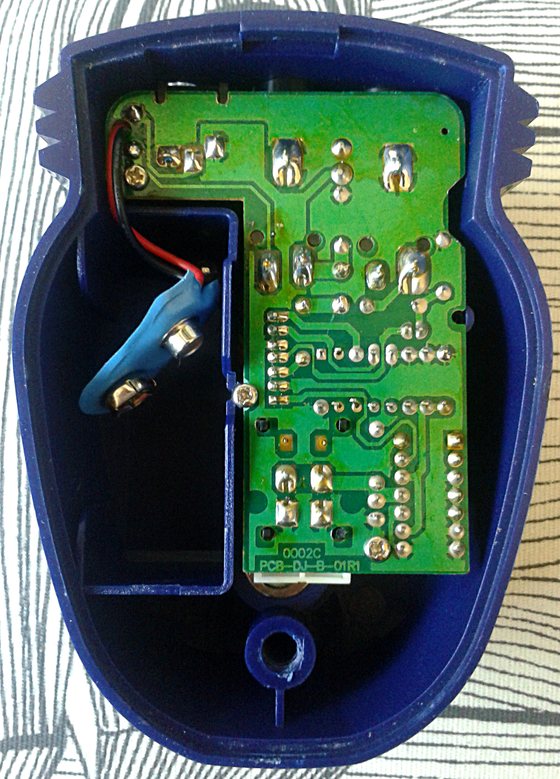
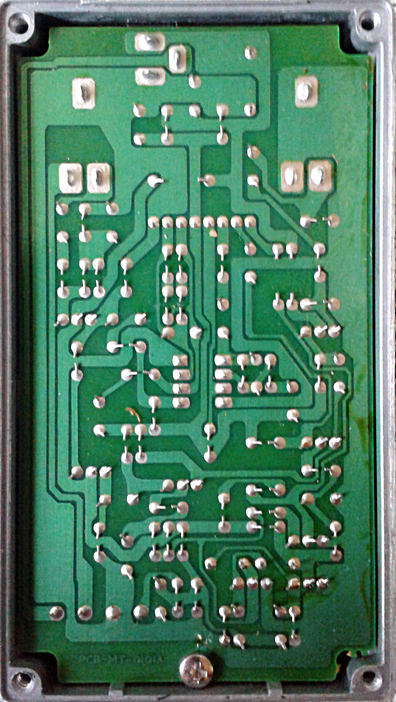
Mini reverb? Idea sound solid. As i was closing in at finishing off my Mini collection, there was very little i could do but acquire one. There are many digital reverb designs around and usually their circuit footprint is relatively close the one of Spinosaurus. So either Danelectro had done the impossible by squeezing a reverb design in a box of this size, or there must be some pitfall in there. Opening the bottom plate shows that bottom PCB  houses only the electronic bypass switching components. Have they managed to cram a digital reverb design to the smaller top board?

DJ4-CornedBeef-guts1

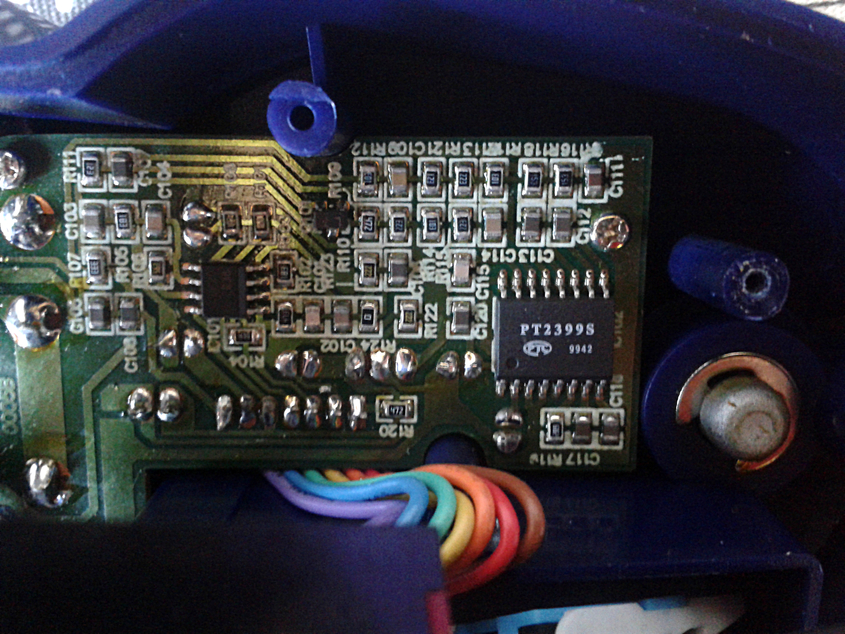
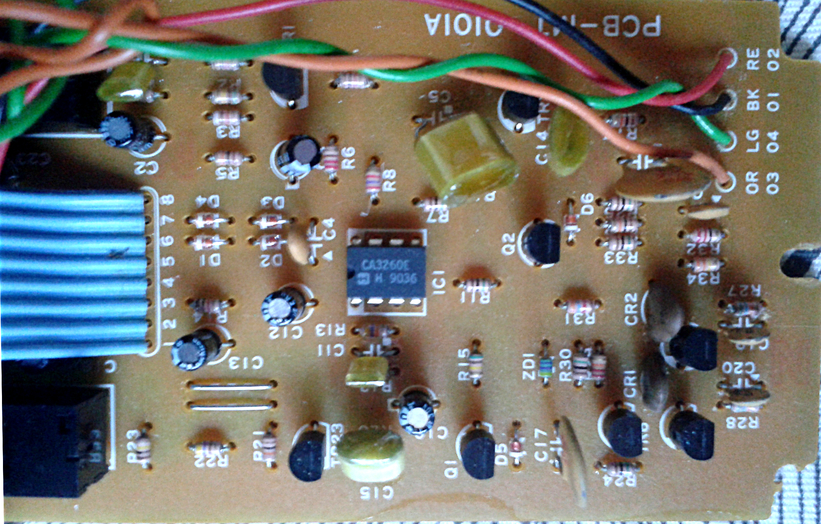
No. They have not. Checking the top board shows PT2399S. I had a gut feeling about this, mainly due to low price of these units. Usually reverbs of any kind are expensive – even the ones that are from those low end series of many big brands. This sort of explains everything. Sadly, Corned Beef is not a true reverb in anywhere else but the marketing spiel.

DJ4-CornedBeef-guts2

So the “reverb” is in fact a fixed delay that is made to mimic reverb sounds with short feedback and delay time. It may not be a true reverb, but it’s still a nicely designed PT2399-based SMD board. Controls do not control the reverb characteristics at all. There are simply mix and hi-cut knobs. Mix is obviously mixing the “reverbed” signal in with the clean and the high-cut seems to be a simple low pass filter with roll-off point controlled by a pot.

I could be a lot more disappointed. Cheap price is one factor that keeps the depression away. I think Dano wouldn’t have gotten away with charging real digital reverb prices for this one. I do think this is the closest to a reverb you can get with a single PT2399. Points for that. However, i’d rather call this one a pseudo-reverb…

How does it sound?
True. It sounds a bit reverbish, but not much. However, it’s not eve remotely close to any of the real digital reverbs around. Anyone familiar with the PT2399 sound can probably spot it being used just by hearing what it sounds like. As a short delay-like pedal, this could be useful. As a reverb? Nope. You need to cough up those bigger bucks for an unit to satisfy that need.

Danelectro DJ-11 Lemon Pitcher Tuner

DJ11-LemonPitcher

What is it?
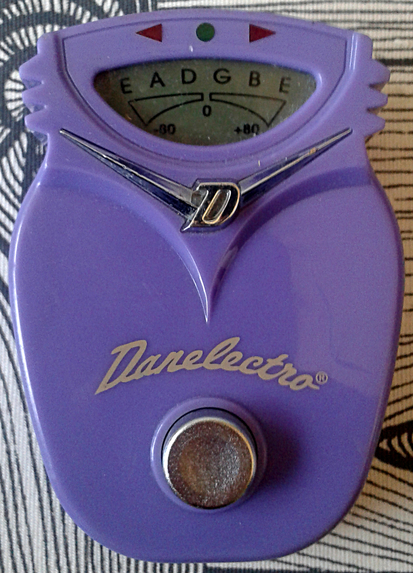
Danelectro DJ-11 Lemon Pitcher Tuner from Danelectro Mini Series. Made in china around early 00’s.

Okay. I’ve been harsh on only few Mini series pedals. Most of them are not bad enough to deserve any harsh words. Then there  is this. In my experience – any brand that produces usable tuner pedal won’t ever fail on that design. So why this one failed and needed a revision (DJ-25)? Size is ok, no denying that. But in reality, what are you going to do with tuner pedal including an old school LCD display and dim lights?

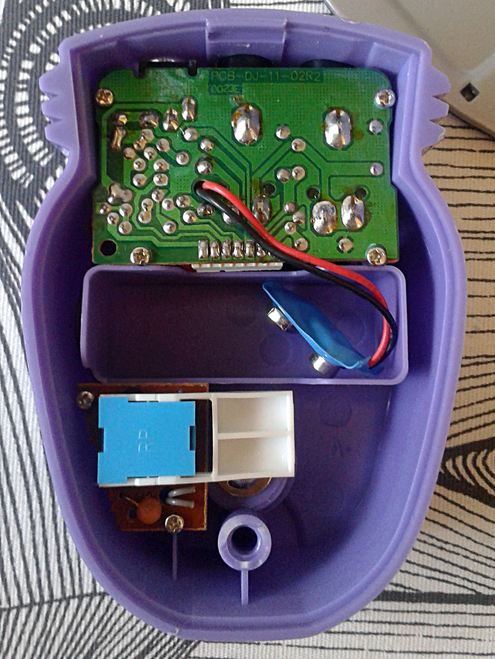
DJ11-LemonPitcher-guts

Nothing. Even if we disregard all the plastic unroadworthiness, we are still left with a tuner pedal that is not sensitive enough and hard to use in anything else than daylight. Gee. I wonder why this design flopped in sales. This and DJ-2 distortion are definitely two worst designs in the series. Stay away. I do not recommend this for any purpose. If it was even a bit more accurate and sensitive.. But it isn’t. It is pedal version of those bad, plastic little tuners that some might use for tuning their acoustic guitars. And due to the fact that it is a pedal with no microphone, one can’t even use this on acoustic guitar..

How does it sound?

As it is a tuner, it doesn’t exactly sound like anything. Maybe it just slightly cuts your highs due to standard mini series bypass buffering. To sum this unit up – bad. That’s the only word to describe the unit truthfully.

Nux MF6 Digital Multi FX

Nux-MF6-DigitalMFX

What is it?
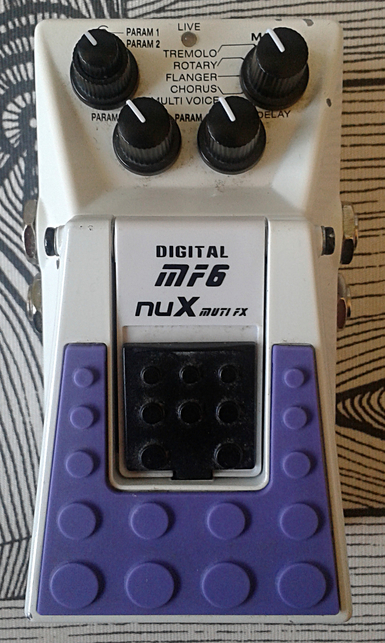
Nux MF6 Digital Multi FX from the Nux First Series. Made in china in 00’s.

Whole Nux pedal line has been quite interesting line. Some of the designs are straight rip offs, but while the underlying design may be just that, the rest is well engineered and somewhat original. The “First Series”, as i’m going to be referring these units, have nice and personal enclosure design. According to interwebs, Nux is originally nothing more but a sub-brand of Cherub. Folks at Cherub may have wanted to build another brand that seems more prestigious. And they have, more or less, succeeded in that venture.

The enclosure is your standard medium strenght cast aluminium box with good rubber bottom and durable feeling plastic parts. The battery slot is accessible through the pedal lid, and its lid is the cheapest feeling part in whole unit.

Nux-MF6-DigitalMFX-ctrls

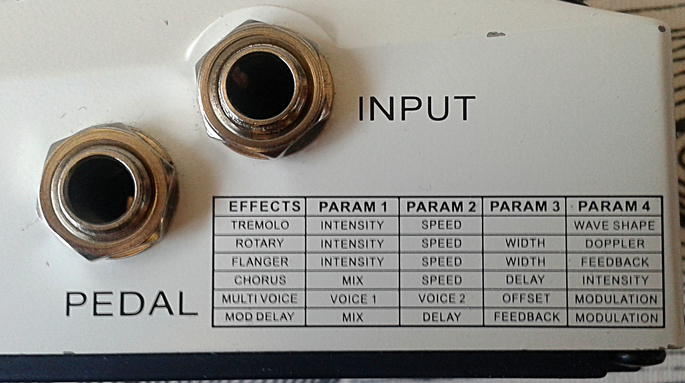
Controls on the top are one rotary switch for mode and four standard pots (one dual gang) for setting the parameters of the selected effect. In short, the effects this unit offers are tremolo, rotary, flanger, chorus, multivoice (which is one repeat dual delay in reality) and modulation delay. Others seem to have nice operation range, but the modulation on the mod delay can be turned off. So that the pedal can be used as a delay unit too. All in all, the number of usable effects is nothing short of impressive. And we should not forget about the stereo output and expression pedal input. So yes. There are quite a lot of features in this cheap pedal.

Nux-MF6-DigitalMFX-guts1

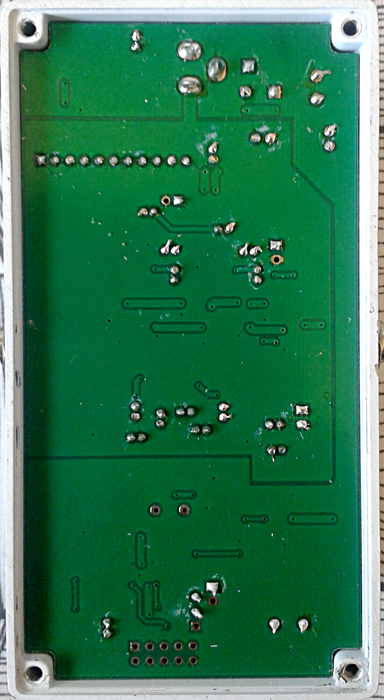
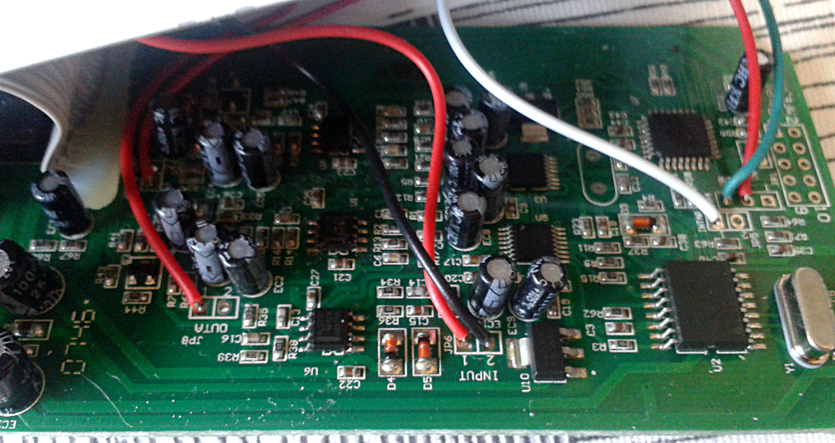
When taking a look under the hood, we see modern SMD board with relatively dull view. Flipping the board over shows what one would expect. It is, like the name suggests, a fully digital design. Once again i’m going to leave you with less analysis since my knowledge of all digital circuitry is very limited. There are couple of digital chips in addition to a few opamps. And a oscillator crystal. Feels a bit like a computer now doesn’t it…

Nux-MF6-DigitalMFX-guts2

I got the unit cheap as used one from a local dude. I didn’t have high hopes for it, but since i was, and still am, somewhat fond of the New Analog Series pedals, i wanted to try this one out too. The conclusion?

How does it sound?
Surprisingly good. There’s no negative thin digital feel to any of the modes. Most of the modulation types easily beat some of their analog counterparts. That’s what you won’t hear often from me. Most of the settings are usable. Overall sound is good. Or maybe even great. I do love it when a design offers more than i expected. Well worth a try if you spot used one for cheap.

Colorless writings, part 10 – The Pup

This Colorless Writing episode marks one milestone for me. It is the tenth writing in the series, which also means that there are now exactly 100 (one hundred) pedal posts on this blog. Every ten pedal posts is followed with one of these. I’d like to take this opportunity to thank all of you, my readers. With around 75 page views per day, i do feel quite honoured. I’ve set up a Twitter account too, so users (and/or FB-emigraters) can easily follow my posts through that service too.

Enough with the jibber jabber. The Pup.

The pickup?

Yes. From electronic point of view, the guitar pickups are nothing more but a simple AC current source made of permanent magnets and a coil wire. In all the simplicity, the frequency of the vibrating string will be transferred to AC current. The current isn’t very high, but it usually ranges from 100 millivolts to around 1 volt. The basic idea of electric guitar is to send this low voltage AC signal to the guitar amplifier that is made of two (actually three, but the third one doesn’t apply here) parts. The preamp amplifies the guitar’s signal voltage, usually to about 12 volts and the power amp amplifies the current to the extent that the signal is strong enough to drive the speaker. Now, think about the AC current generated by the pickups. There is a huge difference between 100 mV and a full volt. The work that the preamp needs to do will be strongly affected by the level of the pickup output.

Got it. But what about the pedals? How do they react to different pickup levels?

If we look at guitar pedals from electronic point of view, we may see that most of your pedals act like preamplifiers. Bigger the signal input voltage, the less the pedal can do with it.

This is the point that flamed up the idea of writing about it. I was recently repairing a bunch of pedals and couple of the simply sounded like crap. I was pretty certain that one EHX LPB-1 Nano was broken as it sounded like overly saturated, bad sounding distortion instead of a clean boost that the circuit is – and has been since the nineteen sixties. I then decided to try it with another guitar, as the one next to my bench was Hagström F200 with original Custom 60s humbucking pickups. Took my Fender Baja Telecaster and tried the same circuits with it. Baja is from Fender’s Classic Player series and it has original Custom Shop pickups with vintage style output. First of all, i had to crank my bench amp way higher to get any sound out of it. Then i engaged the pedal.

You guessed it. Clean. No trace of the distortion. I then took the Hagström back to the equation, but lowered the volume pot setting on the guitar. Clean. So as a conclusion, the “hotter” the pickups, the less there is that a 9V operated effect can do with it. Some of you may have noticed that i’m somewhat biased when it comes to the superiority of a Tubescreamer overdrive. If you’re using it with high output pickups, it will sound horrible (cold dead hand slapping you on the top of your head), but with low, vintage output pickups the TS9 comes alive and sounds like it is supposed to. TS9 with modern high output humbuckers sucks.With vintage output singles – that’s where the magic kicks in.

There is  a chance you’ve run in to issues when you’ve tried to use some of your overdrive pedals with your  synth or keyboard. The signal pushed by those instruments are usually at line level, meaning that the AC signal voltage is closer to five volts. It is a rare pedal that can operate well with that kind of signal without becoming choked sounding. No. It is not a fault in the pedal, but simply a feature. But there is a simple workaround for these situations. Just build yourself a simple, passive volume control in a mini box and use it to bring the synth’s signal down before pushing it to the pedal. You can always push it back up to line level with something like MXR Microamp if you need to get the signal back to your synth.

But you’ve written before that all the pieces of the gear puzzle affect each other? Isn’t that the same thing that applies here?

Partially yes. Some pickups won’t play nice with some pedals. So if you check youtube demos for the unit you are interested and buy the pedal based on that information, there is always a chance that the unit won’t sound even remotely the same with your gear. With high gain distortions the issue isn’t that big. Mainly because anything that goes in comes out totally scrambled. But how about creating a mild overdrive pedal that works and sound great on any pickup configuration? Now that’s not as simple as one might think. And what about active pickups? In essence the active pickups simply mean that there is impedance changing preamp built insinde the pickup. Sometimes those preamps boost the signal too. If you don’t have experience with active pups and a Tubescreamer, you can imagine what that will sound like. That would be pretty much the same thing as you were driving your TS with a Super Hard-On. True, hot (as in high output) pickups tend to sound bigger and better. But some pedals may not reach their full potential with those pickups.

Is it better to have vintage, low output pickups than modern, high gain output ones?

You tell me. Former is definitely the way to go if you want to use your Tubescreamer as the main overdrive. But once again, we would need to define “better” before jumping to any conclusions. Big, fat heavy metal mush sound  isn’t going to be happening with vintage output pickups. There are tons of different sounding pickups out there. Which ones work for you and your pedal rig? I guess you’ll just need to try a few sets out to find it out.

Marshall BB-2 Blues Breaker II

BB2-BluesBreaker

What is it?
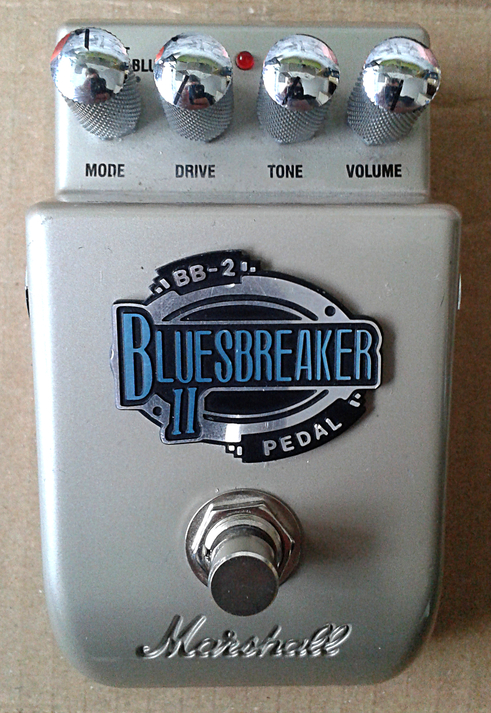
Marshall BB-2 Bluesbreaker from small metal series. Made in china around early 00’s.

The Marshall pedals are are strange phenomenon. I feel like i’ve talked about it, the same thing earlier. Where nearly every single Marshall amplifier ever made has a status that every guitarist knows about. Even the floppiest, bad amplifiers are good for the purpose they were designed for. I think Jim’s passing in april 2012 did affect a lot of people. Not as much as S. Jobs’ but still. Jim wasn’t as controversial character and i think it would be safe to say that everyone liked him and loved his work. For reason unknown to me, the Marshall pedals did never gather the mass admiration like the amplifiers did. Of course, the early pedals have become super rare gems and the big black box series is nowadays highly praised. Which it wasn’t when the series was originally released. Same thing applies for the small metal series. No one was hyping the series when it came out. But if i’m being truthful, the series is well made even though it’s of chinese origin, the designs are not bad at all.

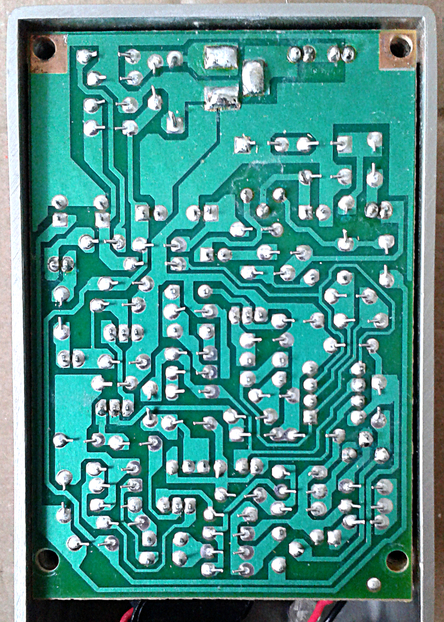
BB2-BluesBreaker-guts1

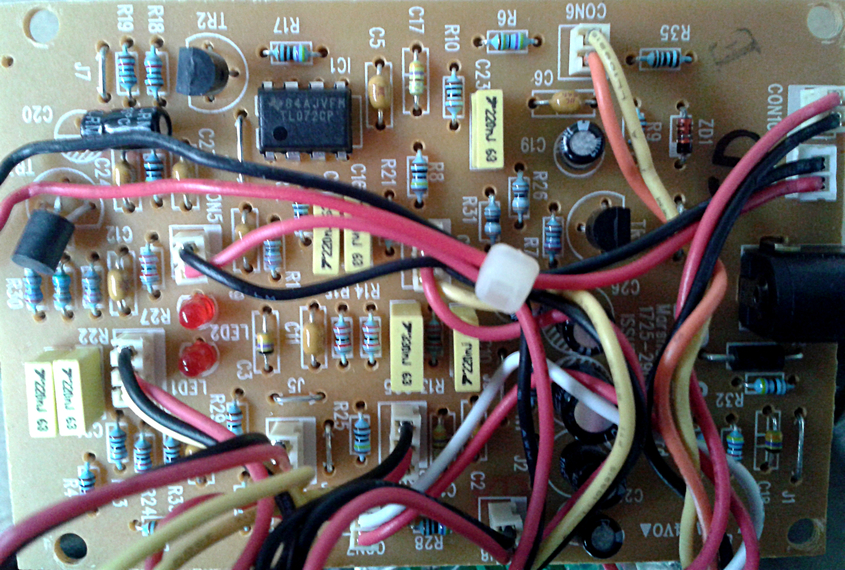
Well made, but dull modern traces that are found in every design of the series. Lots of outboard wiring, but almost all of those are done with terminals instead of hand wired connections. Standard, non-surprising selection of components – TL072 dual opamp and red LEDs for clippers. Someone has posted a factory schematic here. There are noticeable similarities with the original Bluesbreaker, but with some added features. Mainly the Boost option.

BB2-BluesBreaker-guts2

The basic topology here is buffer -> boosting stage -> clipping amp (LEDs in feedback loop)  -> recovery stage (which is something to check out) -> tone control -> volume control. The boost mode bypasses everything from boost stage output to volume control. So the design is quite versatile.

How does it sound?

Fairly nice. The boost mode is what it says – a clean(ish) boost with enough gain. Sadly, the clipping LEDs on the clipping amp in this configuration tend to sound a bit broken. Otherwise, it has similar overall feel as the original, big black unit. It is nice overdrive with hard, big sound. Is it even remotely a “blues” overdrive? Not sure. But it still sounds nice. And you should be able to find one for cheap. At least for now.

Rocktek CHR-1 Chorus

Rocktek-CHR1-Chorus

What is it?
Rocktek CHR-1 Chorus. Made in china around early to mid 90’s. Housed in brittle, all plastic enclosure.

Noticed a lot of two Rocktek pedals, listed as broken on eBay. First one was this one and the second was the Metal Worker distortion. Sniped the lot for decent price and waited with enthusiasm to get the units on my bench. I’ll write another post on the Metal Worker later, so we can focus on chorus on this one. I do enjoy sharing these straight-forward repair reports…

So the unit was completely dead. First, i took it completely apart and noticed two faults that looked a lot like the unit had taken a quick flight and stopped suddenly at a wall. With all the cables attached. The input jack had been totally shattered and the DC jack was torn off from the solder joints, taking an important chunk of the ground strip with it. Basically, a new board mounted input jack, new joints for the DJ jack and a crude, almost brutal fix for the broken ground strip. That was it. The circuit was running like me, ten years ago. Fix was pretty simple and i happened to have suitable parts at hand.

Rocktek-CHR1-Chorus-guts1

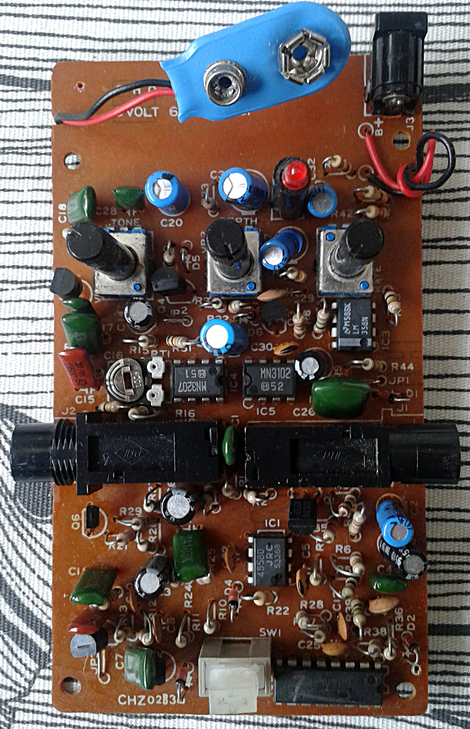
Effect offered other surprises. I’m not sure where the design is ripped off, but the board design is looking a lot like ten year older japanese designs. The design itself is a standard MN3102/MN3207 chorus with LM358 acting as an LFO and a JRC4558D as a mixer amp. Very good looking board and nice analog chorus design. True. There isn’t that much in there to be throwing wow factor around, but overall design does keep all the mehs away.

Rocktek-CHR1-Chorus-guts2

Electronic switching and all the things around it will keep this unit far away from most desired old pedals. Sucky, not too well designed buffering won’t response to people who require modern pedal standards. I do find this one interesting.

How does it sound?
Very nice and usable. Soft analog chorus with reasonable control range. There’s nothing special about the sound, but overall feel is pretty close to all the other unit from 80’s and 90’s with same choice of BBDs. The MN3102/MN3207 has a nice, clear, yet personal chorus sound. Well worth getting this unit, even though it won’t be a prime suspect for your board. These seem to be selling cheap, so for an good sounding analog chorus for your recording needs, this may be a very good choice.

EHX Lumberjack Log Overdriver

EHX-Lumberjack

What is it?
Electro Harmonix Lumberjack Log Overdriver. Made in NYC. According to the serial number, this unit has been manufactured in 2013.

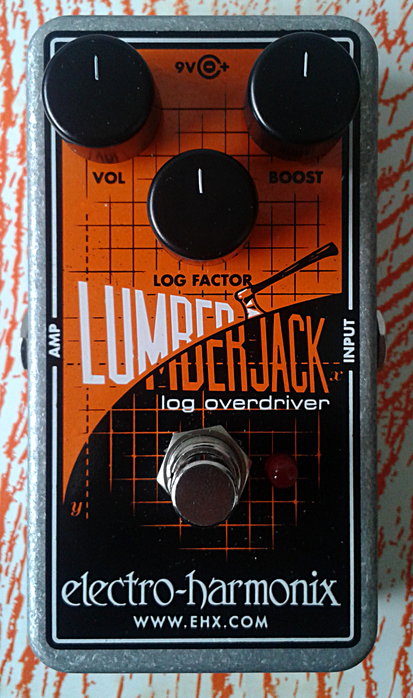
Someone was selling this one as next to new unit for an ok price. As some of you may already know, i’m not a EHX fanboy. At all. Other than Big Muffs and a few odd birds, the EHX designs tend to reach for the skies. Only to find their hand stuck in a pile on manure. Meaning that the designs are always trying to break the limits and to come up with something profound – but usually ending up as a novelty special effects rather than a good sounding, usable guitar pedals. The official youtube demo shows a professional guitarist praising the sound. But somehow i think i sense a hint of doubt in his presence. There’s also a short part with a bass on that demo. Anyway. As usual, i ripped the bottom plate open as soon as the unit landed on my desk. Demos suggested the unit be be somewhat a modernized overdrive version of the bad old Gretsch Controfuzz. The controls Volume and Boost do what you expect them to. The Log Factor adds distant background distortion in the spirit of the Controfuzz, but doing  it in a post 1980 manner.

EHX-Lumberjack-guts

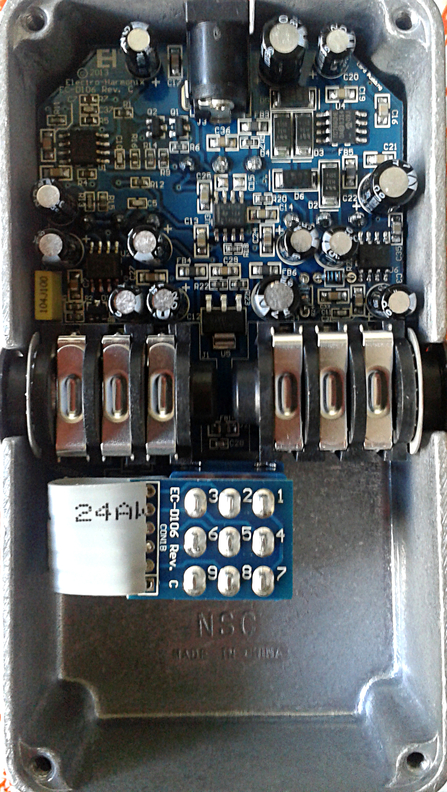
Nope. That’s not anything like Controfuzz. There are five dual opamps and a few transistors in there. While i was hoping that this would possibly be something simple, something i could use to learn’a thing or two, tthe reality hit me hard. With the sound the unit has, and the complexity of the circuit.. No. I’ll just screw the bottom plate back on and put this back to its original retail cardboard box. It can stay there and wait if the sound will have any merit after couple of decades of waiting. On a brighter side, the unit does come with a power supply. So all of the money wasn’t completely wasted.

How does it sound?

Horrible. The Overdrive never grows to be completely around. Instead, there’s always clean signal present. So as an overdrive effect for the guitar, i must say that this is definitely one of the worst. For a bass? Haven’t tried it for myself yet, but there is some hope for this being a decent (or maybe even great) bass pedal.

Makes me wonder.  If a design goes south due to blatant over engineering, why do they keep marketing it as something that it clearly isn’t? Now, slap a sticker with “For Bass” on top of the retail box and it might sell. There is a chance that over engineering has resulted is cutting some of lower frequencies off. If that’s the case, then this unit isn’t suitable for anything.

Except for novelty special effect.

Ibanez FC10 Fat Cat Distortion

FC10

What is it?
Ibanez FC10 Fat Cat Distortion from Power series. Made in japan between 86-89.

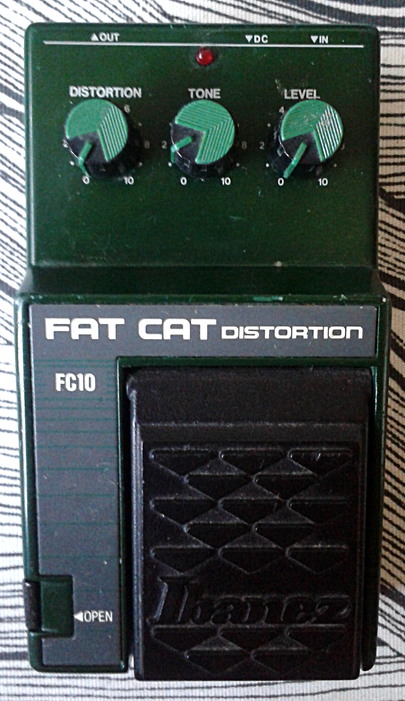
The first Ibanez take to replicate the ProCo Rat was a success of its own. A buffered Rat with standard Ibanez electronic JFET switching. Sure there are numerous other Ibanez takes on the Rat later on, most with more drastic changes on the designs, but this one – It’s pretty much one to one with the original Filter control reversed to act as a more commonly used tone configuration. Solid dull traces and everything is as everything is with most of the Power series boxes.

FC10-guts1

There are various schematics available, but from the experience, the one at Dirk’s page is the correct one. The board has a lot of room on it. The switching section is located at the lower left corner, so the size of the effect itself is just small. Due to asymmetry of the component layout, this one gets a harsh judgement from me. There’s enough room to paint pictures with the layout, but no.

The chip in the Fat Cat is JRC5534 single opamp, which has the needed compensation and balance features. Those are, however, in between other pins than in the original choice in Rats, the LM308. So one can’t turn his/her FC10 into 1:1 Rat by just swapping the opamp to ProCo specs.

FC10-guts2

For the units i’ve seen on sale, they all went immediately. I don’t think the unit is that rare, it just seems like it is very desired distortion. And by considering the sound, i do get it.

How does it sound?
Like a Rat with a way higher input impedance. Meaning that your pups won’t load as much as they do on the original Rat/Rat2. Aside from Tone control working in more conventional manner, there just isn’t too much of a difference to the sound. The changes are for the better, so this might be a nice option. If you can, get one. For cheaper than a reissue ProCo Rat/Rat2 that is.

Danelectro DJ-17 PB & J Delay

DJ17-PBJ

What is it?
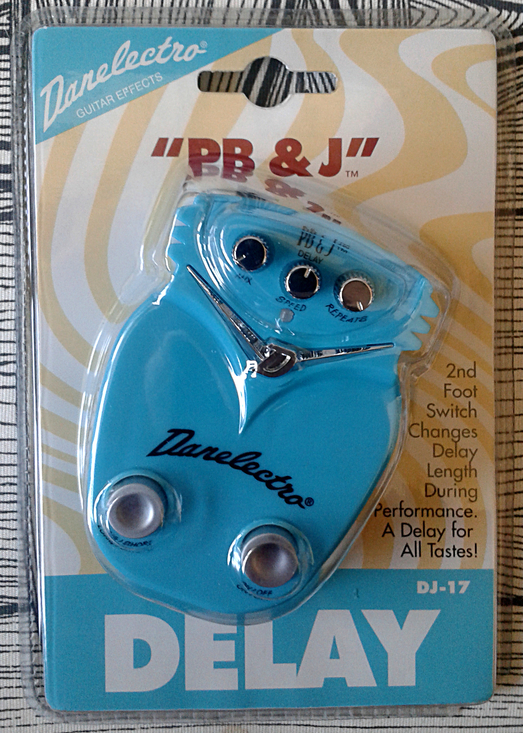
Danelectro DJ-17 PB & J (peanut butter & jelly) Delay from mini series. Made in china around early 00’s.

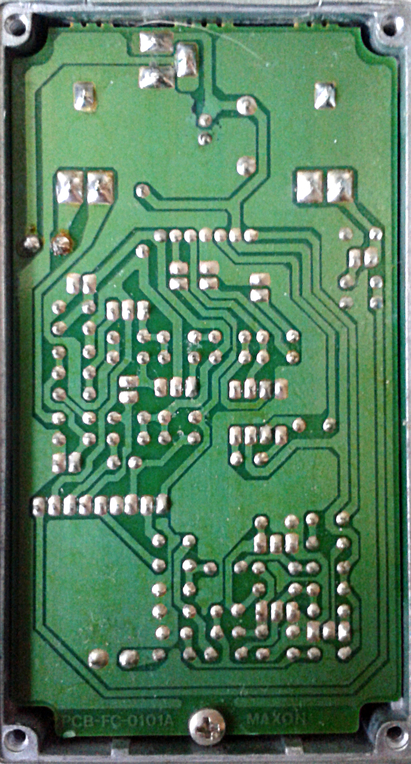
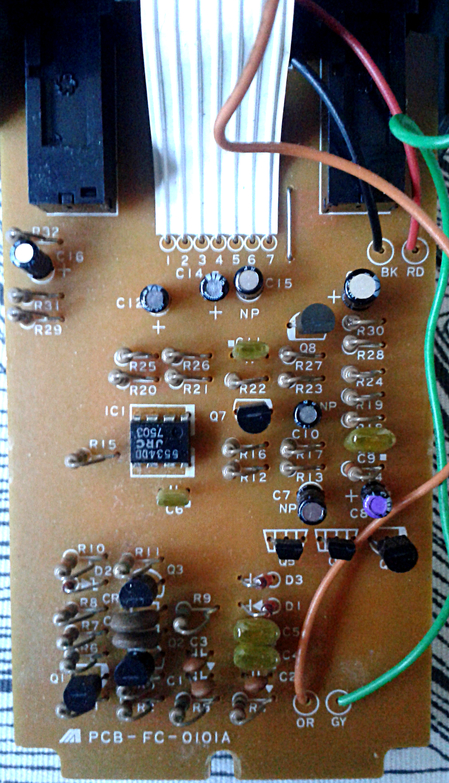
I thought i was getting a slightly used unit through ebay listing. Apparently not. It is in original blister packaking with only one of the corners slightly torn. Packaking indicates that this unit the early Mini series pedal. Later ones all came in cardboard boxes. As there is a little collector in me, you can take a guess if i’m tearing this one open? Hell no. So. This time i won’t be able to offer any analysis on the circuit. I may need to get another unit. One that has been already opened to do that. So this is probably one of the shortest pedal posts i’m ever going to publish.

If i ever come across a used one, i might update theis post. But for now. Just look at the ~12 year old thing in it’s original packaging. Beautiful, isn’t it?

How does it sound?
I have no idea. It has two stomp switches to change the delay time on the go, but as it is still mint in unopened blister pack, i’m obviously not able to try it out.

Ibanez MT10 Mostortion

MT10

What is it?
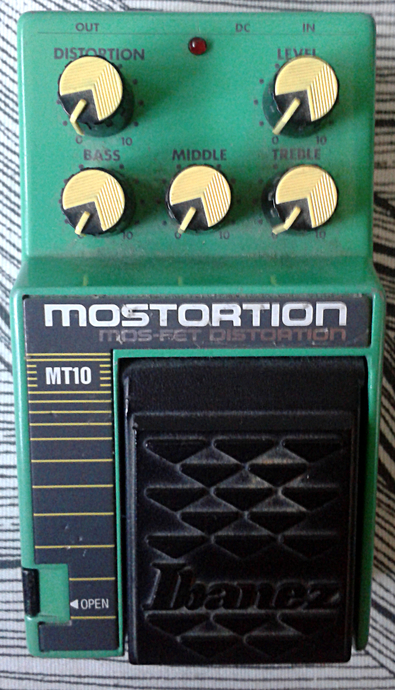
Ibanez MT10 Mostortion MOS-FET Distortion from Power series. Made in Japan, late 80’s.

As the Ibanez Power series pedals come, there aren’t that many original designs that have risen into cult status and are priced as such on the used pedal market. The MT10 Mostortion is one of those, filling this void with OT10 Octaver. Both of these are sort of one offs in the Ibanez back catalog. Where the OT10 is the only Octave effect from Ibanez, the MT10 is the only MOSFET (metal oxide semiconductor field effect transistor) based overdrive/distortion and it has three band EQ as well. I try to think of other Ibanez driver pedals with Bass/Mids/Treble controls.. Nothing comes to mind (ok, the Tubeking distortion etc. but let’s just say that three band EQs are not a standard Ibanez way of doing things). Saw this unit for sale with a reasonable price and i just couldn’t let it go.

MT10-guts1

There’s some visual magic going on with the traces. Normally i would dismiss traces like this with a snarky “meh” comment, but not this time. Maybe it’s just how all the components are distributed nice and even all across the board, instead of super-engineering the left upper corner  and leave everything else blank. The schematic is up at ToneHome, and it shows how the EQ is made. Pretty cool to see something of a standard three band EQ drawn like that. Base topology is a buffer -> clipping amp -> three band EQ -> EQ recovery amp and an output buffer. Quite standard, but still something we won’t run into everyday.

MT10-guts2

It’s the opamp that makes this a MOSFET desing. Harris CA3260 to be exact. This obsolete amplifier may be the biggest reason why this design doesn’t have reissues and the number of available clones is low too. This, at least in part, would also explain the prices these currently sell for.

How does it sound?
The sound is definitely one of the factors affecting the prices. From slight, cool boosting overdrive to harsh and cold metallic distortion. Way more versatile than the first modern box i would compare this to – the ZVex Distortron. Overall tone also reminds me of a Marshall MOSFET 100 Lead head’s distortion channel. There’s this MOS signature sound going on that some people just love. It does have a face and sound of its own. Which is only a very good thing. I don’t think we really need that many more TS sounding boxes in the world. Besides. This simply rocks.

« Older posts Newer posts »

© 2025 killall -9 humans

Theme by Anders NorenUp ↑