Author: mirosol (Page 12 of 29)

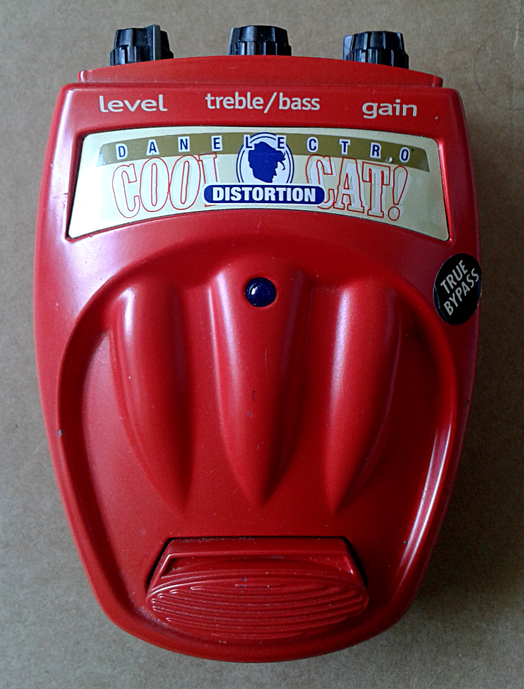
Danelectro CD-1 Distortion

CD1-Distortion

What is it?
Danelectro CD-1 Distortion from Cool Cat series. Made in china around 2009.

The number of good sounding units in this series seems to be on the rise. Took me a while to get one and to tell the truth, this didn’t come too cheap either. But i wanted one, so i went out and got one. Simple as that. One part of the attraction was that all there was on the internet was just a couple of guesses about what the circuit could be. Usual guesses pointed out this being a derivative of the “standard” Danelectro distortion, the Fab Tone from original series. Granted, that design may have been circulating in the brand’s catalog more than enough. But. Since there were nothing more than guesses based on nothing around, i felt it like a duty to shed a little light on this subject. I’ll say one thing before going any further. The box feels and sounds nothing like the Fab Tone.

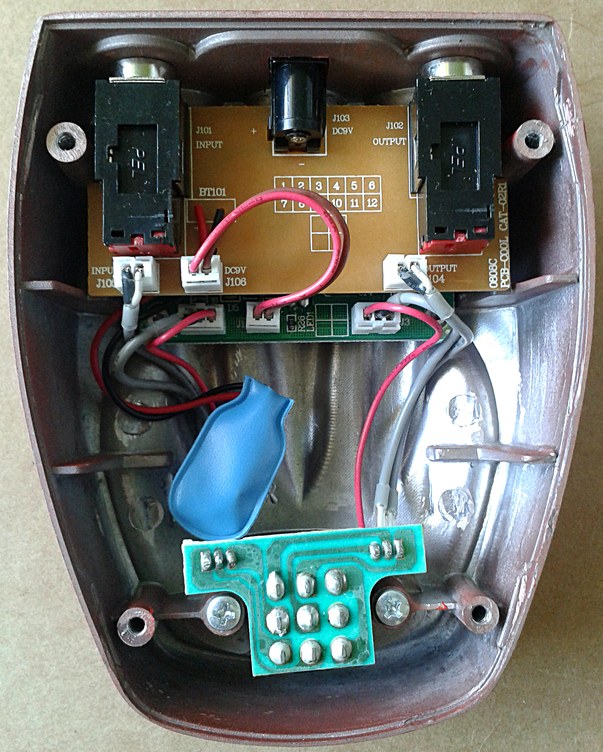
CD1-Distortion-guts1

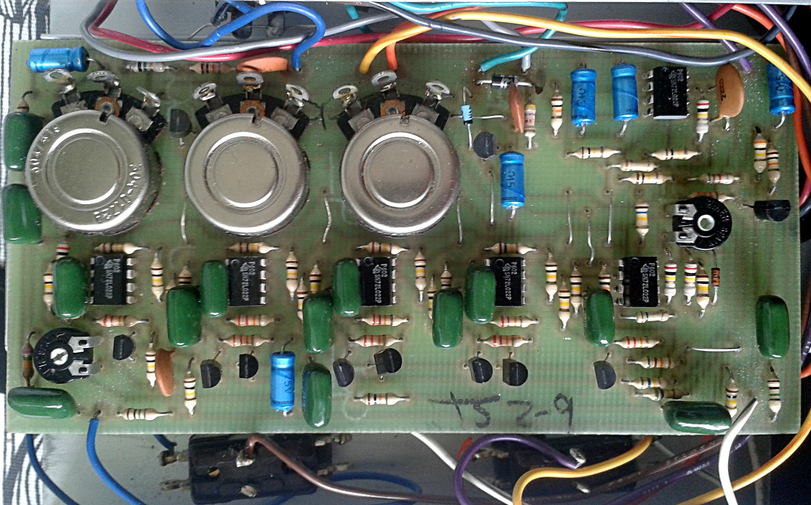
Opening the box up, no surprises at this point. Just a standard Cool Cat series jack and switch board inside. But as we all know, the effect itself is on that other board. Four transistors and a dual opamp. At first glance, the first transistor looks like it’s a buffer, and there’s two separate pairs of clipping diodes. Nope. No clue about what’s it based on, at least not just by taking a quick look at it.

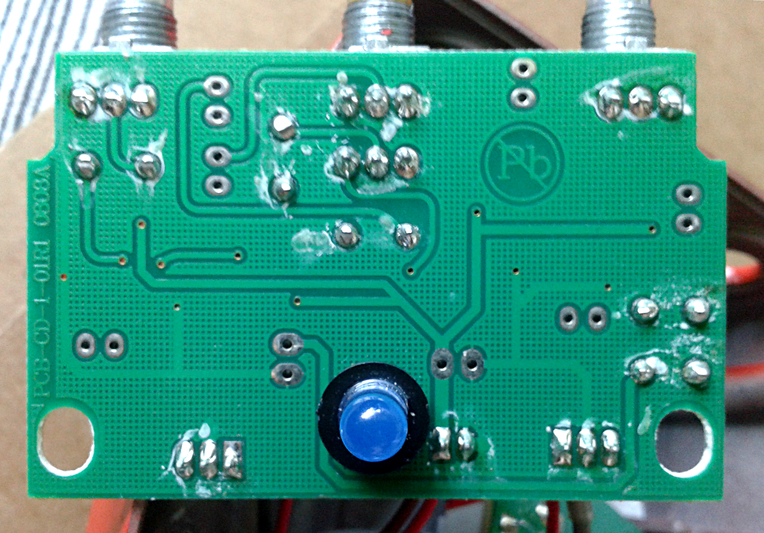
CD1-Distortion-guts2

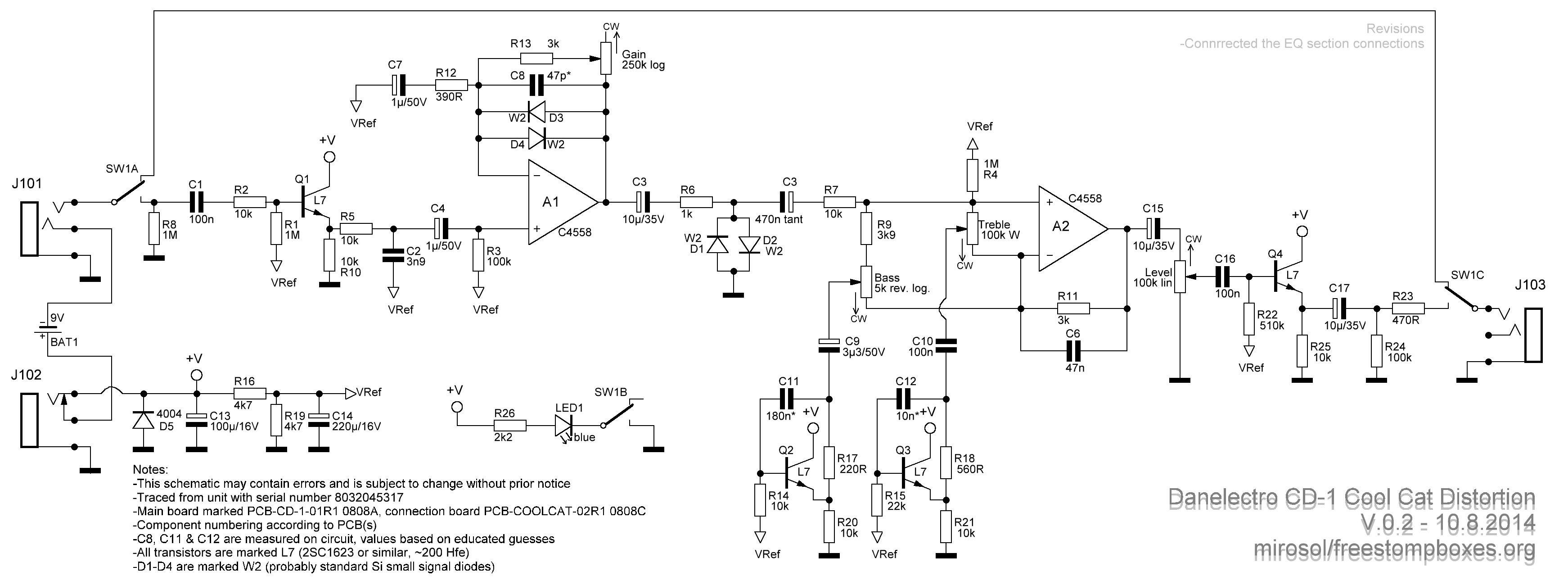
But several hours, a multimeter, a few liters of coffee and several packs of smokes. Yup. Now we know. At first the design didn’t ring any bells, even though it should have. So, we have an input buffer, followed by a non-inverting clipping amplifier with diodes in feedback loop. Then we have hard clipping stage, followed by dual gyrator-based tone section and a buffer for output.

CD1-Distortion-guts3

Design is, in other words, pretty impressive distortion design. At the moment of my trace it really should have been obvious to me. Anyone ever heard of a distortion unit called Distortion Master? Here we have that, almost verbatim, with slight modifications on the tone controls and the gyrators they control. May that mean whatever, but still, we have $200 sound in $40 package.

How does it sound?
Very good. Not too far from those distortions that try to capture the feel of old Marshall amps pushed to the max. Not too high in gain, but well balanced and sufficient. Gain control goes from overdrive tones to big distortion sounds. EQ section works well and sounds like you really don’t have any need for a separate mids control. I would go so far to call this one of the greatest rock distortions. In one word, usable. But we should remember it is heavily based on an existing pedal that is currently manufactured. Still. Wonderful sound to have in one’s toolbox of sounds.

Ibanez DE7 Delay/Echo

DE7

What is it?
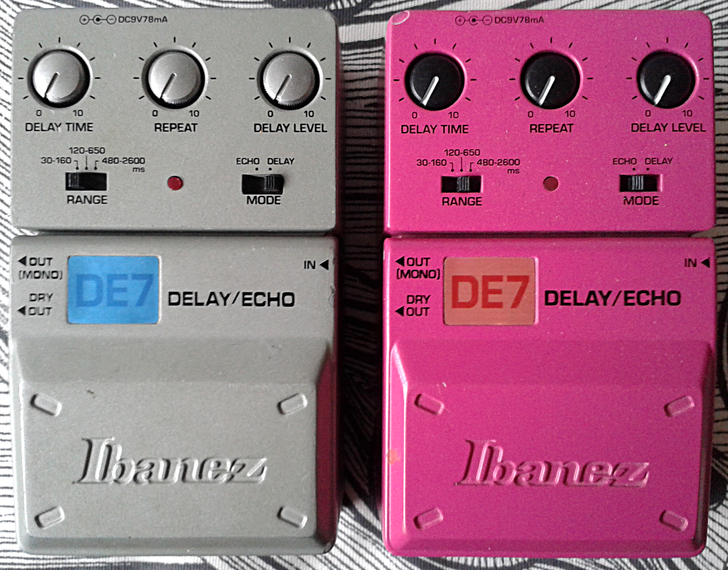
Ibanez DE7 Delay/Echo from 7/Tonelok series.  Made in china around 1999-2002.

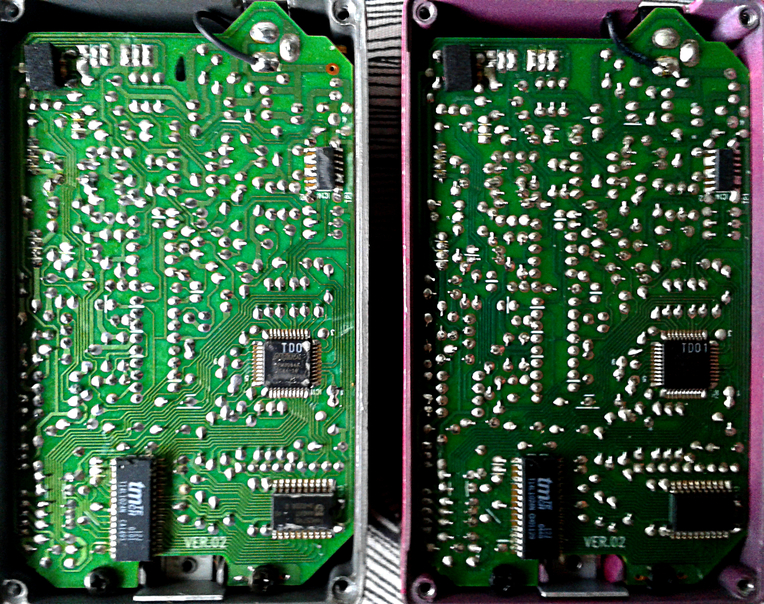
Couple of Ibanez delays hold a few remarkable places in my personal favourites. The DE7 ranks very high on that list. I set up photos with two separate units, side by side, since while the electronics remain the same on both units (DE7 and DE7C), the pink one is limited edition and the standard grey is the basic version. I have no idea what the manufactured numbers are, but pink ones tend to be seen rather rarely. In case of comparing how often different DE7 models come up for sale, that is. Both cosmetic versions are relatively easy to find through auction sites and the prices being asked have not (at the time of writing) gone through the roof. Not sure if they ever will, but if you are interested in having one.. You should probably grab one now.

DE7-guts1

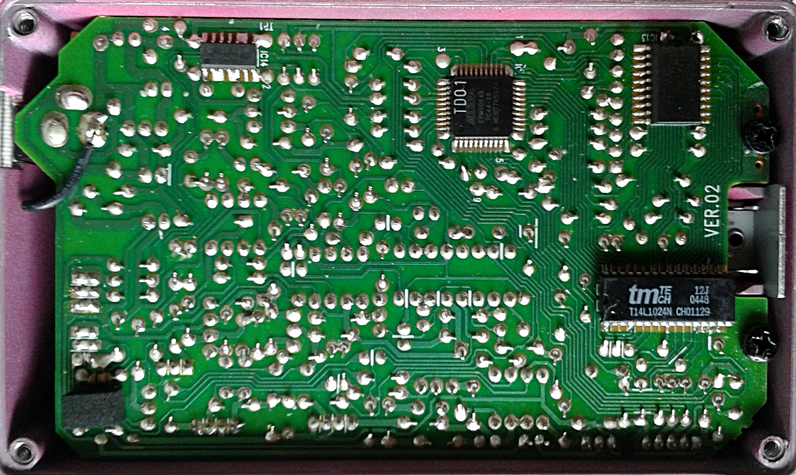
The boards on both versions are exactly the same. Two-sided, modern traces and soldering quality on par with every other Tonelok-series pedal. I’m not aware of the manufacturing factory of this series, but i would not be surprised if it was the same factory behind the Marshall small metal cased series.

DE7-guts2

Construction with mostly through hole components and a few surface mount chips on the bottom looks like a killer. On the other hand, the number of links on the board.. Seems like the design is based on dedicated digital delay circuitry, rather than on DSP.

DE7-guts3

What comes to features, there are your standard Delay Time, Repeats (aka feedback) and effect level knobs. In addition to those we have two slide switches, first one setting the delay time range. There are three ranges that vary from 30 milliseconds to 2600 milliseconds. 2,6 seconds is rather long time and this may even scare the DD-7 folk. On the other features, like tap tempo and whatnot, DD-7 takes the cake, but the price range is completely different. The second slide switches between Delay and Echo modes. Delay being closer to modern standard digital delays and Echo is modelling the vintage echo sounds. Simple features ensure ease of use.

How does it sound?
Next to perfection. Even the digital delay sounds are not harsh, but remind one of smooth analog sounds. Without the noise and with long delay times. On echo mode the sounds are even more mellow. The attack for both modes make you forget that you are using a digital pedal. Natural sounding delay with massive delay times. What’s not to like?

EHX Small Stone EH4800 Phase Shifter

EHX-SmallStoneRI

What is it?
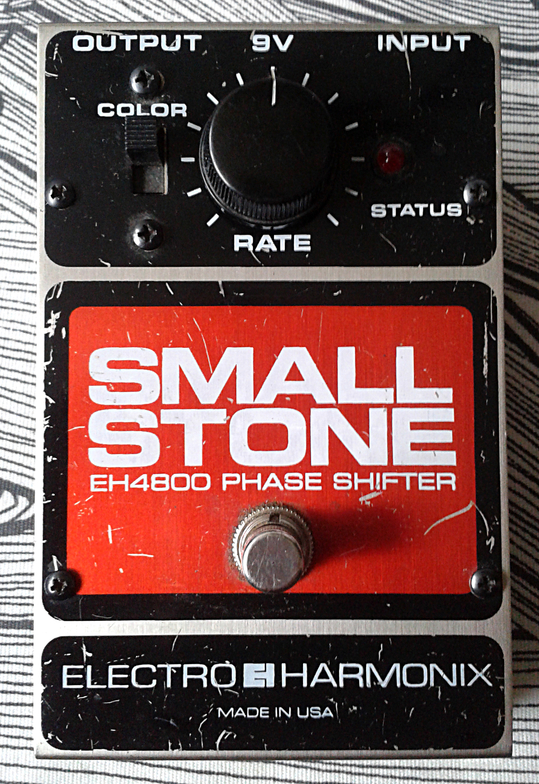
Electro Harmonix Small Stone EH4800 Phase Shifter. Made in USA, possibly in early 00’s.

This wasn’t the first and certainly won’t be the last pedal i’ll buy as a broken unit. Sure there have been units that were beyond repair and those will always hurt, but usually i tend to be able to fix them. This particular unit has all the OTA chips socketed. The symptoms were that the pedal only worked with a battery, but not with a power supply. True. This was the case. But even though i suspected a broken connection from the DC jack, the truth was that everything started to work right once i pressed the ICs firmly back to their sockets. Which makes me wonder why all the chips are socketed in a unit that’s manufactured in this scale. Who knows, maybe not all the chips work perfectly in this circuits and they need to be swapped around.

EHX-SmallStoneRI-guts

Since the early versions of the 70’s, the design has always been using OTA chips to create phasing. There is a distinctive difference in sound of JFET-based phaser when compared to OTA-based design. According to the internet, the early units had CA3094 and CA3080 chips in them. The later versions, due to obvious reasons, are done with LM13600/LM13700 chips. If the reason is not yet obvious to you, the CA3080 was discontinued about 10 years ago, and the CA3094 even earlier. While there are a number of CA3080s available through auction sites, the price and availability isn’t exactly right for manufacturing of this scale. LM chips are still in production, even as surface mount chips.

As for most classic circuits, there is a schematic floating around the web. This one’s drawn by Bernandduur and as always with his work, it is a pleasure to look at it. There’s a quad opamp for in/out buffering and LFO, plus two dual channel OTAs for the phasing. Basic manufacturing methods on these units look ok.  Neat, but not too pleasing.

How does it sound?

A deep wobbler with definite personal sound. Decent range on the rate knob and depth of the phase goes way beyond what we are used to. Even though the sound is very good, don’t expect to get soft and mild slush out of this. This is a lot more like a shock effect than ambient phaser. Prime example of good EHX design. Something that’s not exactly like all the others, and successful at that.

ProTone Pedals Body Rot II

ProTone-BodyRot2

What is it?
ProTone Pedals Body Rot II Distortion. Made in USA around early 10’s.

Once again, a pedal that the original owner put up for sale as defected unit, for peanuts. And once again, i had no choice but to grab it asap. I do not own too many small brand boxes, so i must admit being excited. There wasn’t much information about this particular pedal available. Just the marketing speak, which was more of a typical attempt on hype raising than actual good and informative product description. So all i had to begin with was a marketing praise and nothing else. So without hesitation i opened the unit up as soon as it arrived.

ProTone-BodyRot2-guts

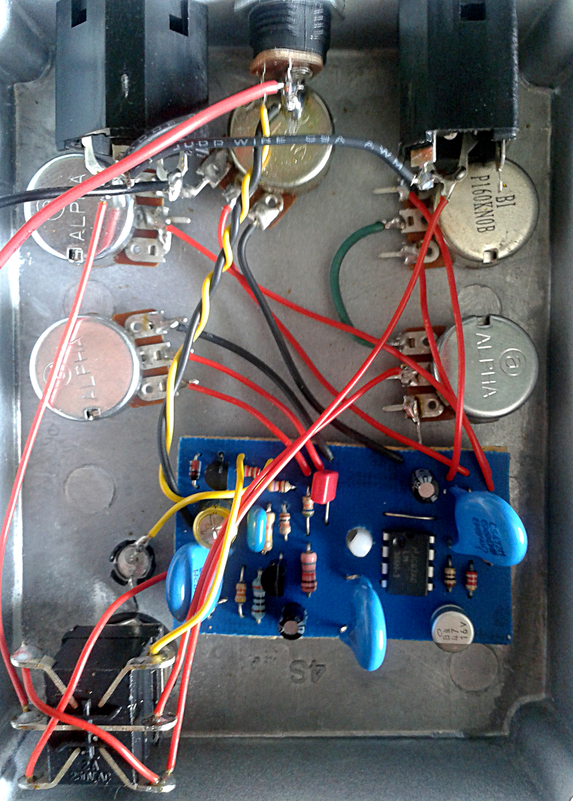
Ok. Handcrafted  from start to finish. Lots of work put on those offboard wires. All pots handwired. All industry standard Alpha pots, except for one (which definitely does not feel like all the others). Standard chinese 2PDT stomp switch controlling a millennium bypass. At this point i needed to know what was wrong with it. LED lit up, but there was no signal passing through the device. First thing i noticed, was a 220µF power filtering capacitor. Rated for 10V. This puppy looked like a puffer fish. So i obviously swapped that for a new one, rated at 16V. The heart of the design is a single 2N5088 transistor, followed by a LM386 power amplifier. Traced my way from the input to that power amplifier and its output was dead.

ProTone-BodyRot2-guts2

Swapped the chip for a new one, and yes. The pedal was back to its original  glory. Since i had the unit open already, i snapped a few photos and posted them to a known stompbox forum. One kind soul called Manfred traced the unit from these photos and component values i picked up. It was quite interesting to find out that the pink component that looks like a resistor in weird color, is actually a capacitor. You can find the schematic from Freestompboxes.org, if you have an user account there.

ProTone-BodyRot2-guts3

Best part for the last. Just look at it. And not to mention that this “groundbreaking, all new” design is actually a few component values away from another well known german high gain metal distortion design. Somehow i knew it. If the marketing is all about raising hype, then there must be something wrong with either the manufacturing methods or the design found inside. I think this pedal will easily take years of use and abuse, but it still doesn’t feel that professional to me.. It’s not all bad though.

How does it sound?
Actually, very good. I do find that minimum settings for gain is killing the signal pretty stupid (as i do find all the designs that go quiet with anything else or more than the volume knob). I haven’t played with the design this is obviously based on, but this one sounds good. Mean, super high-gain, with very nice EQ section. Did i already mention it offers a lot of gain? Good metal distortion, either way. If you really want one, i’d suggest contacting the manufacturer instead of getting one from the store. The store price for a new unit seems a bit steep.

Danelectro Wasabi AD-1 Forward/Reverse Delay

AD1-FRDelay

What is it?
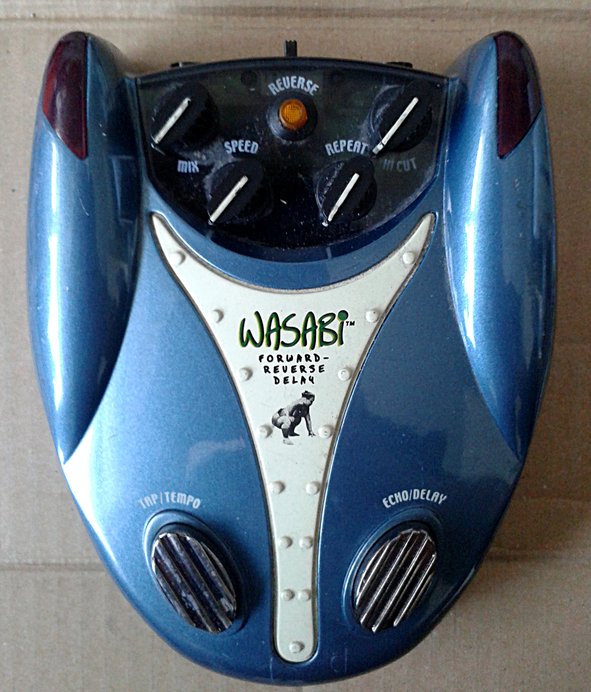
Danelectro Wasabi Forward/Reverse Delay. Made in china, 2003.

Another prime example of Danelectro’s ability to create unique box designs. There are five designs for this series.. Or we should possibly talk about Wasabi as a separate brand. But we won’t. Everything about the pedal simply screams Danelectro, even though the Wasabi was intented to be a new brand altogether. You may or can think or make what you want of it. I’m still calling these Danelectro Wasabis.

Of the series of five effects (Distortion, Overdrive, “Rock-a-Bye”, Chorus/Trem and this delay), i somehow felt the biggest draw to to this one. And i happened to score one for very reasonable price. Previous owner had made pretty profound attachment to the bottom plate. Apparently to have the ability of sticking the pedal to velcro’ed pedalboard without damaging the bottom rubbers. Noble effort, but it took me hours to get the sticky glue residue off from the rubber. Anyway. Forward/Reverse Delay? Maybe the status of Back Talk reverse delay was one of the inspirations sources for creating a design with both modes. But. Let’s go things through in traditional manner. Opening the bottom

AD1-FRDelay-guts1

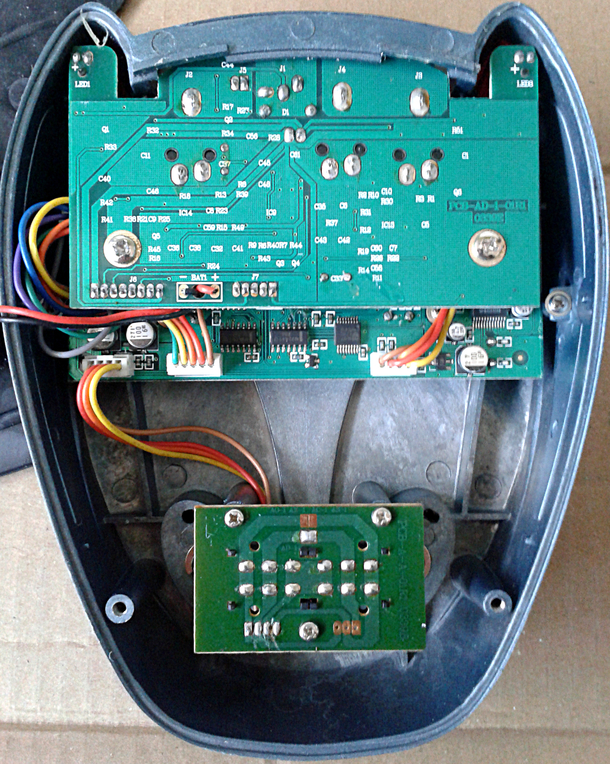
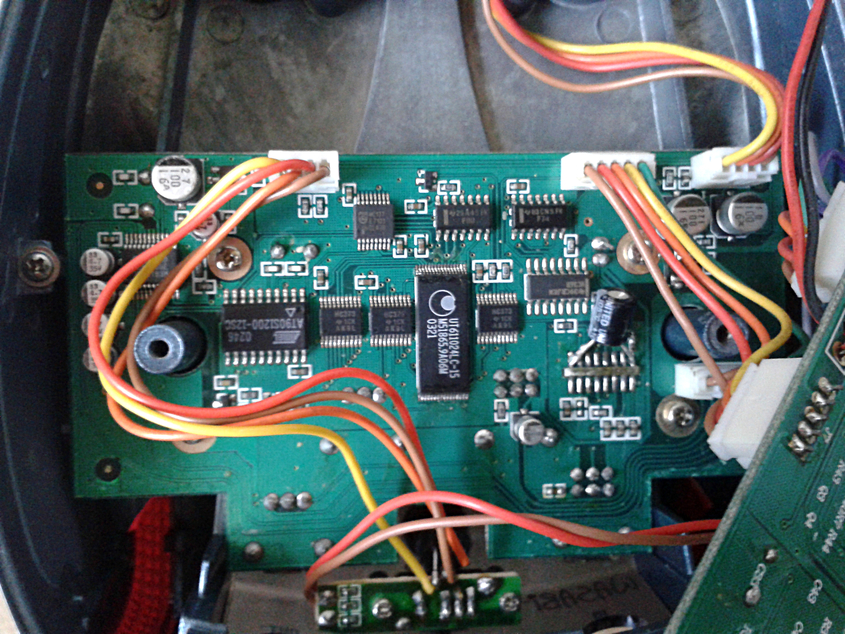
Complex SMD board with components smaller than usual. Well, the enclosure could have housed bigger boards, but battery slot always takes its share of the room available. Lifting the jack board which also houses part of the design, we have several big chips close to each other. I think my desktop computer’s motherboard has lower component density than this one. Complexity grows with added features in linear manner.

AD1-FRDelay-guts2

We have standard digital delay with your everyday controls, delay mix (from all dry to all wet), delay time (called “speed”?! and this one goes from 0 ms to 3000 ms – that’s 3 seconds) and amount or repeats (from one to infinite oscillating space mass). In addition to these rather standard controls we have Hi Cut, which cuts higher frequencies from every repeat. Not completely unlike the feature we find in Danelectro’s Reel Echo desktop/pedal unit. One push of a colorful button turn the repeats in reverse. Oh. Let’s not forget the tap tempo feature. Or in this case, a tap speed. This is a great addition to controls mentioned above.  There’s one more thing. The input selector. We have different input level setting for humbuckers, single coils and general “off” setting. These settings set the input level to suit the guitar used. May be useful in those cases where one wants to use the delay with active pickups or after another device with too high output level.

It’s not a competition to any high end delay box, but when these were available ten years ago, the bang for buck factor was pretty respectable.

How does it sound?
Could be better. In fact, a lot better. The features are very attractive, but the issues come with the sounds. To my ears the reverse mode is about as good sounding as the one found in Digitech’s X-series Delay. And that’s the best part. The raw, fast digital attack of the basic delay is nearly painful to listen to. Maybe even worse than the awful attack we hear on Boss DD-3. For drone/ambient folks, this makes a fine toy. And possibly for home guitarists as well. It could also be used as a shock effect when recording. But as a delay to be used daily on a pedalboard? No. Look elsewhere.

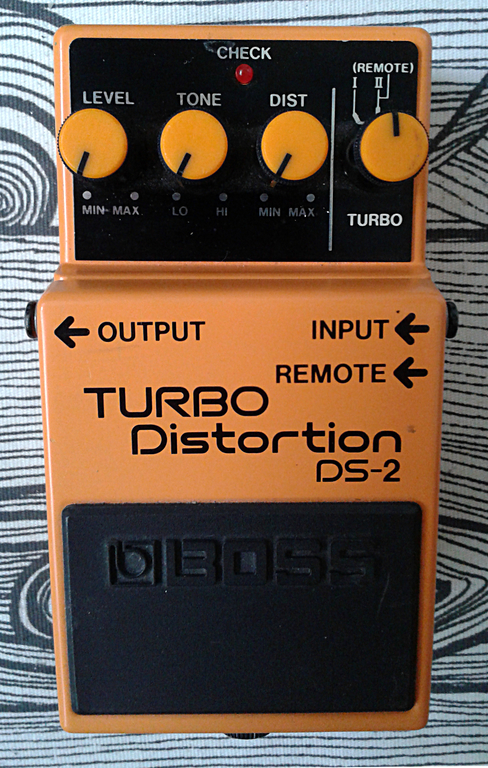
Boss DS-2 Turbo Distortion

Boss-DS2

What is it?
Boss DS-2 Turbo Distortion from compact pedal series. Made in taiwan, february 2003.

Probably the best known as Kurt Cobain’s distortion of choice. I had to get one out of pure interest. I sourced all the Nirvana CDs as used ones last spring. Since there are now expanded reissues out of each and every one of those, one can score the original CDs for pennies. Sure there’s some nostalgia in there, as i (and probably half of planet’s population within certain age range) did listen to those records a  lot when i was in school. I think Nirvana’s grunge was the last “boom” of guitar music to reach an audience as huge as it did. Of course there were a few bigger attractions after it too, but nothing as huge (Green Day’s Dookie craze, scandinavian action rock, etc. etc.). Anyway. As i listened through the discography, i felt like it would have simply been the sound of AC/DC-styled marshall stack maxed instead of somewhat puny DS-2. But as the internet lets us believe, Cobain was apparently a fan of Fender amplifiers. And those aren’t exactly known for their powerful overdriven tones, so the sound had to come from somewhere else. Ok, ok. I promise. No more talk about Cobain on this blog. There’s a schematic up at distortionpedals.org.

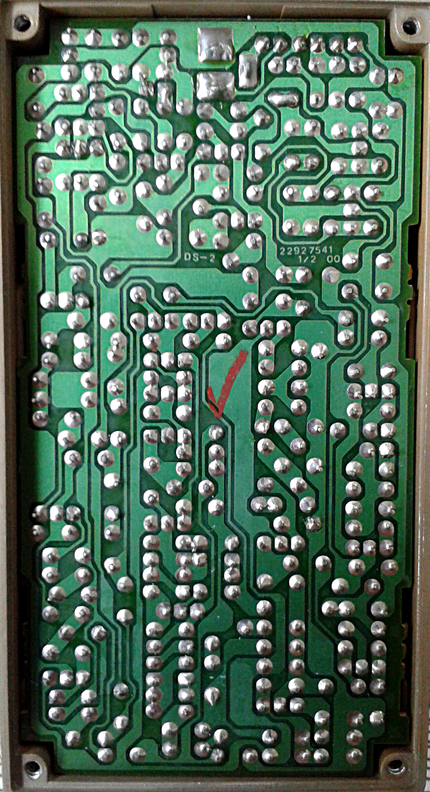
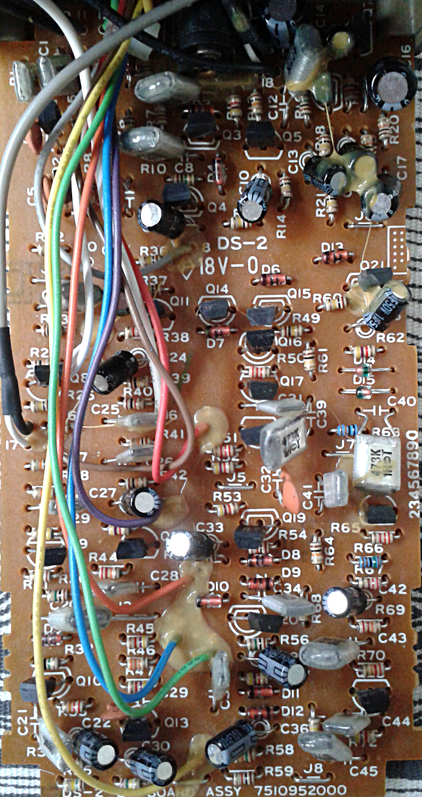
Boss-DS2-guts1

Modernish traces and the board looks rather full. If we look at the schematic, we find at least four gain stages and as most interesting single feature – no opamps. All the distortion is coming for all discreet design. Two JFETs and two BJTs do create sort of a discreet opamp for the distortion control. In addition of those, we see soft and hard diode clipping stages. The circuit does remind me a bit of the design inside BD-2 Blues Driver. Only remind. The similarities aren’t that notable. As features, we have the standard gain/tone/level setup. Plus something called a Turbo mode. The electronic turbo switch seems to add a lot of punch to the first gain stage. One can use a latching remote switch to toggle the mode on and off.

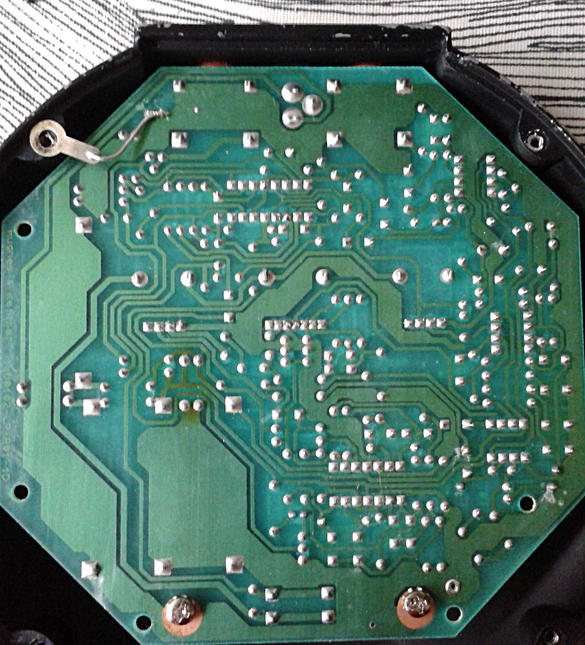
Boss-DS2-guts2

The electronic and board design, build quality and, well. Everything else is on par with the whole Boss catalog. Not super interesting, but i see nothing wrong with it either. Nice box.

How does it sound?
Like a machine that transforms squeeky clean amp to a Marshall stack with everything maxed (or with all settings louder than everything else). Two modes are for high gain distortion, or even higher gain distortion. With the gain setting one can get rather Marshallesque overdriven tones as well, but the brightest shine is still on when that control is maxed. All the controls have sufficient, usable ranges. The amount of distortion isn’t has high as for MD-2 Mega Distortion, but still high. There is slight overdrive-style mid hump present, which without a doubt a feature. This pedal doesn’t sound bad at all. It sounds pretty much  the same as the guitars on those Nirvana albums.

Hughes & Kettner Warp Factor

HK-WarpFactor

What is it?
Hughes & Kettner Warp Factor from early 00’s.

The unit here has seen a lot of use before landing in to my collection. There are good reasons for pros and cons and both are weighting more than with usual pedals we see. Since the positive notions are all mostly on the sound, i think it’s best too look at everything else first. Opening the bottom plate shows a massively sized modern board with lots of joints.

HK-WarpFactor-guts1

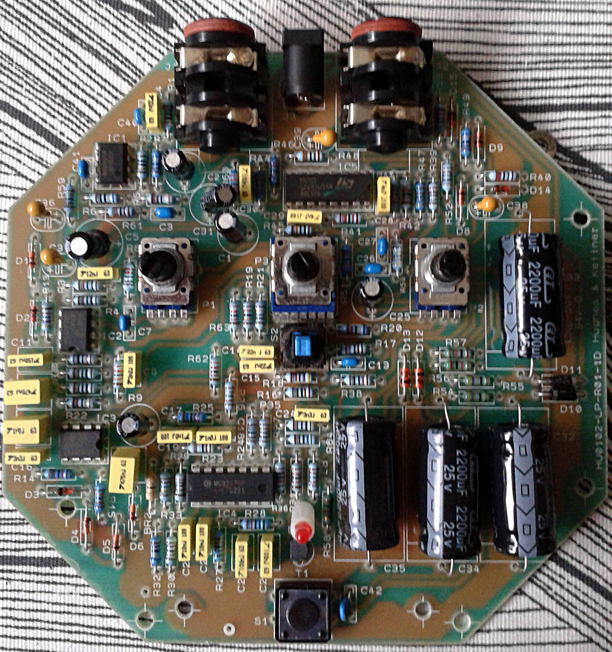
Flipping the board over. Everything is board mounted and number of through hole components is high. Not a bad looking board design, but as i am a huge fan of symmetry, it doesn’t mean that much. Note the four 2200µF filtering capacitors. That’s what we’ll need when the design calls for 12V AC power supply. The supply is rectified to DC on board, which does explain a part of the board and enclosure size. The schematic can be found on the web (try freestompboxes.org), but since it isn’t behind simple image search, i’m not posting it for now.

HK-WarpFactor-guts2

Design is rather huge, and the power supply section spews out +15V and -15V, with reference voltages per each polarity. We could say the unit runs at 30V. So this time there is a fairly good reason for running the effect with 12V AC supply. Circuit design and supply together, however, make the pedal big. And to have a need for 12V AC supply may also be a hassle. But then again, the 30V swing offers headroom that we won’t reach with with 9V DC supply.

As for features, we have electronic bypass switching, level and gain controls, plus a deep tone control called warp. The sub switch boosts lows and low mids to a degree which is rather impressive.

Now, if the size was a bit smaller and this accepted more usual power supply…

How does it sound?
F*n awesome. From Marshall 2203 JCM800-styled massive rock overdrive/distortion to sheer metal madness, this unit sounds great on any volume level. From bedroom practice amp level to loud rehearsals and gigs. I’ve been a fool for many metal distortions before, but  none of them has ever left a impact of this size. Usually the drive/gain setting for metal distortions works in maximum setting or in some cases at minimum as well. For this one, the control range is simply usable all the way of the sweep. Added low frequencies from the sub switch make Boss HM-2’s crushing lows feel like a mosquito passing by. While the usability may be limited, we still have a colorful range from rock overdrive to rock distortion to metal distortion to massive metal sounds. Very impressive pedal.

EHX Holy Stain

EHX-HolyStain

What is it?
Electro Harmonix Holy Stain from XO series.Made in united states in 2010(ish).

Once again. Put a pedal, any pedal, for sale with a broken switch and a price tag around 20% of a new unit. You bet i’ll be there, bombing your email and throwing the little money i have against the computer screen. This was one of those. Simply swapped the defected 3PDT bypass switch and did a little cleaning. Unit works as it should. Or at least close to it.

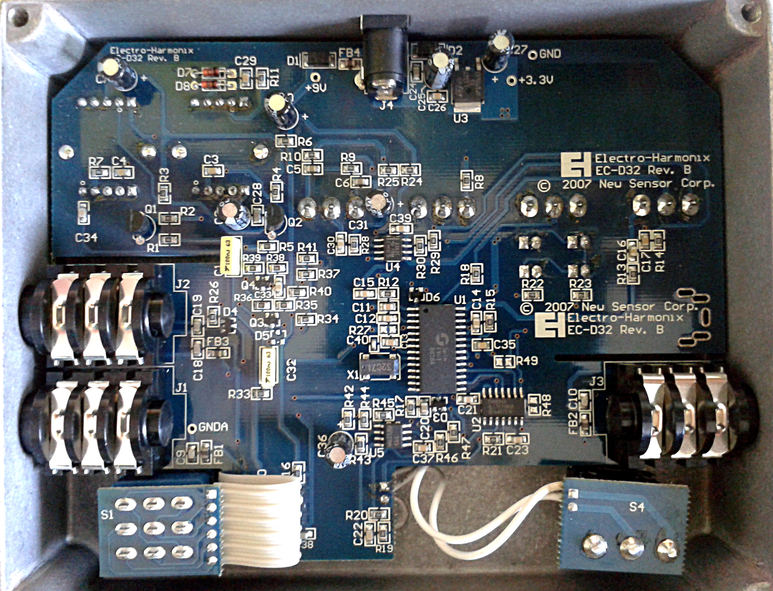
Checking out the insides shows a DSP based big board. All done in current, dull EHX manner. I’m guessing the drive/fuzz/distortion is done with transistors and the rest is digital. It’s sort of like a modern hybrid.

EHX-HolyStain-guts

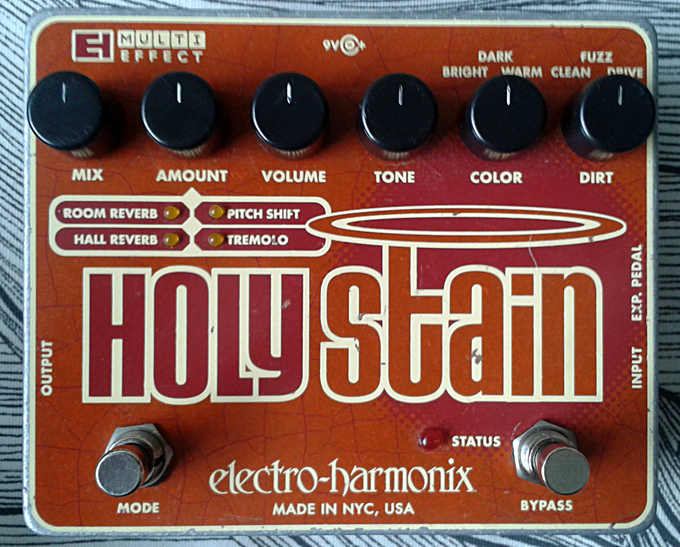
Let’s talk about the features a bit. To begin with, the Holy Stain looks like a cross breed between a Muff and a Holy Grail Reverb, with a few added extras. The main stomp switch is our bypass that sets the overall effect on and off. The basic side is controlled by two rotary switches, a tone control and a volume control. The first rotary selects between clean, fuzz or drive modes. The second selects overall tone color between bright, dark and warm. Tone control acts pretty much like the one on big muff pedals and volume is rather self-explanatory. All that is used to set the base tone.

Then we have the rest. Foot switch selects the digital effect mode between room reverb, hall reverb, a pitch shifter and a tremolo. These four modes share the two controls for all of them, the mix and amount. Mix sets the blend of this extra effect against the clean/fuzz/drive tone coming from the first part. The amount acts as a decay time setting for both reverbs. It also sets the frequency of the pitch shifter mode and the rate of the tremolo. Amount can be rocked with a external expression pedal, which makes the tremolo mode a lot more interesting and the pitch shifter to have similar features to a Whammy.

Limited, but still quite a set of features. These usually come pretty cheap, even as new. But if you think about the features and compare them to what you actually use – or want to use. For me, i would probably gone for separate drive and effects sections with a stomp to engage/disengage the effects other than the drive side. Sure there is notable amount of outside the box thinking when the designer has set the features, but…

How does it sound?
I’ll start with the good and go on about the bad a bit later. The Fuzz mode is actually good with its crisp lead sounds. On fuzz mode, the color settings are usable too, even though i tend to leave it on warm. Both reverbs are ok too, with a slight note explained further…

Off to the bad. First off, to me (yup, may be heresy, but i’m talking about my taste) the clean and drive modes are just bad. First thing that comes to mind is the horrible distortion section found in Digitech RP6 multi-effect. Color and tone controls won’t save those, no matter what. Other reason why the RP6 pops up to mind is the latency. All the digital effect modes are fine if you have your mix control below 35% mark. Higher than that, the guitar signal has already gone out of the speakers before the verbs/shifter/tremolo even think about touching the signal. Similar digital lag as heard on RP6.

One very good mode with almost usable multi-effect section – if you keep the mix down enough for it to work right. Otherwise… no.

Colorless writings, part 15 – Fuzz vs. Overdrive vs. Distrtion

I found myself in very weird situation. Today, i simply had nothing to say. But i can’t pass on a colorless writing, as that would mess up my OCD. I did start on one more demanding subject, but i realised i won’t be able to finish it without messing up my schedule. So i just needed to drop that topic (it’ll be featured as part 16)  and write something else instead. I needed a subject that would be easier to cover. So why not bring up this age old question about how to categorise the effects that produce distorted tones.

Fuzz versus Overdrive versus Distortion?

Exactly. How do we tell which one is which? How can we be certain that a Tubescreamer is in fact a overdrive effect rather than a distortion? We can’t. It’s more likely all in the marketing speak than in real world electronic designs. Let’s start with the early days of distorted tone. Legend has it that certain guitarist for a group called The Kinks used a razor blade to slash a cheap combo amp’s speaker cone to get that distorted sound for one 60’s hit recording. Later in the sixties we were blessed with a ton of fuzz effects that were designed to mimic that broken speaker cone. The most basic fuzz design was (and still is) called a shunt-series feedback amplifier. The circuit was well known before any fuzz pedal was  ever produced. The fact that a guitar’s output is enough to push this circuit to sweet distortion wasn’t exactly mentioned on the text book the circuit was originally from. But there you have it. A very first electronic guitar effect that gives out a distorted tone.

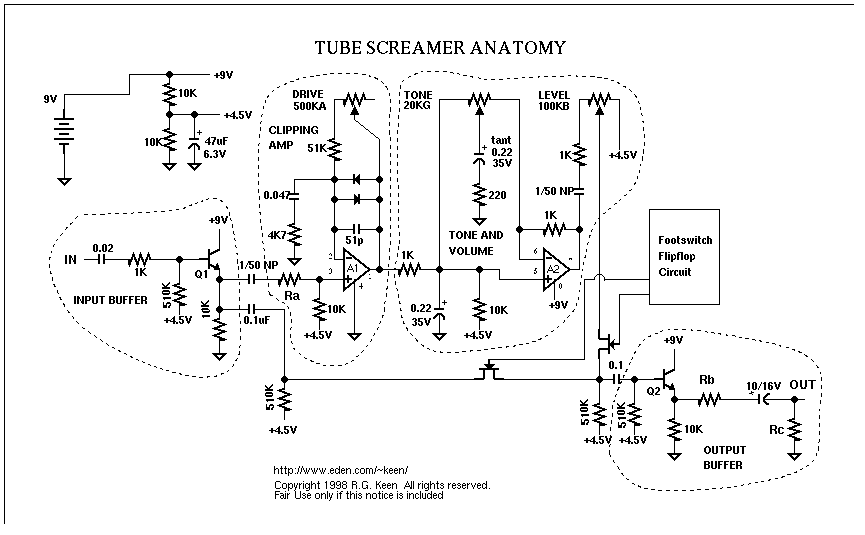
In early seventies other types of pedals started to emerge. Some were called boosters and some were called distortion boosters, but they were still mostly boxes with fuzz sounds coming out of them. Later in the seventies, the dawn for Tubescreamer, DOD OD250, MXR Distortion+, Boss OD-1, DS-1 and ProCo Rat widened the spectrum of distorted tones available. That may not be complete list of units that suit the bill, but it’ll get us going. It must have been in those days when the split happened.

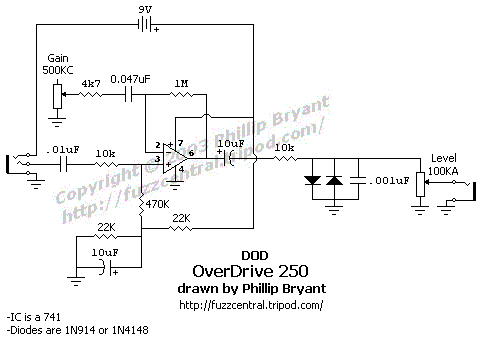
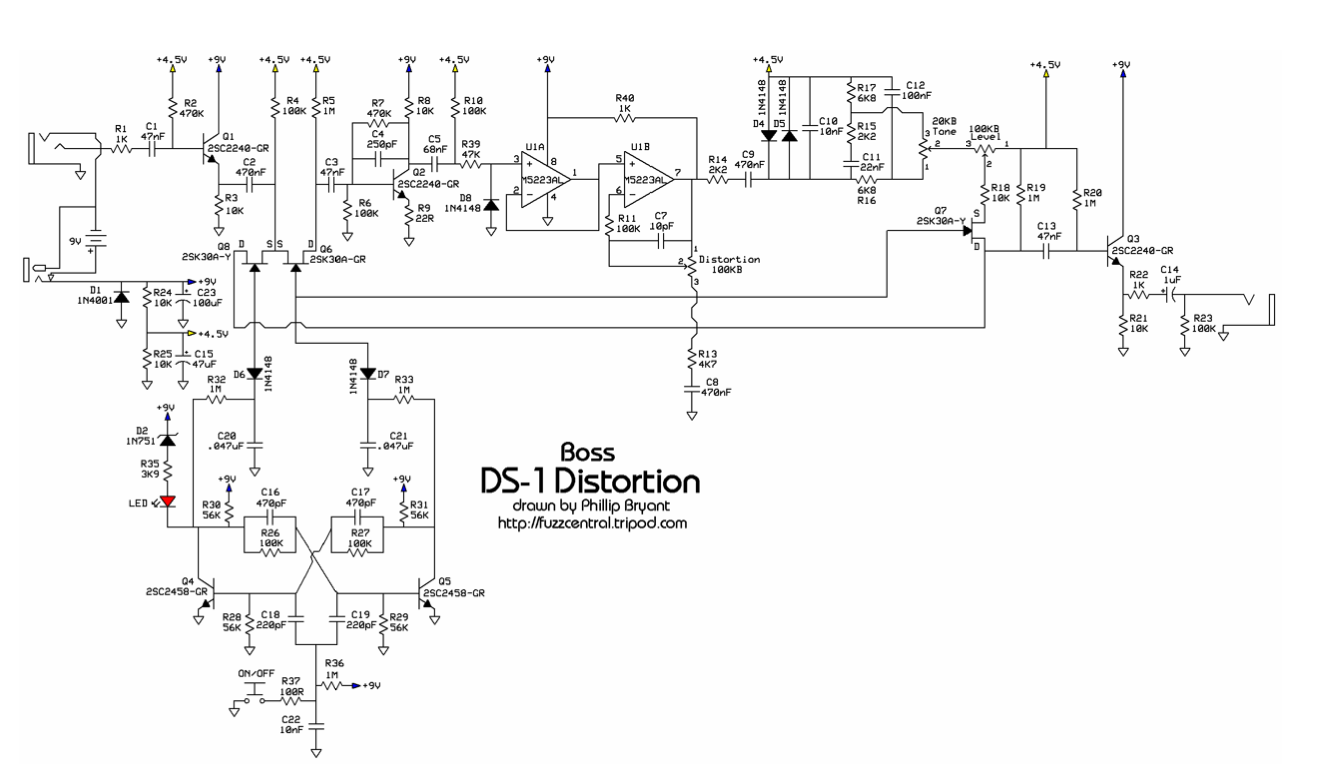
Let’s look at the OD250 and Dist+ first. These two pedals share the circuit topology with each other. Main difference is the type of hard clipping diodes after the gain stage. OD250 uses Si diodes with lower voltage drop and more volume, while Dist+ has Ge diodes with higher voltage drop and less volume. This means that the sound of these is very close to each other. Nevertheless, the former was (and still is) marketed as Overdrive/Preamp and the latter as a Distortion. You guys must now be getting my point?

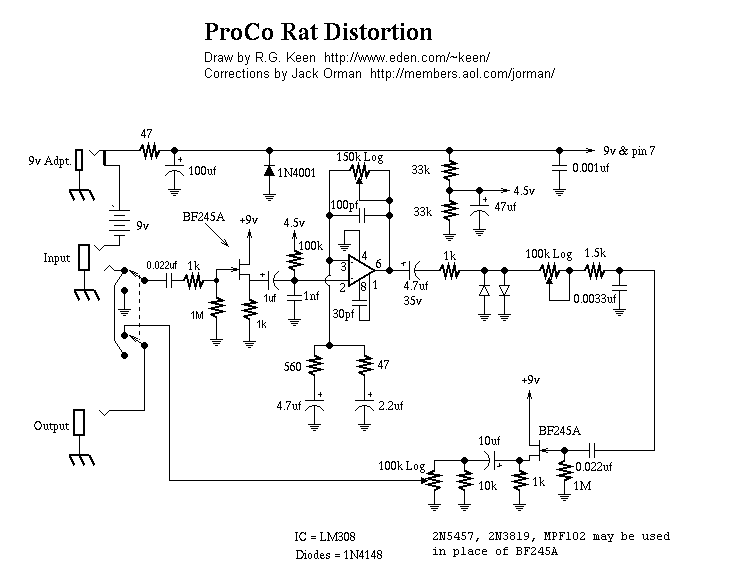
Boss DS-1 works in same principles as the two, but it has more driving stages. ProCo Rat has similarities too, although its gain control isn’t even close. I’d like to point out that some Rat versions had a text “fuzztones for connoisseur” printed on their circuit boards. So is the classic Rat a Distortion or a Fuzz?

The debate may still be going on which one was the first to take clipping diodes to the feedback loop of non-inverting amplifier and creating softer clipping. Usual answers to this 40 year old debate would be TS808 and OD-1. I have no idea which was the first, so i’m not going to waste my time in speculating about that. There are hundreds and hundreds forum posts about this subject to be found on the interwebs. In case you are interested. These pedals with soft clipping are usually referred as overdrives. Although, there are numerous distortion designs out there with similar clipping diode arrangement.

To sum it up?

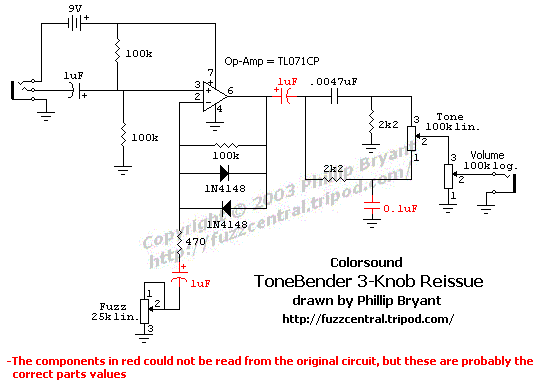
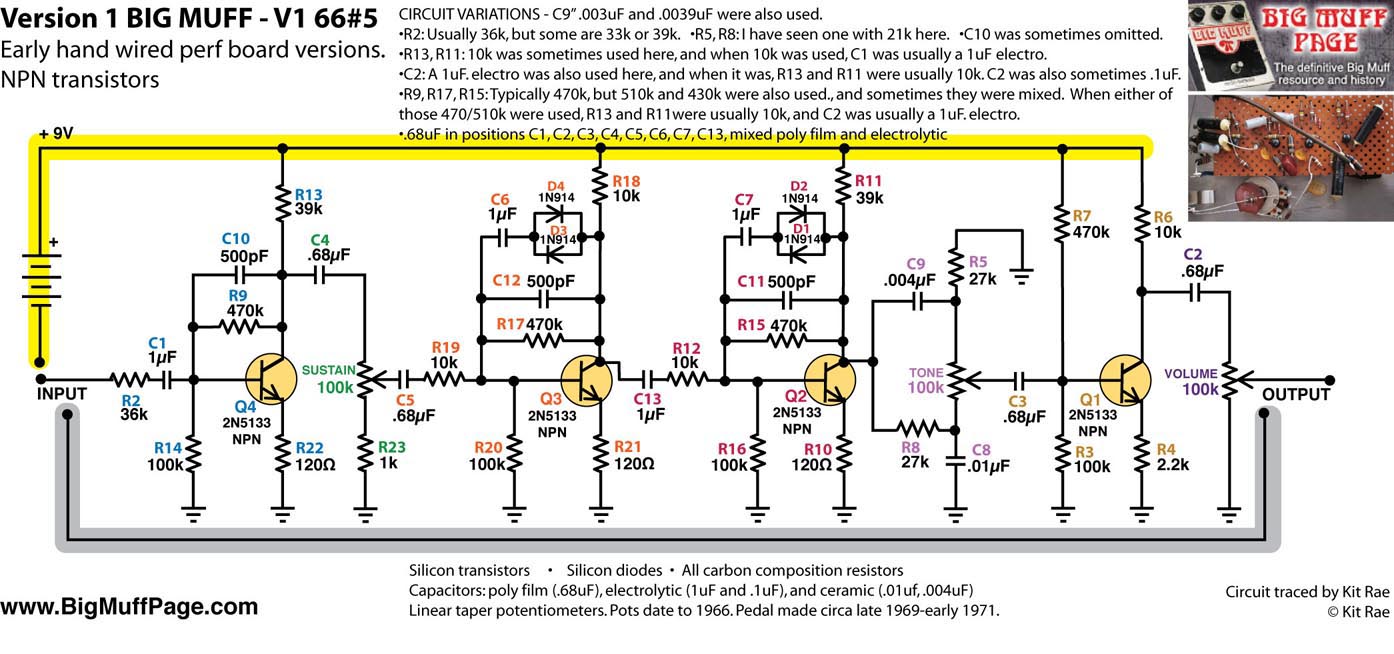
A fuzz. This should the easiest one to point out. No clipping diodes and no opamps. Just a bunch of transistors driving the hell out of each other in order to create clipped or distorted signal. But is it that simple? As usual, no. Take a EHX Big Muff Pi for example. This design (and its hundreds of derivatives) is often referred to as a fuzz. Another nice examples would be Anderton’s tube Sound Fuzz and Colorsound Tonebender reissue from the 90’s. I’d call all of those distortions or overdrives rather than fuzzes.

Going forward with the Distortion. This one may be simpler. Hard clipping diodes. But even here, this may not always be the case. There are pedals like ZVex Distortron that is usually considered a distortion, but to my ears it sounds (without going any further on its electronics) a way more like an overdrive. As the earlier example with OD250/Dist+ shows, the design with hard clipping could also be called just about anything.

Overdrive? Now this leaves us with soft clipping and thus, these should be easier to identify. But no. If we take a look at good ol’ Way Huge Red Llama overdrive, we’ll see it’s way closer to Anderton’s Tube  Sound Fuzz than any other OD we’ve seen. There are a number of JFET-based overdrives too. These may not have clipping diodes in them at all, but they will still offer full soft clipping sounds.

Is that what you call a sum of the subject?

Well. Maybe not. But it does show us one thing. There isn’t one clear, or even fuzzy logic to when we call a  circuit a fuzz, overdrive or a distortion. It’s all in the head of designer at first – then in the heads of the people at the marketing department and after that – in our heads.

Sure it would be easy for me to think that these pedals are fuzzes, these  pedals are overdrives and these pedals are distortions. But that won’t do. We can’t define something that’s completely undefinable. And since there is not a way to define which is which, we all may face the situation where our newly bought a) fuzz sounds like a distortion, b) fuzz sounds like an overdrive, c) overdrive sounds like a fuzz, d) overdrive sounds like a distortion, e) distortion sounds like a fuzz, or f) distortion sounds like an overdrive.

I’m going to leave you with one summing thought – there is no way to define or categorise which is which, from electronic point of view. It’s all in the marketing and in our heads.

This does easily apply to all the other pedal genres as well.

Systech Phase Shifter

Systech-PhaseShifter

What is it?
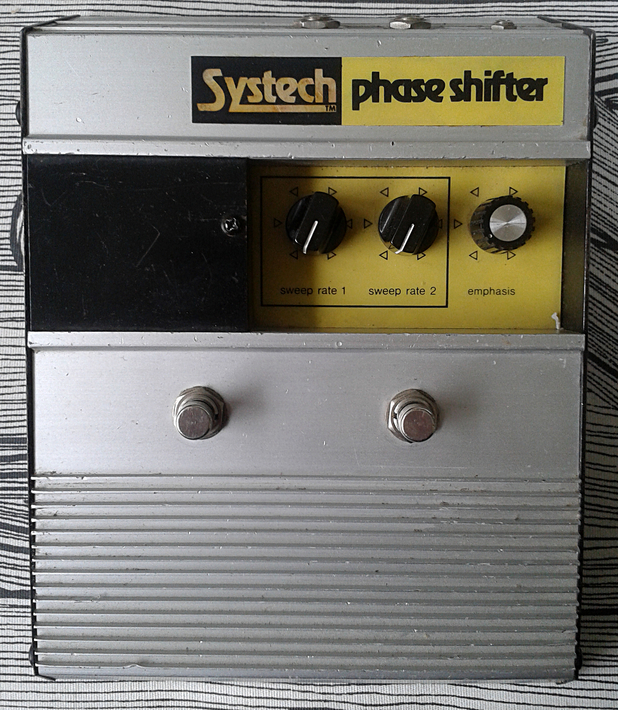
Systech Phase Shifter. Made in USA in mid-70’s. Pot date codes considered, the unit has most likely been built in 1974.

I’ve got this unit more than a year ago and after initial testing it just sort of was forgotten to a spot on my museum shelf (for the units manufactured before 1980). As the testing didn’t raise much more but eyebrows, this didn’t get much more attention. But about a month or two ago a friend from nearly across the globe acquired one after decades of not having one (yeah, Pink! I’m talking about you!). His memory was that the unit was really good sounding and extremely deep phaser, almost pushing the limits of a phase shifter.

Systech-PhaseShifter-guts2

Sadly. He wasn’t correct about the pedal. Or he was. But not about this pedal per se. It did come as a surprise to me too. These phasers have apparently three different revisions of the Systech Phase Shifter. According to the dedicated forums, the first unit was in similar silver/yellow/black housing like this one, and the circuit design in those were pretty standard 4-stage phaser. According to same sources, this board revision is the middle one. Similar enclosure, but eight phasing stages. Not completely different to MXR Phase 100. The third one is the winner. This is the one with silver/red/black colored enclosure and optical design instead of JFET phase stages.

All three versions have a ramp feature for the LFO speed, which is very nice feature. There’s also an independent rate control for both foot switchable rate settings. Ramp works very well and has very nice gradual speed up and down.

How does it sound?
Sadly. Quite dull. This would stay behind just about any phaser if it wasn’t for the ramp. There is some notable personality to its overall phase, but still it is dull. Well working controls and there’s still some usability in there. Like most Systech pedals, this is a classic and highly collectible. Nice thing to have, but will this see much use? I doubt it.
« Older posts Newer posts »

© 2025 killall -9 humans

Theme by Anders NorenUp ↑