Author: mirosol (Page 19 of 29)

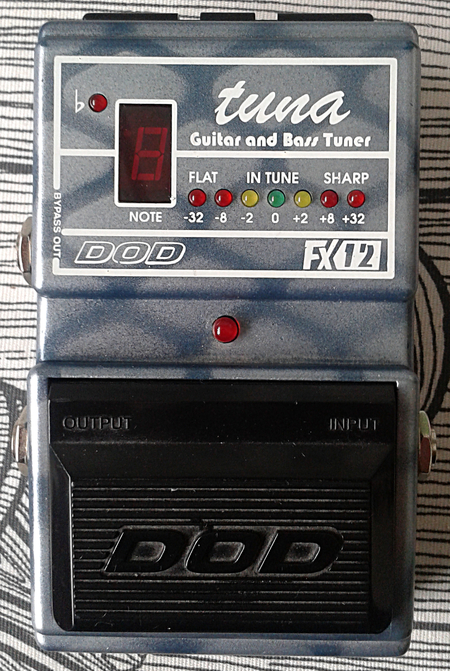
DOD FX12 Tuna

DOD-FX12-Tuna

What is it?
DOD FX12 Tuna. Guitar and bass tuner pedal. Made in USA around 1996-98. The enclosure is in line with the last US made series and the original box doesn’t have “made is USA” printed on it. There is no chinese made “V” version in existence. I’m thinking that the box was designed without “made in” notion, because it was planned to continue manufacturing FX12 in china with other VFX models.

DOD Tuna is one of the first pedal tuners to hit the stores in 90’s. The idea and purpose is there, but the reason why these units were basically butchered in sales when compared to Boss TU-2 is clear. It is a bad tuner. Collectible? Maybe, but a useful tuner? No. Also, that may be the reason why this design never made it to the chinese mass production in the end of 90’s. The fishnet paint is cool.

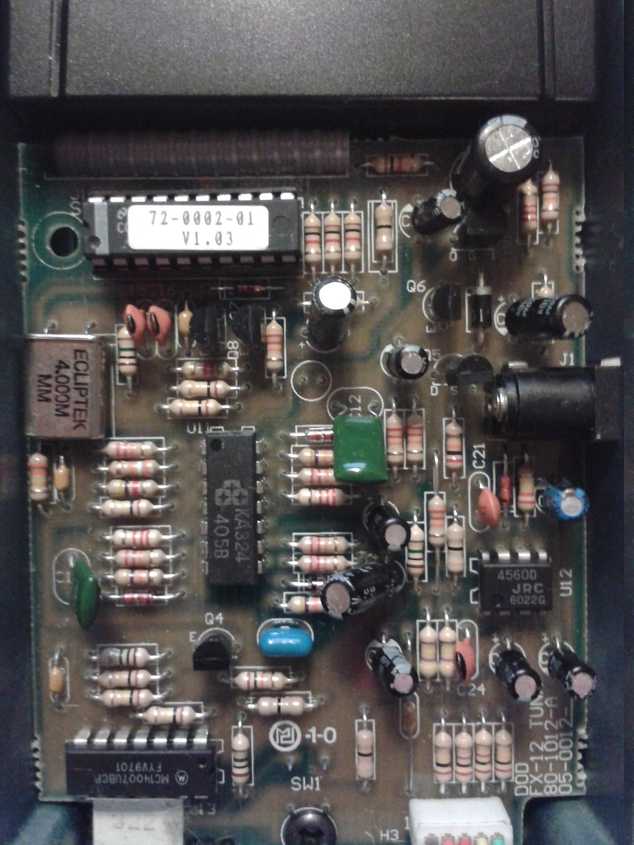
DOD-FX12-Tuna-guts

The guts seem well made and the aesthetics of the whole pedal are nice. It’ s not bad looking box at all. But sadly, all the good things end there.

How does it sound?
It’s a tuner so it doesn’t exactly sound like anything. It’s not even supposed to. It’s supposed to show you the frequency and note on the LEDs. It does that. Sort of. When i tried to tune my guitar with this unit, it showed every string to be in tune. When i strummed a chord.. No. Annoying little thing. I’m keeping this as a collectible novelty and a historical item. But to use it? One needs to be completely insane to even think about using this on his or her board. It is crap.

Tokai TMD-2 Metaldriver

Tokai-TMD2-MetalDriver

What is it?
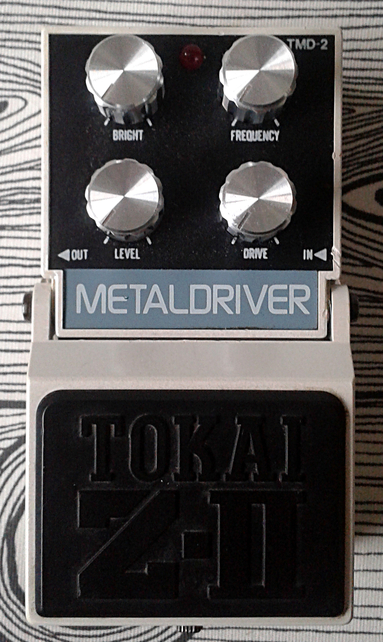
Tokai TMD-2 Metaldriver from Tokai Z-II Super Effects series. Made in japan somewhere around early to mid 80s.

Saw this on sale and couldn’t let the guy rest until we had a reasonable deal on the unit. I’ve been into pedals for a few years at the time of writing this, but i had never before ran into Tokai branded pedals. Which of course piqued my interest right away. For some reason these units do not seem to be hot, or they may be too hot. Very few units are available through usual internet auctions. As most of the items from the 80s with labels “Tokai” and “Japan” are instant collectibles with hefty price tags, the effect pedals by Tokai Gakki seem to sell for cheap – at least if you happen to find one for sale.

Now, first thing i noticed was that the knobs have been replaced. Wouldn’t have noticed it if it weren’t for Effectsdatabase. As the knobs are simple push-on type that tend to become loose with sunken 15mm T18 shafts, my guess is that one of the originals went missing at some point and one of the previous owners simply replaced the knobs with something that simply fits. It’s not that bad and i can live with the “error”. Next up, the Tokai Z-II series logo on the stomp lid’s rubber… Wow. Man. I mean Wow. Instant flashbacks from playing Ikari Warriors and Operation Wolf back in 1989. With all the rest about the outer shell correct, my hopes for the unit kept rising.

Tokai-TMD2-MetalDriver-guts1

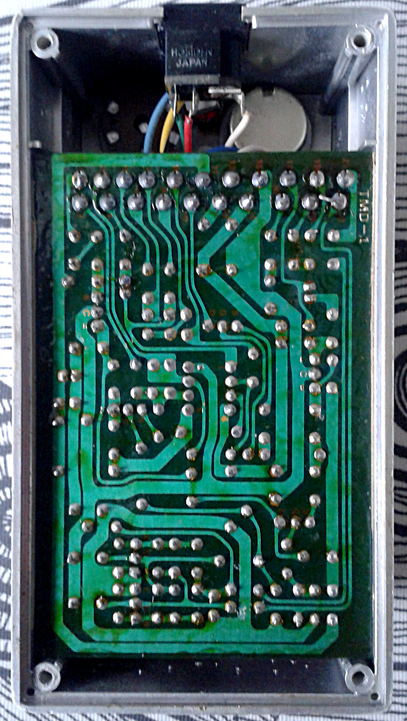
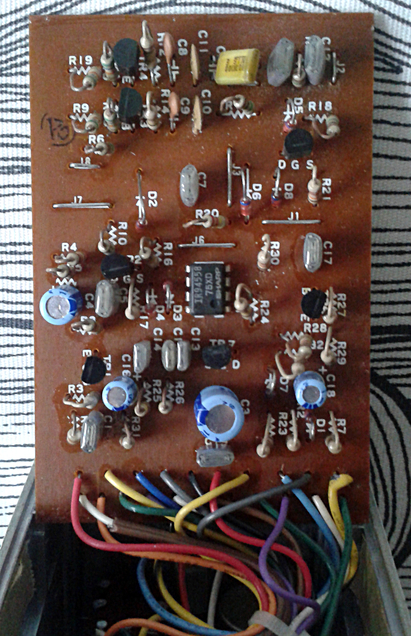
Under the bottom plate, there’s a 30 year old piece of cardboard acting as an insulator between the bottom plate and the board. The board being thick, strong and hand designed. Exactly like most of the japanese units from that era. The reason why so many of the units from that era are praised. Looking at the components give out some details, like Sharp 94558 opamp (which i’m guessing is a Sharp’s make of the JRC4558), standard signal diodes in clipping formation and a few FETs for buffers. Looking at the pots, the overall design brings Pearl OD-5 to mind. One of the pots is a dual gang, which acts as a giveaway. The controls for Level and Drive are self-explanatory. The Bright controls acts as your standard tone control with opening the high end when turned clockwise. The Frequency control is a powerful EQ control that cuts the bass on CW and treble on the CCW. I’ll leave the technical design at rest for the moment. I’m sure i’ll revisit the board with a magnifying glass at some point…

Tokai-TMD2-MetalDriver-guts2

On the outside, the enclosure has a lot in common with Boss housings. But once the box is opened, the harsh reality unfolds. It is in fact a thin aluminum enclosure. Thinner than Bosses. I don’t see any reason why this shouldn’t be able to take a few years on the road, but it is still a lot weaker housing than many other boxes of the era. I must say that near par enclosure design is the weakest link in this unit. So it can’t be all bad?

How does it sound?
And it isn’t. Soundwise it is somewhat close to Pearl OD-5. Without doing any footwork on the design, i strongly suspect that it is in fact a Pearl OD-5 with a marketing twist. Does it sound like a decent and usable overdrive? Yes it most certainly does. With gain maxed, level at 12 o’clock, bright at near max and frequency at the middle it sounds very, very good overdrive. Where as thrashers tend to love old TS9s in front of Marshall JCM800s, this, in my opinion, should serve a lot better in that situation. The controls let you even get decent mild, bluesy overdrive tones out of it. Versatile overdrive box with good EQ/Tone controls. Now does it instantly give out the “Metal” sound? No. It doesn’t. But it is still a very good sounding unit.

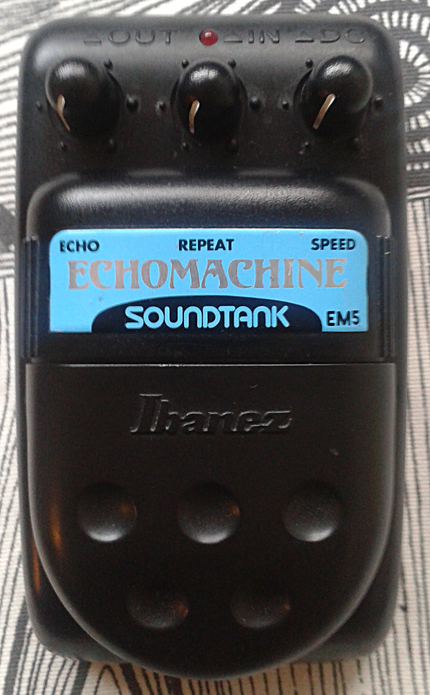
Ibanez EM5 Echo Machine

What’s a better way to continue after DL5 than the other delay/echo from the same series…

EM5

What is it?
Ibanez EM5 Echomachine in plastic enclosure from later soundtank series. Made in taiwan around 1997-99.

The Internet Archive’s wayback machine has a snapshot of Ibanez site from june 1997 and on that page there is a mention the EM5 being the new and exciting pedal in the series of 18 different pedals Yes, 18. So it’s safe to assume that all the existing EM5s were manufactured in between 1996-1999, since all Soundtank production was taken over in 1999 by the next series – the Tone-Loks. In addition to those 18, the rest of the Soundtanks are in fact from the original, metal housed Soundtank series of six different dirt pedals. Namely PL5, TM5, CM5, SF5, CR5 and MF5. Only four of those made it to the plastic series as a continuation, the four being TM5, CM5, PL5 and SF5 (which had it’s model name revised to FZ5). So the latter Soundtank series produced 14 new designs to the bowl and it left out the super good Crunchy Rhythm and super bad Modern Fusion. Sort of like a ski jumping scores. You leave the best and the worst out.. All this should total at 20 different designs. Maybe i should write a Colorless Writings episode about soundtanks at one point. Or maybe even start a new writing series on history of some brands…

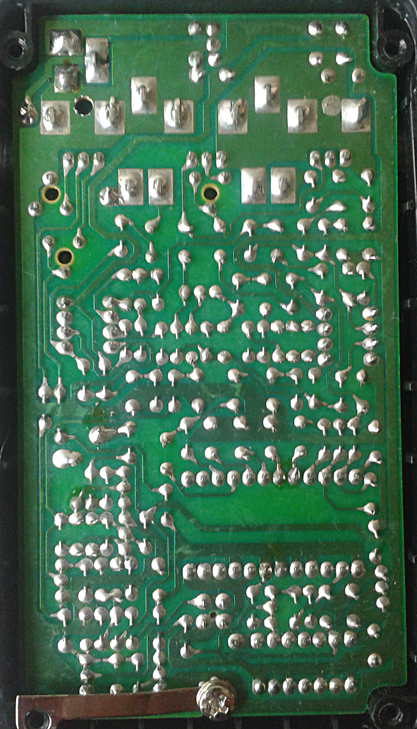
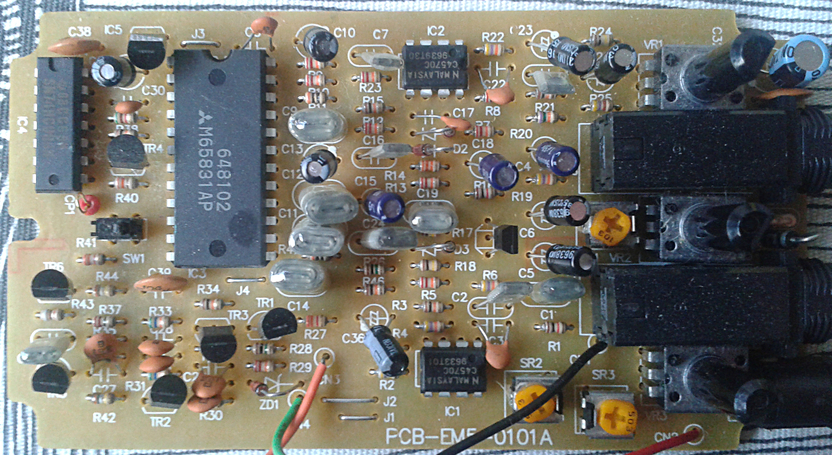
Ok. Let’s get back to business. The EM5 Echo Machine is a digital tape echo simulation delay/echo. I got this unit from the bass player of Versus All (huge thanks to Jason!) in perfect, nearly unused condition. Opening the bottom plate up shows your standard modern Soundtank traces. This time somewhat neater work on the joints than most other taiwanese Soundtanks. And the board is pretty crowded.

EM5-guts1

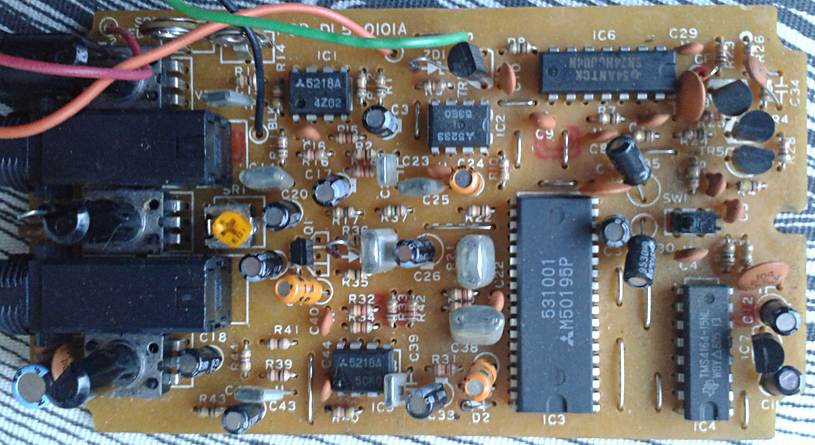
The digital chip responsible for the sounds is Mitsubishi M65831AP. Like many other Mitsubishi chips utilized by Ibanez, this one is too one of those you may find in many karaoke devices. The dual opamps used for buffering and mixing are C4570C, which are not your average choice, but they do perform quite well in this circuit. The schematic for the effect is up at Free Info Society.

EM5-guts2

As stated above, the EM5 Echomachine was apparently manufactured only for about two years, which means that the number of unit produced is somewhat low. Lots of maybe’s on that last sentence, but that’s all based on the little information that is available. If this is the case (and it probably is), these units should be quite valuable. At least when comparing to PL5 Power Lead or TS5 Tubescreamer which were the two most selling designs on the series. But then again. The TL5 Tremolo isn’t as valuable as it should be, so why this one should stand out?

How does it sound?
Like an angry tape echo unit gone slightly mad with the tightness. The sound is without a doubt one of the best digital tape echo emulators of its day and it has not been killed by time, not even now. It has tightness that sounds personal. Nice collectible, and most of all, usable unit.

Ibanez DL5 Digital Delay

DL5

What is it?
Ibanez DL5 Digital Delay from later Soundtank series. Made in taiwan in mid 90’s.

More from the better side of the palsticky soundtank series. These units are well used by almost everyone. It’s rare to see of these in mint condition and mine isn’t exception. Some wear and nicks, but otherwise clean look. Taking the bottom plate off shows a board layout with one big chip in there. Could it be…

DL5-guts1

Yes. The Ibanez’ weapon of choice for digital delay circuitry. Mitsubishi M50195 with 4164 DRAM chip as an companion. It may be more complex by the design than most current PT2399 based delays, but to my ears, it’s not any worse. On the contrary. Check the schematic and see for yourself. One is online and can be found via google. There are couple 5218A opamps that take care of the mixing and buffering.

DL5-guts2

Board features standard Ibanez JFET swicthing with 74HCU04 logic chip and a trimmer to handle delay time range. The board is in good use with not much free space. Neat. Indeed.

How does it sound?
Warmer than most competitors with a hit status. Nice analog feel to it, but with a lot less noise and sharper sounding control to repeats than  BBD-clocked analog counterparts. It does wide range of delay timing and can be mixed all the way up to being almost 100% wet. No wonder it’s still a popular and widely used pedal. Good delay with simple controls. Max the repeats and you’re off to noise land with neverending feedback.

Colorless writings, part 9 – The Switcheroo

Back on the subject of bypass switching are we?

Partially yes. But i think i’d like to say thing or two more about switches in general. Actually. I was sitting on my desk that i use as work bench and killing myself with a build. That’s when the title of today’s Colorless Writings came to me.

As i personally hand-wire everything in my builds, i only use switches with solder lugs. In the time i’ve built and repaired pedals, i must have soldered on way more than 600 switches altogether by today. At first, these mechanical components seem solid. But if you take a closer look of how those are made, you might convince yourself that the first impression isn’t as accurate as you thought.The pins/lugs are held in with plastic housing. Now, those may seem sturdy enough, but when you’re soldering your wires to those lugs and apply just a little too much heat and pressure, you can see and feel the lug moving. Once the lug moves a fraction of a millimetre, the structural integrity is compromised. In a sense, those components are probably the most fragile thing in any build. I don’t want to think how many semiconductors i’ve soldered on in all this time, but never burned any transistors by accident (yet). But have i burned switches? Many. And if we count the ones that have landed back on my desk with them becoming faulty after six months of use, there are a few more. Someone on the mighty interwebs said that firm, decisive and quick is the way to go with all the switches. I couldn’t agree more.

How do the switches work?

The most common toggle and stomp switches we use for pedals are SPST, SPDT, DPDT and 3PDT (of course there are others as well…). Next you might ask what do these initialisms mean. Well:

  • SPST – Single Pole Single Throw
  • SPDT – Single Pole Double Throw
  • DPDT – Dual Pole Double Throw
  • 3PDT – Triple Pole Double Throw

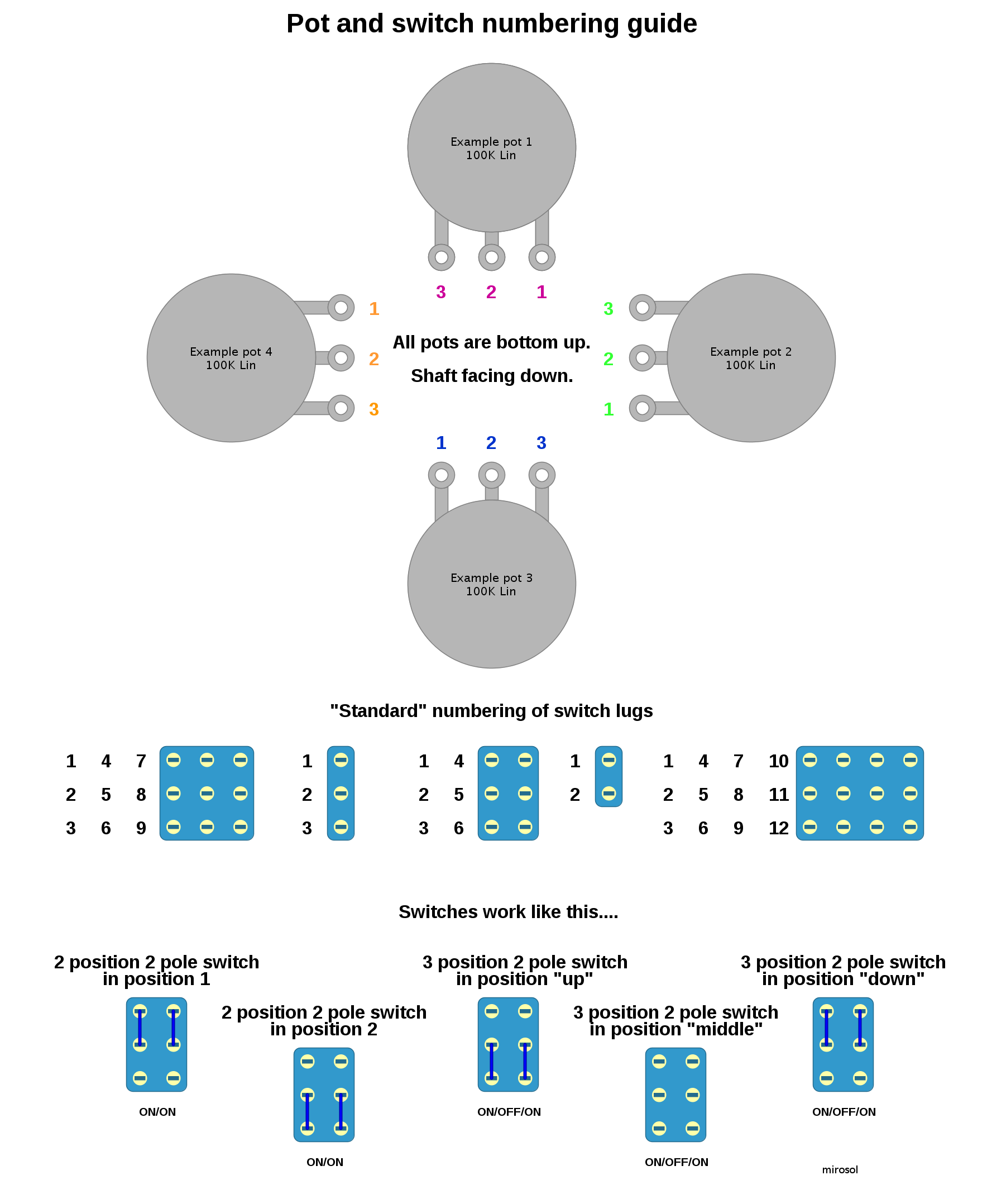
As you might have guessed, the SP/DP/3P part means how many vertical poles the switch has. The second part tells us the effective “throws”, or positions. This may be a bit misleading, since there are different ways the toggle connects the lugs. First, the SPST has only two lugs. The other position has these two lugs connected and the other has them apart. Simple, right? But then we get to the SPDT which has three lugs. There are two different toggle types of this switch. On-On and On-Off-On. Meaning that there’s actually three effective throws on the On-Off-On switch. One position connects the middle lug to the upper lug, other connects the middle lug to the lower lug. Middle position connects nothing to nothing. The DPDT has six lugs and those work exactly like the lugs on the SPDT, except that there are two vertical poles that both respond to the same flick of that switch. Same thing with 3PDT. The nine lugs represent three different poles that all connect or disconnect the same way as SPDT. There are just three of those vertical poles connecting and disconnecting at the same time. 4PDT has four poles, but those too act in the same way. Different poles can be used to connect and disconnect different things on a circuit – for a single flick. I’ve drawn a memory guide for myself a long time ago. It also includes the pot lug numbering convention that i’ve adopted for my use.

Other types of switches you might find on a pedal are tactile or momentary switches, rotary switches and possibly On-On-On types.

The tactile and or momentary switches are very common and usually used in electronic bypass switching circuitry. These come usually in two different configurations. Namely NO and NC. These mean that there is always only one “pole” that is either connected or unconnected when the button isn’t pressed. NO is short for Normally Open (not connected) and NC is short for Normally Closed (connected). Now, when you push a button that is NO, the connection is made for the time you are pushing the button. Once you release your hold, the connection is gone. Momentary switches come in all the variation of different numbers of poles with usual On-On configuration. I haven’t seen this kind of switches on pedals, since the circuitry behind the 3PDT momentary switch is usually complex – unless it is used for momentary feedback or mute control.

The rotary switches are fun. These come in many, many different configurations. For example, 2P6T and 4P12T. First part of the type “code” is for the number of poles. Usual number of poles are one, two and four. Second part tells us how many positions the pole can have. 6T is for six turns and 12T is for 12 turns. Common boutique use for these switches is to place different cap values or different clipping diode arrangements on the turns. For the cap value switching, the simplest example would be the good ‘ol Rangemaster with 1P6T switch. On that configuration, the input of the circuit should be placed on the middle pin. Then the board should have six different values for the input cap. Let’s say 4n7, 10n, 22n, 47n, 120n and 470n. All those caps need to have the other lead at the transistor’s base, while the other leads connect to the six lugs on the switch. This way the Rangemaster can be used from treble booster to bassy wide range booster and everything in the middle. There are, of course, numerous different pole and turn variations of these switches available.

The one type that’s quite rarely used in a pedal is the DPDT On-On-On switch. There are exceptions. You may have come across one of these switches in your time. Most Les Pauls, SGs, 335s and basically any of the guitars with two humbuckers have this type of switch for the pickup selector. The up and down settings work exactly like in On-On switch, but the middle position is different. While down position connects middle lugs to the upper lugs and up position connects the middle lugs to lower lugs, the middle position has fthe first pole’s middle lug connected to upper lug and the second pole’s middle lug is connected to lower lug. This gives out even more switching options than the previous types.

Yamaha MBD-20M Multiband Distortion

Yamaha-MBD20MII

What is it?
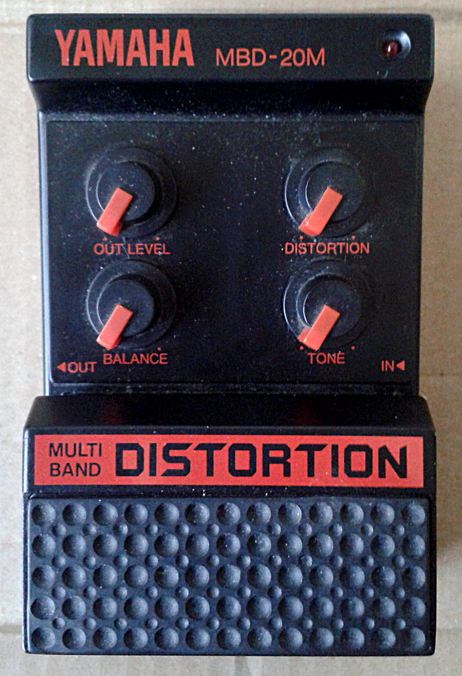
Yamaha MBD-20M Multiband Distortion. Made in japan around mid 80’s.

Got this unit from a guitar guru J. Lindén some months ago. He was selling the unit for a very decent price and i almost did let it go. We were at some gig back then and he said to me that “you’re stupid if you don’t take it”. So i did. Reason i wasn’t too interested on the unit at first was the non-uniform size of the pedal. I do dig those Yamaha 10MII-series pedals quite a lot, but this one has a lot wider footprint than the other pedals in the series. But am i glad i got it? Yes.

Yamaha-MBD20MII-guts1

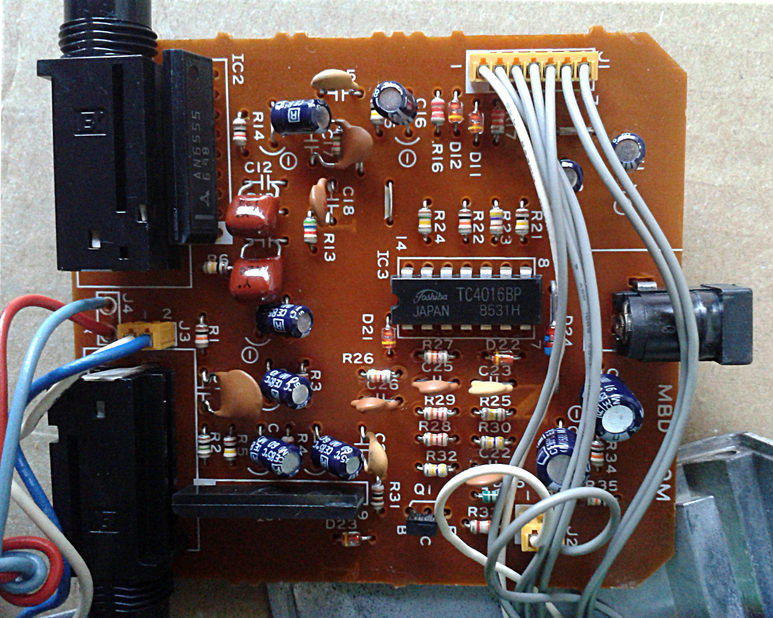
As most of the 80’s japanese pedals, there is nothing negative i can say about the design or the board. As usual with the Yamaha pedals, the quality of soldering and box design is very nice to say at least. I couldn’t find a schematic for the circuit, but There is some information about the box on Effectsfreak.com. Apparently, the design has two separate distortions on board. One distorting the lower frequencies and the other for highs. There are two Panasonic AN6555 low noise dual op-amps to give out the gain.

Yamaha-MBD20MII-guts2

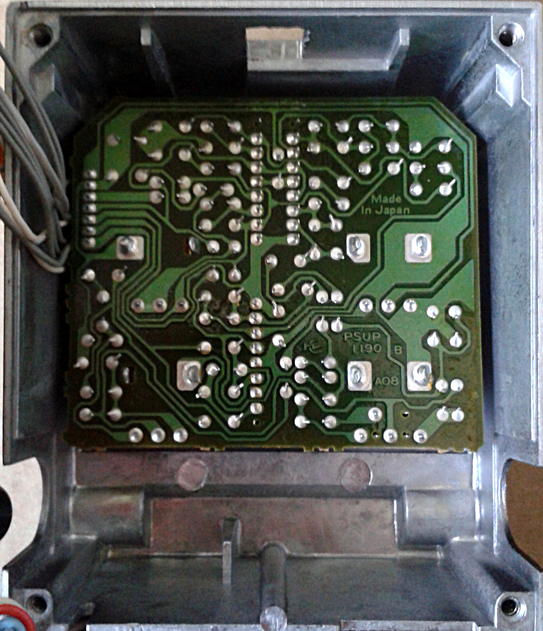
The circuit is spread on two separate boards. One for main switching and the other for the controls and a bit more.. The controls are your average distortion box controls, “Out Level”, “Distortion” and “Tone”. With addition of “Balance” which mixes the low and high distortion bands together. There are obious reasons for why the world needs a distortion with blended bands. First of all the low and high frequecies clip differently. So pushing all of the audible 20Hz – 20KHz frequencies through the harmonic clipping diodes witll result in some parts of the range clipping better the others. This is highly affected by the types of diodes used.

Yamaha-MBD20MII-guts3

Even thought the idea of multiband clipping/distortion isn’t offering a huge wow factor, it is still quite ingenious. And of all the pedals i’ve dealt with – this is rather unique method of controlling how the distortion affects the guitar’s signal. Should it be unique? I think not. It is a very good idea and it probably should be used more on the boutique world.

How does it sound?
At first the feeling on the sound is quite baffling. Only thing i count as a plus is the definition and clarity. But more i play with the box the more it gives out. Level, Dist and Tone controls are your standard bread, offering nothing too interesting. Just sufficient output level and and good range on the Tone. The distortion control goes from high gain distortion to higher gain distortion and i wouldn’t call the minimum setting an overdrive anytime soon.

Then we come to the Balance control. From muddy low band distortion to clear, open wide band distortion to cutting high mids/high distortion. Versatility is enough for many purposes from sort of emulating JCM800 driven over limits for rhythm parts and the screeching high gain lead sounds that are able to cut temepered glass.

It does sound good.

Ibanez DDL Delay

DDL

What is it?
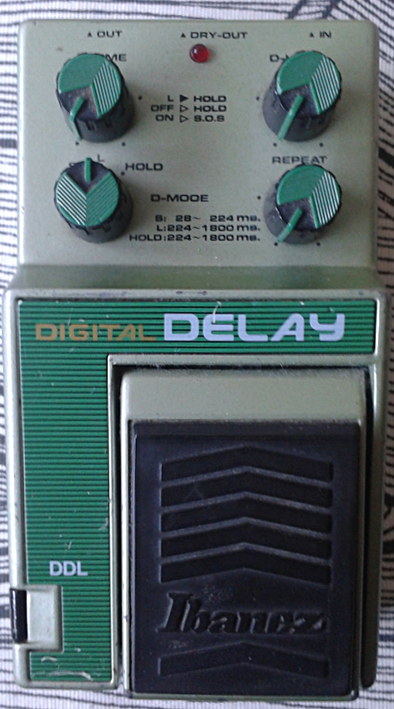
Ibanez DDL Digital Delay from Master series, made in japan in mid 80’s.

One of these units that usually are way too pricey for me. But if someone is really selling his/hers and is willing to give it away for good price, i’m once again there to snatch it. I even got a very nice present in the same parcel with this, but more about that later. Anyway. Thanks to Ari!.

I believe this unit was Ibanez/Maxon’s attempt to kill Boss DD2/DD3. The functionality matches, and the competition for king of digital delays was heating up in 1985. DDL has two different delay time ranges on a switch, plus “hold” mode. Which is similar to one found in Boss DD3 (which was in fact a rebranded DD2, but that is a subject for another pedal post).

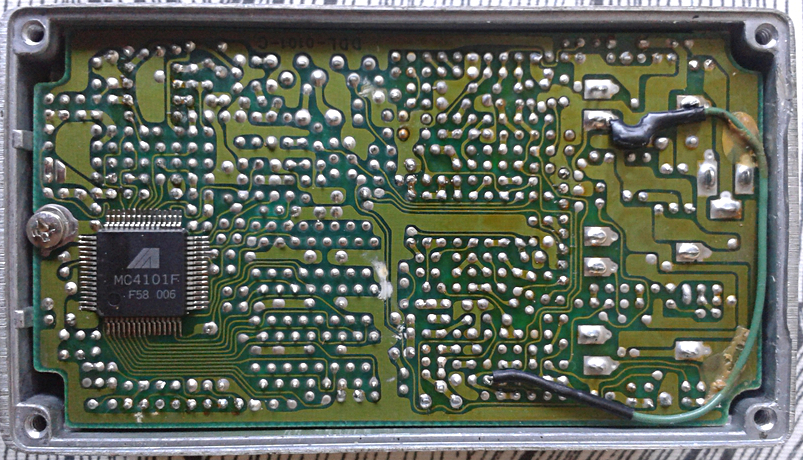
The board is full. And when i say full, i really mean it. Neat and tiny solder joints right next to each other. And plenty of them. The MC4101F is mounted on the bottom and is responsible for all the action.

DDL-guts1

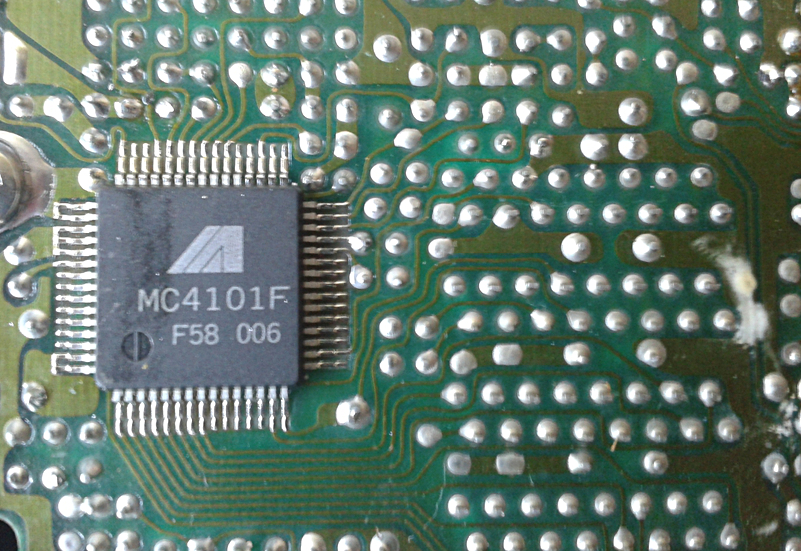
Couldn’t help myself but take another shot of the chip itself. That’ll also let you cloesr to the real scale that those solder spots have. If i was amazed what the Maxon engineers did with DFL, the digital flanger from this same series, i’m even more impressed now.

DDL-guts2

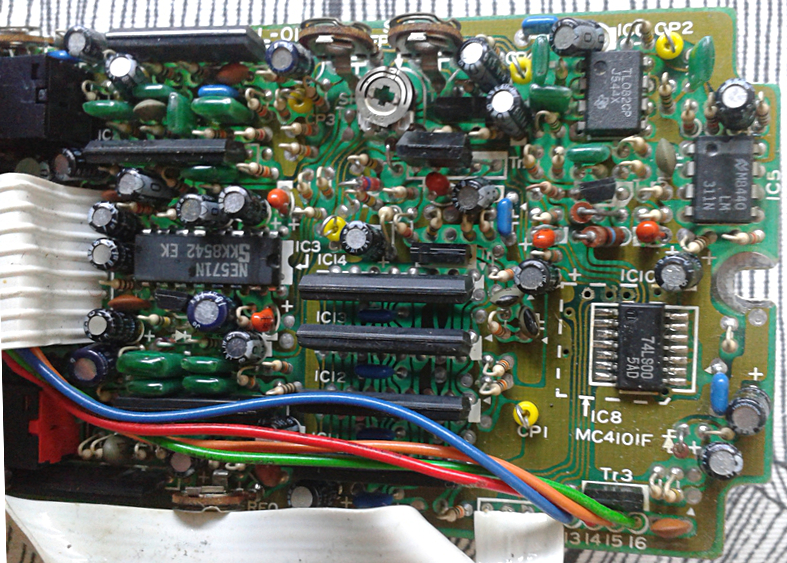
The board shares some qualities with the DFL. The three trimmers are in the same spot as is the DA/AD converter chip, the MC4101F. Couldn’t find a schematic for this right of the bat, so i can’t be 100 percent sure. It does seem like the two share some parts of the design.

DDL-guts3

The controls on this design are very impressive. There’s user’s manual scans available at Ibanez pedal information heaven, the Tone Home. Quite interesting read. They have listed the maximum delay time wrong though. It is in fact 1800ms and not 900ms.

How does it sound?
True delay monster with massive, yet clean delay times. Where the Boss’ counterpart is unnatural and cold, this massive design happens to capture some of the beauty found from analog delays. Not as clinical as you’d expect from a 80’s digital delay. Some circuits may have been scorched by time, but this sound stays unaffected. It still sounds good and fresh, even if it has about 30 years of life behind it. Very usable with its two delay time ranges and the hold mode. No wonder you won’t find any of these for cheap.

Danelectro DJ-2 T-Bone Distortion

DJ2-TBone

What is it?
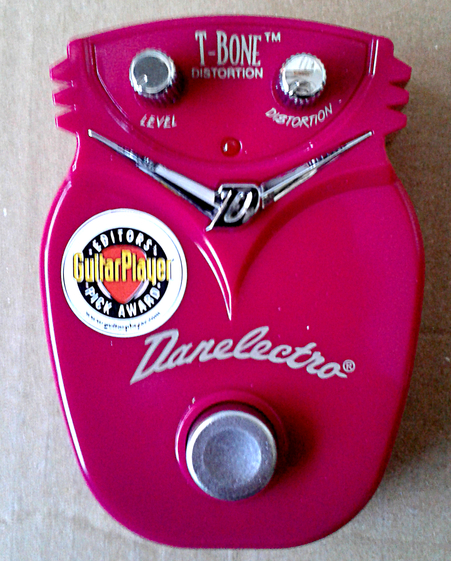
Danelectro DJ-2 T-Bone Distortion from Dano mini series in tiny plastic enclosure. Made in china around 2007 (dating based on a guess).

As i got accustomed to praising the mini series boxes, i thought it was a nice deal to take this home from local music shop as a new unit. Price was pretty much the same as the shop had paid for the unit when they bought it in – a.k.a. cheap. I couldn’t find a schematic for the circuit, so one of my thoughts was to rip it immediately open and see if it was just a simple Dist+/250 adaptation with standard Dano electronic switching. Taking the bottom plate off showed me the in/out board. Minis can be split into two categories when it comes to build quality. First is neat and well soldered. This category usually applies to the units with through-hole components (not always). And the second. The ones that were build on the first day of work after drinking for two weeks on chinese new year. This unit. Sinks definitely to the latter category.

DJ2-TBone-guts1

But i continued with the same profound enthusiasm that i usually have for the unexplored units. Taking the in/out board out made me want to put the little bastard back together as fast as possible. So there’s a 14 pin SOP quad opamp on two-sided, horribly made board that mixes SMD and through-hole components together. At this point i just reassembled the thing. I simply don’t want to know more about it.

DJ2-TBone-guts2

So. For those who have been following my puny blog, even though i may have sounded like it in the past – not all mini series effects are worth the trouble, money or anything else. This unit proves the point. It is probably the suckiest unit in the whole series. The sound and feel of DJ-1 Pastrami mini overdrive did let me have faith on this one too. Faith misplaced so far that a shovel won’t be enough to unground it.

How does it sound?
Like an unwanted, disfigured son of MXR Distortion III and Morley Just Distortion. Yes. Both of the mentioned are really bad sounding designs, so you can only imagine what this sounds like. Bad mid-honk, broken sounding clippers and thin overall feel. As a positive side, the  output level is sufficient for a distortion unit. But no. I have nothing good to say about this. Nor will i even think about tracing and fixing the design flaws on this one. Reason – it will most likely not be worth it. Anyone with an internet connection should be able to find hundreds of schematics that can be tweaked to perfection. At the moment, this doesn’t even wake up the explorer and tweaker in me.

So i put the plastic bag back on and stuff the thing back inside the cardboard box. Let’s see if it sounds better after getting ten or more years of cupboard treatment. I’m certain that the treatment has worked on many designs before. So there is a tiny, remote chance that it could work here too.

Danelectro DSR-1 Spring King

DSR1-SpringKing

What is it?
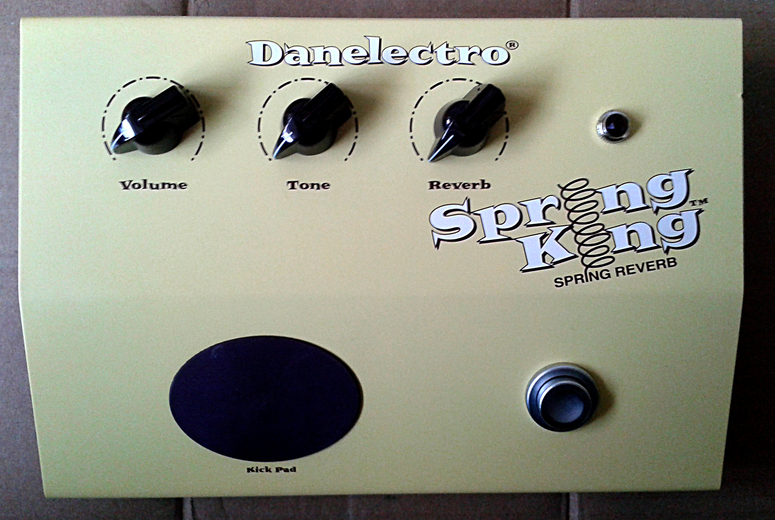
Danelectro DSR-1 Spring King spring reverb. Made in china around 1998.

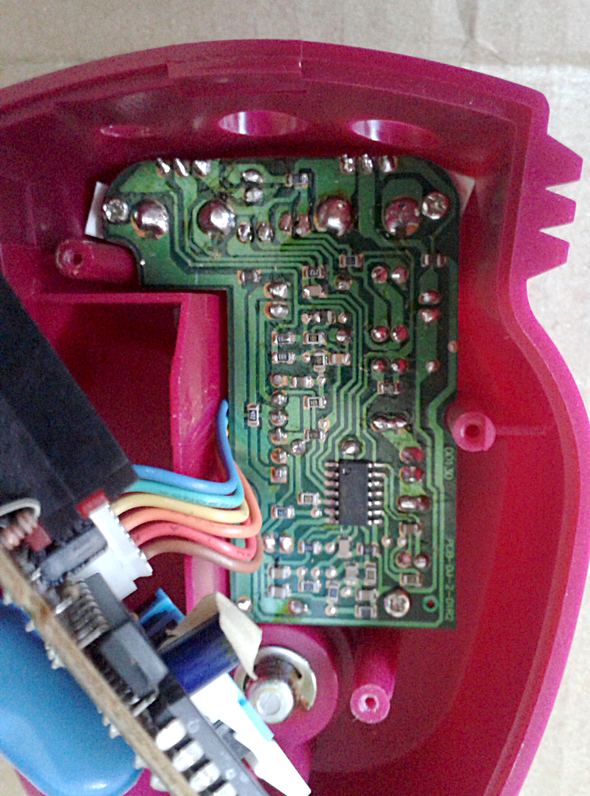
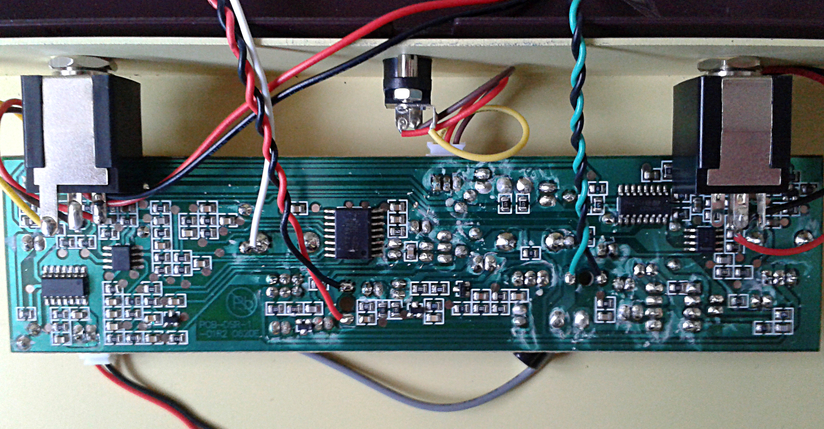
Pedals using real spring tanks inside them seem to be quite rare. There are tons of different digital variations that try to emulate the original spring sound from many brands around. The biggest reason for the absence of springs inside any pedals must be the size. The length of the springs affect their sound and anything shorter than 20cm will most likely be too short of a reverb. So this time i wasn’t surprised that the circuit board itself was quite small inside the massive box. And it is with all SMD construction. Taking a closer look at the SMD ICs, there’s a PT2399 digital delay/echo chip in there. So, to compensate the shortish spring length, the design is a hybrid – utilizing a digital delay chip to get clear slap back effect in addition to analog spring sound. The three controls take care of the attenuating and slight boosting overall sound with the Volume control. The Tone seems to boost highs when maxed and the Reverb is a mixer control that blends the digital chip and the spring unit with the signal.

DSR1-SpringKing-guts1

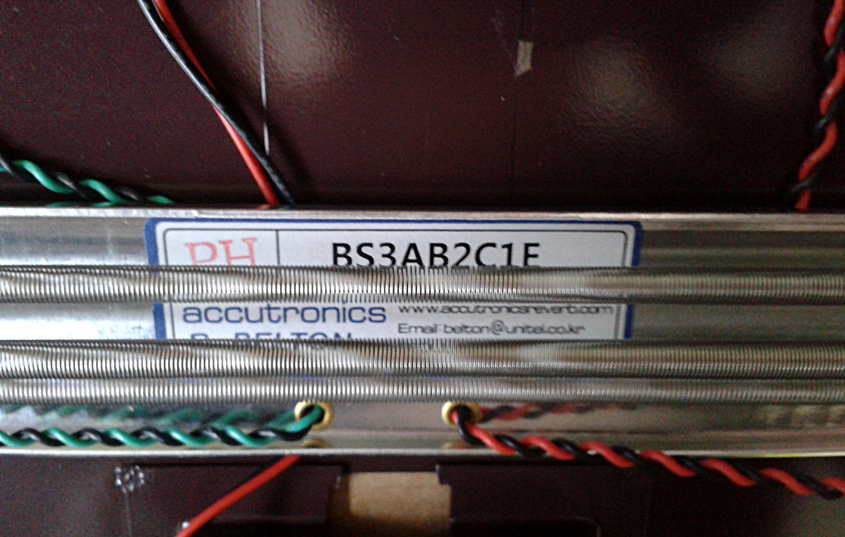
If i wouldn’t have taken a look at the chips, i would have expected this to be all analog design. So the overall “meh” was a bit of a letdown. Nevertheless, it is a good and clever design. And it does have the springs in there, which do affect the reverbed sound. But no. It is not 100% analog spring reverb. The springs are Accutronics/Belton BS3AB2C1E, a “tank” with three springs.

DSR1-SpringKing-guts2

There’s also one more, very cool, but simple feature. The kick pad. While it’s not connected to anything, it’s simply a rubber pad glued on the top of the enclosure. Kicking it or stomping on it makes the box naturally shake. Which leads to the tank shaking and giving out the uncontrollable spring action – like heard on many surf records. Nice feature in addition to quite unique and, like i already said, clever design.

Modding the PT2399 part for fully controllable delay in addition to springs should be doable. But. I think i’ll keep the unit as it is.

How does it sound?
Good. Very good. At first i would not have noticed the digital delay that was present. So i was already patting myself on the back for an amazing deal of the analog spring reverb pedal. So the disappointment may be biasing me a bit. Without that fact i would have probably declared this unit the greatest sounding gift from the Danelectro catalog ever produced. But that aside, the sound is definitely wet enough and the controls are sufficient. Very nice, big box.

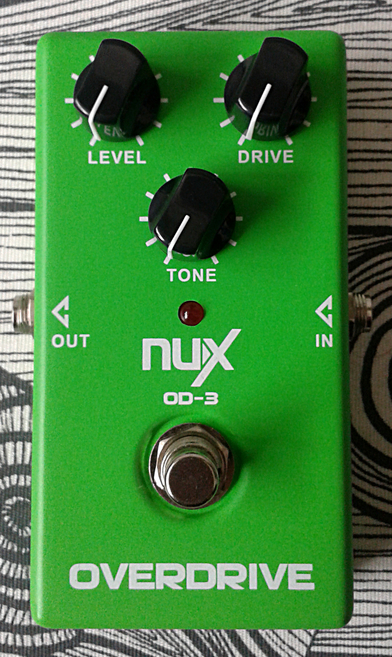
Nux OD-3 Overdrive

Nux-OD3-1

What is it?
Nux OD-3 Overdrive. Super cheap thing, made in china 2013.

The next one of the Nux analog series box to arrive. As usual, i opened the box, tried it out and ripped it open to take a few (poor) photos. Short testing convinced me that this is nothing more than Yet Another Tube Screamer (TM).

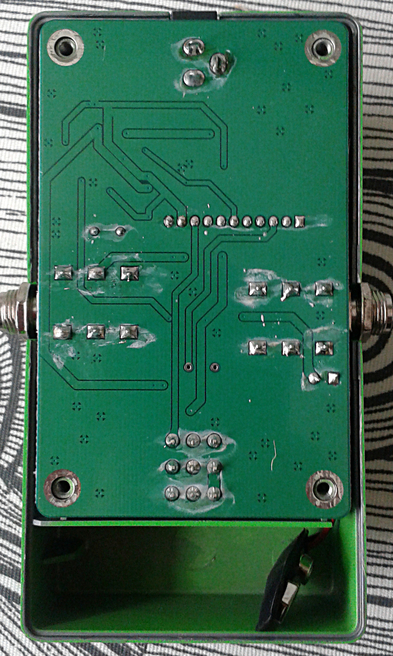
Nux-OD3-2

Some flux residue. The box design is the same as in all the others in Nux’s analog series. The pot feel is as terrible as in others too. The pot tapers and values look familiar.

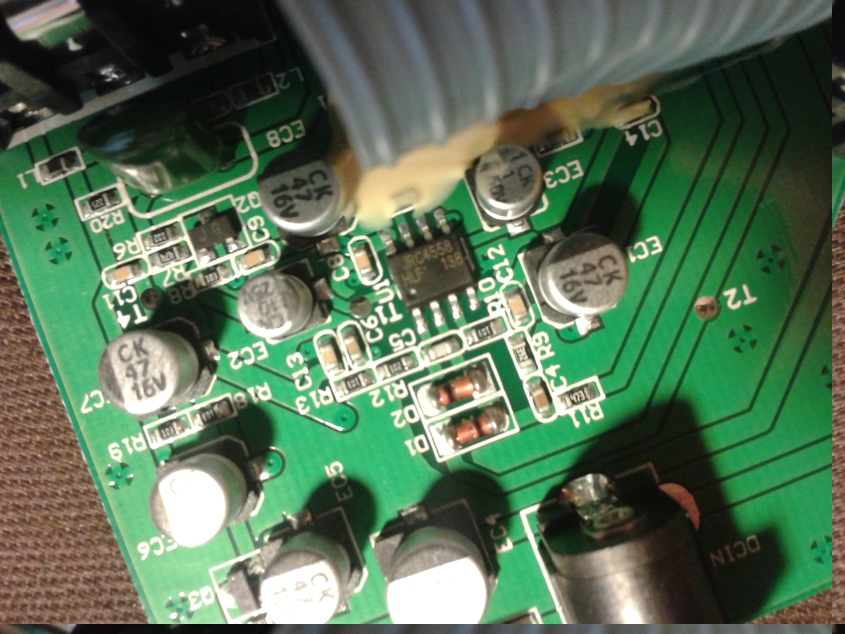
Nux-OD3-3

Taking a closer look at the heart of the circuit confirms it even further. JRC4558 and SOT packaged Si-diodes. I’ve seen that before now haven’t i…

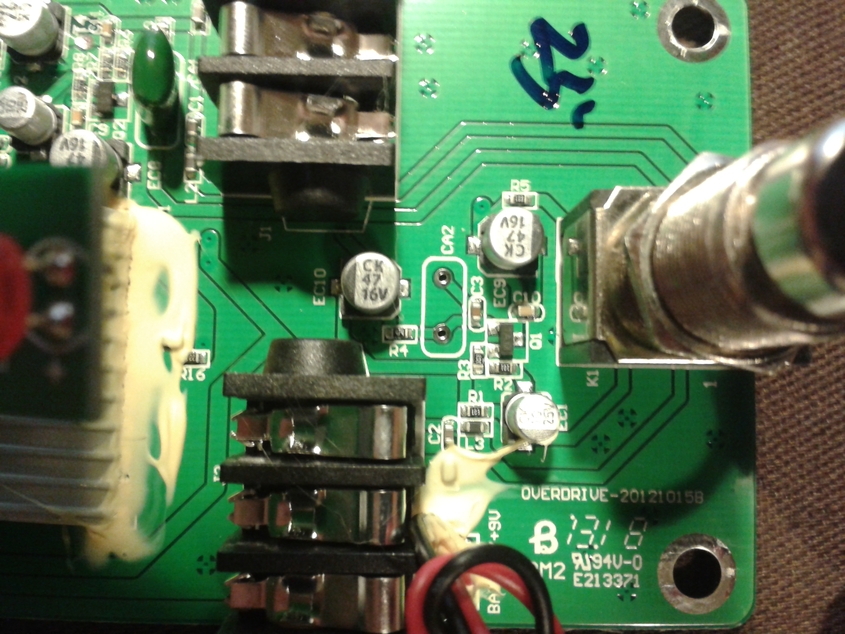
Nux-OD3-4

Still, a reasonable build quality with solid design choices. True bypassed basic pedal. I really just wish they would do something about the pots. I don’t think the better ones with sturdier feel ans more solid build quality would have cost that many cents more per piece.

Nux-OD3-5

How does it sound?
Exactly like every tubescreamer and derivative around (mid-honk, lowish output etc.). Not much more to say. Exact circuit copy will sound like the original. No surprises there. Cheap and built with reasonable quality. Might be a nice option for anyone looking for a cheap TS with a true bypass.

« Older posts Newer posts »

© 2025 killall -9 humans

Theme by Anders NorenUp ↑