Author: mirosol (Page 21 of 29)

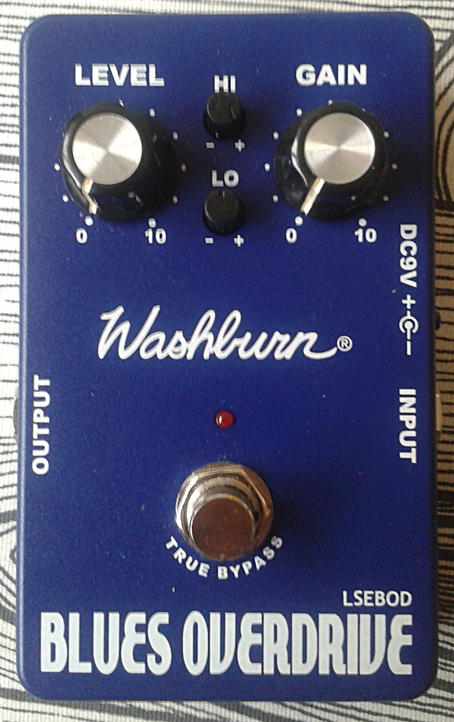
Washburn LSEBOD Blues Overdrive

Washburn-SLEBOD

What is it?
Washburn LSEBOD Blues Overdrive. Made in china around 2010. Should it ever even been made? Not so sure.

So. It is 1:1 with Artec Blues Overdrive. Artec is a korean brand that’s been around for some time. It has produced couple of interesting, or at least promising designs. I’ve had some contact with a couple those korean units and those are not too bad design wise. There are couple of Artec boxes that i might be interested in, even at the moment.

Before getting deeper, let’s talk a second about Washburn as a brand. Without any wikipedia checking, i think Washburn is a US brand that moved all of its guitar manufacturing to korea back in 80’s. Those korean made guitars were still very good guitars (which i know from personal experience). In early 90’s, the brand was still somewhat prestigious. The following ten years basically killed the brand. Since the earlier products sold under Washburn brand were actually good, the reputation carried on. But. In 00’s the not-so-ingenious heads at Washburn decided to provide even cheaper guitars. We all know how that works out. Compromise the quality to get the price cheaper. That’s what happened. All new Washburn guitars i’ve touched since 2005 have had nothing to do with the guitars that were made ten years earlier. The crappy guitars left everyone believe it was just one of those super cheap, super bad brands. I think there are not many people who know that the brand’s earlier work was more than sufficient in quality. Even if they did get the quality back on upward track recently, the facts still leave the brand not wanted.

Turning this unit around had one really funny detail.

Washburn-SLEBOD-back

“Warranty void when modify”. That’s basically an invitation to tweak the $20 pedal. But once opening the unit up… No. I want to screw the bottom plate back to its place and try to sell the unit for the price i got it. Which will be next to impossible (and didn’t happen. It did cost too many currency units me to take these crappy photos…). This kind of utter crap lands on my desk rarely. And that’s what it is. Utter crap.
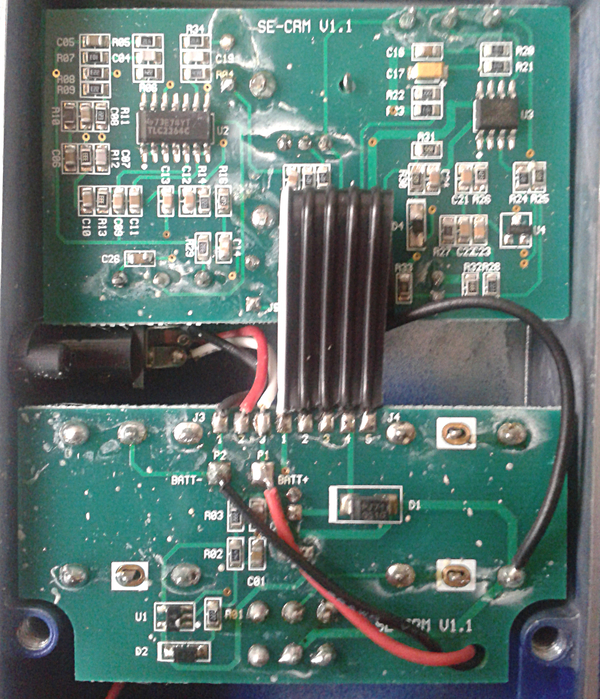
Washburn-SLEBOD-guts

I don’t mind about all SMD, but just look at it. Worst build quality i’ve seen to date. I wouldn’t dare to take either of the boards out, as that would definitely mean that something would break. Washburn already burnt all bridges with the guitars later than 2002, now they are making OEM deals with korean brands that outsource their bad build quality to even way worse chinese manufacturers. Do any of you think that i would feel good about playing my 1993 Washburn at a gig? Everyone will be looking at me like “why’s that dude playing with $50 guitar?!?”. I know my 1993 guitar is very well made and it sounds very f*n good. But everyone in the audience will only see my playing a “cheapest brand” guitar. Thank you Washburn for all your lousy decisions. If you want to wreck your brand – follow the example of Washburn. Buy Artec design, badly made in china and sell it for more than korean Artec box. Yeah. Everybody loses.

How does it sound?
Horrible disfigured hybrid child of Marshall Bluesbreaker and a Ibanez Tubescreamer. Mid-honking it’s way through with broken sounding clipping stage. The EQ controls won’t help you out of this mess either. It is definitely the same box as Artec blues overdrive. If you want a Blues Overdrive, look at anything else than Artec/Washburn. Anything else. This unit sounds like a toxic waste that you won’t ever be able to get rid of (gladly i did get rid of it). Of all the overdrives i’ve played with, this is without a doubt one of the worst. Simply put. It is Bad.
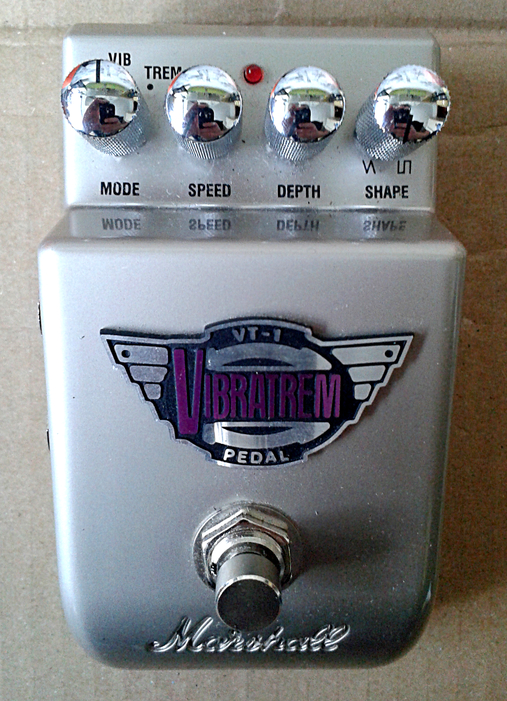
Marshall VT-1 Vibratrem

VT1-VibraTrem

What is it?
Marshall VT-1 Vibratrem, made in china around 2005.

The Marshall pedals are curious things. The hits in the 60’s and 70’s , another hits in early 90’s. After that the big black box series went through massive inflation. The next generation of Marshall pedals were introduced in early 00’s, while the players rediscovered the original Guv’nor and the original Bluesbreaker. While all the earlier Marshall pedals were just fuzzes, overdrives and distortions with one wah in the lineup, the “next generation” offered wider range of sounds. The nine effects in the next generation series have a few distortions, but also a reverb, delay and a few different modulation effects. This is one of them.

First of all, the idea of pairing a tremolo and a vibrato to a single box is a splendid idea. The controls are your standard depth and speed, with addition of LFO waveform control that can take the wave from square to saw wave. And then there’s a switch with two modes, a tremolo and a vibrato.

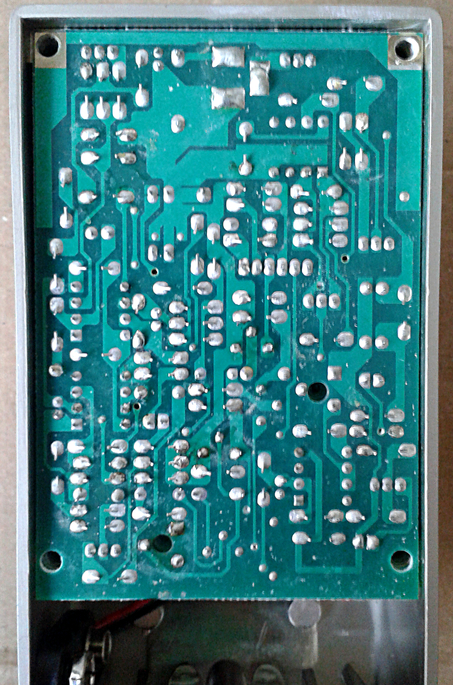
VT1-VibraTrem-guts1

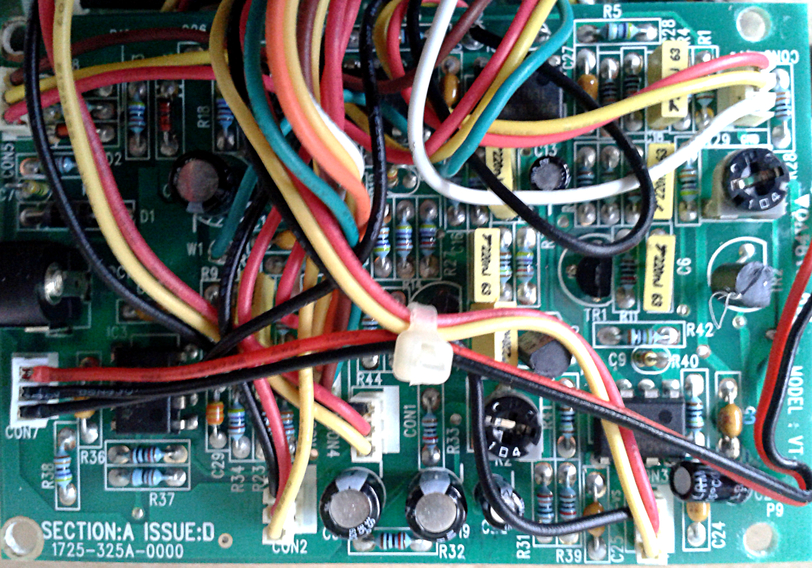
Board looks like most modern designs. Dull and not too eye pleasing. But the overall construction with all the wires does look pleasing. Even though the wires all have terminal sockets to minimize the labour. Also, the through hole components does give us a hope that not all big name designs are done with baking the surface mount components in chinese toaster ovens with litres of flux residue all over them.

VT1-VibraTrem-guts2

It is quite complicated design that i’m not going to unravel more at this point. This would be a pain to reverse, not to mention how massive undertaking it would be to clone it. Quick searching did not reveal a a schematic, but it did point me to a reported fault.

Apparently  some units tend to come over unity level with sort of boosting the output level. At those brief test runs i had with my unit, i didn’t notice it. Guess i’ll need to revisit the testing. ..Or it could be one of those psycho-aural or psycho acoustic phenomenons often affiliated with tremolos and their output levels.

How does it sound?
When it comes to tremolos and vibes, i appreciate the fat and thick sounds. This heavy hitter provides those both with two distinctive wave forms. The sound is somewhat overwhelming, but still it keeps your guitar’s tone well in tact. Tremolo part is thick and juicy. Vibe is a lot brighter than most of the vibrato effects i’ve played with. That’s not a bad thing.

I’d say this makes a very usable effect in both modes. Personally i find the tremolo part to be more to my liking than the vibe, but it does sound good all the way. Recommended tool.

Ibanez PH5 Phaser

PH5

What is it?
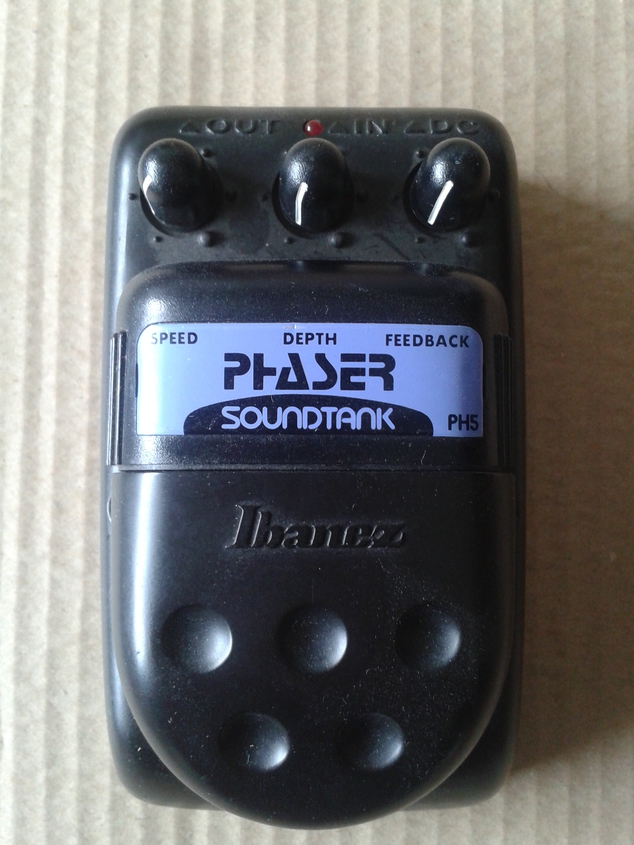
Ibanez PH5 Phaser from the Soundtank series. Made in taiwan around 1996.

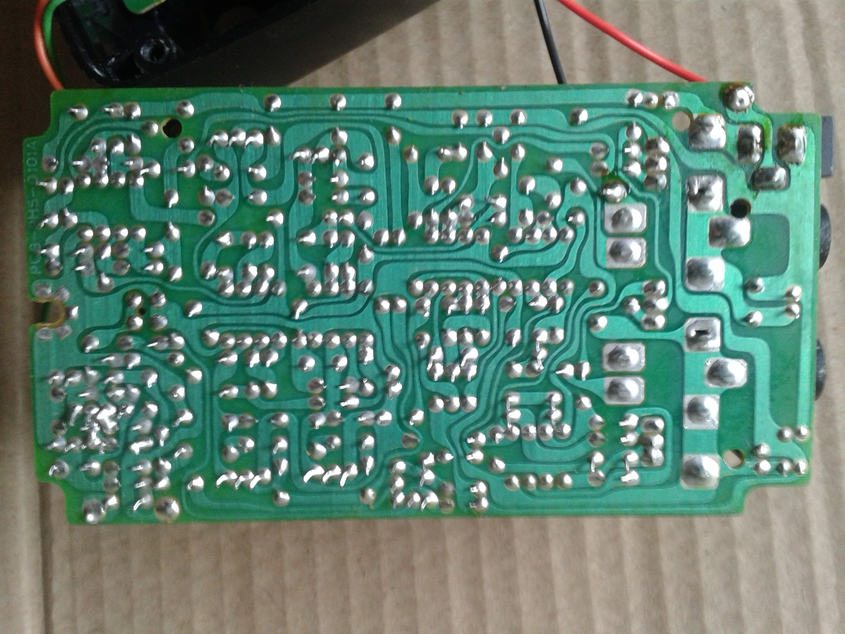
I’ll admit it. I love phasers. Don’t use them much (or at all) on my standard pedal board, but i always have a couple of differently voiced ones with me when i’m in studio. Some phasers are bad, while some can really improve your tone. This one sinks easily into the latter category. Opening this puppy up shows oldschool acidy corners on the traces, which always make me feel warm and fuzzy.

PH5-guts2

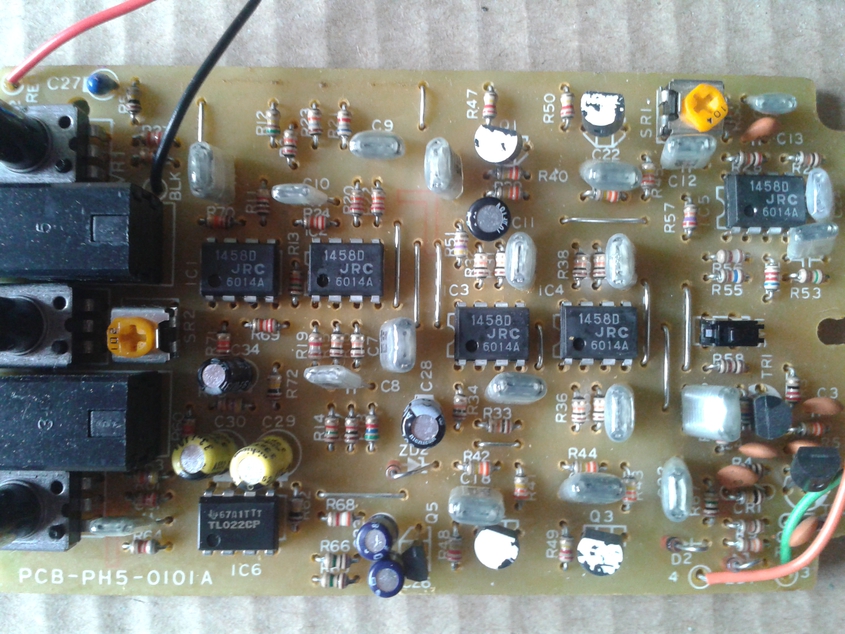
As i couldn’t find a reasonable schematic floating around, i’m going to assume couple of things by just looking at the component side of the board. To me this looks like a four stage design with JRC1458s acting as LFOs and single TL022 taking care of the mixing. Some folks on forums were talking about this being quite close to the PT9, which may very well be true. If you get a chance to read the schematic for this, the phasing JFET biasing should not be overlooked. Forum folks say that it’s unconventional.

PH5-guts1

With just three controls, this is quite versatile phaser. Speed and Depth act as they should and the Feedback control can take this thing in to space. Bad swithing, as is natural for the series, but simply swapping it makes this run happily again. I do have couple of other phasers in my collection, but it seems that i take this one with me a lot.

How does it sound?
Soft and powerful. From slow and mild to fast, vibe-like and swirly wild. Despite the near-standard Phase90-style circuitry, this is versatile phaser that sounds quite natural. Biasing sounds on point and accurate as there are no “broken” parts on the phasing sweep. Really nice sounding design which makes this one of the best sounding phaser tools i know.

Ibanez PH10 Bi-Mode Phaser

PH10

What is it?
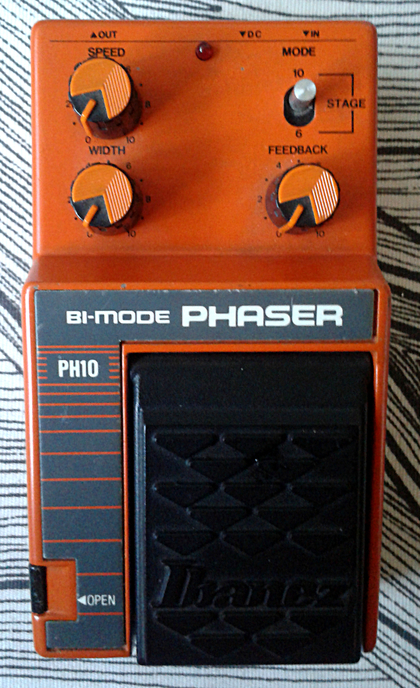
Ibanez PH10 Bi-Mode Phaser from Power series, made in japan between 1986-89.

One of the nicest phasers. The Bi-Mode here means that the phasing stages are switchable between six and ten stages. Which is not a bad idea to throw in to a huge bowl of phasers. Got this unit for a reasonable price from J. Linden of Linden guitars. As i tried it out, i felt like the six stage mode was losing the phase from most of the sweep. That could only mean one thing. The unit had went misbiased over time. I’ve seen this happen with new units too, so it’s not that uncommon. Biasing the JFETs with the trimmer is a bit of pain on this one, but i think i nailed in the first 5 minutes or so. So all i needed to get this unit running properly was a screwdriver and a hint of patience.

PH10-guts1

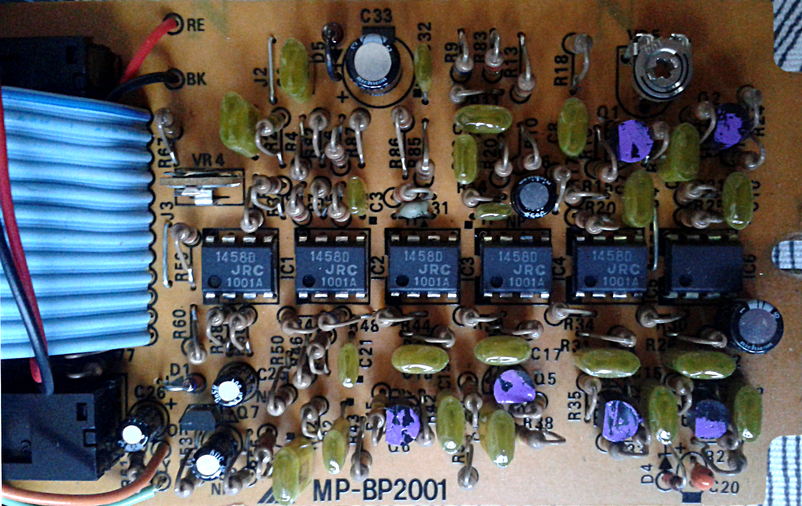
As most of you may already know, i’m a sucker for symmetry on the board layouts. The idea of placing all six ICs in a single row is a heart warming visual candy.

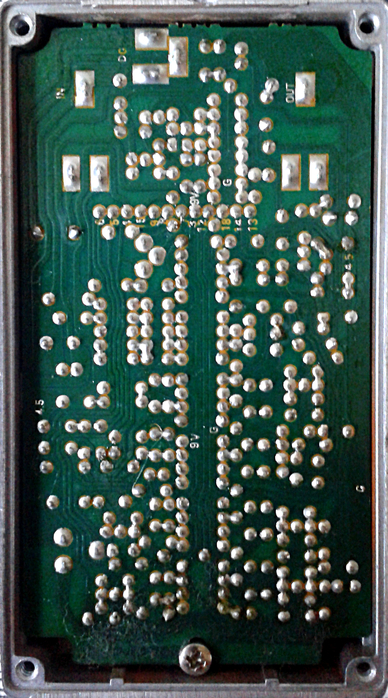
As for the design.. As the photo below shows, there are six JFETs responsible for the phasing. So how does it become 10-stage phaser just by a flick of the switch? The design sort of re-uses the first four stages in the 10-stage mode. Quite an elegant solution. You should be able to find the factory schematic PDF through your favourite search engine. I’m not linking it here..

PH10-guts2

The feedback control takes the signal from output filter and pushes it back to the beginning of the phasing stages through the one half of a dual opamp which is there, just to drive the feedback. This is very nice feature as well. I’ve seen this type of feedback network used a lot on different flanger designs, but not in many phasers.

So. In general this is pretty versatile and neatly designed phaser. Definitely more usable than the standard and overly cloned Phase 45, 90 or 100.

How does it sound?
Like a good phaser tool with lots of versatility on the controls. On six stage setting it is not that far away from Phase 100, but the feedback control lets you tweak this to a lot thicker and much more psychedelic swirls. Now if we take the ten stage setting, the sweeps and swirls get even more depth and psych on. The slow ambient sweeping on both, 6 and 10 stage settings are really good sounding and usable too. Once again, the feedback control takes the trophy home. Very good phaser.

Nux AS-4 Amp Simulator

Nux-AS4-1

What is it?
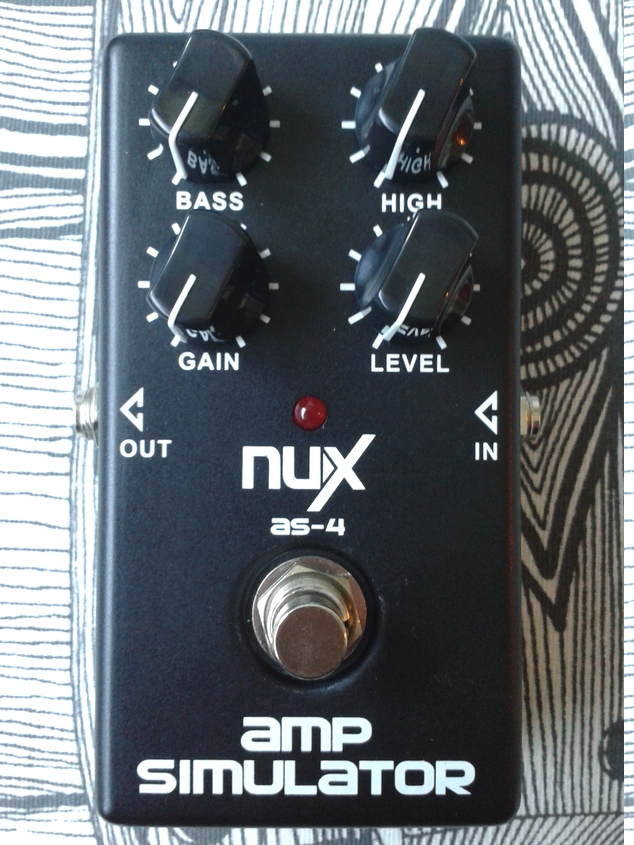
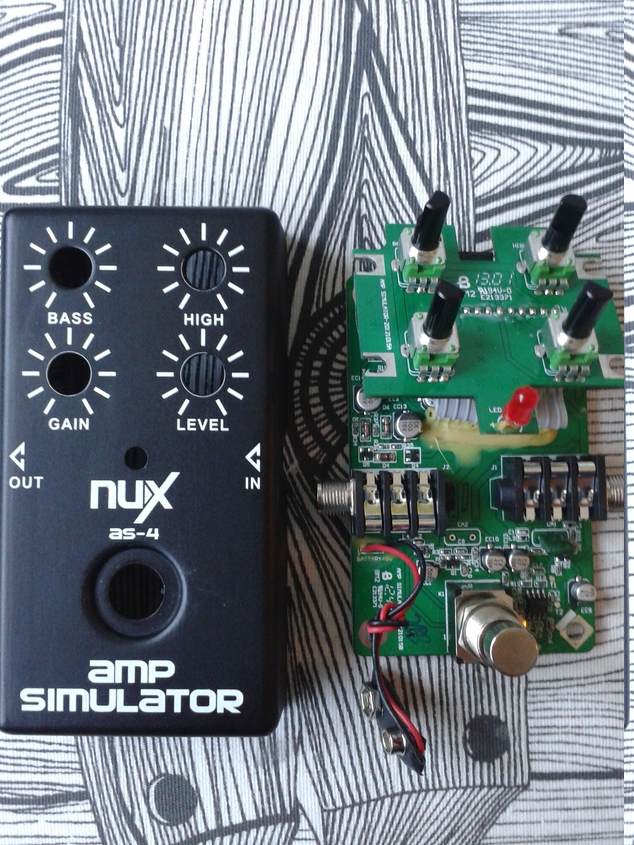
Nux AS-4 Amp Simulator from Nux New Analog series. Made in china in 2013. Cheapest thing there is.

These units have around for some time now, and this unit is part of family of four. There is Overdrive, Chorus, High gain distortion and this one – The Amp Simulator. The price tags raised a few questions. Could it be usable or just crap in design and build quality? Is it one of those cheap 1:1 corporate clones that flood the market from china? I wanted to find out, so regardless of the risk, i bought this one. Of course, i ripped it wide open as soon as it landed on my mailbox.

Nux-AS4-6

As the japanese started to use two separate boards in the beginning of the 80s, we have the same board method utilized here. The biggest difference being the 1590B-sized box instead of higher type commonly used by Boss and others. The bigger board has the effect circuit and switching, while the smaller board holds only the controls. Standard true bypassed pedal with “meh” build quality. Some ugly flux residue, but the components are baked on neatly.

Nux-AS4-2

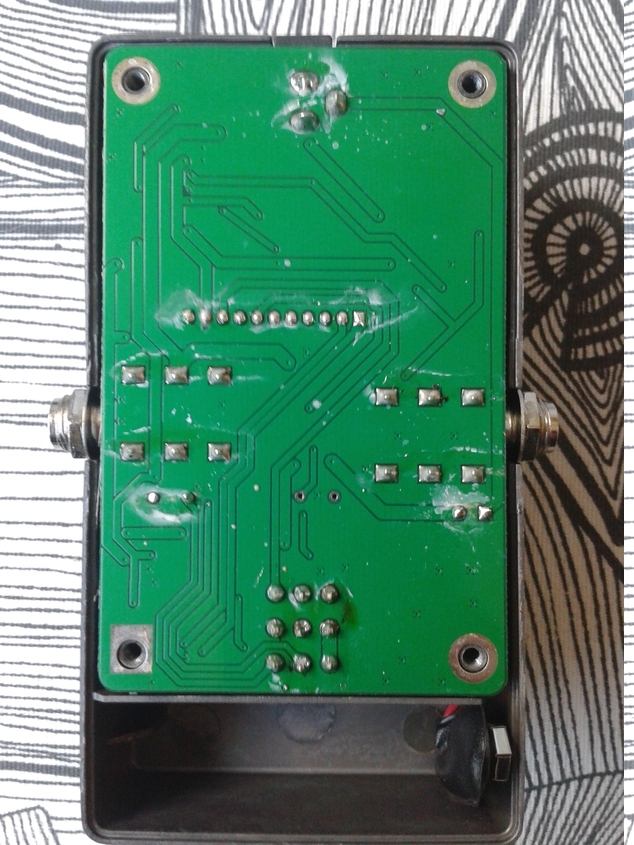
The design methods are not bad at all. The screws that seal up the bottom plate are also used for fastening the bigger bottom board to the enclosure. If you’re going to build pedals in huge mass produced fashion, this is the way to do it. the jacks are screwed on to the box as well, offering some more sturdiness. The engineer behind the box design knows his stuff.

Nux-AS4-3

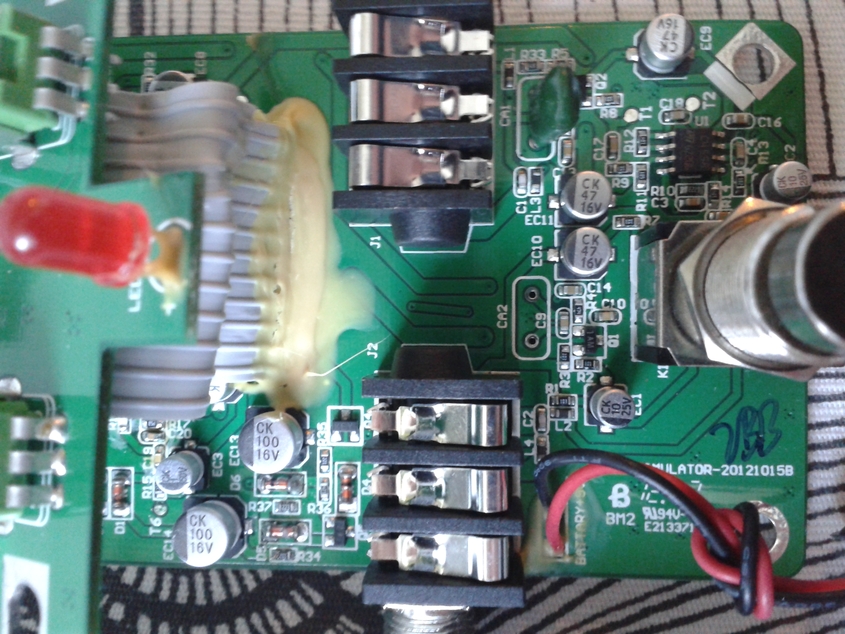
Note the wax on the picture above. Yes. It is ugly, and probably not the greatest way to secure the ribbon cable connections. It still seems better to have the wax in there than to rip the joints off accidentally. Mix of mylar caps in otherwise all SMD board in Digitech manner doesn’t convince too much…

Nux-AS4-4

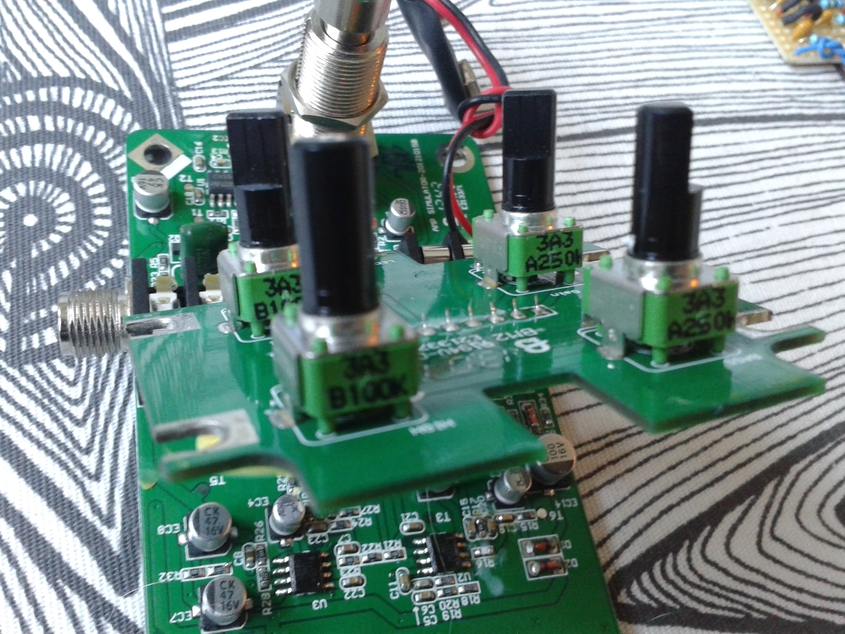
Next up is the one biggest issue i’ve come across. The pots. While those may be 1:1 clones of Alpha brand components, they are not good. One big culprit on the whole pedal. They work – yes. But they turn way too easily – in a word, they are just too sensitive. Just a tap with your foot can ruin your perfectly tuned settings in a heartbeat. If the company didn’t “save” money on pots, i would strongly recommend these for anyone and everyone. It is quite sad. One little thing ruins a design that is otherwise reasonably good.

Nux-AS4-5

Didn’t go too deep on to what the design has in store. I’m just going to leave it by saying that the component selection reminds me of Xotic’s BB preamp pedal.

I’m also hoping that Nux won’t sell these things as OEM for cheapo brand boxes for their own good. So far i’m quite confident that the future of original chinese pedals lie within Nux.

How does it sound?
Soundwise too. BB comes to mind. So it’s rich in bass and warm in gain. Overall tone is pleasing and starts from mild preamp with natural feel to it – which then can be turned to soaring gain monster by turning the gain knob. The overall sound has a lot of common with good tube amps’ overdriven sounds. With versatile bass and treble controls and well working gain control, this is very usable and good sounding pedal for a good price. I’m just hoping they acknowledge the pot issue and fix it. Before that happens.. No recommendations from me. I’m going to use myself as a guinea pig and get all four pedals in this analog series. Well see then…

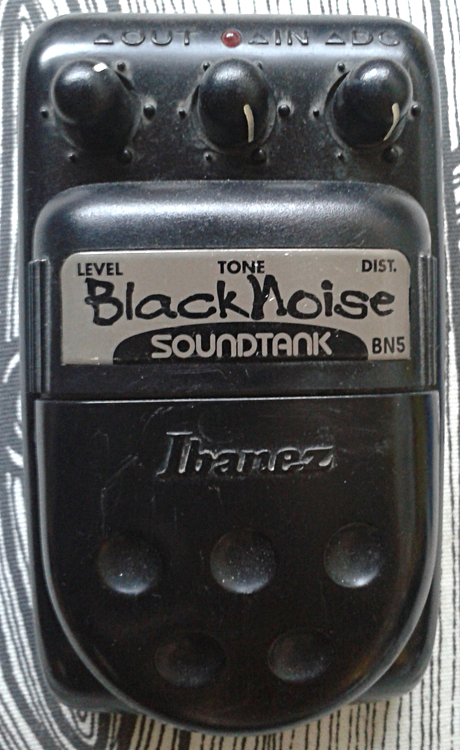
Ibanez BN5 Black Noise

BN5

What is it?
Ibanez BN5 Black Noise distortion from later Soundtank series in plastic enclosure. Made in taiwan in mid to late 90’s

The marketing section of Ibanez pedals made this out to be a “industrial” distortion. It’s how the marketing can turn a design to something that it is not – and then people will hate and slander the design for years to come because the marketed sound doesn’t have too much to do with the reality. I could sink this one deep into that category. In the day, the name and marketing suggested that the unit is “Lethal, rough-edged industrial distortion at its most extreme-the sound of a small amp overdriven way past the limits. Our heaviest, most intense, and just plain loudest distortion pedal.” it does sound like marketing jargon that promises to deliver, now doesn’t it? Does the reality support that description? Don’t get me wrong. It has some of that AC15 driven over the limits feel to it. So it’s not all wrong, but still.

I’ve ran into similar issues with other pedals too. The marketing has us believing one thing that the unit does not offer. That can lead to severe disappointments and hurt the brand as much as the individual design in eyes of the users.

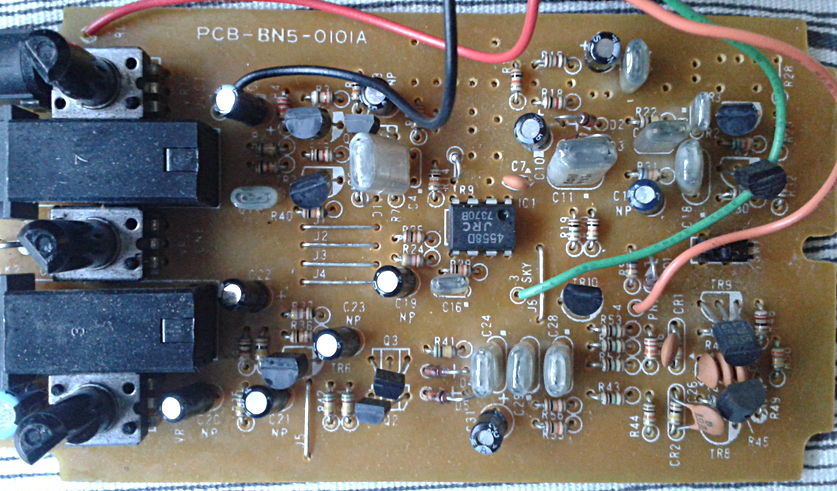
BN5-guts

Let’s leave the marketing section behind and focus on the pedal itself. The silk screened label clearly has BN5 on it. Lots of unused holes? And doesn’t the layout look familiar? How about we take a look at the schematic (from Dirk’s archives). Next, take a second to compare it with the SP5 schematic. Topology is the same. The board layout is the same, minus the silk screen labelling. I guess i need to check other pedals from this series to see which ones have the same board layout.

Deep inside this is just another Rat/TS adaptation with standard distortion box analogy. Buffer -> main gain stage -> hard clipping -> tone control and static gyrator filters -> output level control -> output buffer. Souped with electronic switching and bypass. There are at least four similar designs in the series, all with slightly different frequency responses that result in different overall feel.

How does it sound?
High gainer that’s not bad at all. Feeling slightly harsher and louder than Slam Punk, but basically hailing from the same neighbourhood. My first impression isn’t placing this to industrial music genre, but to the same lot with TM5, CM5, PL5 and SP5. All are very nice sounding distortion pedals with slight or slightly bigger differences. All of them do sound good. As the Soundtank distortions come, this is one of the really good ones.

Colorless writings, part 7 – The Collector value

So you’re talking about the prices of used, collectible units?

Yes i am. This is one subject that shows human nature at it’s finest. Let’s make up a person. We’ll call him Peter. Peter was playing a guitar actively in early to mid 90’s. He had all the right gear back then. The gear that was cheap with reasonable sounds and was underestimated by many at the time. His pedals were used a lot, and none of them survived without any nicks and scratches.

Twenty years go by faster than one expected. Peter now has a day job and he’s given up on his rock star dreams. He only has one Les Paul left and trusty old 15W tube combo that he plays every now and then. usually after a few beers. The pedals he used to play are lying in a cardboard box at the back of his garage. One day he remembers the box and decides to put all the old trusty pedals for sale. All the great oldies, like DOD FX50B Overdrive Plus and FX80B Compressor, both with missing battery doors, Ibanez soundtanks DL5 Delay and TS5 Tubescreamer, Boss DS-1 Distortion, Marshall Guv’nor (obviously without a battery door) and MXR Phase45 with missing pot knob.

Now. What do you think happens next?

What?

The sites that list used guitar gear get filled with posts selling these items. Peter clearly doesn’t have any clue what the units sell for, as he currently isn’t into pedals. Hasn’t been for over twenty years, even then he was more of an average user than enthusiast. And of course, as the units are all “old”, there must be some good money in them. This is where it all goes straight to hell. Peter can’t understand why all the other site users slam him down on comment threads and why no one is buying the pedals.

So he just put in too high prices?

Yes. As i keep on hunting and dealing with pedals every day, i run into this thing almost every day. For some reason almost everyone without deeper enthusiasm thinks that everything must be valuable just because it has ten or twenty years of age. And that’s why we see all the most common late 80’s and 90’s pedals for sale with ridiculous price tags. These people log on to eBay and search for their item. Then they estimate the value based on those units that people (thousand other Peters from around the world) are already asking way too much. The next Peter then gets the idea that every one of those is valuable. As the end result, there are now 15 pieces of beaten DOD FX50Bs with missing battery doors available, all for $100 a piece plus shipping. And none of those are selling. Gee. I wonder why.

Let’s make up another character and call him Mike. Now. Mike has similar situation, but his pedals from early to mid 90’s are slightly more desirable. Let’s say his cardboard box holds a DOD FX13 Gonkulator Modulator, Ibanez FL9 Flanger and a MXR Distortion+ from 1976, all three in very good condition.

Mike has a better view on how the world works. He could use a little cash to help his new hobby with miniature airplane models. He’s heard of the site called effectsfreak.com and he logs on to see what his units usually sell for. He then sets the starting price at slightly lower, let’s say 5 bucks than for what the units have sold for in the past. He’ll get all the units sold in first two days. He’ll make a nice profit and also one happy collector per item.

There should be more Mikes in the world.

The idea of your unit being extremely valuable may come from the facts that you’ve seen really old and rare pedals from the 60’s, 70’s and early 80’s sell for hundreds, maybe even as high as a thousand USD. But something inside a human mind won’t accept that those are not the same thing as the units you have, the units that cost next to nothing as new and there are 25 000 pieces of them manufactured and spread around the world. Further, those are not worth anything when they are missing knobs, bottom plates, battery doors etc. This is another cold hard fact that people seem to be forgetting. One should try to sell one of those units with missing parts to any brick and mortar musical instrument store. You can guess the answer you’ll get.

How is it wrong to ask for some amount if someone is willing to pay what the seller is asking?

It may not be wrong. But i see this behaviour every single day and i totally see the sellers getting slammed in the comment threads. The thing i can’t emphasize enough is “don’t be a dick”. I’ve been on the brink of ripping someone off on some deals and i’ve always felt bad afterwards. When dealing with used gear that is more or less subject to its magical qualities, i strongly believe that it’s best to have both parties being ok with the end result. Sure. I’ve bought shit with a hefty price tag and i’ve been a subject of very bad deals. Probably even been a cause for one or two. Life is just a game that we must learn to play along the way. Being a dick makes it difficult for all of us.

The problem get even deeper when someone really pays the unreasonable price that was asked for a common unit. That just raises the price of that model artificially without any basis for it. We have the internet nowadays. One can easily get a clue what the unit is really worth by just doing a minute worth of footwork.

I may sound like a dick here too. That’s not my intention. My intention is to let you, the reader of my puny blog, know that you should not pay good money for unit that is missing rubbers from the bottom, the bottom plate, the serial number, pot knobs, battery door or anything else. These units are not collectible and their place is in rather the trash bin than on the auction listings with massive price tags. So dear god, the missing battery door is not something that should only shave off 3% from the price of a counterpart in mint condition.

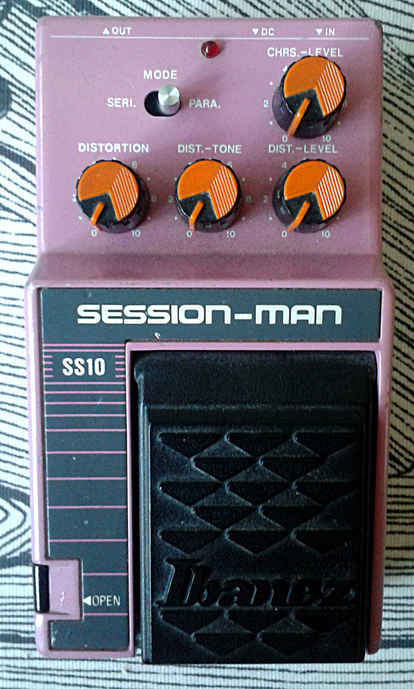
Ibanez SS10 Session Man

SS10

What is it?
Ibanez SS10 Session-Man Distortion/Chorus from Power series. Made in japan between 1986-89.

Mid 80’s was a perfect time to try out stupid things like to combine distortion with other type of effects in small pedal enclosures. DOD did it, Boss did it and of course, Ibanez did it. The idea of mixing distortion with chorus seemed like something that i wanted to try out. The great thing with the Session Man is that there’s a switch that places the chorus in parallel or in series with the distortion to create different soundscapes. The bottom knobs control the distortion with standard parameters (level, tone, gain) and the upper knob determines the level of chorus mixed with the distortion. The chorus doesn’t have any controls, other than the mixer level. Sure, there are trimmers for those parameters inside, but it is basically fixed to one depth and one speed.

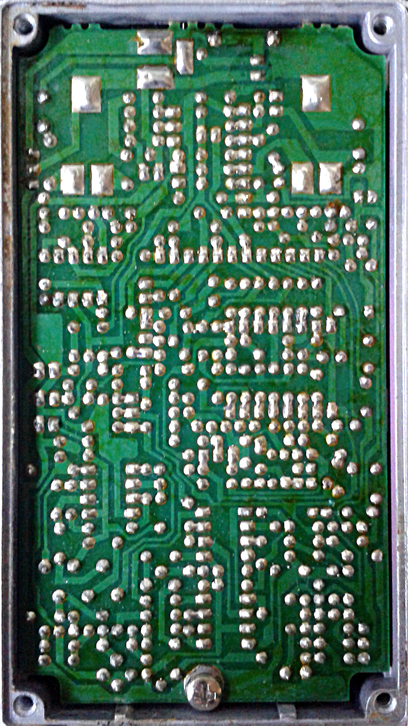
SS10-guts1

For all analog distortion and chorus delay circuitry, the board looks like it’s well used space. Turning the board around reveals crowded and crammed circuit with a lot of components. The yellow trimmers are for tweaking the chorus. I couldn’t find a schematic to see everything there’s going on.

SS10-guts2

From these crappy photos and being inside my unit, i can tell that there’s a BBD pair handling the choruses timed delay, one opamp acting as LFO ans SIP opamp driving the distortion. The SIP may be a good choice, since  there’s a lot of stuff going on on the board.

These seem to be somewhat collectible units. As a niche novelty items, i think the value is correct. But as a usable, unique sounding guitar effects? Not so sure.

How does it sound?
First of all, the distortion isn’t too bad. Quite open and dynamic, without the flattening compression that most distortions offer. Now, when we engage the chorus in parallel, i’m like “why?” The chorus is so mild that it hardly does anything, even when maxed. Anything good that is. The chorus is a lot more overwhelming in series mode, but still. Why? The parallel setting is a thing of its own, but if i wanted to chain a chorus and a distortion after each other in a studio environment, my choice would not be SS10. For a live setup maybe. But even then i’d rather use a utility box to engage both with a single stomp.

These combination pedals are nice curiosities. As these come, the SS10 isn’t the worst of them by far. It could even serve a purpose on some situation.

Boss GE-7 Graphic Equalizer

Boss-GE7

What is it?
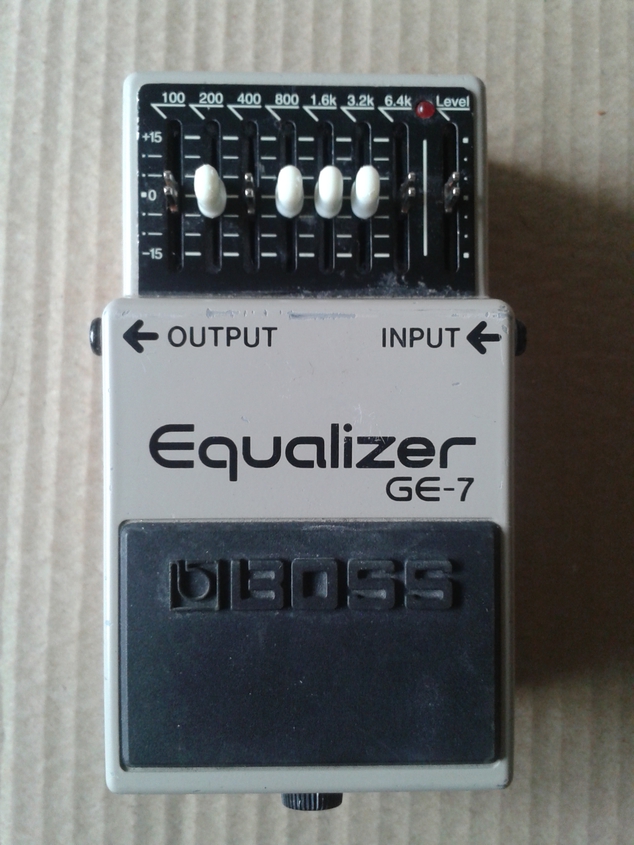
Boss GE-7 Equalizer, made in taiwan in may 2002. Otherwise in fair condition, but missing a few slider knobs (which seem to very hard to source as spares).

Schematic is online, courtesy of Hobby-Hour.com. There are three DIP-8 and two SIP-9 opamps plus a transistor based output buffer that make up the circuit. There’s also standard Boss-style electronic JFET switching. All seven frequency ranges from 200 Hz to 6.4KHz are active filters that are able to boost or cut the desired frequency while keeping other frequencies well in tact. Plus the gain slider sets allover level and offers a reasonable amount of boost for all individual bands.

Boss-GE7-guts1

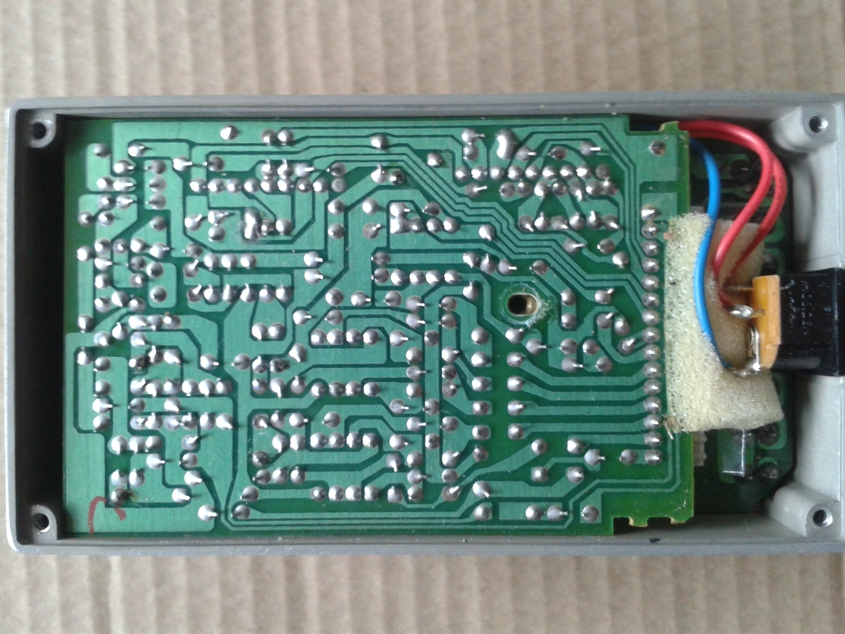
The board is your standard modern taiwanese specimen. Dull, ground/trace-filled, autorouted touch, which doesn’t raise much feelings. The (a)symmetry is more pleasing than most of the modern designs, but still quite boring.

Boss-GE7-guts2

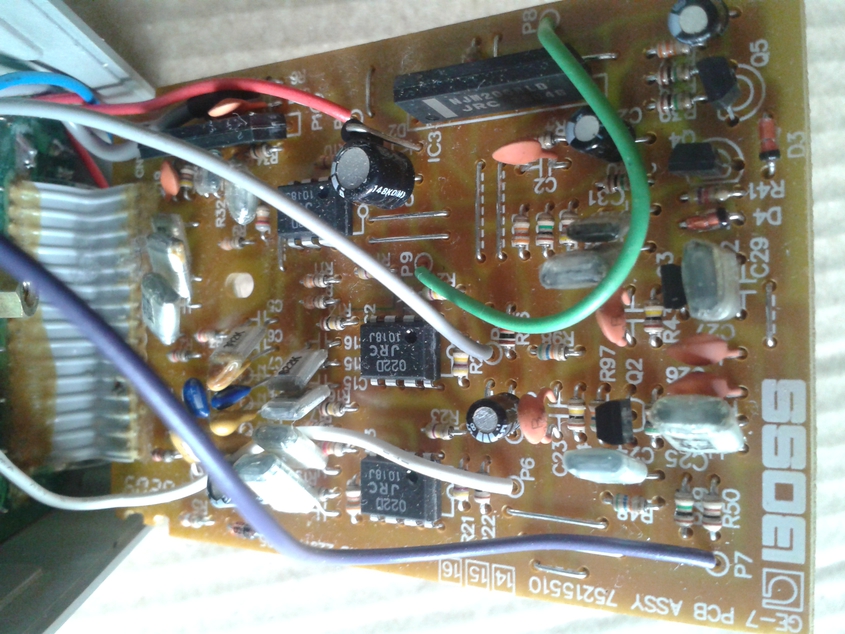
Didn’t expect to see SIP opamps so this was one quite interesting things about this pedal. But now that i’ve been inside of various Boss boxes, the surprise isn’t that big. Other thing that in reality is interesting is definitely the board fastening. All the sliders have their own board, which is fastened to the main board and the enclosure with a single screw. With these few peculiarities boosting the otherwise low interest, this is not a bad tool to have.

How does it sound?
Loudish. Can be used as a clean boost in addition to frequency tweaking. Versatile 7 band eq. Doesn’t sound like “Wohoo”, but rather like “Yey.” One can definitely use this to pre- or post-eq other pedals  in addition to boosting one’s cleans. And distortions.

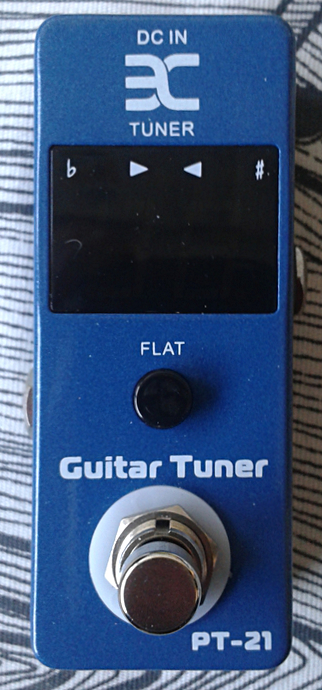
ENO Music PT-21 Guitar Tuner

ENO-PT21

What is it?
ENO Music PT-21 Guitar Tuner, made in china 2013.

I wanted to try something tiny as a tuner for my personal pedal board. The price was one factor. I didn’t want to get another TC Electronic tuner as the old Polytune i have works reasonably well and i’m familiar with the use. Recently i’ve noted that i rarely use the polyphonic mode, so i was pretty interested in these new chinese mini pedals. First i tried it out. Works. Feels responsive.. A/B’d this with my old war horse, Boss TU-2. That Boss is the tuner i use at home for everything from re-stringing to fine tuning the intonation. TU-2 is good, responsive (sometimes too responsive) and very accurate tuner. This ENO is about as fast as TU-2, doesn’t go mad and doesn’t get mixed up in frequencies.

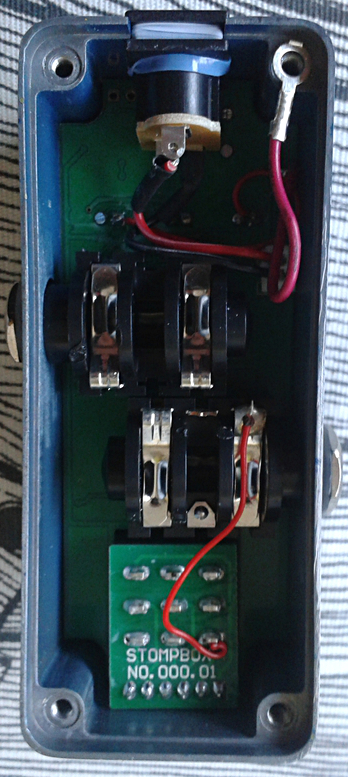
ENO-PT21-guts1

Opening the unit up shows pretty neat work. Everything has its place (ok, the couple red wires could have been replaced by better engineering). The rubber band making the DC jack fit perfectly made me smile. Simple solution, yet quite elegant. At this point i’m not getting deeper about how it works as it is digital design. Maybe i’ll revisit all the stub articles about digital stuff one day..

ENO-PT21-guts2

It seems like the ENO PT-21 is solid and well made tiny tuner pedal. I’m yet to test it on my own board, so we’ll see how it takes some real action – handling the temperature changes and if the frequencies stay accurate on real situation. For home use this cheap little thing seems to be a good choice.

Placed it on my board and used it for a few days. Even though it seemed to be as accurate as TU-2 in the first run, the Floyd Rosed Strat didn’t agree. It does get close, but not close enough. Sad. Sad indeed.

How does it sound?
It doesn’t. But it isn’t supposed to. It is true bypass though. But for the usage.. It’s not the worst tuner i’ve had by a long shot, but it simply isn’t accurate enough for me. Not bad, but i might sell it off rather than trusting it. Oh well. Guess i’ll just need to get that Polytune mini. On the bright side, this is definitely better than DOD FX12 Tuna.

« Older posts Newer posts »

© 2025 killall -9 humans

Theme by Anders NorenUp ↑