Author: mirosol (Page 27 of 29)

DOD Overdrive Preamp 250 (reissue)

DOD-250

What is it?
DOD Overdrive Preamp 250, 90’s reissue in yellow first series style enclosure. Made in china.

This is one of those boxes that everyone should play with at some point in their life. If for anything else, for the feel of that heavvy duty box. The base design topology is pretty much verbatim with MXR Dist+ and probably a hundred other boxes from end of the 70’s up to today.  There are differences though. And good thing there are. As in my opinion, modern Dunlop made Dist+ reissue with UA741 and Ge diodes just suck. But before anything else. Let’s just open this up and see what’s inside.
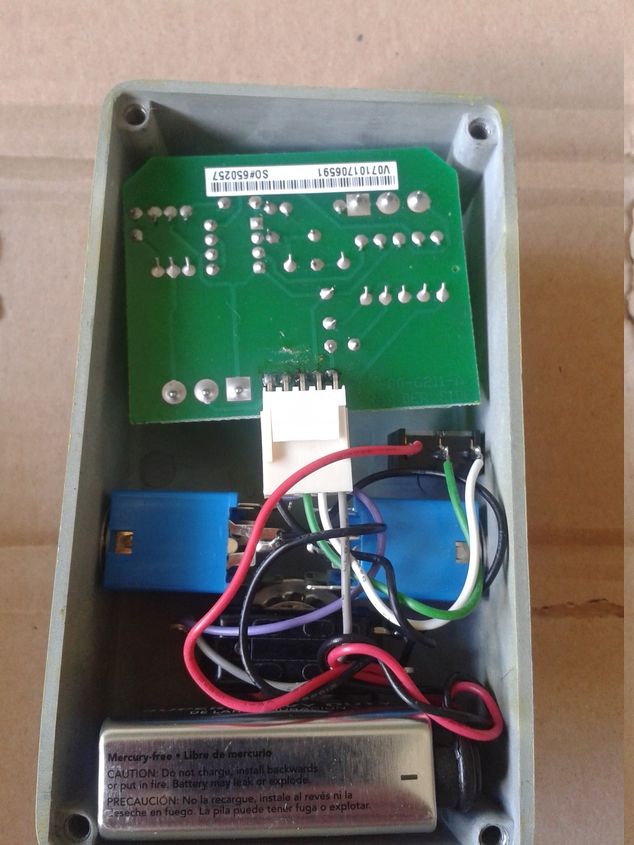
DOD-250-1guts1

Looks quite modern with neat thin circuit traces and connector. Plus the blue jacks. Sadly, no date printed on the board. I really wish that it had a date in there. Would make the guessing process less valid. Components are often good place to start the process. So let’s see what lies underneath that board!

DOD-250-1guts3

There is a dual opamp  in here!

Some documented units here at the internet have KA4558 chip instead of RC-branded one, so that should be a clue. Oldest Fairchild Semiconductor’s datasheet for KA4558 chip i could find is dated 2001, so i do believe that the units featuring Texas Instruments RC4558P are older than 2001. Drop a comment if you know the exact dates when these were made with KA and RC branded  chips. I’d be more than interested to know. The print on the chip is 66CRDYN, which tells me absolutely nothing. I’ve read that usual way for printing manufacture date on the chips is with four digits. Two for year in question and other two for the week of that year. Apparently not for TI chips.

The dual chip can be found only in these reissues. Original design is with UA/LM741 single opamp. Schematic for both versions (one with old single opamp and the one with dual opamp) can be found online, and checking them both out would be recommended. The dual opamp version just omits the other half of the chip completely by grounding the inverting input and shorting the output and non-inverting input. The other half is used as in original. So it is basically just wasting the other half, while staying true to the original.

The box itself is quite loyal copy of the original with the stamp on the back. But there’s also a aluminium sticker that tells us where this unit came from.
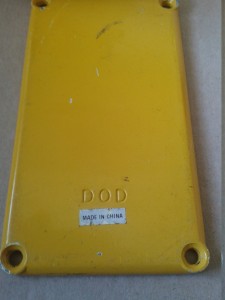
DOD-250-2backplate

How does it sound?
Just amazing. For me, this one sounds way better than any of the single opamp versions i’ve tried. I actually cloned this version of the circuit for myself and i’m using this clone on my main pedal board. Once cloned, i can have standard 2,1mm DC jack and an indicator LED – Wouldn’t want to harm my original to incorporate those features. I use it to boost the rhythm riffs on choruses. Just a tad of boost and mild overdrive in addition to my mildly overdriven base sound. It just brings the songs alive. In my opinion, this is just the perfect overdrive/booster. Better than all the rest. I know some people will disagree. And they are welcome to disagree all they want. I just don’t see myself fastening any other design to my board as an overdrive anytime soon.
Colorless writings, part 2 – The Collector

Second article in this series. I’ll be asking myself questions about collecting these damn things.

Why are you collecting guitar effect pedals?

Well. I guess i’ve been sort of an addict to something for all my life. I decided that ~1250 title record shelf should be enough as a personal library. To some, that’s peanuts. But i was collecting records a few years ago. Until i started to build pedals myself. I built couple of kits that i purchased and most of them worked right off the bat. All of the sudden i noticed that i simply forgot to buy vinyls and cds and spent most of my money on components for pedals. By that time i used to have something like five to ten factory made pedals for my use. And i was building a lot. As i was building pedals for friends, i started to get some factory made stuff in trade.

I’ve been interested in pedals for a long time. For some reason that interested got a bit out of hand later on. Can’t remember my very first own pedal (TS5 or Zoom multieffect monster), but the first i bought with my own money, and really loved was Schaller tremolo. That was somewhere in the year 1999. Had to sell it later on, but many others followed. And got sold. For a very long time i only saw distortion as any distortion, tremolo as any tremolo, delay as any delay and so on. The biggest difference was the controls. I think i was the average pedal user back then. Only through building i became aware of the drastic tonal differences between designs.

I started to request pedals in exchange for pedals that i had built. Of course i had to open every last one of them open to see how these were made. To study them. If the schematic for a design was around the internet – that, in addition to hands on feel to the sound gave me good gut feeling why something on the circuit sounded the way it did. All of it started to make more and more sense. I do not know everything i want to know about electronics, but i now have these gut feelings about many things. Most of my correct assumptions are correct due to experience, not from books or studying.

Back to the question… I do value other boxes more than i value others. Through collecting pedals that i find interesting, i can get a better glimpse of the design and how it sounds. To collect pedals is to learn about them. Sort of like collecting butterflies and learning about biology – if you excuse my super lame figure of speech.

Why you chose to collect the brands you collect? 

The brands are what they are and those are selected by coincidence. I don’t care that much for brands as i do for interesting designs. Some manufacturers just tend to have more interesting stuff on their catalogue than others. Some brands are appealing, and i’ve started on few, but sold all of them quickly if the overall experience has been bad. Like Dunlop made MXRs. I had a few of those (Phase 90, Dist+, 78 Badass dist, Bluebox, Dyna Comp…). But all of them sounded just bad, even those were/are exactly the same as the old, original MXRs – at least topologically and by components. All of those felt and sounded arrogant to me. Only unit i kept is the Dist+, but that’s because i modded the hell out of it.

I’ve had some EHX boxes and still have couple. In my opinion, this is the brand that is nowadays simply overrated. Don’t get me wrong. Mr. Mathews is a genius who has developed many great original circuits. But in addition to those great circuits, he has developed a ton of crud which make up some of the most wanted effect pedals ever. The obvious ones like the Big Muff will always be part of my collection. Octave multiplexer should be mentioned here, as that’s probably the greatest down octave design i’ve had a pleasure to play with. But then.. There’s Memory Boy and Frequency analyzer to mention a few. If you don’t know what i’m talkin about, you should try to get your hands on either of those. I wasn’t the only one who thought my Memory Boy unit was broken…

Where Dunlop made MXRs feel arrogant, most of the EHX boxes feel just wrong.

I’ve always liked Danelectro pedals because of their appearance. First Dano i ever had was the Dan-Echo (unit got sold later on, and i’m looking to score one for cheap at the moment). Which led to finding interest in other Dano boxes as well.

My main collectible brands are Ibanez, Danelectro and DOD. I have mixed feelings about Boss/Roland, and my interest toward Marshall effects has peaked recently. I really don’t have a clue what my collection will be like in a few years. If get fed up with some brand, i might just sell them all.

Aren’t those cheap plastic things just bad?

Oh you mean the Ibanez Soundtanks and Dano minis+Fabs.. Well. Not necesserily. There are some that i wouldn’t call good, but the rest. You’d be surprised. 80’s cheapo will have very different price range today. If the circuit design is good, who cares about the outer shell? This may sound like some hippie “inner beuty” crap, but there is some truth to it. Besides, no matter what the quality of the enclosure may be, almost every repair job i’ve done has involved with something that isn’t caused by the enclosure. Nor the plastic jacks. Nor the “cheap” pots. Actually, most pot replacement jobs i’ve done have been with the ones that are considered to be high quality and endorsed by boutique builders world wide.

You want to get the best for a reasonable price, don’t you? Everyone does. That’s why manufacturers create series that are cheap, but offer the sound you are after – and because you buy them for the price. If no one buys certain design, that design will eventually vanish.

But generally speaking. Bad? Compared to what?

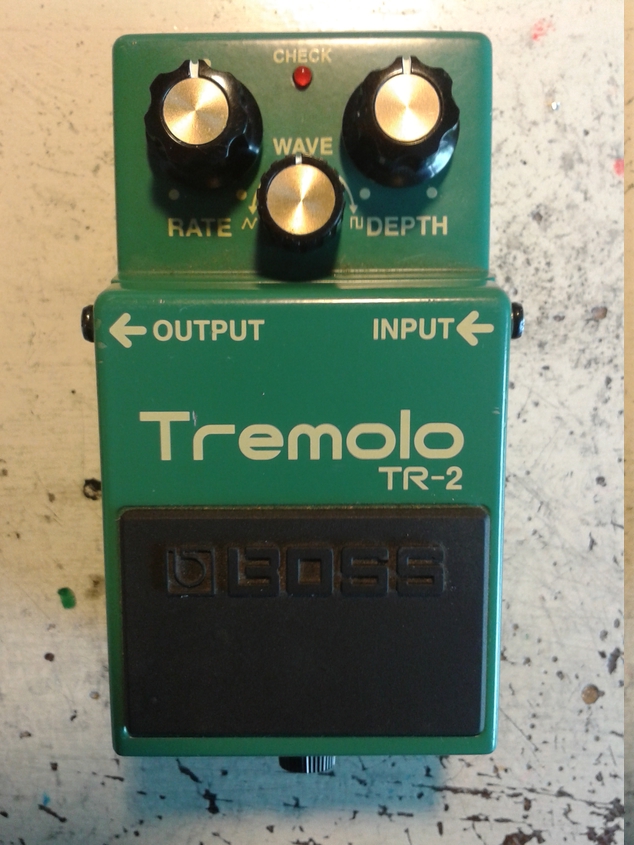
Boss TR-2 Tremolo

Boss-TR2

What is it?
Boss TR-2 Tremolo. Unknown manufacture date. No serial, as the label has vanished at some point alolng the way. This came to me in a trade as a defunct unit. Gladly, it was just polarity protection diode and one burned resistor. No visible damage to the board itself.

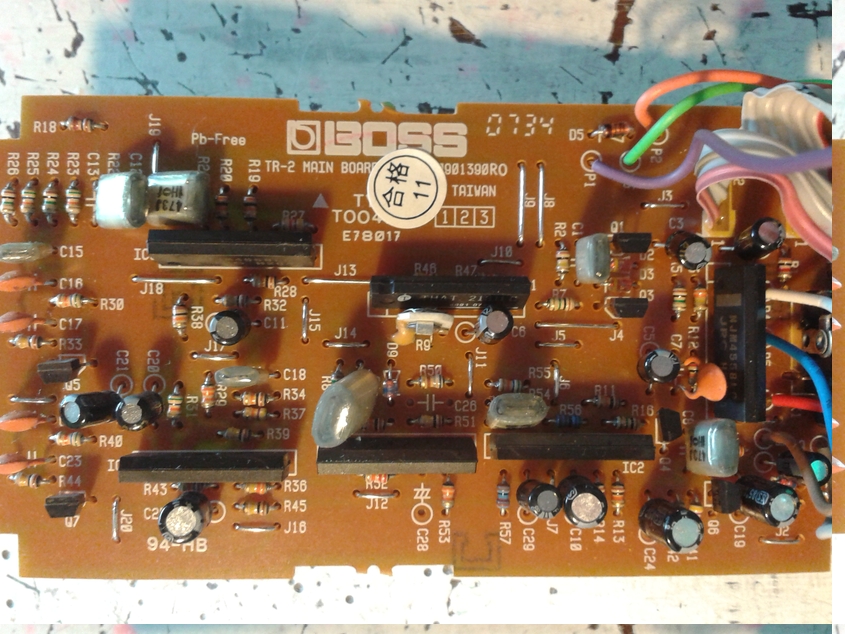
Of all the tremolos i’ve played, this one just seemed solid by construction and sound. Nothing special or anything that made me go wow. Just one of those tools that are good to have. TR-2 was first released to the public in 1997. The Pb-Free label on the board suggest that this is quite new unit, maybe around 2010-11.

Boss-TR2-Guts1

As the photo above shows, all the opamps are SIP-chips. The LFO and gain recovery amps are M5218/NJM4558, while the modulation amplifier is M5207 VCA. The factory schematic (found on the internet) shows how the LFO is created – and how the modulation is applied to modulation amplifier. Neat and simple. Design is pretty straightforward and does not peak my interest more. Controls offer good range, while the wavefrom control is too subtle for my taste.

Boss-TR2-Guts2

Traces on the back of the board show neat soldering, but dull design. Almost machine-like autorouted feeling to it.

Some people have reported that the output level of this design is lower than unity, aka volume drop. I would mostly blame that on human brain perception or psycho acoustics, but the issue can be dealt in other ways too.  As the modulation recovery amp is wired as standard inverting amplifier, there is one resistor responsibe for the output level. That resistor being R12, the feedback resitor of IC2A in the schematic. Original value is 22K, but you could swap it for 27K or try on different values to tweak the output to your taste. You could even replacce that resistor with 50K pot to get control over the output level. Other option to try is to snip the C4 – 100nF capacitor taming the oscillator output. One more option is to lower the value of input limiting resistor of the modulation amp. This being R9, the 10K resistor. 6.8K should offer unity or slight boost. One more mod would be to remove C7. This will omit the high frequency taming at the recovery amp and let more highs through.

One could of course play with all of the above to tune it just perfect to your ears.

How does it sound?
Decent. Not too special, but nothing’s amiss or wrong. Mass tremolo with no personal character to it. LFO wave control leaves me a bit puzzled. It could be a lot better or just a bit more drastic. Not a bad thing to have. Wouldn’t buy this as a new unit, but i’m glad i got.

Danelectro D3 Fab Metal

D3-FabMetal

What is it?
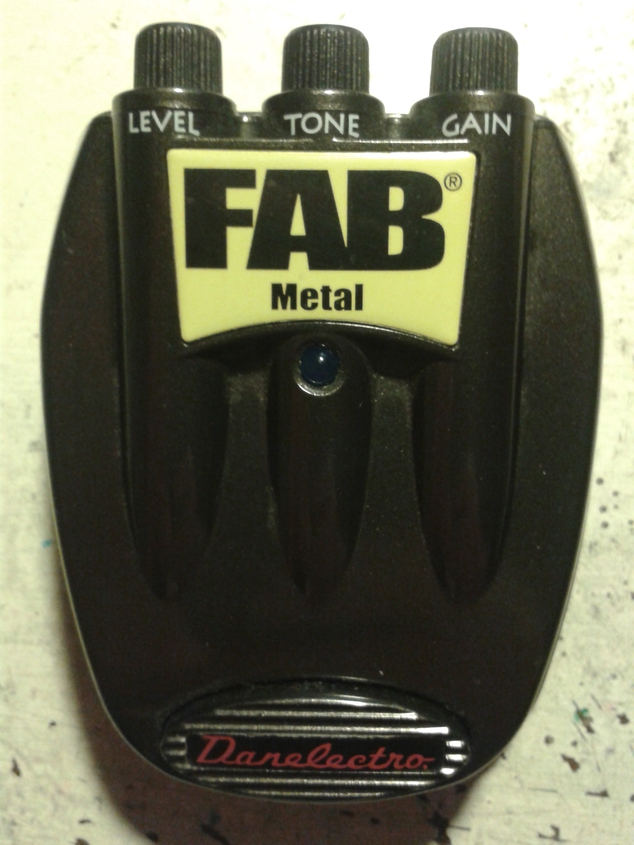
Danelectro D-3 Fab Metal. Fab series, made of plastic and probably the cheapest thing you’ll ever see.

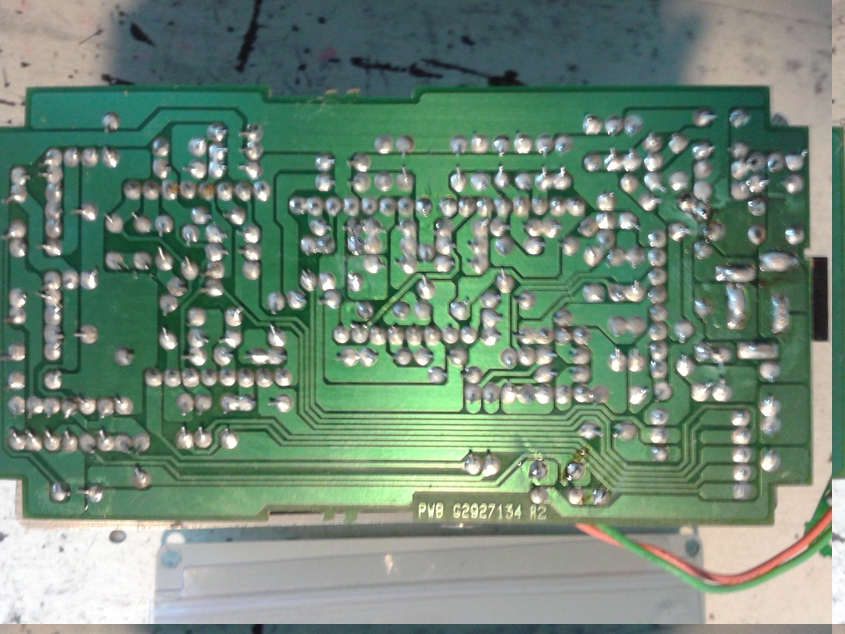
For some reason i seem to gather metal distortions even i’m not a big fan of metal music or the guitar sounds commonly affiliated with it. I do think it’s fun to play with metal distortions at home though. So while i’m gathering more of the missing Danelectro boxes that i want, these tend to arrive in the meantime. Where mini-series boxes vary in build quality, these are very consistent. Consistently bad. As new units currently sell for 15-20€, it is no wonder the build costs have been cut in every single step of the way. Not to say that these wouldn’t work. They will, probably until the end of time. But the board is shielded with a piece of paper that has a layer of tin foil on the other side. Magnet for radio frequencies and manifestation of bad business orientated thinking.

D3-FabMetal-guts1

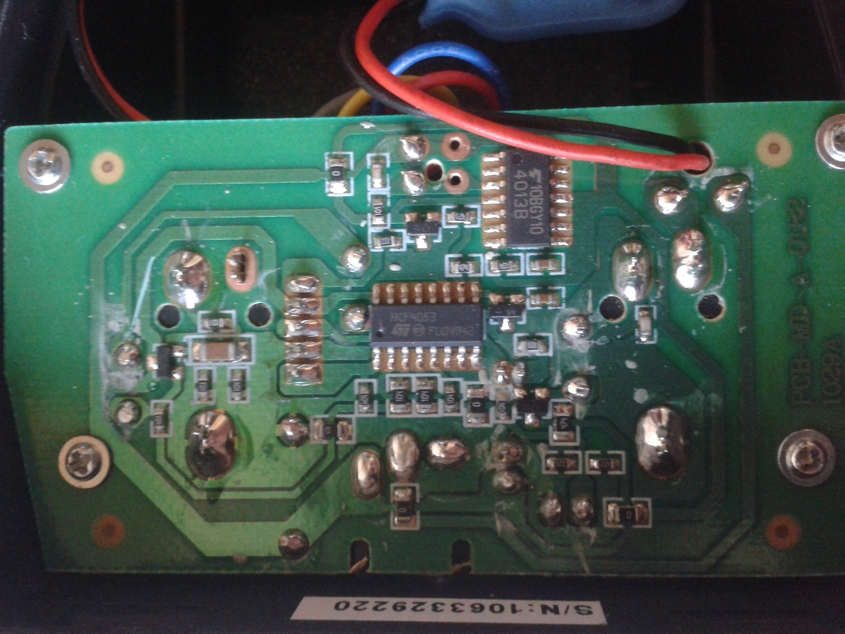
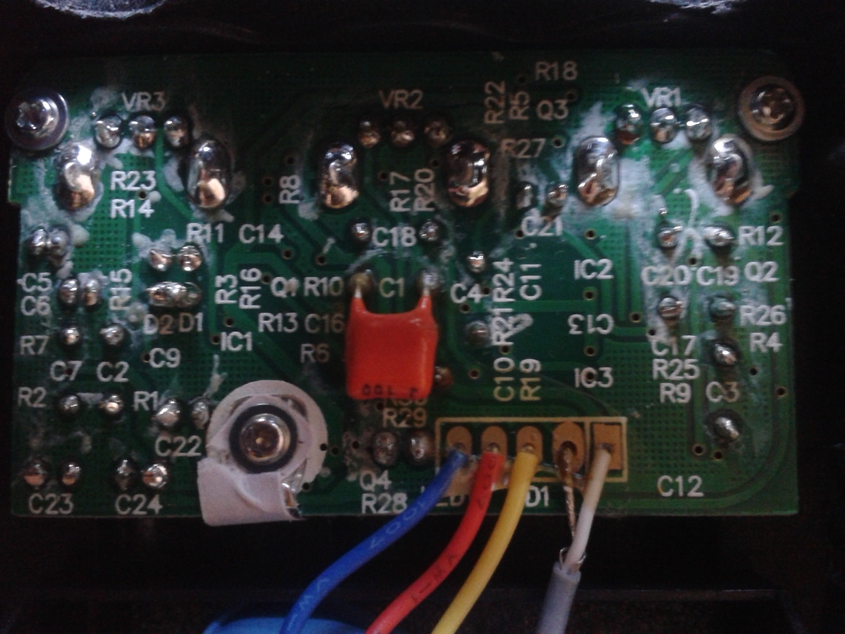
There’s flux residue all ovet the board and soldering looks astonishingly bad. I always have hard time looking at component selection that’s mixing SMD and thru-hole components. Plus the board design looks like a winner of “who can whip up a quickest PCB design” contest. Auto-router is another possibility here. Not eye pleasing at all.

D3-FabMetal-guts2

I can say with certainty that Fab series isn’t designed for active guitarists, but those who are starting to learn guitar – a perfect way to kill the starting enthusiasm for tone hunting is with these pedals. It could be argued if Danelectro should have released these at all. In my opinion, they shoudn’t. These hurt the brand and spread misconception that all Danelectro boxes are made with same (lack of) integrity.

D3-FabMetal-guts3

The design itself is your standard distortion with gyrators and multiple gain stages. Mr. Jones has drawn a schematin in 2006. This doesn’t have component values listed, but i suspect this may not be prime suspect for cloning or modding…

Like stated, the build quality alone make these very much undesirable boxes with no value at all. May the designs inside be how bad or good ever, you’ll be a lot better off with modern chinese cheap brands than these. These may be slightly cheaper, but still. Wouldn’t recommend this series to anyone. This may be the point where i draw the line. I have nothing against Mini series or plastic Soundtanks. These have been created to make money. If the retail prices are as low as 17-22€, you can imagine how much time, effort and quality gets in to the final product.

Danelectro. Please stop killing yourself.

How does it sound?
Awful. Didn’t have very high hopes for the unit, but as a metal distortion, it sucks. However. Once the gain is maxed, this turns into digital sounding fuzz rather than metal distortion. Which isn’t good, but it may have some use in certain situations. As a guitar effect? Avoid this like a plague. As a power electronics noise tool? Maybe.

And no. I won’t be finishing my Fab collection. Ever.

DOD FX57 Hard Rock Distortion

DOD-FX57-HardRockDist

What is it?
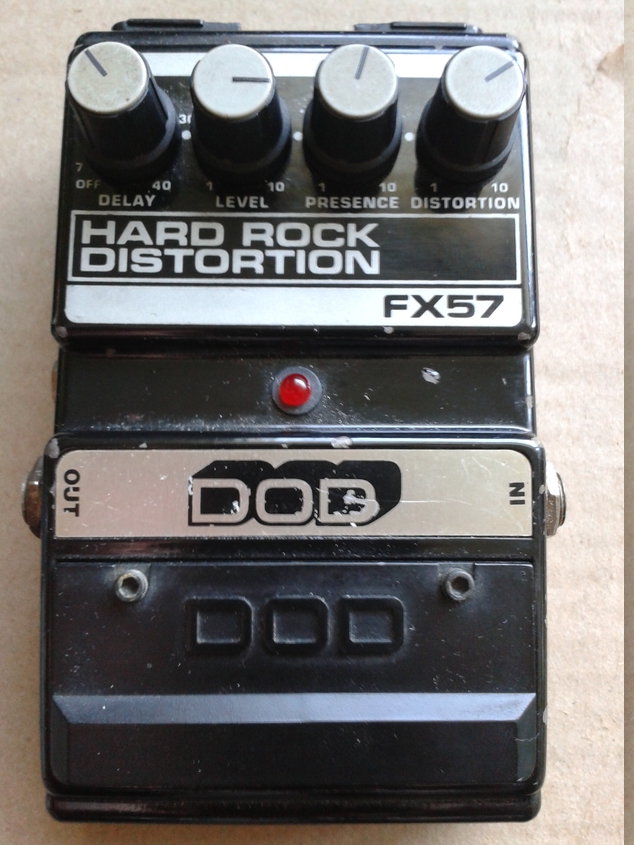
DOD FX57 Hard Rock Distortion. USA made box, dating 1987.

Bad year. 1987 i mean. According to DOD information heaven, America’s Pedal website, the basic idea for this design was already tried out on certain DigiTech double pedal, as well as on one Boss design. And what is this idea? To take a OD/Distortion and place a delay circuitry after it to “widen” or “thicken” the sound. I must say that the idea itself doesn’t sound that bad. Distortion with analog delay? How could that be bad? Well it can. For those interested, the schematic can be found online at Schematics Unlimited. It shows that the delay section is placed  after the main gain stage and to be mixed back to the distorted signal at the level control. The delay itself is created with MN3007/NM3101 pair. Level control is mixing the signal, delay included or not, with virtual ground and passing it to the presence control. The distortion control is basically just a variable resistor limiting the input signal current after the mandatory input buffer – which is needed due to basic DOD electronic switching. There are two trimmers that affect the delay functionality.

DOD-FX57-HardRockDist-Guts

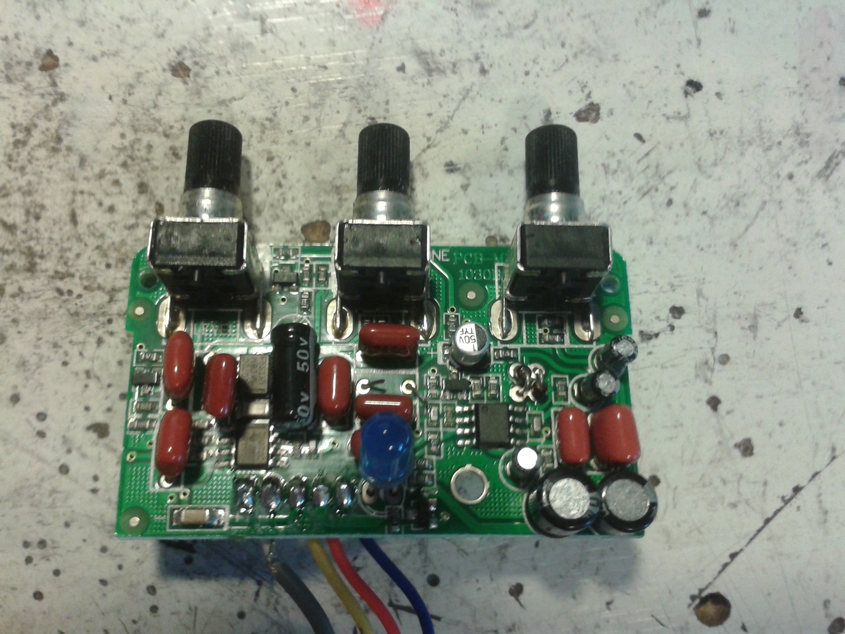
The board looks kinda cool with those yellow mylar caps.

Now what exactly makes this a bad design? Two things. The distortion and the controls. That is a lot for one design. With the soft clipping, placing four Si diodes to the feedback loop of the gain stage offers something that isn’t too far from tube screamers, but the filters and second clipping stage (the Ge diodes) before the volume control gives out texture that isn’t too desirable. And that presence control would need a huge rework to even remind me of anything reasonable.  I personally think that presence is just a wrong word for this control. It should rather be “extreme bass cut pot that we here at DOD didn’t think all the way through”.

How does it sound?
Bad. Thin, hollow and nasal. Turning the delay off doesn’t quite help you. With the distortion at minimum and delay maxed, we can get something that reminds one of usable sound. But it is pretty crappy sounding design. Not all the settings are awful, but none of them are particularly good wither. Overall experience is so crappy, that i have high hopes for this becoming a rare gem – due to low(ish) number of units manufactured in relatively short period and the fact that some people will dispose their units with their everyday garbage. Which wouldn’t be too crazy idea with this particular unit. Not all of the setting combinations are horrible, but in genereal; it sucks and it sucks hard. But it is an interesting failure.

Ibanez CP5 Compressor

CP5

What is it?
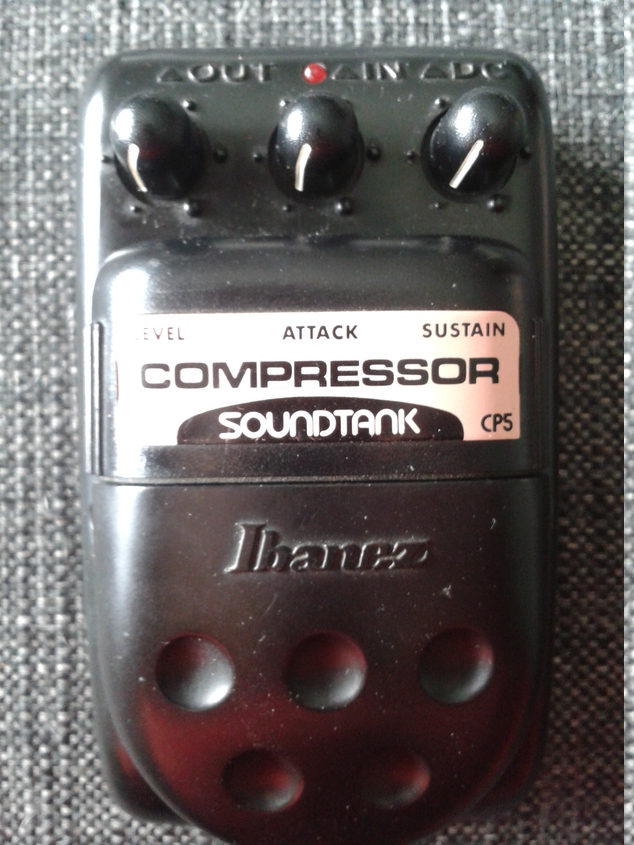
Ibanez CP5 Compressor from Soundtank series in plastic enclosure. Serial points to somewhere around ’95-97. Date is based on a educated guess, as always with these.

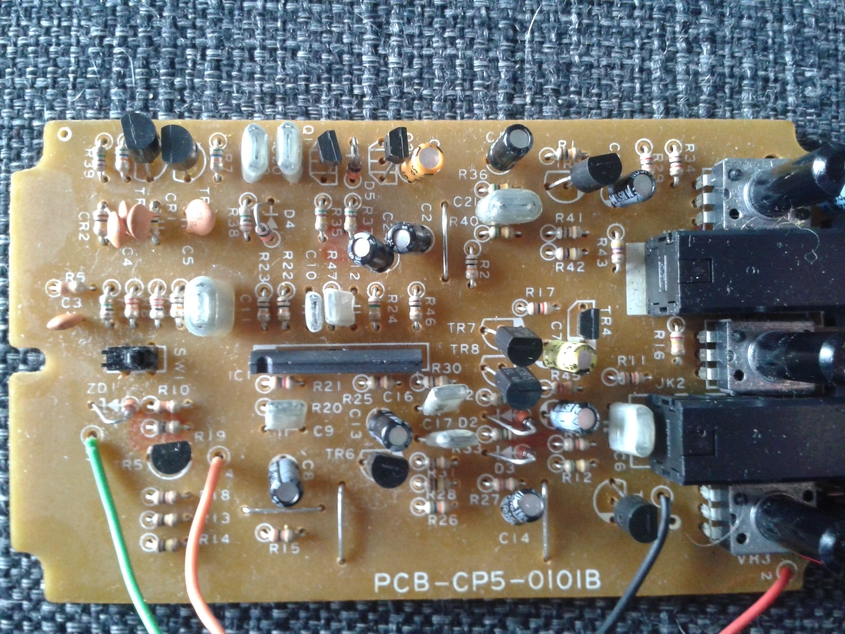
First off. Ibanez compressors tend to use somewhat obscure OTA replacement in a few designs. The 9-pin  SIP-chip in question is BA6110, which is in fact a VC opamp. The datasheet doesn’t have a word about transconductance. It does talk about voltage controlled amplifiers, filters and oscillators. While the chip is way different from the obvious CA3080(A/E) found in MXR Dyna, Ross Comp and about a hundered different derivatives, it can do the same thing. Ibanez uses the same SIP-chip in only tremolo it ever produced, the TL5 – only there the VCA is harnessed to be used with LFO instead of controlling it with the input signal’s voltage. More about the tremolo once we get to it.. This post is about the compressor.

CP5-guts

To study the schematic, you can check it out on Dirk’s page. His trace is beautiful work of art as always. All the other stuff going on with the circuit are relatively close to Dyna/Ross, so the base design is and isn’t a ripoff at the same time. I’m not quite familiar where in the Ibanez/Maxon design timeline did the BA6110 chip arrive, but it seems that the Master series CPL was the first one. Followed by CP10 and this circuit. Which are, all three of them, pretty much the same thing. In other words, an VCA adaptation of CP9, which uses more traditional LM16900 dual OTA. Which is, CP9 i mean, actually Dyna/Ross comp with dual OTA (second half unused). So the histroy behind this Soundtank CP5 is pretty clear. This time, the design revamped by the Maxon/Ibanez  team is better than the original.

I can say this with confidence. All four mentioned above do work and sound a lot better than currect Dunlop/MXR version of the Dyna.

How does it sound?
One of the great ones. Where as MXR Dyna is a lot more like shock effect with it compressing way too much even on minimum settings – This one can be used on all the time without excess noisy mushiness. Of course it can be turned to the max, which makes it quite close to Dyna. In a few words – Really good sounding compressor with classic feel to its sound. Doesn’t give you as much noisy mush as CA3080 designs, but good compression that thrives with a telecaster.

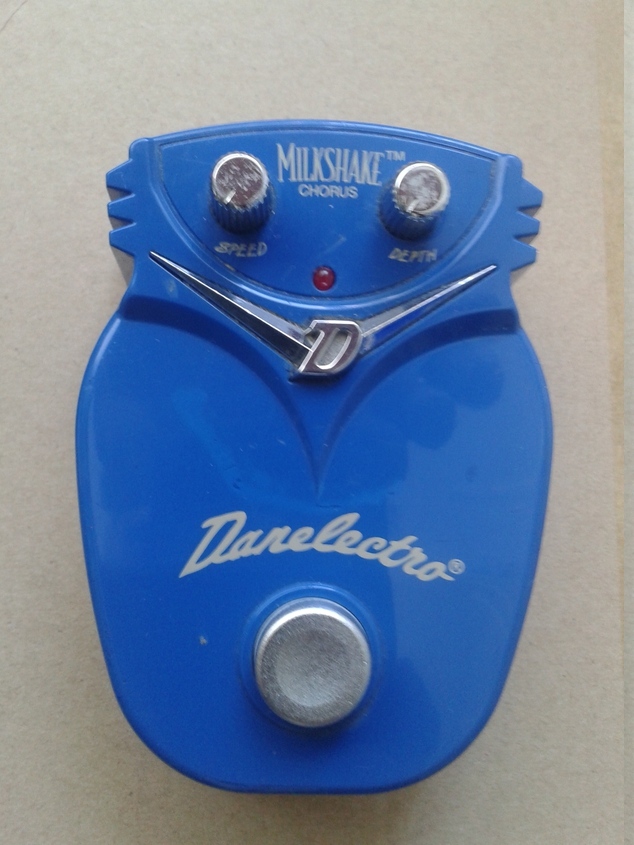
Danelectro DJ7 Milkshake Chorus

DJ7-Milkshake

What is it?
Danelectro  DJ7 Milkshake chorus from Danelectro mini effects series.

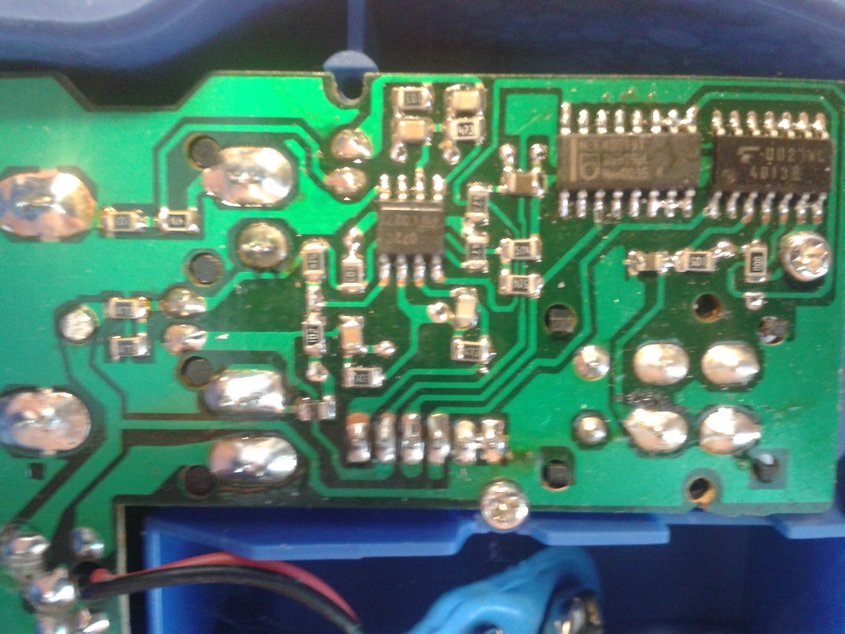
Not bad at all. The series is notorious for what it is – the cheapest possible way to come up with a guitar effect pedal. What Dirk Hendrik states on his site about plastic Soundtanks applies here too. I’ve never come across Dano Mini with broken enclosure. While one can criticize the series all he/she wants to, there are still  a lot of great designs available. This may not come as a surprise, but this one is one of the prime suspects for a rehousing job. Not too much of good information to go on. Maybe i need to tear this completely open one day.

DJ7-Milkshake-guts

I’m not going to rehouse this, unless i get another unit. But as Dano minis go, i wouldn’t make it true bypass either as there’s no real advantage in doing it. Now that i’m heading back to the heresy section, i can say that i’ve never had a problem with buffering eating up my tone with any of the Danelectro designs. Like with most minis, i’m left with mixed feelings. I can see why someone would disregard the whole series because of the box. I’ve even heard rumours that some folks may have had issues with grounding on these. Minis are without a doubt the ugly ducklings of the cheap pedal world. Switching seems durable. Most of the designs sound great. Bypass doesn’t suck. Prices of the new units are very high considering..  ..if you can find a new one these days.

How does it sound?
It’s reasonably good chorus. By the sound itself and not going deeper into tracing the unit, i would say it’s close enough to Boss CE-2. May it be far or close by design, you’ll still be able to get good chorus sounds with vintage feel for a fraction of what CE-2 costs.

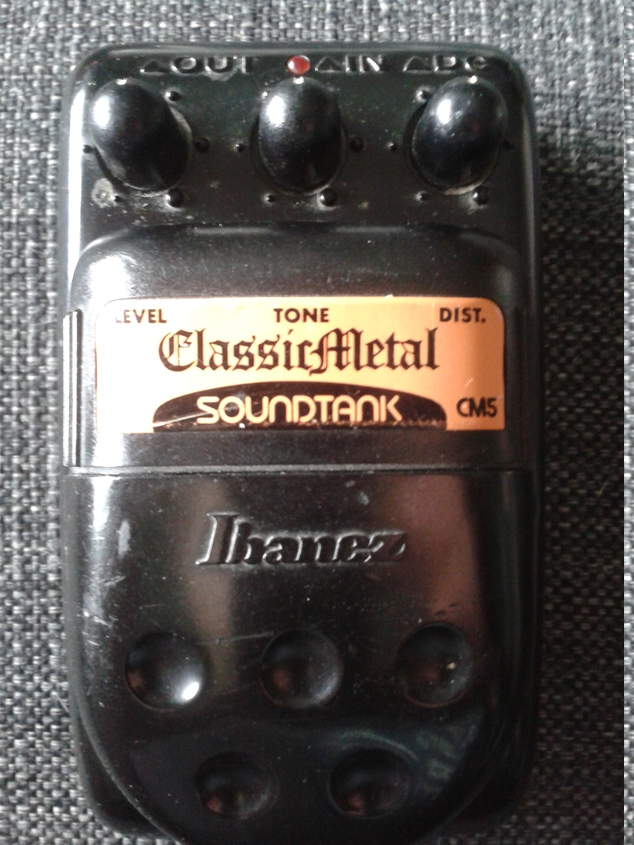
Ibanez CM5 Classic Metal

CM5

What is it?
Ibanez CM5 Classic Metal from Soundtank series in plastic enclosure, made in Taiwan. Condition could be better, but after swapping the switch it runs like a charm. I never thought that dents or scratches affected the sound in any way. Late 90’s date, so this unit isn’t the most valuable soundtank in my collection, but its value comes more easlily through use.

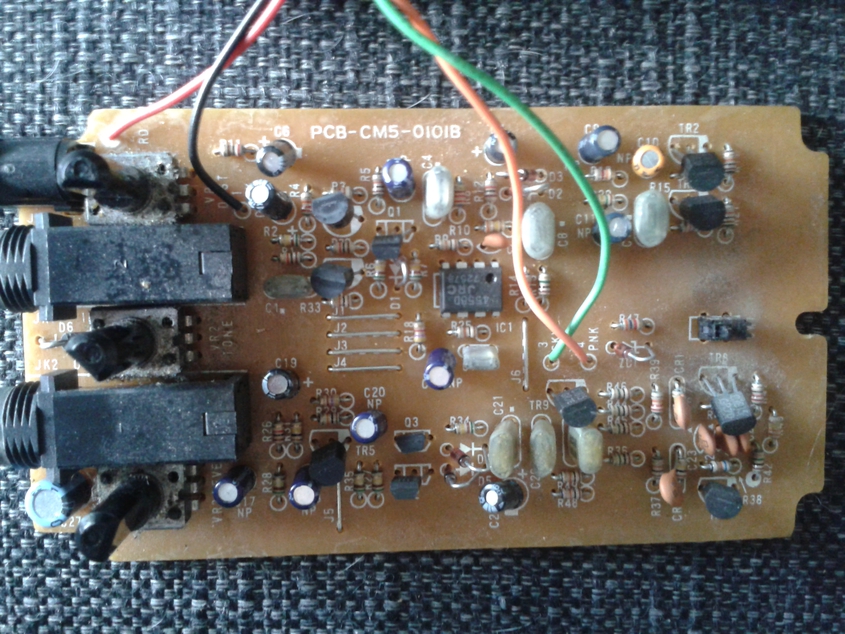
This is one of the pleasant surprises in the series. Name and basic controls do not raise interest that much, but once plugged in, my face just raises a smile. Clean high gain distortion without noticeable noise content. Simplified Rat as main gain stage that drives a pair of hard clipping diodes. Followed by two active gyrator filters for tone control and taking ecxess frequencies out of the signal. Standard Ibanez switching and buffering included. Simple, yet effective.

This one’s gain stage could be modded closer to a Rat, but as it is – i simply don’t see a reason to do so.

CM5-guts

The board seems quite spacious when compared to some other Soundtanks. Basic, good use for JRC4558. Other half for gain stage and other for tone driver. Again. Simple, yet effective. For those interested, Dirk has a schem up at his site. All in a nutshell – its main stage may be based on a Rat, but overall design doesn’t have too much in common.

How does it sound?
Surprisingly good. Subtle overtones for those high note bends, massive but accurate chord rhythms. In general, very underrated pedal with really good sound. It is just a one trick pony, but does that trick really well. One that should not be overlooked.

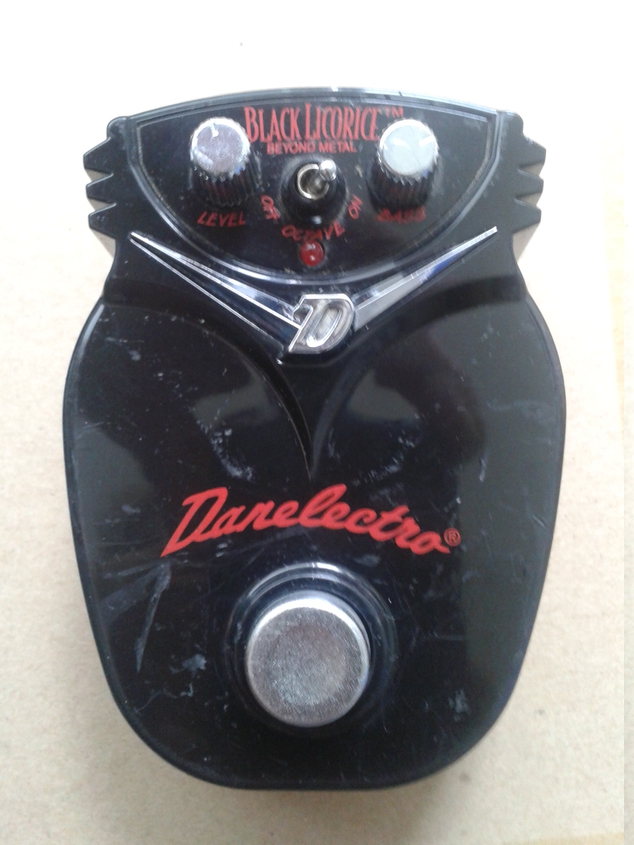
Danelectro DJ22 Black Licorice Beyond Metal

DJ22-BlackLicorice

What is it?
Danelectro DJ-22 Black Licorice, Beyond Metal from Danelectro Mini effect series.

While many designs in the notorious mini effects series are surprisingly good and most of the designs have some really nice tweaks or upgrades to some other, known classic circuits, this one disappoints in so many ways. If you didn’t know already, i’m somewhat a freak when it comes to octave down effects. As some of you may know, the most common way to create down octave divider sounds is to drive the hell out of  CMOS flip-flop IC. This one is not an exception to that rule. Design reminds me of also notorious MXR Blue Box. There’s something very wrong with the distortion design and the way it handles lower and mid frequencies. Board also feels way too crowded to bother with modding it for more pleasant frequency response.

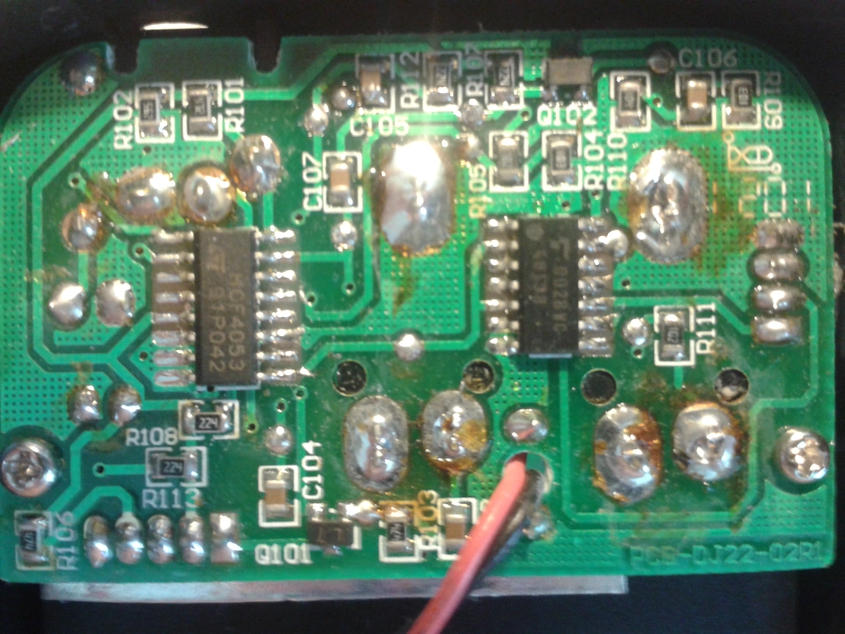
DJ22-BlackLicorice-guts

Standard mini plastic enclosure, crammed with substandard soldering. Toggle switch bypasses the octave dividing circuit, which acts pretty much in the same manner as Blue Box’s blend control. Next paragraph will tell you why i didn’t dig any deeper to what it does and how.

How does it sound?
Bad. Honking, plasticky and thin, despite the basic octave divider circuitry. Where Dunlop’s Blue Box sucks with its way too low output, this one sucks with everything else. Divided octaves sound reasonable good, but the distortion part is just bad. Worse thhan Fab Metal (more on that later…). Definitely one of the worst (re)designs in this series. Wouldn’t recommend it, unless you are a true down octave aficionado. And even then. This may be good only for trying it once. My first encounter in this series that sounds exactly like it looks. Too cheap. This may be the one Danelectro effect that won’t ever let you get your pennies back.

Ibanez No.95 Renometer

Just because i happen to feel like it, here’s another post for today..

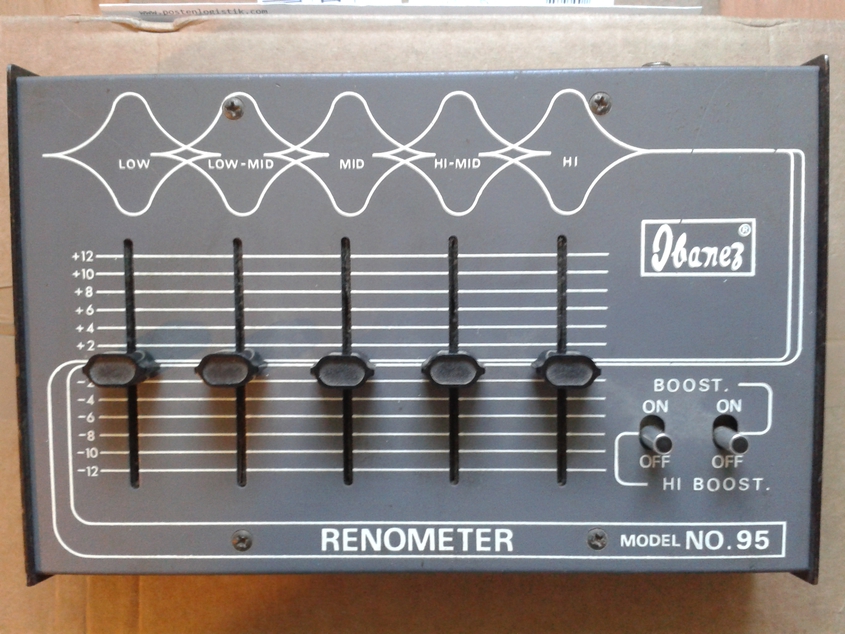
Ibanez-NO95-Renometer

What is it?
Ibanez Renometer Model No. 95 EQ/Booster from mid seventies.

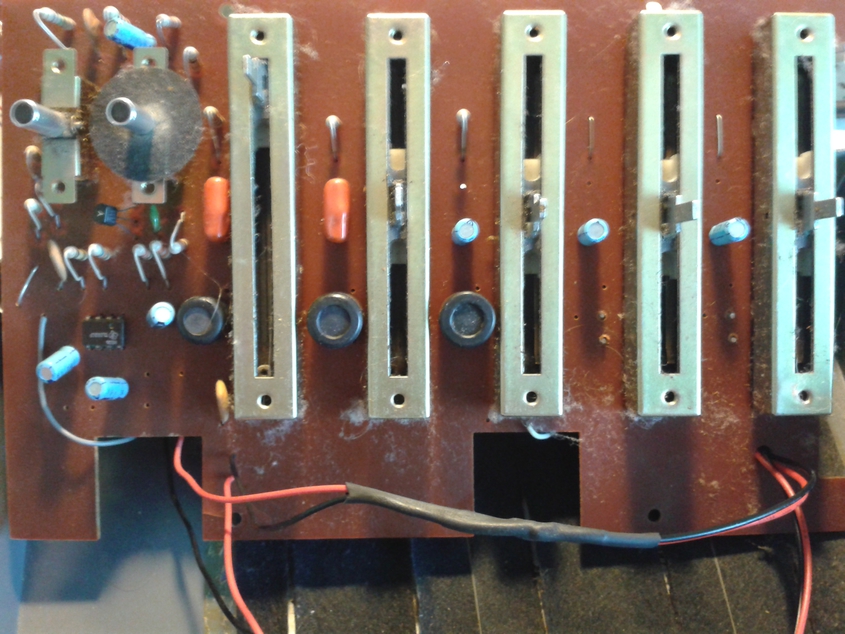
Got this unit in a trade some time ago. In very good condition i might add. Plugged it in and had no response. Gladly, the only broken thing was one of the battery snaps. This requires two 9V batteries, as it runs with +9V and -9V, using gorund as vref. Measured current consumption settles round 5mA, so those two batteries should last a long time. Couldn’t believe my ears how loud this thing is. The boost switches work in mouth watering manner – offering even more raw clean boost. While trying out the sliders, i noticed wah-like textures to the sweeps. Opening the box up confirmed it.

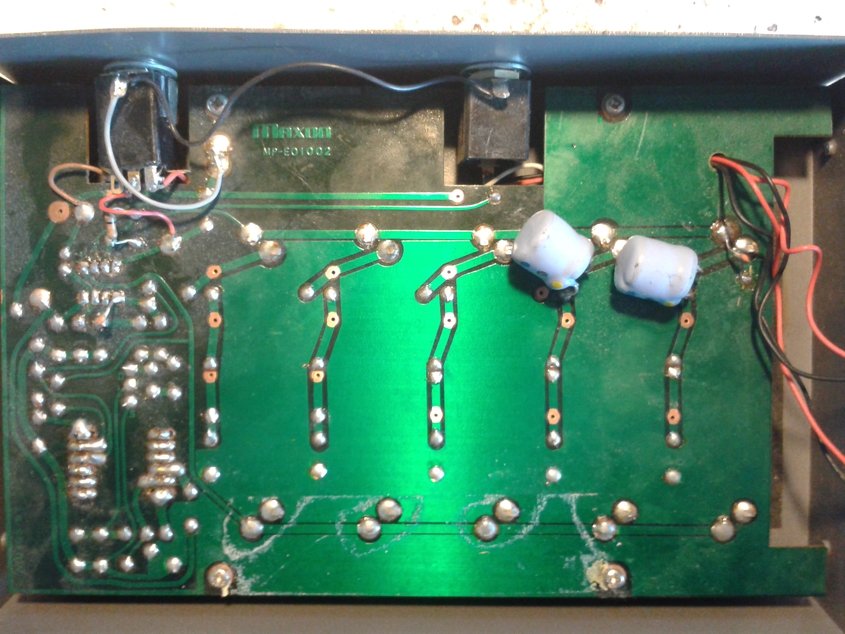
Ibanez-NO95-Renometer-Guts1

The sliders are basically five simplified cry baby wahs that are wired for cut and a boost. The print on the cover has +12/-12dB on it, but i’m having hard time believing that it is just 12dB that this thing adds to the signal. Maybe it is, but it gets multiplied by all the 5 frequency ranges. The photo above shows tha the inductors for lower frequencies are so huge that they are mounted on the “wrong” side of the board. The image below shows the smaller inductors next to the slides.

Ibanez-NO95-Renometer-Guts2

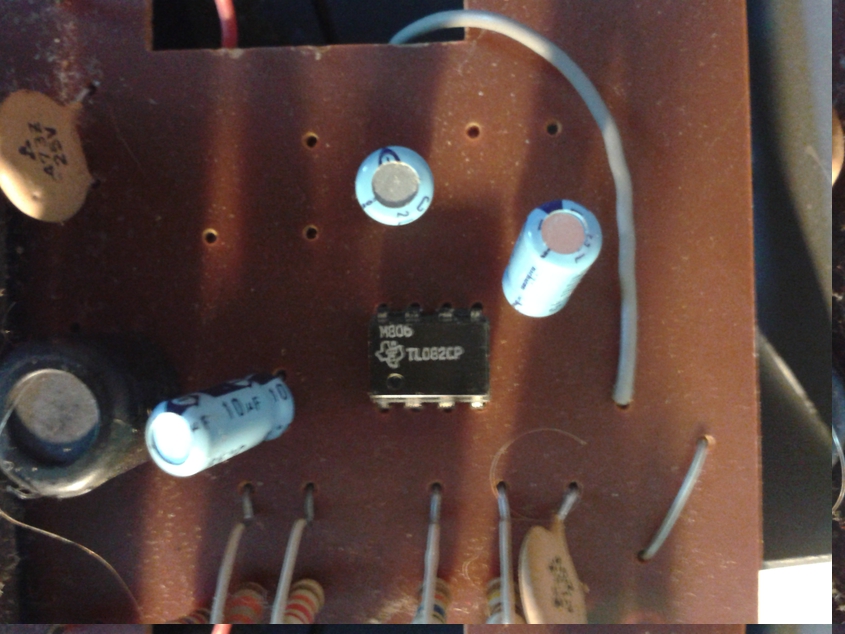
Didn’t have hard shell battery snaps with long enough leads, so i soldered the new one to the old wires and cleaned it up with heat shrink tubing. As you can see from the board photo, the part count is pretty low. Which made me question what was driving it to offer so much sheer volume…

Ibanez-NO95-Renometer-Guts3

Just one TI TL082. I heard loud effects with TL family chips, but not this loud. I could be just because of the +/- voltage swing that takes the volume to this level. I do wonder what the empty holes are for…

Oh. Once again, Dirk has a perfect schematic published on his site. His unit seems to run on JRC4558 and it has an dc jack. Neither of which are present in my unit.

How does it sound?
Clean and Loud. If it weren’t for the 5 huge inductors, this one would get cloned immediately and that clone would get a permanent spot on my pedal board. No distortion at all. Just a perfect, super loud EQ booster. Actually. I don’t know of a better sounding one to exist.

« Older posts Newer posts »

© 2025 killall -9 humans

Theme by Anders NorenUp ↑