Author: mirosol (Page 8 of 29)

Digitech XBW Bass Synth Wah

Digitech-XBW-SynthBassWah

What is it?
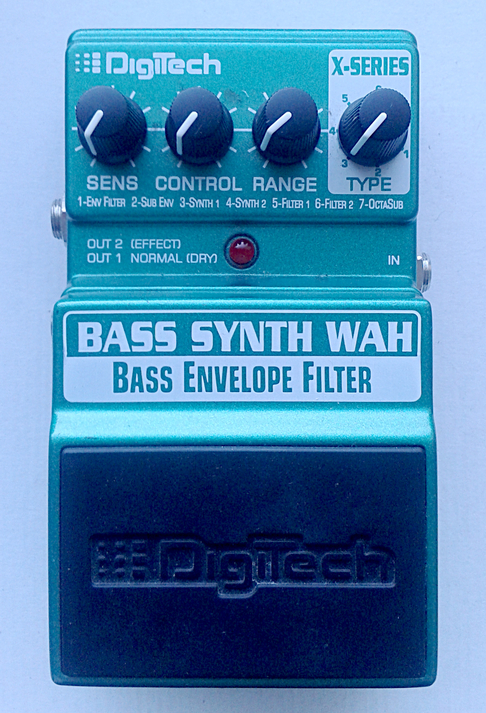
Digitech XBW Bass Synth Wah, Bass envelope filter from X-series. Made in china around mid-00’s.

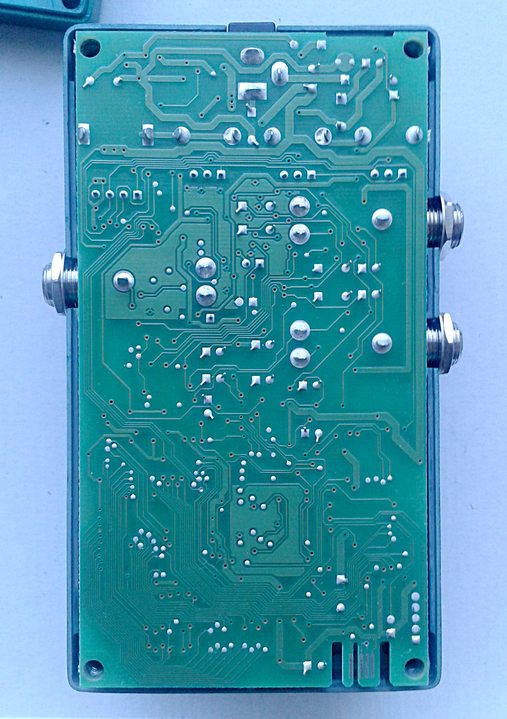
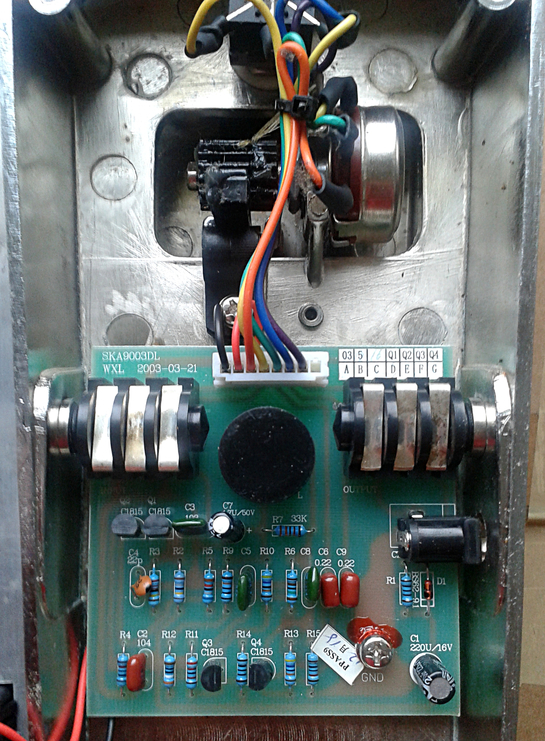
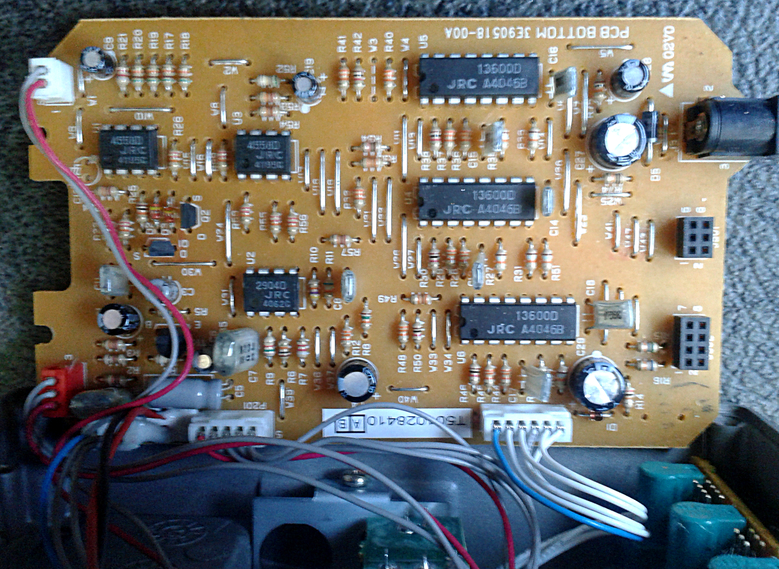
Ok. I’ve had some of the X-series boxes lying around for quite some time. Just didn’t find it in me to open them up until now. All them sounded and felt reasonable good on initial tests, so i just took the stance of “decent, not great, but decent” and left them be. Now i figured i would finally start checking them through. XBW is a good unit to start with. Good features and there is some notable usability in there. Sure this isn’t meant to compete with Boss SYB-3/SYB-5 with its lower price point and slightly smaller feature set. I haven’t seen schematics for any of the X-series boxes around. Opening the bottom plate gives a clue for why. There are vias like drops in the ocean.

Digitech-XBW-SynthBassWah-guts1

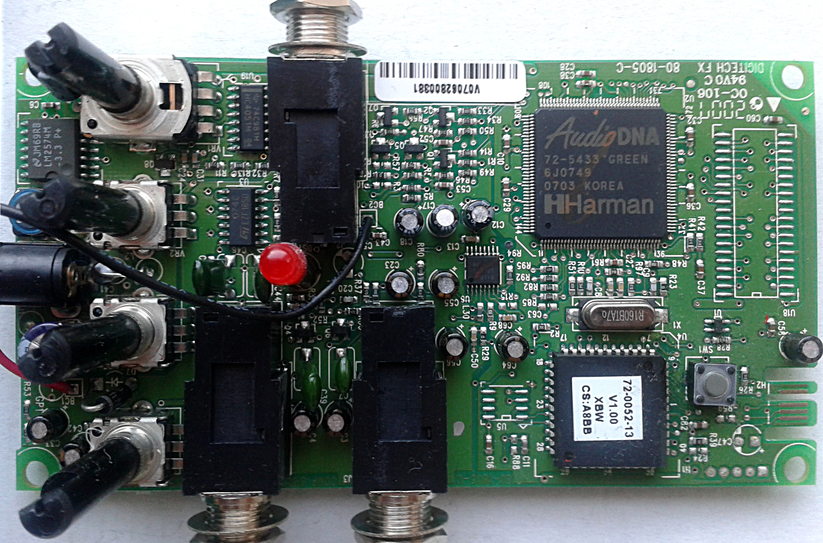
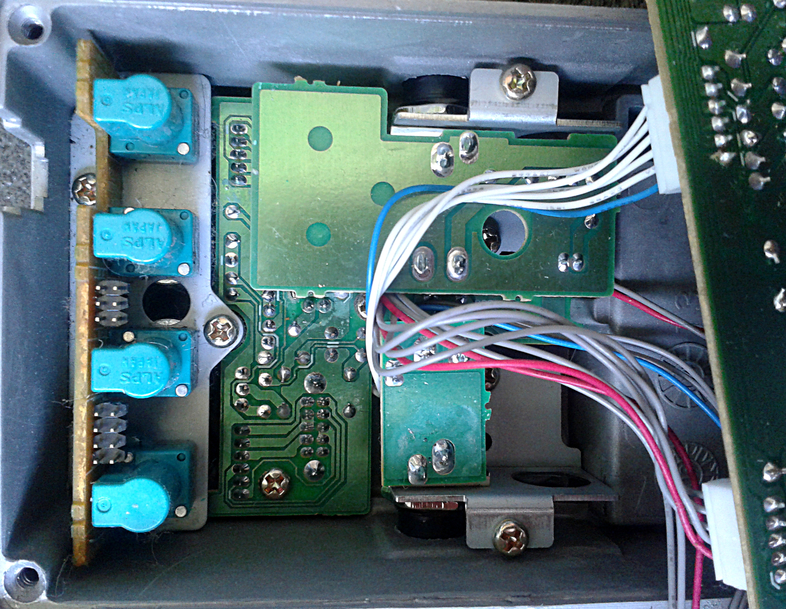
For starters, super dull, auto-routed board design is quite off-putting. Next, the brand is called Digitech. Which made me slightly cautious and suspicious, since the Distortion series is all analog and has roots deep in the old DOD catalogue. Flipping the board over shows what’s really going on. Harman (the mother company of Digitech) branded AudioDNA digital signal processor with crystal oscillator and a ROM. Now this is what the digital effects are made of. Don’t have to see the schematic to tell you that there is analog signal path with buffers ann switching, followed by AD/DA conversion and another set of buffers and switching components. The effect is in the slash between AD/DA.

Digitech-XBW-SynthBassWah-guts2

This made me worry a little. Could it be that Digitech X-series is as boring designwise as post-2005 Boss pedals? This meaning that the circuitry is exactly the same on all boxes, just with different digital control for each and different code in the ROM chips. Nothing too wrong with that. It’s just that my interest about the X-series boxes just got stomped even deeper in to the ground.

How does it sound?
Like a working “bass synthesizer” pedal. To get a picture, we need to compare it to something we already know. Boss SYB-3 is well more feature packed and wilder in its sounds. Same thing goes for Ibanez SB7. I’d say the synth sweeps here are duller than the competition, but there isn’t that much negative to the sound. More boring than the competition, but still a decent entry level bass synth/autowah unit. For the price and your home recording applications – i’d say this will suffice. Works and sounds pretty good on guitar too. Leaves me baffled, but still trusting.

Carlsbro AC1160 Wah Wah

Carlsbro-Wahwah-2

What is it?
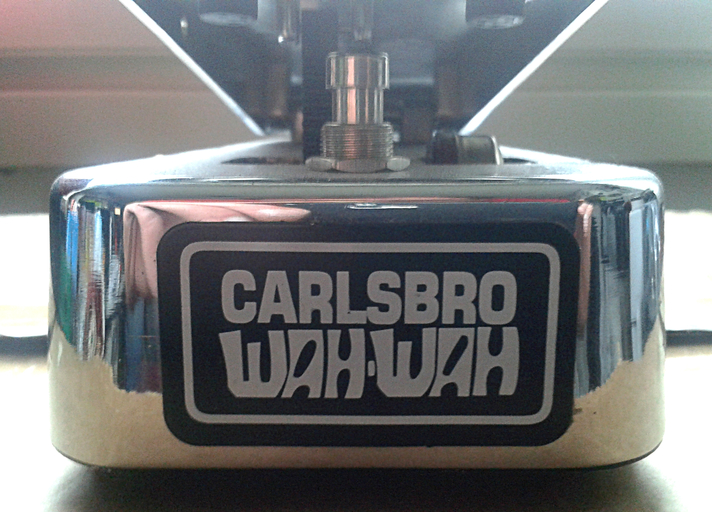
Carlsbro AC1160 Wah Wah. Made in china around mid 00’s.

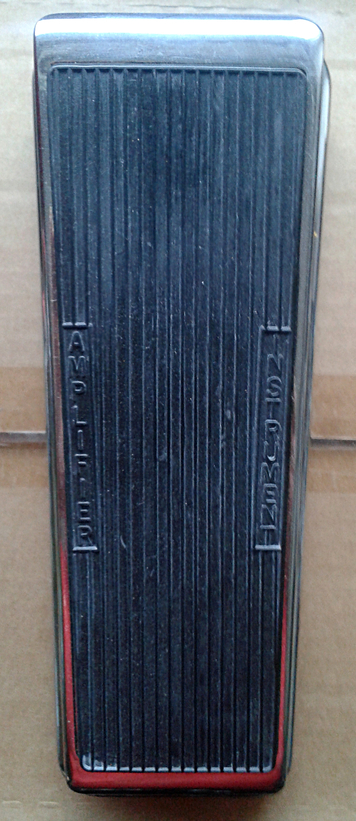
A wah in a standard Cry Baby sized enclosure, but instead of the basic black, the surface is cool looking chrome. By starters, i must confess that i’m not a big user of wahs. Since i taught myself to user choruses, i still noticed that those can’t be used in as many applications as one might have thought. Same goes with wahs. Some folks will love them and use them a lot. For myself, i just don’t see it. I’ve tried to keep and use one on my main board a few times, but no. For me, the wah use is for studio sessions and mainly just doubling the overly fuzzed lead parts to get more lively overall tone. But that’s it. I just don’t use them. I think i do know how to use them (short, quick sweeps to accent the notes and/or long slower sweeps for the funkier parts). Still. No.

Carlsbro-Wahwah-1

Got this one from a friend with bottom screws, battery door and rubber mat from the top missing. All those parts are quite easily available, but they do not come that cheap. Since i though i’d like to have this in my collection in as pristine condition as possible, i restored it to it’s original state. It’s in decent condition, and yes. It is very nice thing to have in the world of hundreds of different wahs. The enclosure and the board have the same footprint as most other commercial wah pedals. Meaning that one could very easily swap the board for standard Cry Baby or Vox board. The board layout does look different from those two mentioned, but the inductor has the same spot as in Cry Baby. What comes to the enclosure, this model for the box has been around since the late 60’s with only a few revisions. Since it ain’t broken, why try to fix it?

Carlsbro-Wahwah-guts

Must admit it. Simply due to lack of interest i haven’t dug any deeper.  But taking the Carlsbro track record in to account, i highly doubt the circuit is anything out of the ordinary. The interwebs tells a story of the early Carlsbro wahs being just OEM’d Colorsound pedals. Since this is the 00’s (or 10’s), this may not be the same thing as it was 40 years ago. After all, this pedal is recent production and made in china. At one point i may try to get a hang of myself and just trace it. But for right now.. Nah. Once and if i get around to that, we will then know how this differs from other wahs. This post might get an update at one point.

How does it sound?
Not that different from standard GCB95 Cry Baby, currently manufactured by Dunlop. Well sweeping unit with solid overall feel to the construction and to the sound as well. Not much negative to say. But on the other hand, not that much positive either. Good solid sounding standard wah pedal. The same caveats that bother me with standard Cry Baby are in place. Annoying switching and no status LED. So in other words, this is decent vintage-like unit with nice amount of user value. Nothing special, but not bad. Nice and cool looking thing to have.

Boss OS-2 Overdrive/Distortion

Boss-OS2

What is it?
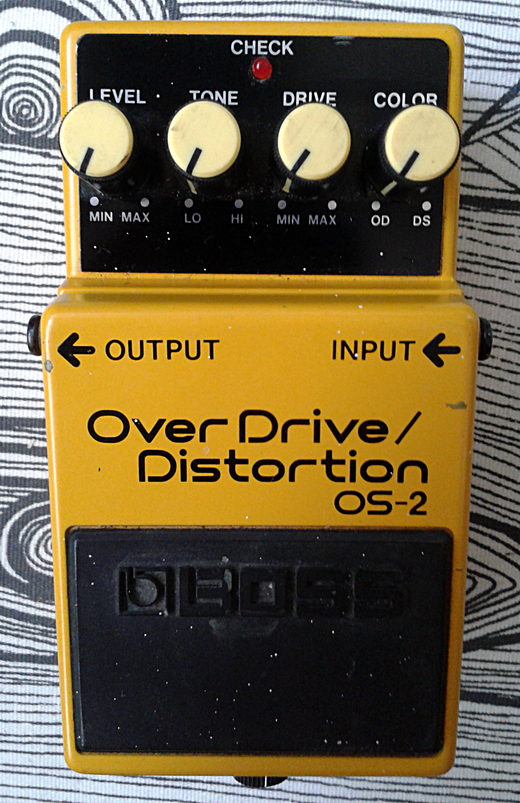
Boss OS-2 OverDrive/Distortion. Made in taiwan, january 1996.

I was rather keen on trying this one out. I find the idea of OD and Dist made blendable in a single unit intriguing. This, among with other basic or classic hits as DS-1 and SD-1 are probably the cheapest and most common boss pedals around (sure the number of Metal Zones sold may top everything, but still..), so the money spent versus the fun had was nicely in balance. Before digging any deeper, let’s take a look at the board.

Boss-OS2-guts1

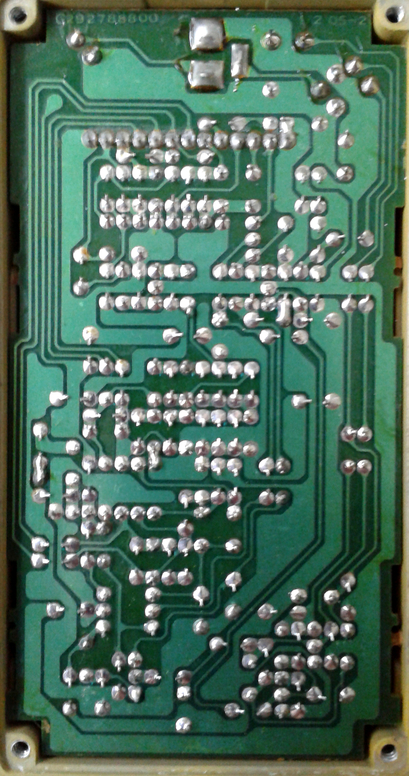
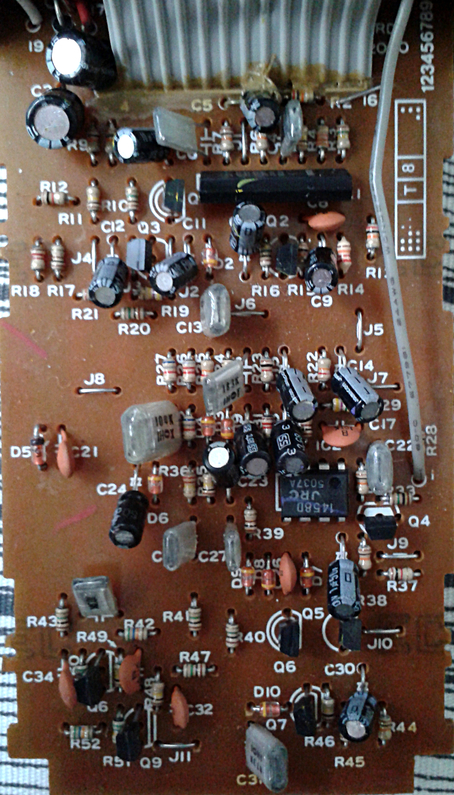
Just as one would expect from a boss pedal that was released in 1990. All the japanese hand craft pointers are already gone and CAD software with auto-routing feature has been in use. Nothing even resembling a visual beauty has not been a part of the board designing process (yes, you can argue that it doesn’t have to be as much as you want).  So no matter what way we look at this, it is just dull looking, but well functioning board. There would have been room on the board to place things differently, but why bother. It’s not like anyone else than some pedal freak/enthusiast will ever be looking at the board from a visual perspective. But let’s look forward. There’s a traced schematic up at FIS. This is where things get a lot more interesting.

Boss-OS2-guts2

The switching and input buffering are per most analog Boss boxes, so nothing of interest in there. After the input buffer the incoming signal is split in two ways. The upper part in the FIS schematic resembles a ProCo Rat with its dual high pass filters and hard clipping. The WTF points go to post clipping filtering. After this filter network, that sort of mimics the filter control on Rats, there’s an buffer stage, followed by a mixer amp that takes care of the mode mixing with a pot called “color”. But we’ll need to back up a bit. The second path from the input buffering was sent to an overdrive stage. This stage isn’t a lot different from SD-1 clipping amp with its asymmetrical clipping diodes in the feedback loop. There is more gain coming out of it and the high pass filter is set lower than in Tubescreamers or Super OverDrives. The output of this clipping amp is then fed to the other side the color pot. The gain setting is the most peculiar thing in this design. It’s a dual (or as some folks like to call it – a stereo) pot with value of 270K that sets the feedback resistor for both sides simultaneously. Rest is just the tone control not completely unlike the one in SD-1 and the output buffering.

So yes. There is some effort in the design. I’d even go to lengths to call some parts of it interesting. Simple, but convincing. Nice design in a cheap package. But then comes the issue.

How does it sound?
Not that great. If we start with the OD side of the color pot, the biggest thing that the sound does is raise eyebrows. Maybe even shoulders. It mid honks its way to the drive-in and leaves you with warm cup of soda and cold fries. But the distortion side of the color pot is the burger. Double cheesed and not bad at all. It sure does remind me of a Rat, but not to the degree where it would be “something alike”. Nope. It’s sleeker in its tone and does not go as mushy. Not a Rat, but not a DS-1 either. Good sounding distortion that goes closer to DS-2 Turbo Distortion range. So overall sound of the pedal isn’t too impressive. But it isn’t bad. These do come cheap, so you might as well get one. Hope you like your soda warm, fries cold and burger delicious.

Rolls RFX970 Vibraflange

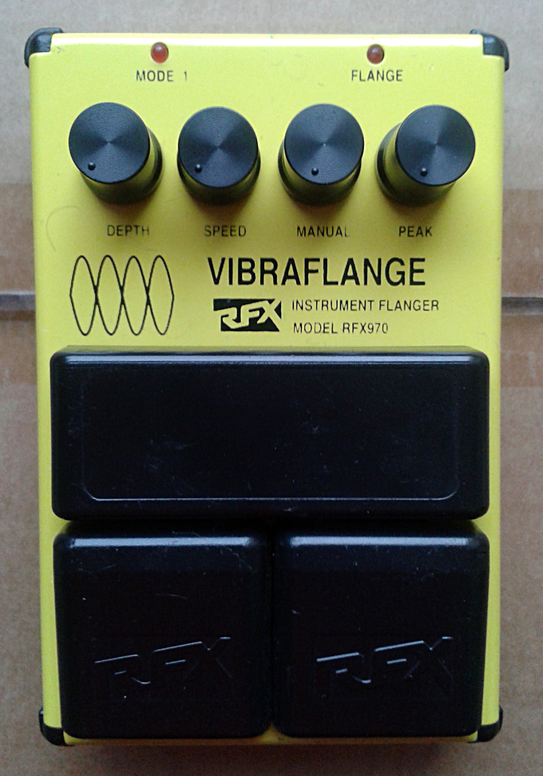
Rolls-RFX970-Vibraflange

What is it?
Rolls RFX970 Vibraflange. Made in USA, 1993.

For some reason i wasn’t aware the amount of stuff in the back catalog of this company called Rolls. The reasonably priced headphone amplifiers and patch bays i did know. But then again, the main reason might also be that the bigger part of  Rolls catalog has been paraded in the US a lot more then here in europe. This thing caught my eye on auction listings. The price was cheap and the shipping plus taxes weren’t too high either so i thought i’d give it a go. Once the parcel arrived i felt pretty enthusiastic. Had to try it out right away. But there were a slight problem in the paradise that day. Effect turned on an everything seemed to be in order, but the LFO didn’t seem to pulse correctly. After a short debugging session, i was aware of the issue’s nature. The speed pot didn’t connect properly inside the pot. And during this investigation, i got pretty certain why. The original board mounted pots were the worst pots i’ve ever seen in a production pedal. Ever. Cheapest things with tendency of disconnecting the sweeper if the pot were bent a fraction of a millimetre to suitable direction. Sure, i contacted the US seller, asked and got a partial refund, since the issue was most likely present when he shipped it out. It couldn’t have appeared during the shipping since the broken pot was one of the middle ones. So i got my partial refund (thanks to the seller, if you happen to read  this) and went on to replace those crappy parts for something that works. I had to widen the pot holes a bit to get the industry standard Alpha brand pot shafts to fit through the panel, but otherwise the task wasn’t too massive. Instead of original board mounted cheapos, i now have hand wired, panel mounted, sturdy pots in there. And the unit works as it was originally intended to. I had to replace the knobs though. Originals were flying high on the standard 17mm shafted pots i normally use. Black knobs, so the visual difference isn’t too remarkable.

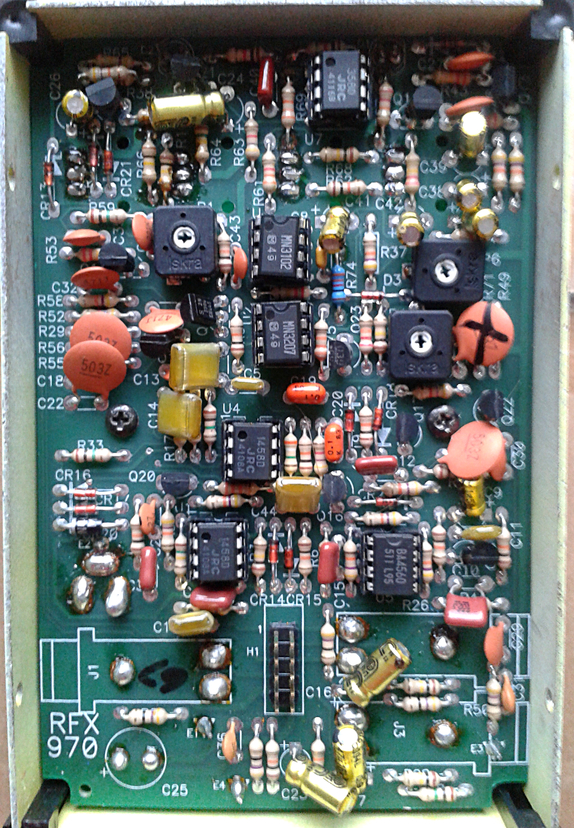
While the unit was open i could straight away see how, when and with what the unit was made. My first surprise was the date codes on the electrolytics. Year 1993. I was aware of the fact that David Oreste Di Francesco formed DOD in 1973 and that he went on to build Rolls electronics afterwards, but i had no idea Di Francesco had started Rolls that early, at the time DOD was still its prime. (Please do correct me if i have any of this information wrong.) Anyway, the board design looks very familiar to those who have been inside any DOD FX series pedal. The feel and look of the design doesn’t differ much.

Rolls-RFX970-Vibraflange-guts

Of course i was assuming this would be an analog design with BBD involved instead of seeing anything digital, but the use of MN3207 and a MN3102 for its driver was still a pleasant surprise. Like i just said, the board design looks and feels a lot like most circuits we find in DOD FX series. This is not  a bad thing at all. It feels more warm, fuzzy and home-like to see this design method elsewhere.

For the features and controls we have two stomp switches, one for bypass and second for activation of “Mode 1”. I currently have no idea what this “mode” actually  does, but the overall tone of the pedal gets softer once it’s on. For the knobs, we have Depth, which controls the intensity of the flanging, Speed, which controls the rate of the LFO pulse, Manual, which affects the LFO’s intensity and a Peak, which controls how high the Q will get on the highest part of the LFO sweep. Quite a pack of controls for a flanger that, at first, seems pretty basic.

How does it sound?
Nothing like a basic flanger or the image of a basic flanger you currently have in your mind. I was blown away once started to play around with this.With zero speed setting, the tone of the pedal is like mild, shimmering octave up with nice glassy feel to it. The controls allow setting the tone from that to a vibrato, that i can call a vibrato (in reality not too many phasers or flangers get to this area). And this can also stretch to that classic velcro’ed airplane flange. Versatile modulation sounds with all the good and bad that comes with the use of analog BBD chips. This thing sounds just amazing.

One can always change the bad pots to something else if needed. But if the design sounds awesome… I may need to keep my eye out if i happen to come across some other units from this RFX pedal series with reasonable price tags.

Colorless writings, part 19 – Component Quality

Are you talking about the marketing text  we see on many manufacturers’ sites and brochures?

Exactly. The phrases like “Only the best quality components have been used” and “Highest quality components” are something i tend to see around every now and then. I’ll start with this link: http://www.dirk-hendrik.com/boutique.html It is to Dirk Hendrik’s page and this page raises a few valid questions towards all boutique manufacturers. The main questions would be:

  1. Are carbon composition resistor better than metal film resistors?
  2. Are poly box capacitors the best type for an effect pedal?
  3. Are *insert brand name here* electrolytic capacitors the best for an effect pedal?
  4. and so on…

Before taking any of those questions on, i’d like to take a look at “quality” as a word. To me, it seems like high quality is always what we all are graving for, no matter what it means. And sadly, more than often it means the brand and feel of the brand than actual quality in components or actual build quality. I recall someone has said that if you repeat a lie often enough, it becomes the truth. I’m fairly convinced that this applies here too. Anyway. The word itself originates from latin, and we could roughly translate it to “level of excellence”. Now, the higher level of excellence is always better thing to reach after than a lower level of excellence. Right? But then comes the question, how do we determine high or low quality?

Yeah. How do you determine it?

Good question. And i did ask it myself before you, you know. We are on a slippery slope when manufacturer sets him/herself as producing things with high level of excellence. That’s like saying i’m the greatest swimmer in the world because i swim. It does not say anything worth mentioning about the water, the distance or the time. But i don’t consider myself to be the greatest swimmer. This all applies only to the build quality, so let’s get going and finally touch the real subject.

Of course there are differences in component quality between manufacturers and manufacturing methods. But do these differences matter and are they even relevant to sound or durability? I’m fairly certain that these two are the main issues when we try to determine the quality of an effects pedal. So. Are vintage style carbon composite resistors always better than modern, cheap metal film ones? No. For replicating a feature hiss for vintage fuzz face, you’ll need to use what the 60’s units used. But temperature changes will make those “mojo” components hiss even more (or less). So for a modern fuzz pedal, those are probably not the best thing to use. Thus, the quality isn’t better for modern application. As far as resistor go, i’ve rarely seen a broken resistor of any age. The only real difference between the cheapest 1/4W metal film resistor and the most expensive metal film resistor is the price tag.

But what about those poly box capacitors? Or electrolytics?

It’s pretty much the same thing as with the resistors. The audible differences between different plastics around the polybox caps are virtually non-existent. We are talking about 9V powered circuits here. And the signal we’re shaping is coming off from a coil that’s wrapped around a magnet. I can tell you one thing. Those 400V rated capacitors from top shelf brand name are not going to sound better than those modern, cheap chinese Panasonic brand caps that are rated for 63V. You can get 40 of those Panasonics for the price of one audiophile labelled capacitor. And you can take a wild guess which one will be at home in our 9V circuit. And how about those multilayer ceramics! Those are possibly the cheapest thing if we don’t take the plain ceramic disks in to account. So does the price have a say in quality in this case? To me, no. All MMLC (monolithic multilayer capacitors) have always been reliable, solid and cheap. Even the tolerances on those are usually well balanced. All this applies to electrolytics as well. Our 9V circuits are not as critical to caps as the high voltage tube amplifies, for example. Even in those, manufacturing method of a capacitor is more crucial than the price or the brand. May it be what ever. The chances are that the manufacturer will use what his/her chosen supplier has in stock, rather than doing real, objective testing to find out what capacitor is truly the best for his/her application.

The issue comes when these components are advertised as “highest quality”. Are they really the highest quality available in the world? Are they the best suited selections for the purpose? How have you tested or tried the components? Marketing text will always be marketing text, but trying to make yourself look good by lying isn’t probably the best way to go. That has a tendency of backfiring.

There are differences in components. These differences may and will affect the tone in many cases. In many cases the difference will be so small, that it can hardly be described as audible. In some cases the quality of a component may and will affect the life expectancy of an effect pedal. The phone jacks are a great example of this. Those cheapest non-brand jacks that you can get for 20 cents a piece. No. You don’t want to use those. But on the other end of this rope – will you get more life out of ten buck Switchcrafts when compared to Neutrik/Rean open framed jacks? Probably not. Will a pedal with the most expensive jacks be better in quality than the one with reasonable priced jacks that feel just as sturdy and will last the same amount of time and (ab)use? Maybe yes. But since the feel and life expectancy is the same, i see no harm in declaring the second option as a quality product too.

So once again, the quality is in the eye of the beholder?

We could say that. Quality isn’t that simple of a subject that we could just say “it’s like this”. Because it may not be. But we should not make the mistake of advertising the use of quality components if we have not done sufficient footwork to determine the quality. By ourselves. To quote Carl Sagan, “Extraordinary claims require extraordinary evidence”.

Digitech WH-II Whammy II

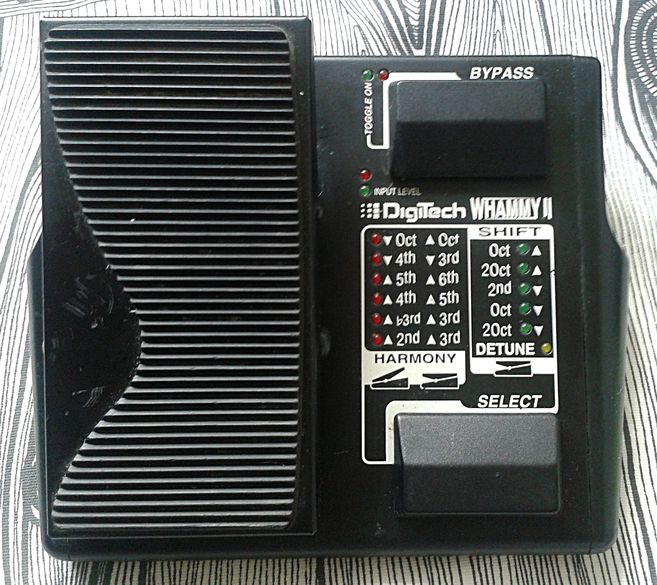
WhammyII

What is it?
Digitech Whammy II, made in canada. Possibly sometime in the 90’s.

It’s rather rare occasion that someone gets a chance of buying a rare western made unit for a low price. For me, the day this one came for sale was one of those rare occasions. I paid good amount of money for this, but didn’t check out any auction sites or anything to determine what there usually go for. And when i did… Boy was i glad i bought this. In reality, i paid about a quarter of what these usually sell for. Of course, the unit had seen use and the switches weren’t making connections in the best possible manner. Nothing that i can’t fix myself though. But in all, the unit was in nice condition. Sure. I had to come up with a power supply for it, but being the pedal freak that i am, there is a medium sized cardboard box full of different DC and AC supplies in my possession. The pedal is powered with 9V AC supply, which isn’t that uncommon – i had one suitable at hand straight away. I cleaned the unit a bit and the condition isn’t bad. Slight wear and tear, but nothing remarkable. What was more interesting was that the labels say “Made in Canada”. I had no idea Digitech had done any manufacturing in maple leaf flag country. But by the looks of it, a lot more brands should have turned to canadians to do their work for them.

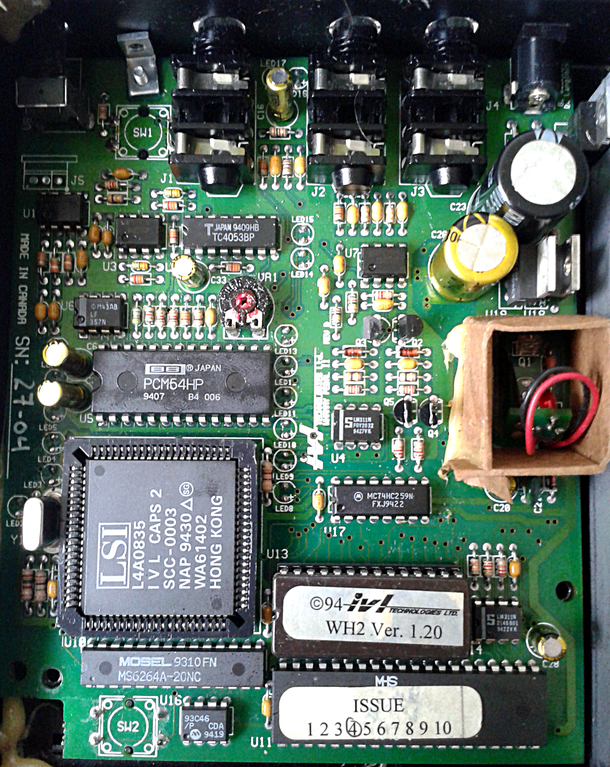
WhammyII-guts

The look of the build quality is very pleasing. Sturdy and strong. There is a lot of the board that has been manufactured by hand and that is always a great selling point for me. I hadn’t been too interested in any version of whammys due to simple fact that i do not know how to use one. Whammys are great toys to fool around with, but just don’t see myself having one on my board. Nor would i see myself using it regularly. But while the effect themselves are not the peak of interest, the genre is. Foot controllable pitch shifting. Good idea that has been in the shadow of many other genres since the beginning of time.

The one thing that surprised me the most was the foot control. I did assume the control was done with a pot, like for nearly all the basic wah pedals (Vox, Cry Baby etc.), but this is not the case with a Whammy. The control here is optical. Meaning that there is a LED that moves closer and further away from a light dependent component that is inside that cardboard box on the board. What do you know! There is always something new to learn!

As the features go, we have out rocker pedal, a bypass switch, and. The mode switch on WHII is a stomp too! One can change the mode of the effet by stomping on it. The later Whammies have a know switch for this. The modes are harmonies from octaves to 5th and octaves from one to two. Both down and up. The design isn’t polyphonic, so it doesn’t act well with chords, but it tracks both up and down harmonies/octaves very well with single notes.

How does it sound?
I can only compare this to Whmmy IV at the moment as these two are the only ones i have. But when i do compare them, it just seems like IV is the exactly same sounding effect, just made cheaper in asia. Whammy II sounds like a very decent foot controllable pitch shifter. It can be used as a harmonizer or an octaver by simply not touching the rocker pedal. The modes work well and sound good. Maybe the low octaves aren’t exactly as good as they are in Arion MOC-1, but still very good. As for the harmonies and shimmering up octaves.. Just beatiful. Man i’m glad i have this unit.

Boss RV-5 Digital Reverb

Boss-RV5

What is it?
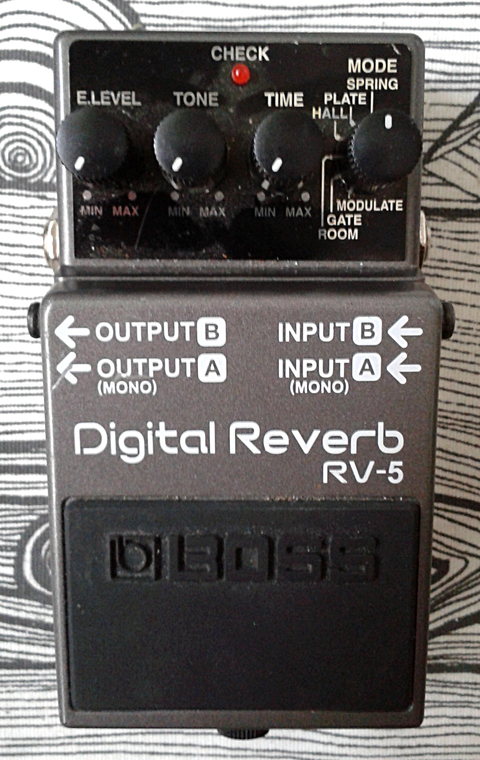
Boss RV-5 Digital Reverb. Made in taiwan, june 2008.

So the Boss RV-reverb line keeps getting duller as it goes further. Can’t help but to compare this to RV-2, which was ground breaking pedal in many ways. First off, the RV-2 was the first compact digital reverb ever produced. Second, the design had some real ingenuity in it. RV-2 has gained its status with its impressive, hard work from the design department, while making things that previously were impossible, possible. Sure it was costly effect to produce. So it was replaced with RV-3, which offered more options by having delay settings. Delays are just simplified reverbs without the vast number of stacked repeats, so adding delay modes wasn’t too big of a deal. It did add to versatility a lot, but while it gained high number of supporters, it still couldn’t touch the original RV-2’s status. Apparently RV-3 got too expensive to manufacture as well and it got replaced by RV-5 in 2002. RV-5 was apparent attempt to recreate the feel of original RV-2, instead of clinging on to multi effect-like feel that was the thing with RV-3.

Opening the box up shows a side of the board that makes me wonder if they were attempting a Guinness world record for number of vias on a compact pedal with a single PCB.

Boss-RV5-guts1

The other side shows couple of dual opamps for buffering and mixing, but the effect itself is just a Boss branded DSP chip. Also note the two crystal clocks. Even though this looks like an elaborate and neat design, the same DSP is circulating for other Boss effects too. Which means that the pedal is pretty much the same as twenty or more other pedals in the series.  Only the code for the DSP is different. The thing that gives me the only real feeling about the board is the “Cheer Time” text on the silk screen layer of the PCB.

Boss-RV5-guts2

As the features go, there are six modes of reverb, including digital modelling of spring, plate, hall, gate and room reverbs. Sixth mode is “modulate” which adds a sort of  chorusey feel to the reverb. Other controls are E. Level, which mixes the clean signal with processed one. Tone, which can be used to cut some highs so user can try to mimic more vintage sounding units. And finally Time, which sets the decay time for each mode. This unit is also built for stereo in and out, so it has more uses on the studio desk than many others that are simply meant to be run with a guitar.

The frequencies are kept well in tact, so this reverb works quite well with all the instruments. We could call it full range device. Not sure if that is too official term, but since it’s not cutting your lows or highs to audible degree..

How does it sound?
Like all Hi-Fi digital reverbs. Even though it gets the job done with flying colors, the amount of lacking personality and individualism is higher than on most tasteless and scentless sounding pedals. All the way to the degree where i would go so far and call it boring. While it is one of the most boring guitar reverbs i’ve ever played with, it’s not that bad. Where the digital design was still rocking in its cradle when the RV-2 was released, that also meant that the deficiencies in that unit turned out to be the strong parts. RV-2 is not a supr dull Hi-Fi device, but great reverberator for folks who want to sound like themselves by adding certain rough edge to their sound. RV-5 does not give you any edge. It works as a reverb and it works well. It has no personality and it has no edge. But it works. In reality, this unit will serve a lot better as a vocal reverb used in the inserts of a mixing console than what it can do with a guitar.

More modern technology doesn’t always add to to better sound.

Monarch MCO-22 Compressor

Monarch-MCO22

What is it?
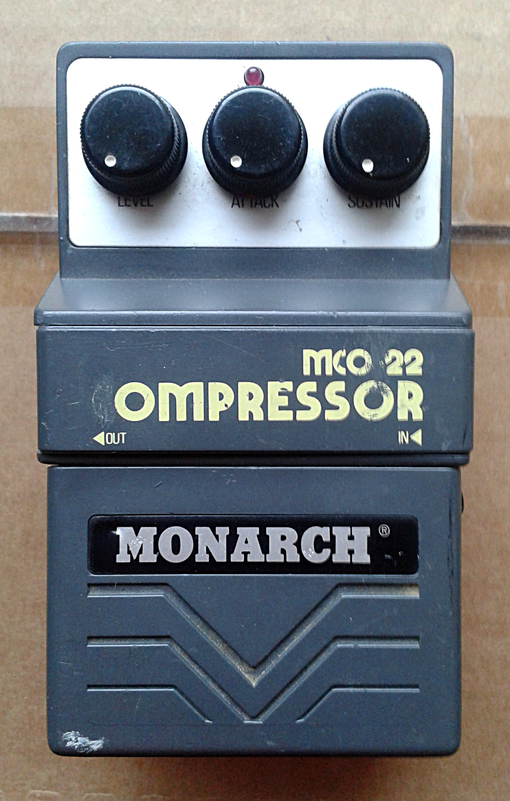
Monarch MCO-22 Compressor. Made in japan around mid to late 80’s.

Got this one in a trade. Could have bought it straight off, since the price was right. There is always something interesting in these 80’s japanese cheapos. Mainly because most of them are really good sounding and usable circuits, despite their cheap and lousy plastic overall feel. A little research pointed out that Monarch was a brand that was basically just OEM’d catalogue of Aria effect pedals. And as such, this pedal is exactly the same unit as Aria ACP-1 Compressor. This particular unit has seen some use too. The knobs are not original, but for a unit that’s seen use this isn’t a surprise. Well. At least the plastic battery compartment cover is in its place. Of course i then needed to know what the electronic design held in store, so i opened it up. Typical japanese board design with pleasing looks and a mark of hand crafted trace design.

Monarch-MCO22-guts1

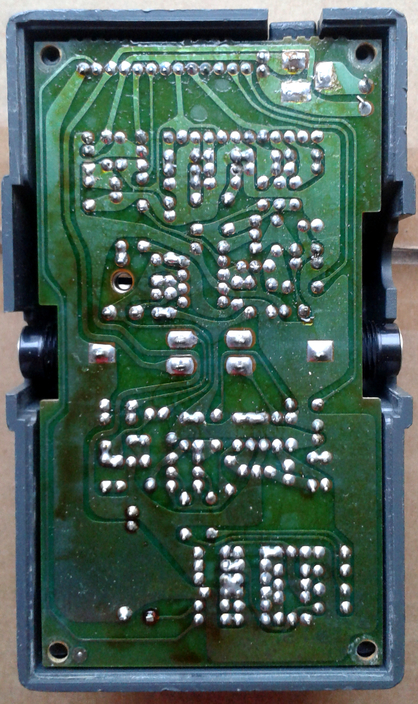
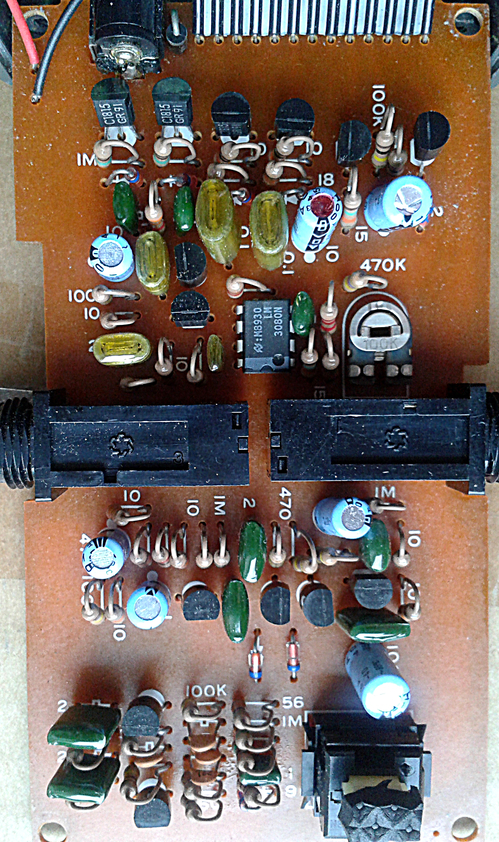
By testing and looking at everything else, i was pretty sure the design is the standard OTA-based compressor like so many others in the genre and from the era. The stacked control board only houses the pots and and the indicator LED. No other parts of the circuit extent to the control board. The image below shows the component side and its layout. The switch (which someone has repaired with a piece of non-slip tape) and the electronic switching components are at the bottom. The diodes are for actual switching transistors that are grouped between the switching and jacks. So the effect circuit itself is placed above the jacks.

Monarch-MCO22-guts2

And the circuit is nothing else but a 3080 OTA-based compressor/sustainer. A quick search on the susbject showed up a DIYStompboxes forum thread where good folks were sorting out issues with a Rocktron Big Crush pedal. As Analogguru states on that thread – “Funny to see the schematic of the Aria ACP-1 (and similar units) in a Rocktron pedal.” So let’s take a peek at the Big Crush schematic that user jwbink1500 has uploaded. There are some similarities with the standard Dyna/Ross compressor, but the trigger part differs to a degree. According to Analogguru, the main difference between a Rocktron and Aria/Monarch compressor is the value of one resistor. Which he believes is an error that came to be in the cloning process. Nice design. And what’s more important…

How does it sound?
This actually sounds better than many modernized versions of the OTA compressor. The controls have good usable range and and the mushiness isn’t an issue. For the attack control, the feel is a lot better than for many similar designs. Despite its overall plastic feel, the sounds are very good. This was an interesting find and i’m actually very happy with the unit. Even if it doesn’t have the original push-on knobs in place.

DOD FX96 Echo FX Analog Delay

DOD-FX96-EchoFX

What is it?
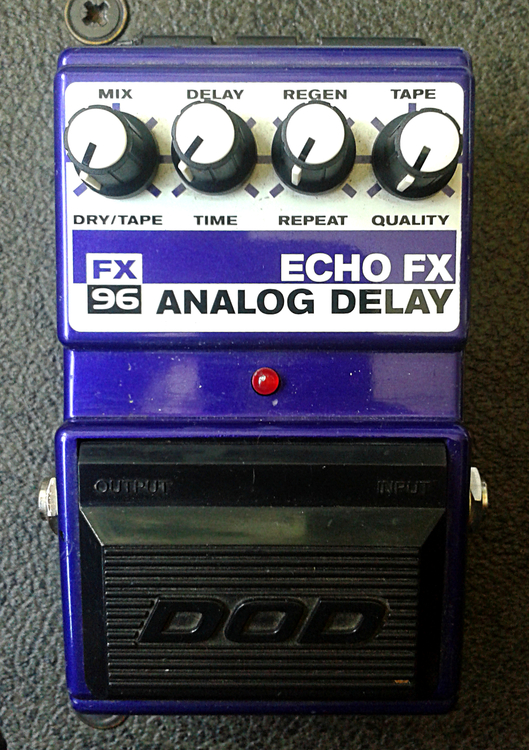
DOD FX96 Echo FX Analog Delay from FX series. No serial number, but component stamps suggest the unit is made is USA, 1999. The America’s pedal is once again perfect source for the version details and additional info. So check that out before continuing.

I’ve been partly in love with analog BBD-based delay units for a long time. They all do have their shortcomings and added noises, hisses and relative uncontrollability. While the sole idea of using a small chip with thousands of FETs stacked in such a small device is almost stupid, the sounds these chips are able to keep delayed is something that cannot be achieved in any other measures. Many have tried to model an analog delay in modern digital methods, but as many as there are folks trying it, there are equal amounts of people who have failed in this task. In our modern world, the analog delays are not in the cheap. Mostly due to the fact that manufacturing these chips is expensive and are currently produced in limited numbers. Sure there are a few types that are still in production, but not the ones we really want to see and hear in a effects pedal.

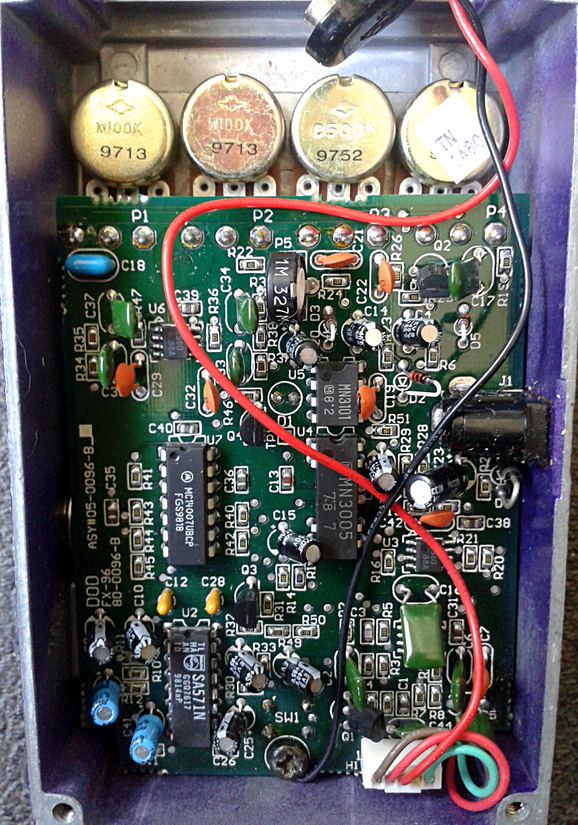
Everything about FX96 looks and feels like every other pedal in the series. Quality through hole components and the touch of hand labour is just glowing with pride. This unit houses the revision B circuit board, which adds a 1M trimpot to the original revision.

DOD-FX96-EchoFX-guts

I’m not too interested in the buffer/mixers or even in the SA571 compander (which is used to compress and decompress the signal sent to the delay line and decompress it again afterwards), but the delay line itself. In this model, the bucket brigade device is the almighty MN3005. A 4096-stage BBD and it’s driven by a MN3101 clock driver. In my limited experience with analog delay units, the MN3005 has most definitely been the crown jewel in the list of all BBD chips ever manufactured. Due to its high number of FETs, it can produce up to 800ms of delay time with very reasonable amount of signal distortion (as a side note, the compander is there to eliminate part of the noise and/or distortion produced by the FETs). So long delay times with little distortion. This is the s*it.

The controls are Mix, or Dry/Tape, which sets the output ratio of buffered clean signal and signal processed by the BBD. Delay/Time is used to set the time the signal is stored in the BBD chip before releasing it. This ranges from a few milliseconds to respectable 800 milliseconds. Regen/Repeat sets the amount of signal being passed from the output of the delay line back to its input – resulting in feel of continuous echo. This control ranges from single slap back to infinite “self-oscillating” repeats. I use quotes for “self-oscillating”, since this feature found in most delay effects isn’t exactly an oscillation. And finally the Tape/Quality knob controls the higher treble frequencies that are being passed in the feedback. More cut on the highs and the repeats will die quicker. Not in completely different manner than what we may hear some old tape echo machines to produce. If the high cut is minimal, then the sound will remind us more of a modern digital delay, while still being all analog.

How does it sound?
From rockabilly slapback to super space wars. I said before that this unit is little distortion. This doesn’t mean that there isn’t any, it’s just that the amount of noise/hiss/distortion is at lower level than with some other analog delay units. It isn’t squeeky clean, but the noise floor level on high delay times is just giving it a bit more character, while it doesn’t hurt tone. At least not that much. Very good range in controls, which let you set the the tone to be anything from real vintage sounding to modern. Sure. It does not sound like those pristine modern digital devices, but it sounds very, very good.

If you are after a studio grade noiseless delay, then look elsewhere. But if you are after the tones from the past and beyond, all the way to reality of space, then this unit is for you. I’m nearly in love with it. If i was to sell my collection, this one would be the very last to go. Once i played with this, i was immediately convinced that this is the unit that is a dictionary example of a keeper.

Ibanez PM7 Phase Modulator

PM7

What is it?
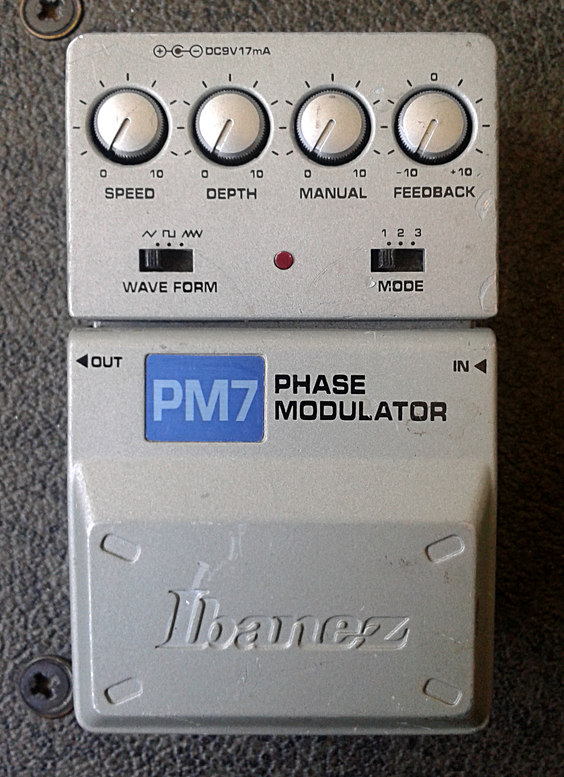
Ibanez PM7 Phase Modulator from 7/Tonelok series. Made in china, 2005

As the truly modern guitar effects go, there are usually those that designers have spent hours to design an effect that sounds great on guitar. Better than the previous takes on this same subject. Then there are these designs that try to create something completely new and something that’s never heard before. These two imaginative design methods rarely combine well. That said, the Maxon engineers behind the PM7 Phase Modulator have reached a line that’s not often crossed. The controls are loaned from flanger designs and the versatility of Speed, Depth, Manual, Feedback and three LFO waveform modes, in addition to four/six stage switch and two in/out of phase modes for the 6-staged phase, is just more than convincing. Manual can be seen at Midimanuals.

PM7-guts1

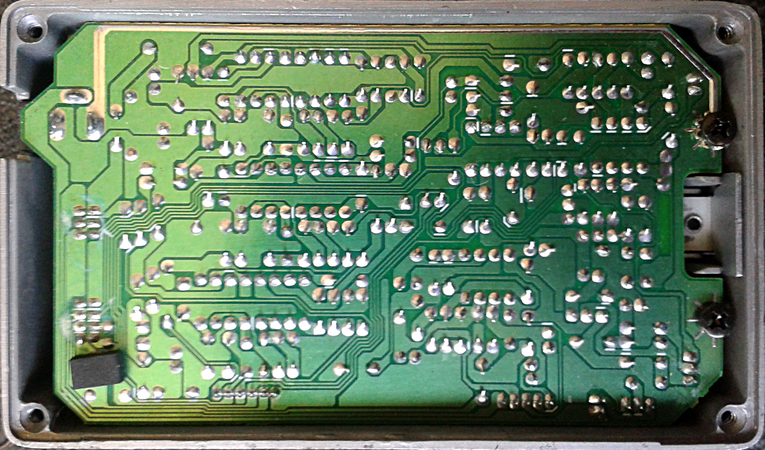
Everything is still through hole construction on five board system that is familiar from all the other effects in this series. No surprises in build quality or component selection. The phase utilizes three dual 13600 OTA chips. SO every phasing stage has it’s own half of the chip.

The factory schematic is up at Ibanez.com. Yes, since it’s 7-series factory schematic, it is a pain to read.

PM7-guts2

Buffering and mixing is done with obvious Ibanez/Maxon weapon of choice, the 4558. LFO is created with NJM2904D. I’m guessing that the choice for this chip as LFO has been made due it’s stability in case of taking more wobble out of the LFO than what we usually see in any, or at least most, LFO controlled circuits.

PM7-guts3

Solid construction and designed to withstand a hit. Thick metal housing for everything electronic that is fastened with screws. Nothing floating or other wonky in there. These will be able to take years and years of abuse on the road.

How does it sound?
From mild sweeps that remind us a little of the original MXR Phase90 to absolute noise madness that can be described better with a word monster pseudo-ring-modulator. Well, this is to be expected. If one takes out a 6-stage OTA-based phaser and equips it with more feature packed LFO than most design have, this is what you’ll get. The palette is very versatile and the sounds range from mild to extreme, while still hanging on to term usable. Overall, this is a very good pedal.

« Older posts Newer posts »

© 2025 killall -9 humans

Theme by Anders NorenUp ↑