Author: mirosol (Page 7 of 29)

EHX Hot Tubes Nano

EHX-HotTubes-Nano

What is it?
Electro-Harmonix Hot Tubes Nano. Made in NYC, 2013.

Some time ago i stumbled on to a schematic of this CD4049 hex inverter based OD/Dist unit. Played around with the design and noticed it had some real potential. There are numerous drive designs with hex inverters on the wild and while the CD4049 distortion is quite distinct in its tone, most of the circuits still have their own kind of face. Since i had played around with the old version of the circuit and loved it, i had no choice but to get the modern original. Rare occasion, but since the new EHX nanos are priced very reasonably, i got this one as a new unit. For all you DIY’ers out there – get the original. It will be cheaper than building your own from the schematic.

EHX-HotTubes-Nano-guts

Quick eyeballin’ of the board shows that the circuit is the same as for the old, big boxed Hot Tubes units, just executed with SMD components. Everything from board design to the box scream “EHX” from miles away. Nothing special in the insides. There is a schematic up at Gauss Markov’s site. Plus a documentation for you to build your own. Like i said above, it may not be economically viable, but still. If we recap the design, there is JRC4558 after the input. Both channels of this chip are used to drive the first gain stage of the hex inverter. The gain of the design is set by simply placing a variable resistor between the dual opamp output and the first inverter input. This is followed by a second stage and next up is the switch for bypassing the tone stack. Both option outputs are driven by hex inverter stages, which means we have two of the inverters not in use. The tone control itself is pretty close to the variable high pass/low pass filter we see in all the Big Muffs and derivatives. It’s always a pleasure to look at an electronic design that makes sense.

How does it sound?
Vintage-like. Not too trebly in any way, but focusing on the lower frequencies for the overtones. It does sound very powerful. From mild boost to soaring distortion. I think some of the bass players will enjoy this more than average guitarist due to its relatively dark tone. Like stated, the tone focuses on lower frequencies, but i find this very usable nevertheless. The tone bypass is a novel idea too and will add to already high usability. Very good sounding unit. And since these come cheap, i can’t help myself but to recommend it to you all. It may not suit to everyone’s taste for a main overdrive, but it will have its use.

Marshall EH-1 Echohead

Marshall-EH1-Echohead

What is it?
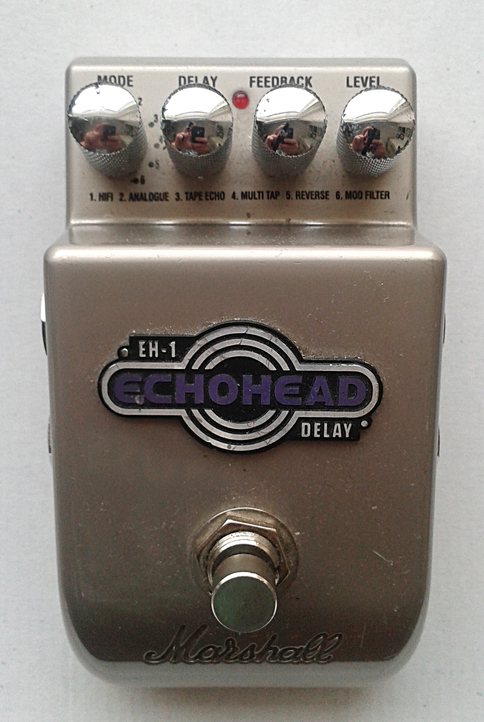
Marshall EH-1 Ehcohead delay/echo. Made in china around early 00’s.

My relationship with these effects isn’t anything too special. I just simply like them for their heavy construction and fine tones. Most of the units in this series (which i like to call “small metal series”) are relatively low on their price point and most of the designs are still available as new in 2015. I’ve already been inside a few boxes and may have pointed out that the chinese factory that manufactures these for one of the UK’s coolest brands may be the same shop that is responsible for Ibanez 7-series. At least the board manufacturing methods and and component placing do suggest that. I have absolutely zero evidence to back me up on this. It’s just a gut feeling. As it is a gut feeling to like these units. Well. A small form factor, good tones and box design that will be able to take a hit on a road.

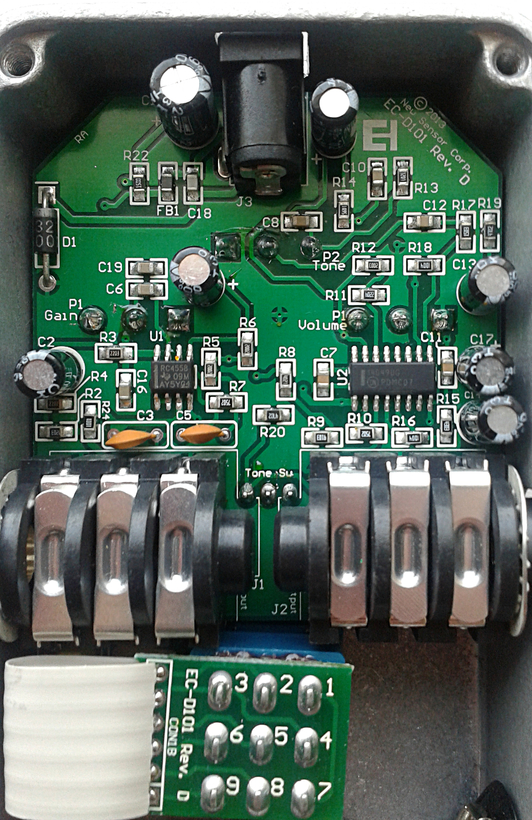
To begin with this delay/echo unit, opening the bottom plate shows a board that reeks of digital design. This was to be expected. There is no way the design could have been analog with the set of features we have on the pedal.

Marshall-EH1-Echohead-guts1

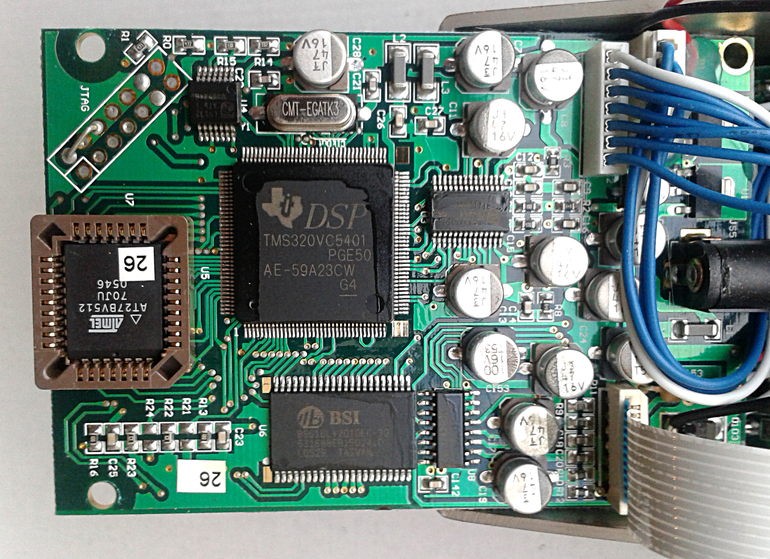
The electronic design itself is rather complex. We have our Texas Instruments DSP chip, plus Atmel and BSI controllers. The motherboard is taking care of the AD/DA conversion and the effect itself, while the switching, buffering and mixing is handled on the second board.

Marshall-EH1-Echohead-guts2

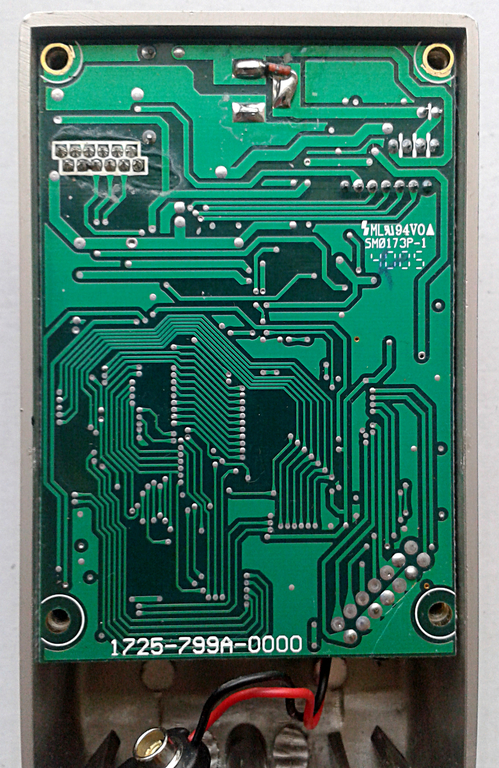
With current, limited understanding of digital design, i have to leave with these photos and a notion that if someone wants to design a digital effect with SMD components, it surely should look something like this. In my opinion, at least.

Marshall-EH1-Echohead-guts3

But what about features? I said above that the amount of features made me think digital in the first place. For the connections, we have mono input  with stereo output and a jack for external momentary tap tempo switch.  In addition to DC jack, of course. The knobs are representing the basic controls required for a delay/echo. Level setting the balance between clean, or dry and processed, or wet signal. Feedback controls the amount of repeats and delay time is pretty self explanatory. And what’s more important, the delay time ranges from nothing to up to 2000ms.  2000 milliseconds in this price range is very, very respectable. Last knob is a switch for the effect type modes. I’ll say a few words about these in a second.

How does it sound?
Well. To begin with, great. Controls are well responding and the six modes offered all sound different. First mode, the HIFI, has its overall tone in Boss DD-7 direction, with still being pleasant and usable. Usually this type of pristine on digital delays ends up in emphasizing the high frequency content resulting in extremely cold and piercing repeats. This one here has great tone, even on HIFI mode. Next two are Analogue and Tape Echo modes. These have similarities, but both of them do a very decent job on modelling the types they represent. Multi-tap is next, and it’s a great feature. The repeats are handled in a different manner than on the previous modes. Sure, the mode doesn’t live up to all its potential since the controls are just basic. Nice addition still. Then we have the Reverse mode. To my ears, this reverse is better than the one we’ll find in Digitech’s Digidelay. Simpy put, usable reverse delay. The lasts mode is Mod Filter. So we do get a modulation delay in the mix too. The modulation, obviously lacking in controls, isn’t the best modulation delay i’ve heard, but still. A very good one.

This set of features with all the different digital delay tones. Usually cheap does not add up to good. This time is does. While the engineers have been forced to drop a few things out, they have still managed to squeeze a respectable amount of features in a such small package. I have very little negative to say about this pedal.

Digitech XHR Hot Rod

Digitech-XHR-HotRod

What is it?
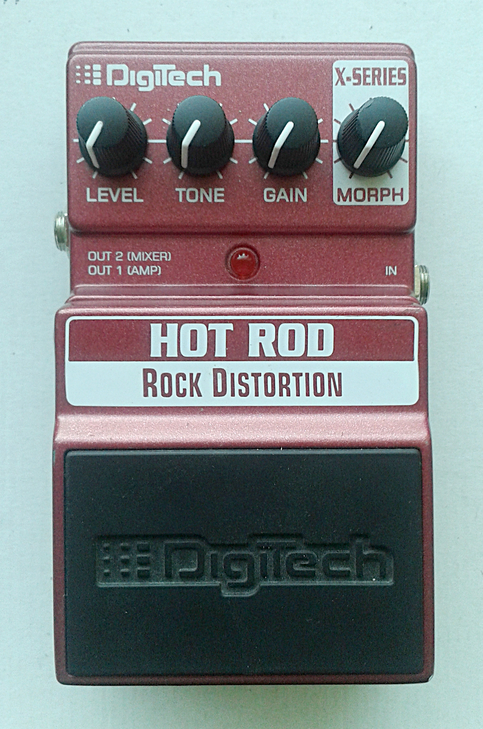
Digitech XHR Hot Rod Rock Distortion from X-series. Made in china around mid 00’s.

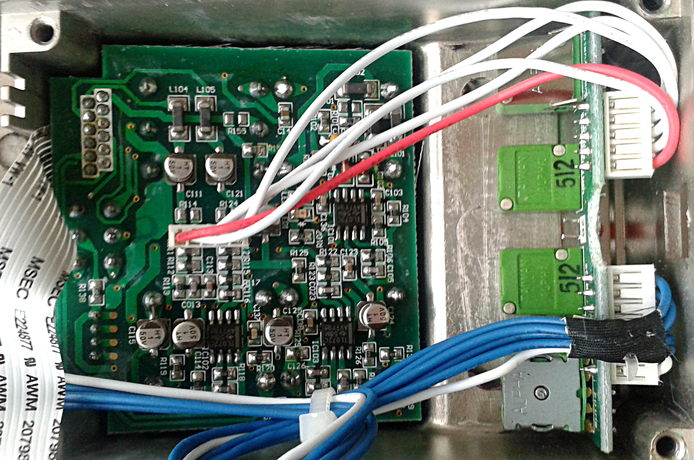
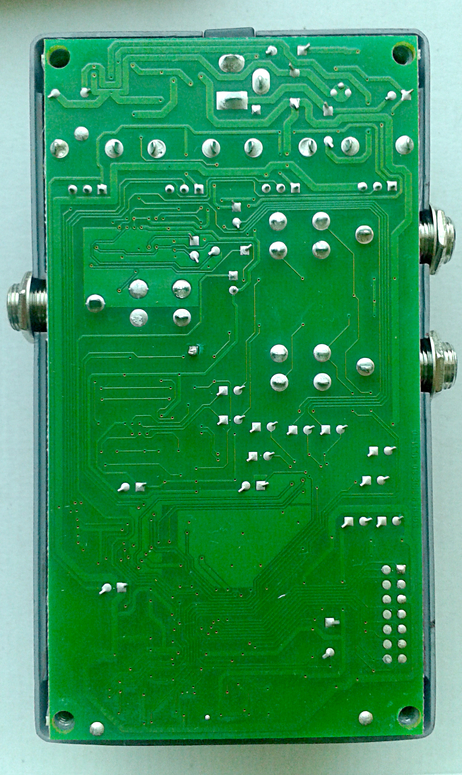
It says Rock Distortion on the top. What to expect from its tone wasn’t anything short of obvious. But. The disappointments of shared digital board designs for the several other units of the series made me rather weary about what to expect designwise. Once the bottom plate was off, the sight was nothing close to those autowahs and reverb/delays. By the looks of the board it already looked like a digital design, but there’s no easy connection for the code burning anywhere. Just the 14 pads with nothing soldered to them.

Digitech-XHR-HotRod-guts1

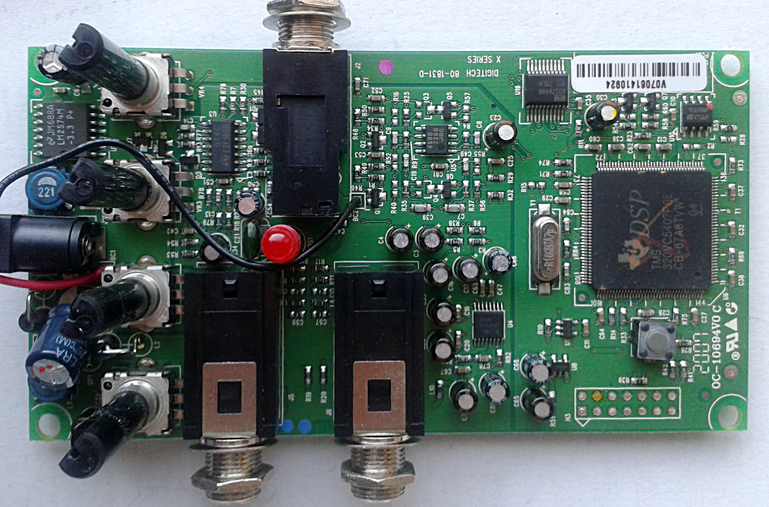
So the board differs from modulation and echo effects from the series. Instead of Harman branded AudioDNA DSP chip, there is Texas Instruments processor accompanied by a oscillator crystal. Nevertheless, the design is all digital, except for the buffering and switching. Same as, well. All the digital effects.

Digitech-XHR-HotRod-guts2

For controls we have Level, Tone and Gain. But in addition to those standard controls we also have the “Morph” knob. While level/tone/gain are pretty self-explanatory, the morph isn’t. It’s sort of like scoop, depth and texture controls combined in one knob. Very effective and it discusses nicely with all the other controls. In essence, the morph adds a lot of variation to the pedal.

How does it sound?
From Marshallesque, fat OD/Dist to scooped near-metal distortion. And everything in between. Versatile and the digital code isn’t bad. The effect does not add emphasis on anything that sounds broken. Many digital distortions set the emphasis on modelling one feature of the tone the designer/programmer is after, resulting in useless one trick pony that does nothing more but walks on a pink tight rope. The biggest caveat comes from completely foreseeable behaviour. Meaning that drops in voltage or changes in guitar controls does not affect anything. At least not to the same digree we see and hear on analog designs. At worst, the tone is Ibanez MF5 resurrected as a Robocop. It’s not all bad, but it still is a Robocop. At best this shines as a squeeky clean, modern, solid distortion tone. Not clean as in “not-distorted”, but clean as is in “you won’t hear the shit storm inside the tone”. Or in other words, the overtones are just foreseeable.

Still. For the price, very decent digital rock distortion. Nothing you can’t get out of your Line 6 Pod 2.0, but still.

Colorless writings, part 20 – Repair statistics

At first, i’d like to say WoHOO! It’s been about 18 moths, and there are now exactly 200 different pedals covered and i’ve also posted 20 of these unintelligible texts about preferences and gut feels.

Anyway. Back to business.

 So we’re talking about repairs?

Yes. Can’t exactly recall when i did my very first pedal repair. But since i’ve been heavily addicted to effects and sounds for something like five years now, the first one must have been around that time. About five years ago. Of course, the circuit debugging skills are something quite different today than what they were back in those days when i was starting out. I still do feel uncomfortable working with massive SMD boards, but to date, i’ve been able to fix every single one i’ve come across with through hole components. One exception being an old japanese Boss DD-3 which had a fried chip. Two pedals that i’ve given up have both been Dunlop manufactured modern “MXR”s.  I do find it to give more of a mental boost to figure out what’s wrong with someone else’s pedal than a pedal of my own. Sure, i’ve bought tens and tens of broken/defect units for myself and fixed them. But still. There is this certain excitement when poking around unit that isn’t mine. After all, i don’t mind throwing something that i own to the trash bin, but that isn’t an option when doing the fix for someone else. Think of it as tattooing. When you tattoo yourself it doesn’t matter all that much, but when you’re tattooing someone else, the results do count..

What is the most common fault with a pedal?

This is very common question i get asked. Almost as common as “how long it takes to build a pedal”. Answer to both questions is simply, “it depends”. Sadly, i haven’t kept a log of all the repairs i’ve done, so i have to rely on my recollection. (I should start to keep a log though, so we can revisit this writing in five to ten years..) Bosses and Ibanezes. For these brands, the most usual situation is that somebody has been trying to use the unit with a wrong polarity power supply. This results in burned (or in extreme cases, exploded) parallel polarity protection. Most cases are easy to fix, but some i’ve seen have had the board burned to the degree that the fix has not been as simple. Bosses are built to pretty high degree of excellence, and other than burning the power supply section, there are not that many common faults. Occasional worn out switch would come to mind, but that’s it. If Bosses are used in civilized manner, they will last years and years of physical (ab)use. This same thing applies with Ibanez boxes. Although, there are noticeable amount of more broken footswitches on those units. Still, the switches and burned polarity protection. Those are the main faults. For more boutique-like pedals, the faults are the same. If there is a parallel polarity protection in place, i’d say it’s pretty likely someone burns it with a wrong power supply. My rough estimate for probability would be around 60% chance of someone being idiot enough not to understand the difference between AC and DC power. I’d still place this “burning polarity protection” as second on my list of common faults.

All the switches, regardless of type, will simply worn out with use. It doesn’t seem to matter if the switch is made by high end brand or it is the modern chinese, cheapest possible part. For example, all the faults within Vox brand pedals i’ve seen so far have been with the mechanical switches. And those switches are the higher end industry standard, mexican Carling brand switches. Same thing with Wampler, Menatone and tons of other higher end pedals. Most common issues with those are the switches. And those usually can take up to several years of active stomping before giving up on you.

Switches first, killed polarity protection second, what then?

Those would be the most common faults. After the user fault of killing the polarity protection, the next common fault would be the burned out semiconductor. I’ve seen burned opamps, hex inverters, CMOS switches, transistors, you name it. The easiest way to kill a semiconductor in a pedal is to burn the polarity protection out first and still not believe that there is anything wrong with the power supply used. Feed the board with a short circuited power for long enough and if we’re unusually unlucky, we’ll have damage to the semiconductors as well. Some designs do not protect the CMOS switching and other sensitive components well enough. Those pedals are bound to end up on my desk more often. Still more rare occasion than killing a switch, but still. Noticeable fault in number of fixed units. Burned diodes, opamps, DC-DC converters.. Yup. I see those every now and then.

What’s funny, i’ve grown to hear a few different faults in effects. Certain type of gating and behaviour has always been due to a broken diode in a signal path. That’s something i’m actually rather proud of..

Burned out semiconductors third. Anything else?

I’ve seen a few instances with dead and/or leaky electrolytic capacitor causing the circuit not work. This can happen, but it is much more unlikely than all the other above. Key idea with all the capacitors would be that if it’s physically broken, then it’s broken electronically too. It’s very rare occasion to see any polyester or ceramic capacitor broken. Electrolytics can be killed simply by reversing the polarity inside the circuit or for a single cap. Tantalums are a thing of their own. I’ve heard stories of these to short out, but i’ve rarely seen that myself. Well. I wouldn’t use a tantalum power supply circuits anyway (they are great for signal paths though).

In all. That’s pretty much it. After all, we’re talking about very simple amplification and filtering circuits in all pedals. There basically only a handful of different components in use. And since there is only a few ways to hook up a semiconductor to have it working, the circuits in every effect pedal have similarities. Fixing a pedal is pretty much like fixing a car. Only with smaller parts. Some parts are brand and model specific, but most are interchangeable between every pedal. I don’t know how to fix a car and i have no plans to learn it. I do, however, have a mechanic to do that for me. This comparison is more true than most of us would like to admit. I recently had a broken tail light glass on my car. I changed it myself, but the procedure was pretty close to changing a broken pot knob on a pedal. I also recently had the water pump and engine sealing renewed, which would be a lot more like changing a CD4066 switch and a quad opamp on a pedal. The latter i can do. The former.. I’d rather leave it to the people who really know what they are doing.

In light of the last few sentences, i’d like to point out that you don’t have to repair your pedal yourself if you do not know what you are doing. In that case, please don’t even try. You’re bound to do more harm than good. You most likely know someone who’s been working with soldering iron for years. Ask him to do the repairs. Or send it over to me…


EDIT!!! Nope. As of this date, 7th of october 2017, i’m saying the text above is full of shit. Dead cap is way more likely to cause issues than a burnt semiconductor. This edit should suffice..

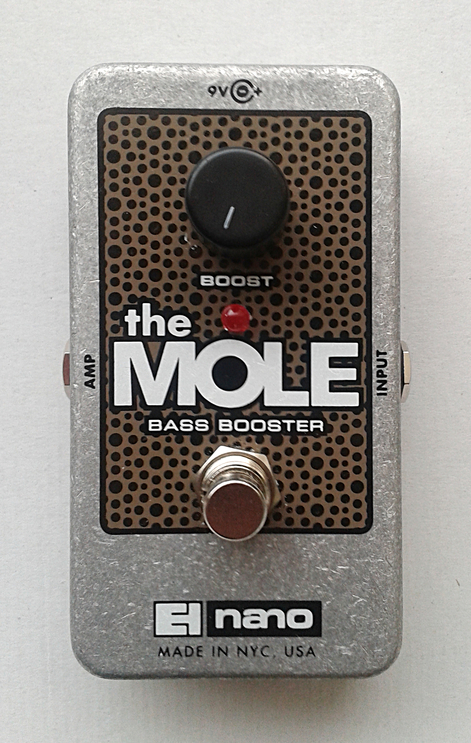
EHX The Mole Nano

EHX-Mole

What is it?
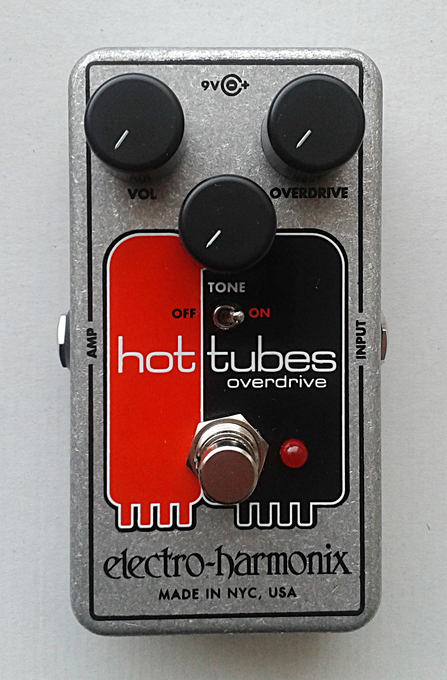
Electro-Harmonix The Mole Bass Booster from Nano series. Made in NYC in 2013.

As the one transistor, simple boosters in the EHX family go, here we have the “Bass Booster”. Circuit has pretty much the same topology as all the other simple boosters (LPB-1 and Screaming Bird). The component values are the ones that determine the frequency response and thus, determine if the circuit boost full-range, bass or treble. On full-range, we cut nothing out. On bass, we cut out the high. On treble we cut out the bass. Simple, isn’t it. I was expecting to see the same board as for LPB-1, but no. The Mole has its own design, even though the circuit is still simple, one transistor booster.

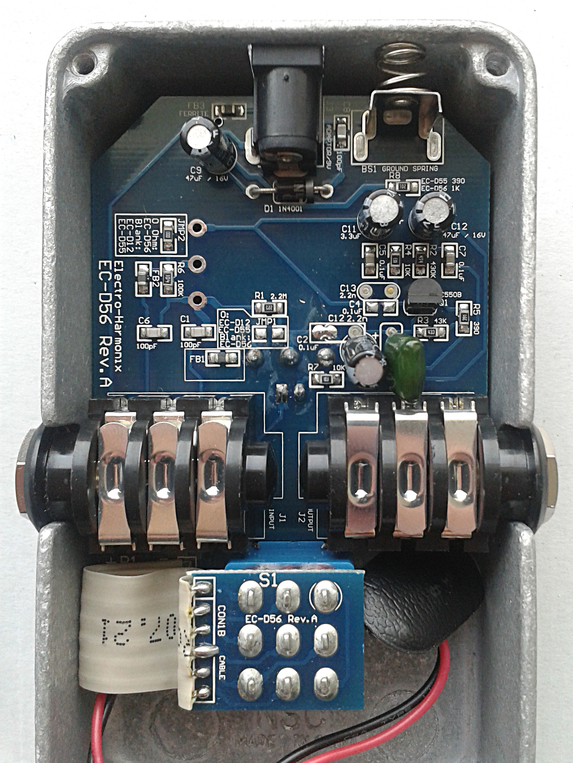
EHX-Mole-guts

Here we have our modern EHX board with most of the design laid out in SMD, while couple of the caps are through hole. And the transistor is a classic TO-92 packaged device too. BC550C. I think EHX has bought those to last a lifetime. At least this type seems to be the weapon of choice for most EHX pedals calling for NPN transistors. Overall, simple and useful. Why?

How does it sound?
Useful due to how it sounds. Want to cut the high end off and give some volume for the lows? For very cheap nano series pedal, this is the way to go. While i don’t see myself using this on my main board anytime soon, i think of the unit as a tool to shape the tones in studio sessions. While it is very good unit, the lows tend to need a lot more power to get amplified. You know, your 50W all tube guitar amp will be louder than your 100W all tube bass amp. In reality, this isn’t exactly true, but due to how we humans perceive frequencies, it might as well be. Due to this, the Mole seems a bit sluggish for its output level, when compared to LPB-1 and Screaming Bird. It could be louder, but still. This one gives you decent kick for your lows while cutting the top end. Usable. Tool.

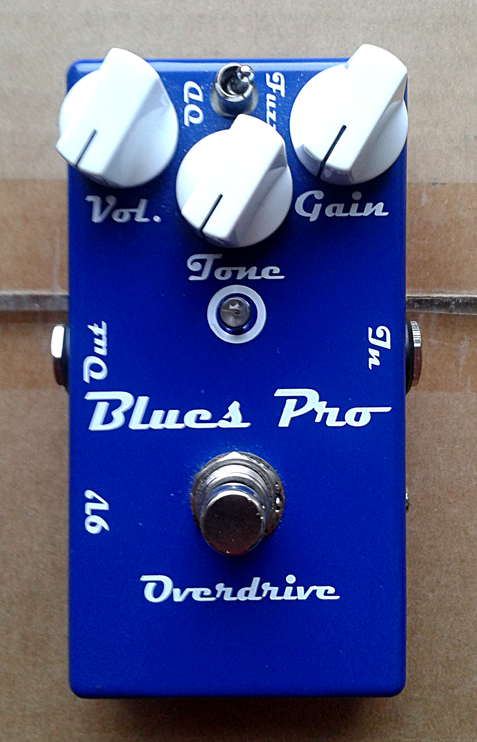
MI Audio Blues Pro V3

MIAudio-BluesProV3

What is it?
MI Audio Blues Pro V3. Made in australia around 2013 or so.

Smaller brands with good reputation in the tweaker community? The vast number of brands vs. the reputation leave quite a few out of the equation. There are these smaller brands that may have had one of theirs as a flavour of the month on certain guitar forums. Usually when that happens, the hype lasts just as long as someone finally opens the unit up and finds the circuit to be nothing more but a tweaked tubescreamer with questionable build quality. Mostly for that reason some of those new and exciting brands seem to vanish as fast as they appeared. But MI Audio has kept its status. And mostly for a reason. Decent build quality on all units and noticeable amount of effort to stand out with the tones. Not to mention the well developed sense of humour. I’ll admit that my first reaction was a wide smile when i opened this unit up.

MIAudio-BluesProV3-guts1

I think i don’t need to say anything more. The gut shot tells you everything you need to know. If i was to say something negative about the build, the excessive flux residue makes me think the unit was put together in a hurry. Plus i’ve never been a fan of board mounted DC jack that is simply placed behind a hole in the box. That seems just a little cheap. But that’s all of the downs i can think of. Everything else is pretty solid. My guess is that the circuit is pretty much the same as for previous versions of the Blues Pro.

We have out basic three knob arrangement with Volume, Tone and Gain. The toggle switches between “OD” and “Fuzz” modes. Which both are still a lot more overdrivish tones than anything resembling a fuzz. I’d rather call those modes “standard OD” and “Slightly Fuzzier OD”. That’ll give a better idea what to expect.

How does it sound?
Open, semi-transparent mid-gain overdrive. Clear as summer sky. Clipping textures for both modes sound open and whole without compressing too much. I felt there was something familiar about this tone, so i A/B’d this with Barber LTD Silver. There are a lot of similar points for these two, mainly the openness and transparency. Both are miles away from any current mass produced big brand pedals. In a good way. I do prefer these types of clear boutique-like tone way over the tasteless big brand stuff, although MI Audio isn’t that small brand and hasn’t been for years. Good all-around overdrive pedal. Possibly not the greatest choice for soaring lead work, but as an overdrive, very good.

Australia is pretty far away from here, but i’m hoping to be able to try out their amplifiers some time in the future.

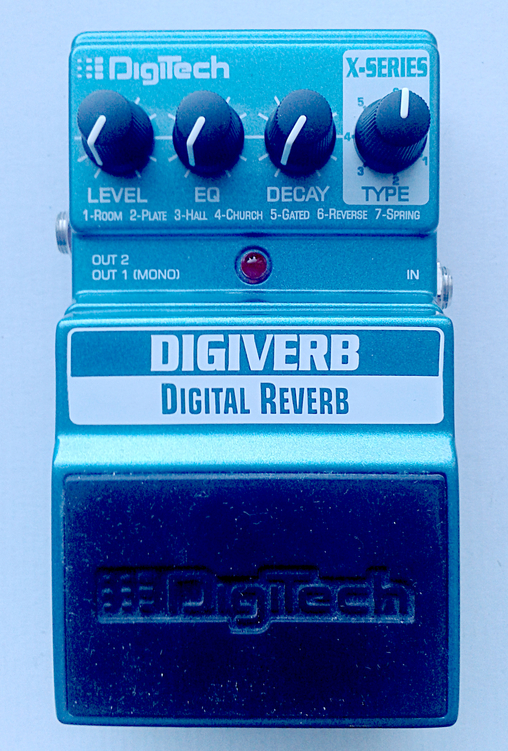
Digitech XDV Digiverb

Digitech-XDV-Digiverb

What is it?
Digitech XDV Digiverb from X-series. Made in china around mid-00’s.

Hmm. Something familiar? Digitech X-series doesn’t fail to disappoint. At the top of the price list for the series, the reverb and the delay are usable units with decent set of features. Actually, these units take on Boss and other mass produced units for a tight match while still being a lot lower on the price tag. But here’s the thing. While other big brands have designed their units from ground up, solely for the purpose they serve, the Digitech units are, well. Digitech units. Once we open up the bottom plate we’ll see what’s going on. Yup. The board is the same we saw on previous X-series posts.

Digitech-XDV-Digiverb-guts1

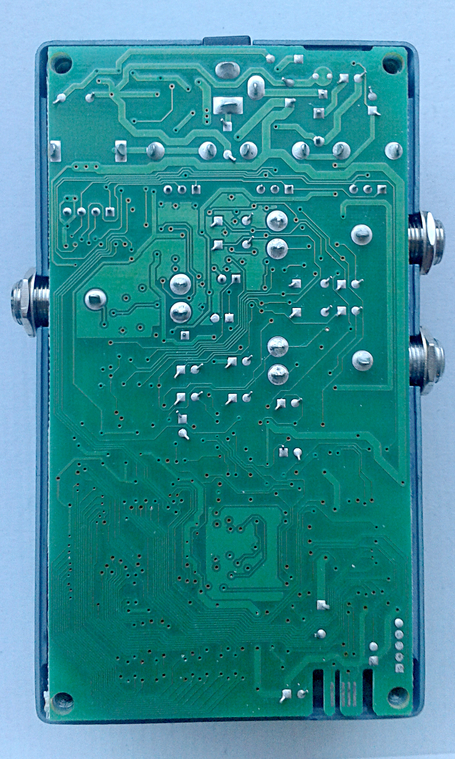
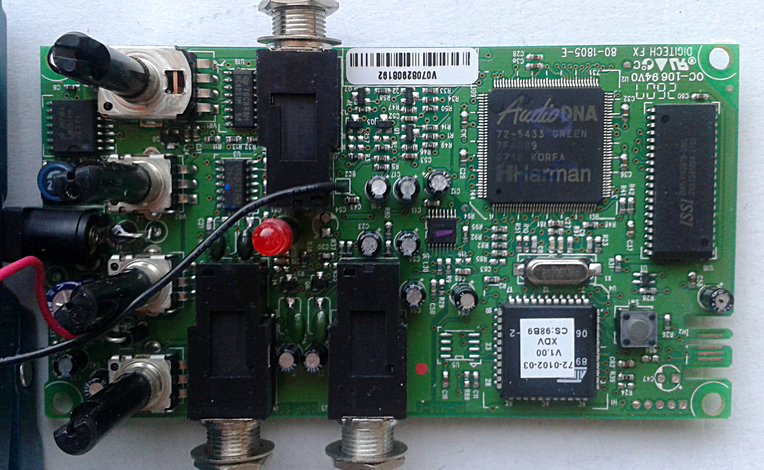
And it doesn’t change once we flip the board over. The circuit is the same, with inclusion of that ISSI-chip which isn’t present on most units. But the rest of the layout and electronic design is the same.  I just noticed the cutouts on the bottom right. If you look closely, you’ll see the connctors there. That must be a connection that reminds me of PCI connections found in computers. I’m fairly certain that is used to send in the data to determine which effect the pedals will be. So in general, the effect is made with AudioDNA DSP, an Atmel chip and an ISSI-chip.

Digitech-XDV-Digiverb-guts2

I said earlier that the effect is feature packed. It is. With mix control to dime in the desired wet/dry level, EQ control to set the amount of highs and decay time control, the these three would offer decent basic setup for any reverb. But then we have seven modes that all have their own reverb tone. The modes are like straight from your standard rack mount reverb units, room, plate, hall, church, gated, reverse and spring. I’d call that a decent set of features. And these modes do resemble what they are trying to model. Quite well too.

How does it sound?
Not bad. Like any pristine sounding rack mount reverb in a small form factor. And since you can get these used for reasonable prices, the bang for buck ratio is very nice indeed. The quality of the tone is also on par with the rack mount units. And thus, the lack of personality and notable level of boringness steps in. Works fine and sounds decent. Usable for your home recordings. This could even be used as a master reverb through mixer send/return loops. I doubt that many would notice any tonal difference between this unit and any low to mid priced Lexicon rack unit. Good sounds in from a boring digital circuit. You bet the article for XDD Digidelay will be shorter than this. After all these two are in fact the same pedal with different code burned in them.

Catalinbread Merkin Fuzz

Catalinbread-Merkin

What is it?
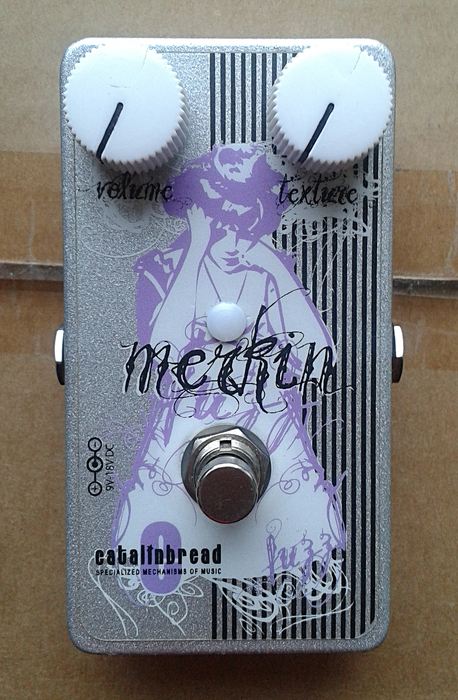
Catalinbread Merkin Fuzz. Made in USA in 2010.

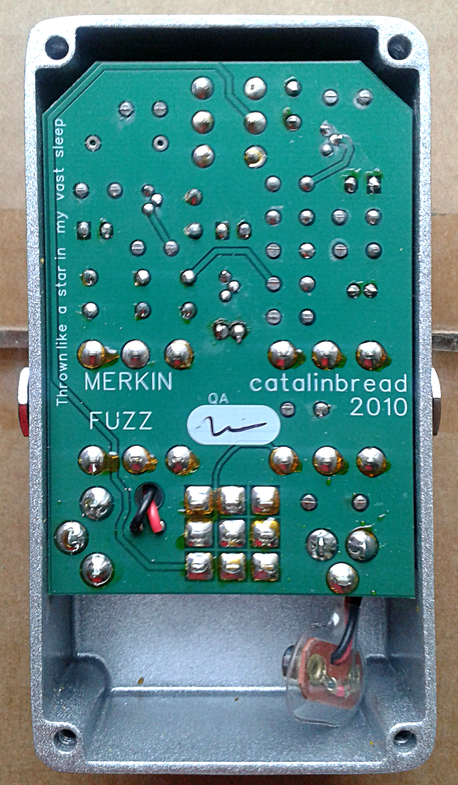
One of the first more “boutique” pedals i sourced and deemed as a keeper. Before getting  the unit, i had already played around with the circuit as the traced schematic has been floating around for years. You should be able to find at DIY forums. Due to this, there wasn’t anything completely new to me when i first fired this original up. When this unit reached me it had its LED burned out and i swapped it for a new one back then. Sad thing is that i didn’t snap any photos then. Call it laziness, but i just didn’t find the enthusiasm to open it all the way again for this article. If we start by looking at the guts, we’ll see two sided board that is looking very professional, but at the same time, rather dull.

Catalinbread-Merkin-guts

Sometimes it’s great to find that circuits that have very little to do with each other on the topology have similar sounds coming out of them. I’m certain that some people thought this to be just modernized and treble cut Mosrite Fuzzrite due to it’s spongy, wild sounds. But designwise this isn’t even relatively close to Fuzzrite. In general, there are three transistor stages, which all take every single bit of gain out of their semiconductors. The texture pot is mixing the output of first and second stage, which is then pushed to the third stage. Somehow this arrangement reminds me more of the Baldwin-Burns Buzzaround, while still being nothing too close. In other words, the circuit design is pretty cool and has some out of the box thinking in it. Sure, there isn’t anything completely profound and anyone with deep experience and understanding in fuzzes could have created something that takes bits and pieces from the Fuzzrite and Buzzaround to combine them in a modern circuit. I’m not sure if this is the case. But if this design is created on a breadboard without following the two schematics mentioned, i’ll take my hat off and raise my glass.

Catalinbread is one of the companies that have grown from single person boutique operation to respectable scale and very respected reputation. There is a reason for this. First off, they know where they are coming from. Second, the quality. Professional and modern boards which are then hand crafted. Boards may look dull, but all the joints look like person with the iron has a real interest in the finished product. Next Catalinbread pedal i’m getting may very well be a new one.

How does it sound?
Ingenious. From that “satisfaction” to killer mushroom clouds. There is definitely that vintage sputter in the tone and texture maxed will give you massive single note lead tones that will work great on those doom/stoner leads too. While the two-knob configuration is the way to go with vintage-like fuzzes, there are tons of different sounds. The pedals reacts to guitar’s volume knob as a gain, and the guitar tone can be used to transform the sound. You’ll get up octaves and down octavish craziness in there too. Not to the degree of MXR Bluebox, of course, but still the overtones are something quite different from Fuzzrites and derivatives. If i had to describe this pedal with a one word. The word would be a “keeper”. Sure. It may not fit to everyone’s taste as it is quite wild. But to me. A keeper.

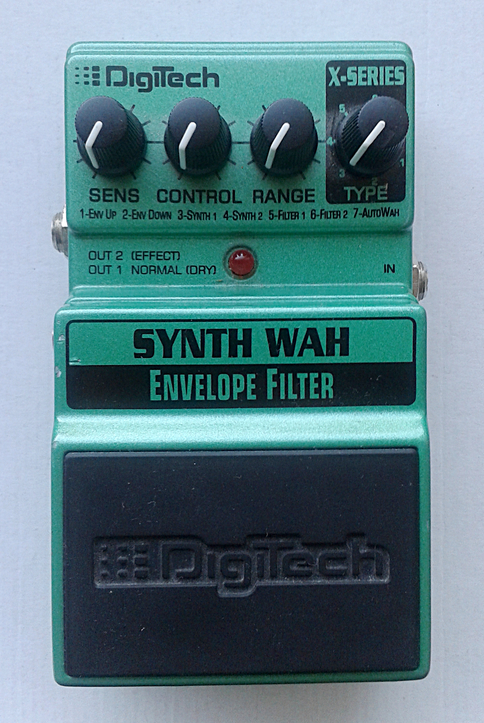
Digitech XSW Synth Wah

Digitech-XSW-SynthWah

What is it?
Digitech XSW Sythn Wah envelope filter from X-series. Made in china around late 00’s

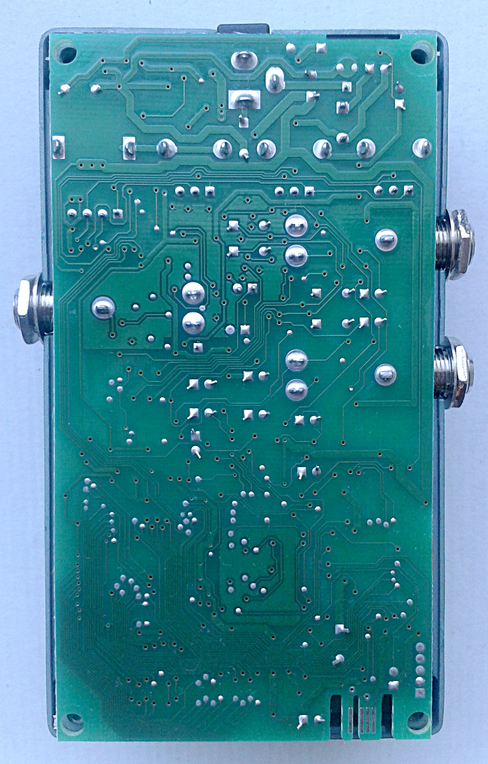
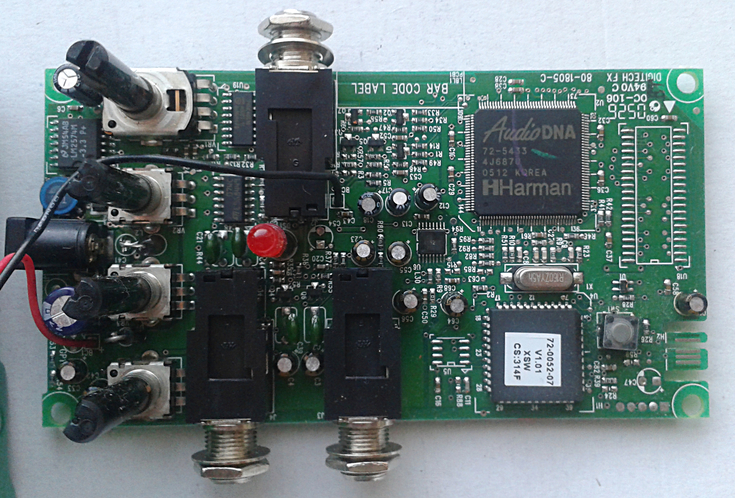
Deeper green on the color than the bass version, the Synth Wah Envelope Filter takes on the battle for autowahs with slight synth features for a guitar. Decent set of features will let you play around for hours. Some of the modes are usable and may even come handy in some situations. Once again, there is nothing close to a schematic available, but once we open the torx screws and check the PCB we notice something that we didn’t want to see. Sea of vias and the auto-routed footprint that is nothing more or less than the same board we’ll see in the bass version.

Digitech-XSW-SynthWah-guts1

This continues when we flip the board over. Yes. It is exactly the same effect as the XBW Bass Synth Wah. Only things that are different are the print on box and some lines of code inside the ROM. I did know to expect this, but it still made me feel stumped. This makes me think that all the X-series boxes have just two different boards inside them. The first are the ones which have a rotary switch as a fourth pot and the second, there are boards with a standard pot in that position. It is just me, but i’m still an analog electronics enthusiast first and thus, not too thrilled about all digital designs such as these.

Digitech-XSW-SynthWah-guts2

I had a conversation over the social media some time ago. One talented guitarist (who uses Boss GT-100 multi effect, by the way) noted that all the effects are just resistors and capacitors, so it doesn’t matter if the design is digital or analog. I just had to correct him. You know, when there is someone wrong on the internet.. No, these two methods are not the same and cannot be compared head to head. Analog designs rely on electronics engineering, while digital designs rely on processing power, code and A/D-D/A signal conversion. Some modern pedals nowadays can easily hold a power of Nintendo64 inside them (some modern multi effects are even more like desktop computers). But the question is like comparing locally hand forged steel gate on your driveway with one that’s been moulded in chinese steel ovens. Yes. These both do the same thing. And yes. To the laymen it doesn’t matter. But for hand forging enthusiast the different is huge. Then comes the question which is “better”. Neither. Or both. Beauty is in the eye of the beholder.

How does it sound?
Not bad. The modes have good and usable wobbles in them. The synth-like sweeps are pretty wild and since there isn’t too many guitar envelope filters with similar modes available, this unit is rather desirable. Whether it is the same effect from electronics design point of view as the Bass Synth Wah is irrelevant. Sure it matters to me, but it doesn’t affect the sound. My personal opinions rarely affect the sounds… Again, the low price point and big user value will make this effect tempting to many. Not to analog enthusiasts, but for everyone else. Not a bad unit. Good and cheap thing to get. Not a bad investment, if you don’t care about the analog/digital aspect.

Boss FZ-5 Fuzz

Boss-FZ5

What is it?
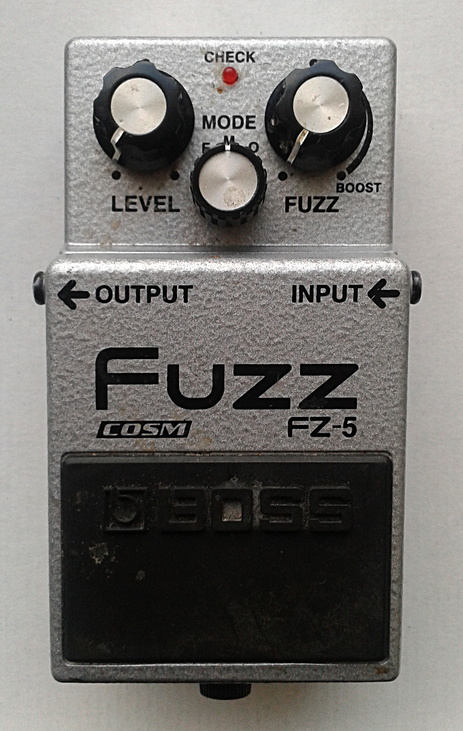
Boss FZ-5 Fuzz. Made in taiwan, may 2007.

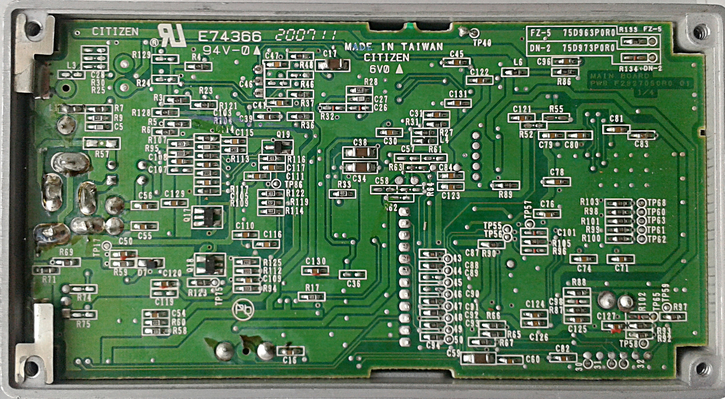
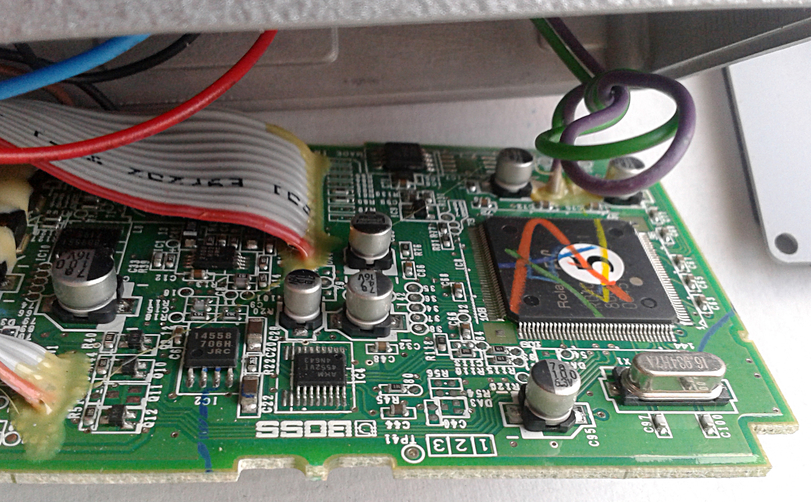
Since we are on a roll with sounds coming out of digital circuitry, here’s one to add. Some may have wondered why there isn’t a schematic or any hint of a DIY project for a pedal with this reputation. The answer is simple. The code inside the pedal is the thing that makes up the effect. The electronic circuitry is once more nothing else but input buffer -> electronic switching -> A/D conversion -> digital signal processor -> D/A conversion -> electronic switching -> output buffer. There is a Boss branded signal processor that takes care of creating “that vintage up octave sounds”. Sure. The idea of having a Fuzz Face, Maestro FZ-1 Fuzz Tone and an Octavia in a single box is not that bad. Actually i’d call it very tempting.

Boss-FZ5-guts1

But there is a “but”. The label on the cover says “COSM”, so at least the digital design isn’t being covered or pushed aside like it wasn’t there. I’m not sure when digital stopped being a selling point in pedals. In the 80’s and early 90’s it was respected to have everything digital. To be honest, i’m not sure if i’m ever going to get interested in DSP. The DSP is very useful and can do great things. For example, think of all the reverb units around. And what about those multi effects that are nothing short of great for bedroom practice sessions. Here’s the “but”. We are talking about digitally modeling three circuits that would have been doable with cheaper set of components as an analog unit. To me, this seems like one of the in-house competitions Boss engineers might have had. Say, who can turn three simple, a few transistor circuits into a current hogging digital design?

Boss-FZ5-guts2

These three modeled circuits have been classics for decades and for a reason. The different transistors in Fuzz Face (and same goes for the rest of the trio..) make a noticeable difference and there have been several main versions over the years, since late 1960’s. Nevertheless, these classic effects have their status due to driving the semiconductors to the point where they shouldn’t be driven. What boss did, was to model these digitally and put it on the market. And then there are the results…

How does it sound?
Fz-5 isn’t the worst sounding pedal in Boss catalog. Hell, it isn’t even their worst sounding fuzz. But it is like playing chess with a friend on Nintendo. The three modes are surprisingly close to their idols, but still not close enough. The main difference with vintage analog circuits is the “unreliability”. The one factor that makes a Fuzz Face what it is. Even the best digital modeling can’t calculate the semiconductor behavior close enough to reality. Maybe in decade or two, but not yet. These modelers are not that bad sounding things and someone who’s not married to the analog electronics won’t be able to tell a difference. To sum it up, the pedal offers “close enough” models of three widely used and recognized fuzz circuits. For garage punk guitarists, this is not an option. But for those who want to use a little of fuzz in their home recordings, why not. The fuzzes from this box are a lot better than the ones on most multi effect units of the era. At the same time, it is good and it is bad.

« Older posts Newer posts »

© 2025 killall -9 humans

Theme by Anders NorenUp ↑