Category: Ibanez (Page 6 of 6)

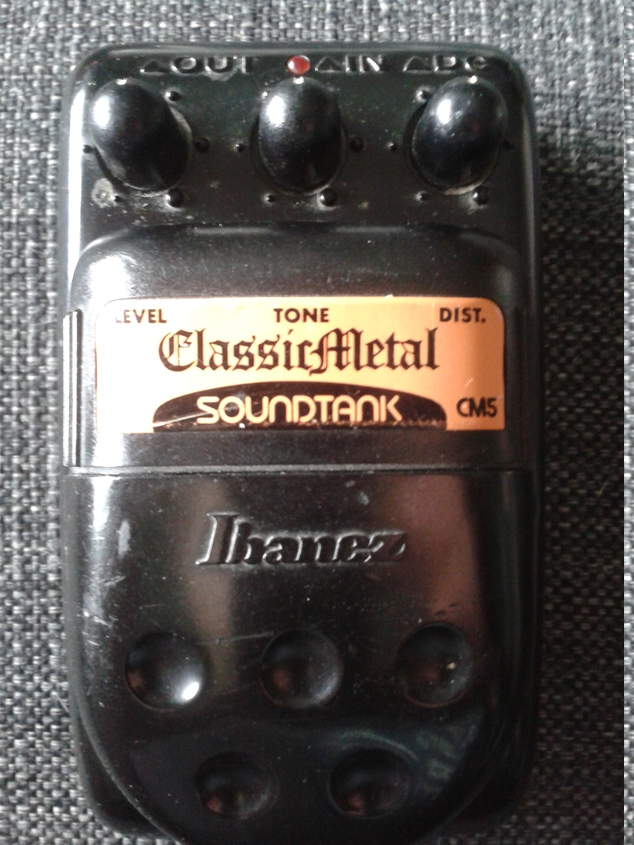
Ibanez CM5 Classic Metal

CM5

What is it?
Ibanez CM5 Classic Metal from Soundtank series in plastic enclosure, made in Taiwan. Condition could be better, but after swapping the switch it runs like a charm. I never thought that dents or scratches affected the sound in any way. Late 90’s date, so this unit isn’t the most valuable soundtank in my collection, but its value comes more easlily through use.

This is one of the pleasant surprises in the series. Name and basic controls do not raise interest that much, but once plugged in, my face just raises a smile. Clean high gain distortion without noticeable noise content. Simplified Rat as main gain stage that drives a pair of hard clipping diodes. Followed by two active gyrator filters for tone control and taking ecxess frequencies out of the signal. Standard Ibanez switching and buffering included. Simple, yet effective.

This one’s gain stage could be modded closer to a Rat, but as it is – i simply don’t see a reason to do so.
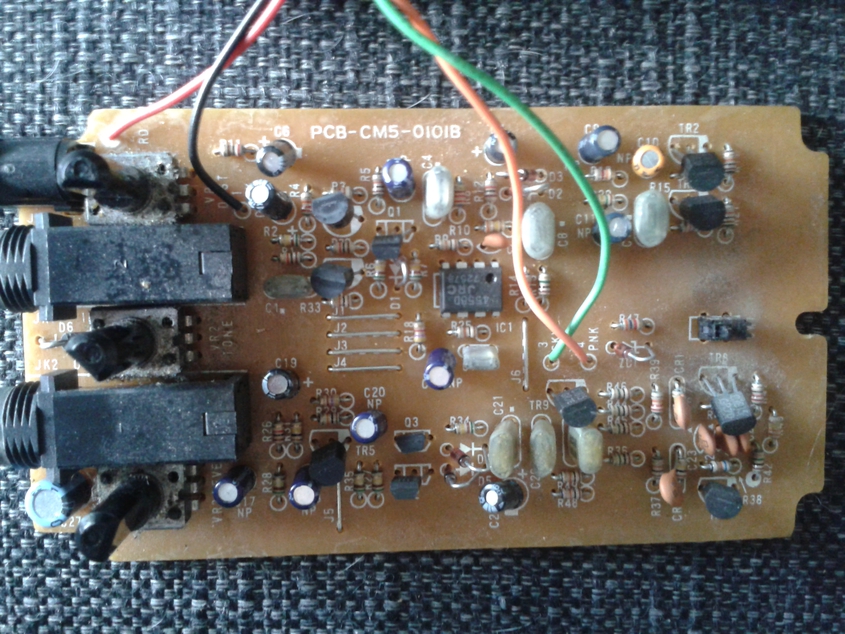
CM5-guts

The board seems quite spacious when compared to some other Soundtanks. Basic, good use for JRC4558. Other half for gain stage and other for tone driver. Again. Simple, yet effective. For those interested, Dirk has a schem up at his site. All in a nutshell – its main stage may be based on a Rat, but overall design doesn’t have too much in common.

How does it sound?
Surprisingly good. Subtle overtones for those high note bends, massive but accurate chord rhythms. In general, very underrated pedal with really good sound. It is just a one trick pony, but does that trick really well. One that should not be overlooked.
Ibanez No.95 Renometer

Just because i happen to feel like it, here’s another post for today..

Ibanez-NO95-Renometer

What is it?
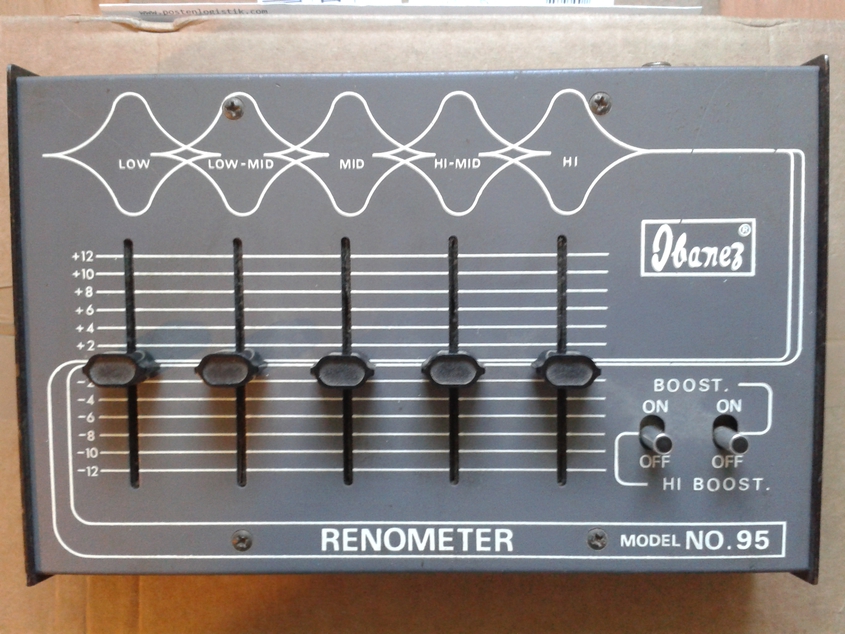
Ibanez Renometer Model No. 95 EQ/Booster from mid seventies.

Got this unit in a trade some time ago. In very good condition i might add. Plugged it in and had no response. Gladly, the only broken thing was one of the battery snaps. This requires two 9V batteries, as it runs with +9V and -9V, using gorund as vref. Measured current consumption settles round 5mA, so those two batteries should last a long time. Couldn’t believe my ears how loud this thing is. The boost switches work in mouth watering manner – offering even more raw clean boost. While trying out the sliders, i noticed wah-like textures to the sweeps. Opening the box up confirmed it.

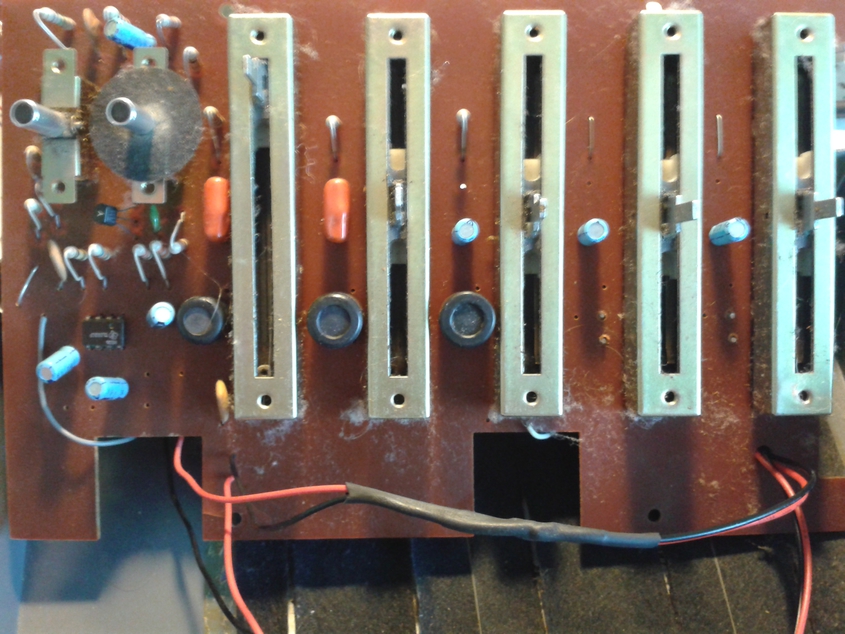
Ibanez-NO95-Renometer-Guts1

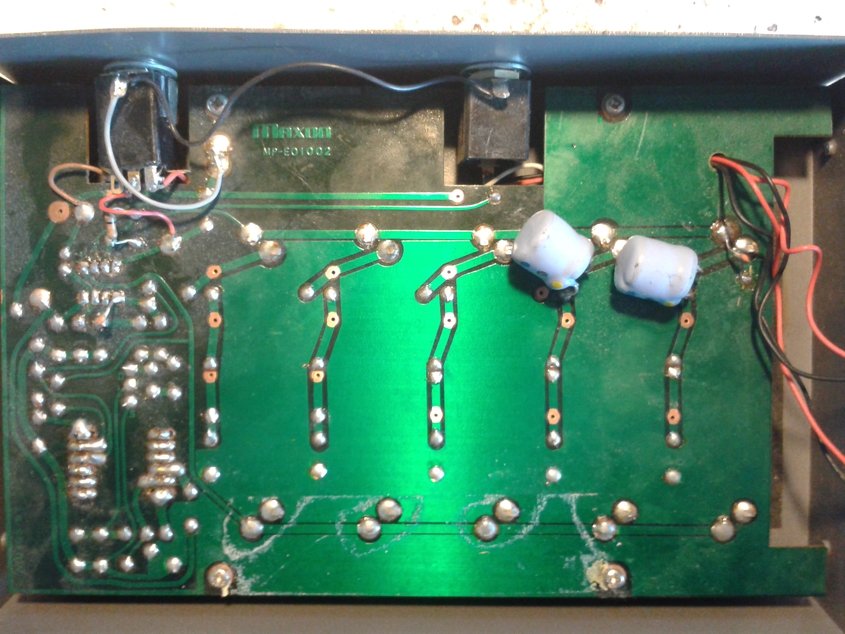
The sliders are basically five simplified cry baby wahs that are wired for cut and a boost. The print on the cover has +12/-12dB on it, but i’m having hard time believing that it is just 12dB that this thing adds to the signal. Maybe it is, but it gets multiplied by all the 5 frequency ranges. The photo above shows tha the inductors for lower frequencies are so huge that they are mounted on the “wrong” side of the board. The image below shows the smaller inductors next to the slides.

Ibanez-NO95-Renometer-Guts2

Didn’t have hard shell battery snaps with long enough leads, so i soldered the new one to the old wires and cleaned it up with heat shrink tubing. As you can see from the board photo, the part count is pretty low. Which made me question what was driving it to offer so much sheer volume…

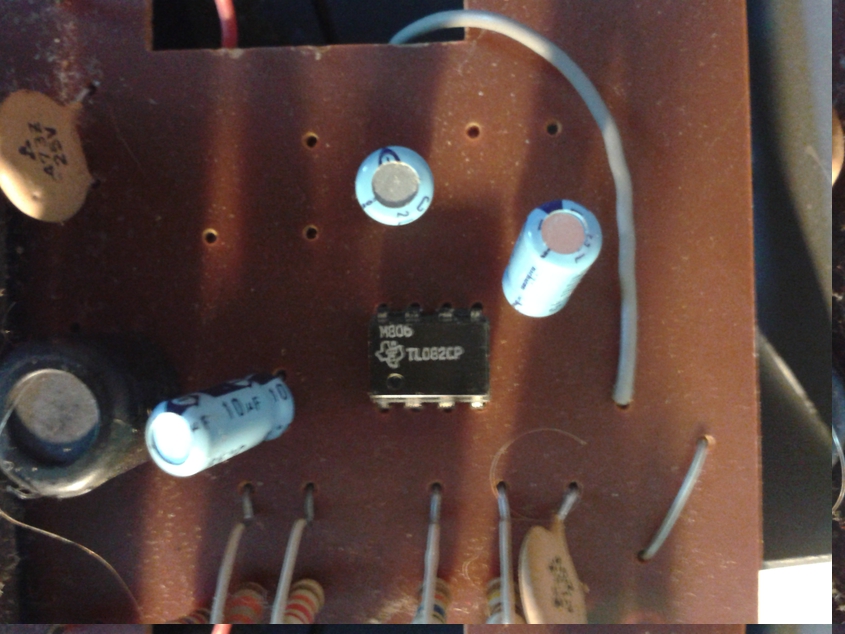
Ibanez-NO95-Renometer-Guts3

Just one TI TL082. I heard loud effects with TL family chips, but not this loud. I could be just because of the +/- voltage swing that takes the volume to this level. I do wonder what the empty holes are for…

Oh. Once again, Dirk has a perfect schematic published on his site. His unit seems to run on JRC4558 and it has an dc jack. Neither of which are present in my unit.

How does it sound?
Clean and Loud. If it weren’t for the 5 huge inductors, this one would get cloned immediately and that clone would get a permanent spot on my pedal board. No distortion at all. Just a perfect, super loud EQ booster. Actually. I don’t know of a better sounding one to exist.

Ibanez AF9 Auto Filter

AF9

What is it?
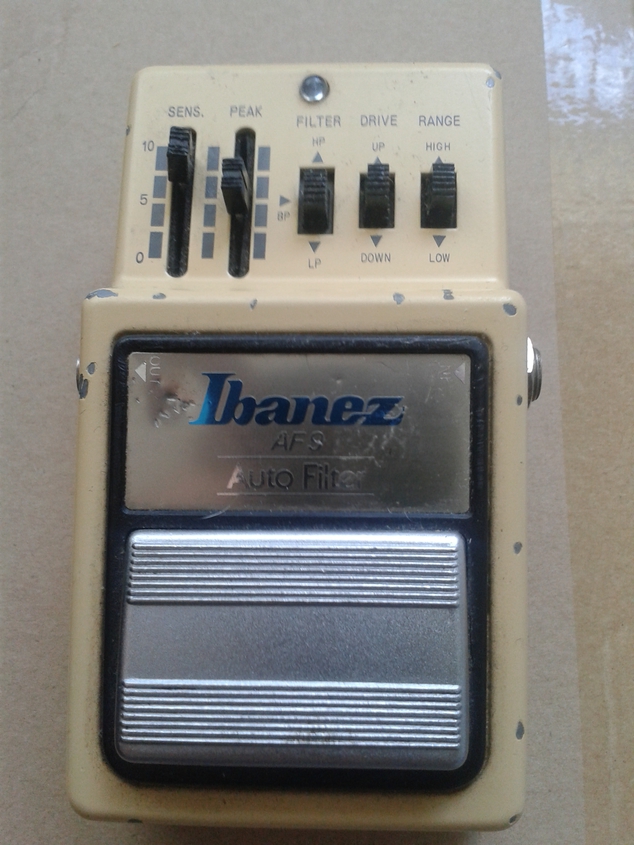
Ibanez AF9 Autofilter. Made in japan in early 1980’s.

Even though i don’t see myself as a huge fan of autowah/envelope filter genre, i happen tohave a few specimens. The way envelope filters, aka autowahs usually work, is that there’s an driver part that triggers the filter when certain input level threshold is achieved. Then the filter sweep is mixed with the incoming signal. I do believe this design works in the same manner. Quick googling around did not give me the schematic. Because of this (and in part because i haven’t had the time to analyze the circuit more deeply),  i can’t offer deeper understanding of the circuit at the moment. Reliable sources tipped me off that this should be close to Ibanez AFL, the Auto Filter from the Ibanez L/Master Series.

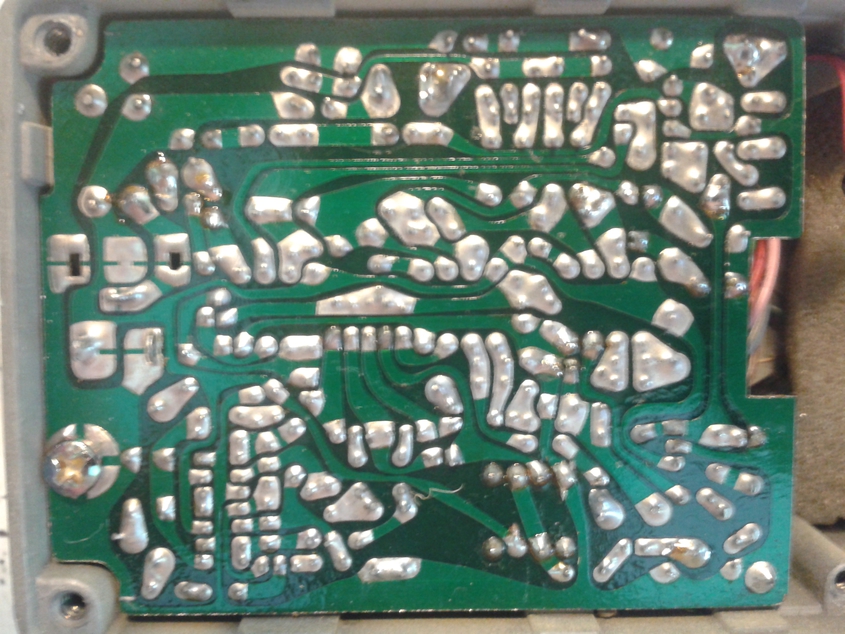
AF9-guts1

Older Maxon/Ibanez PCB layouts are just beautiful pieces of art, don’t you think? The traces are like perfectly aligned acid trips. Just beautiful. Even the joints are beautiful.

I find all the controls useful. Sensitivity affects how easily the filter sweep is applied to the signal, Peak then takes care of how hard the sweep affects it. The slide switches alter the filter type between low pass, band pass and high pass, all of them affecting the different parts of the frequency range. The sweep can be driven from up to down and down to up with a switch. And finally, Range setting makes this usable with bass.

Apparently these boxes have quite a lot of user and collector value.

How does it sound?
Greatest sounding autowah i’ve ever played. Versatile, yet simple. Schoolbook example of how autowahs/auto filters should be made. It can do wild, almost synth-like sweeps and standard funk sounds. From rhythms to leads. Useful, even when your music isn’t funk.

The range of settings are good. None of them kill the signal or behave badly in any way. This unit makes me feel good in so many ways.

Ibanez FL5 Flanger

FL5

What is it?
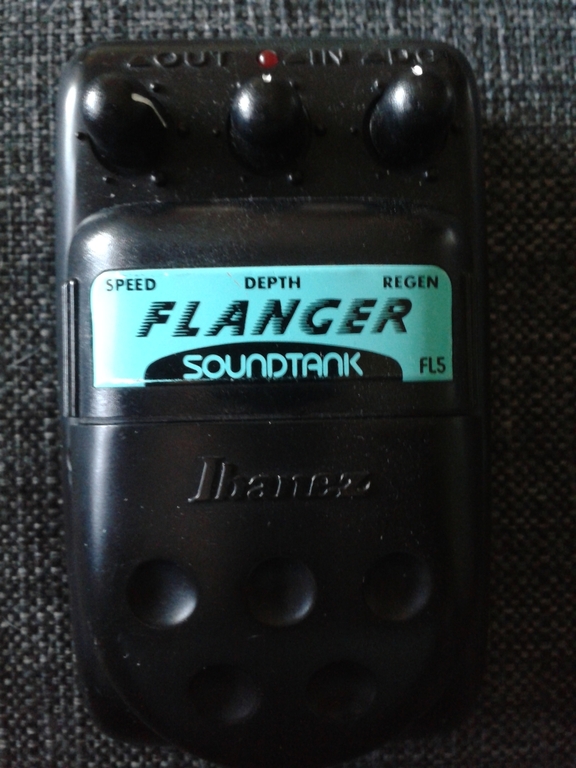
Ibanez FL5 Flanger from Soundtank series in plastic enclosure, made in Taiwan, late in the 90’s. So it’s pertty new unit in my collection with only about 15 yesars of age.

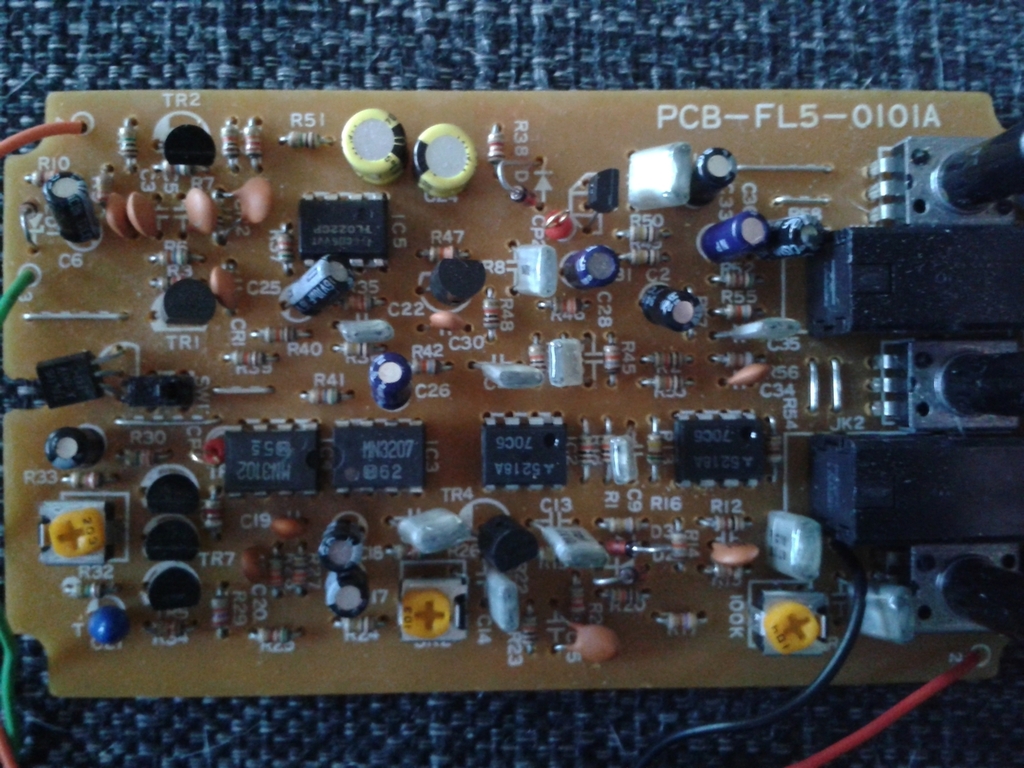
According to notes from (one of my heroes,) Dirk Hendrik the circuit is pretty much verbatim clone of Ibanez/Maxon FL9, with delay control omitted. So in essence, it is poor man’s version of one of the gratest flangers ever designed. MN3207/MN3102 pair driven by TL022 and two Mitsubishi 5218As for LFOs. One of the most crowded boards in the series. For some reason i can’t find a schematic for this design, while FL9 schem can be found online. Anyone have a copy?

FL5-guts

Circuit is a rock solid workhorse. I acquired one board as an addon to other deal some time ago (thanks Brent!). That board had some bad traces and all the caps were removed. One day, if i find the time, i’m going to try and resurrect that board. Maybe add the missing delay control and rehouse it in D box. That will be huge, but somehow i think it could be worth the trouble. The unit pictured above is my working specimen with high serial number.

How does it sound?
Nothing negative to say. Very warm and soft, while it can be turned to be massive airplane shattering windows in a small town. Exactly like its big brother. This box is really good to have. If you can score one for cheap, do it. You won’t regret it. Just replace the switch and you’ll be golden.

Ibanez LF7 Lo-Fi

LF7

What is it?
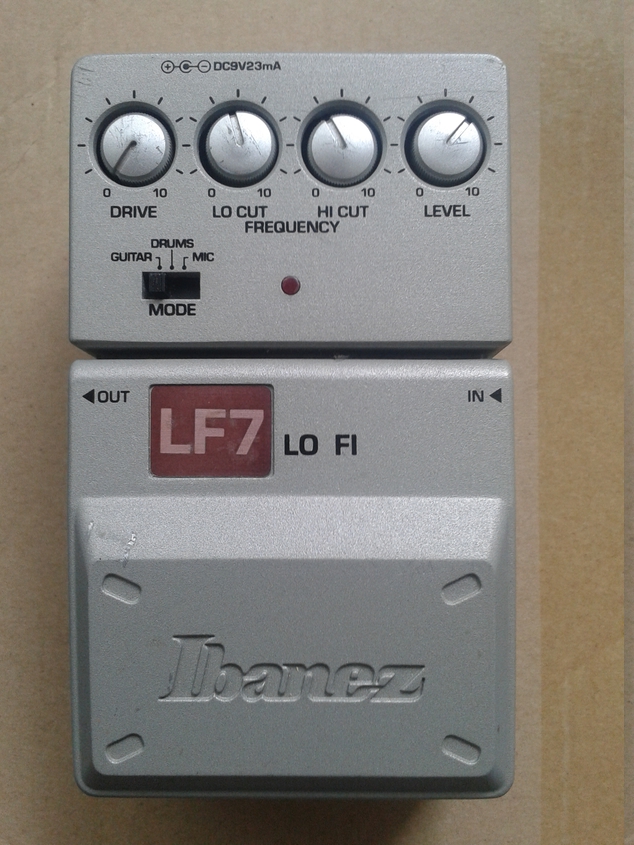
Ibanez LF7 Lo Fi from Tonelok/7-series. Apparently made in the year  2000, as the enclosure has the date 1/2000 stamped on the inside.

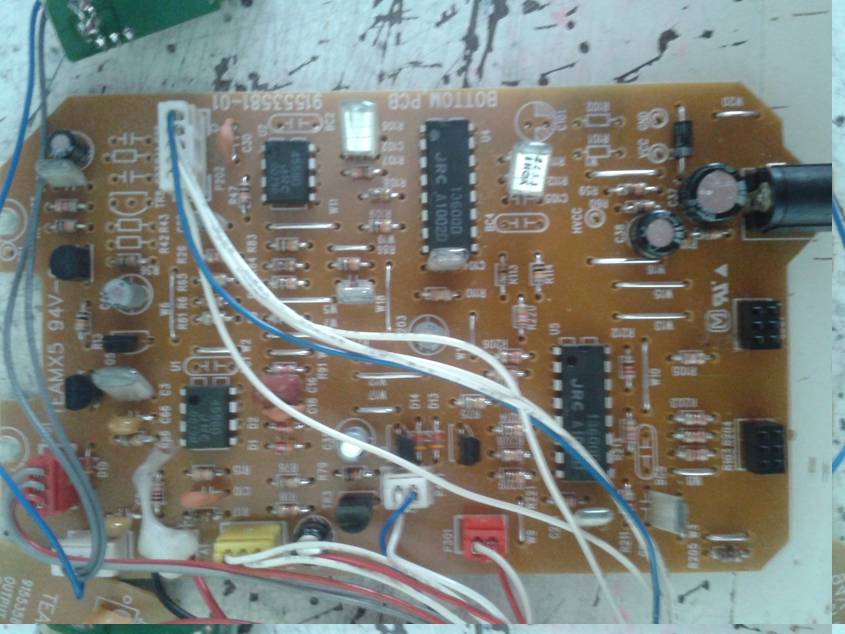
The board itself has a lot of components left out, so it seems that the same board may be utilized in other designs of the series too. I think i may need to do some reading on this. As the circuit is what it is – a distortion with active filters, i think i’ll focus on the enclosure and how the 7-series are made, rather than trying to analyze the circuit on this particular design.

LF7-guts1

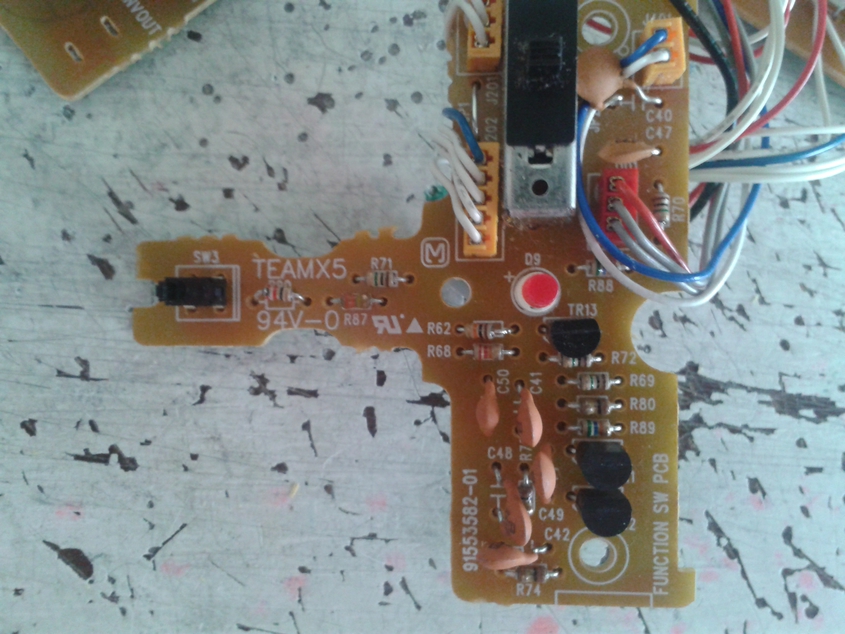
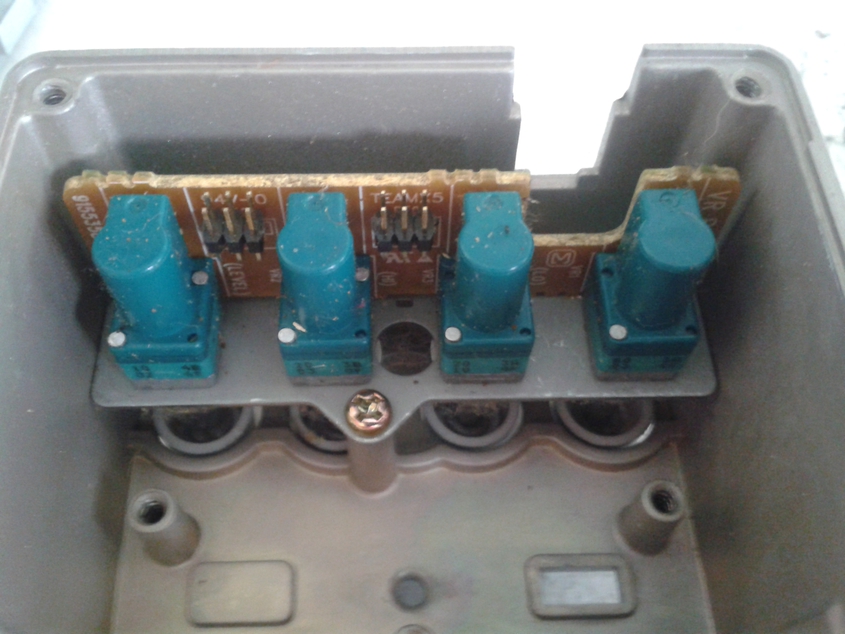
The base design for 7-series boxes is made of 5 (!) boards. One for input jack, one for the switching, LED and slide switches (picture below), the main board (above), the control board (aka VR Board) and one for the output jack. It is crowded in there, but this type of design leaves a lot of room for the main board. Which is huge when compared to compact size of the pedal itself. There is a downside to this. Over engineering. You need to use all the space available, right?

LF7-guts2

Meaning that the same results in sound could have been achieved for a lot smaller board and lower parts count. The factory schematics can be found online, but study them with caution. These are the worst schems i’ve seen with depicting of all the 5 PCBs, showing some parts of the layout and having massive, unnecessarily long lines. These also notes how all 5 boards connect together. Good information,  but difficult and/or frustrating to read.

Back to the good things. These also seem to built for war. Couple of the units i have were mailed to me wrapped in just two pages of newspaper and a thick paper bag. Knowing how the postal service treats the parcels, i was quite surprised how none of these had any issues after such treatment. The Tonelok-idea is not a bad idea at all. I’ve run into issues accidentally kicking the pot knobs on some pedals (think ZVex’s Fuzz Factory) that have the stomp switch way too close to the knobs. Add trigger happy controls to that equation, and you’ll find out why locking knobs is a very good idea.

LF7-guts3

Other downside to this series is the use of the same tact switch that’s found on Soundtank/5-series. Swapping the switch takes about double the time compared to Soundtanks, due to complexity of the 5 boards that need to be disassembled. So, disregarding the switch – These are built to last and can take a hit, plus locking controls work great. Overall, i think these are the most underrated pedals ever made. Can’t wait to see if the switches outlast the Soundtank switches or not. And more importantly, how the value of these develop in next 20 years…

How does it sound?
Back to the LF7. This design was just perfect specimen to talk about the series in general. The reason being that this may be one of the worst sounding  Ibanez designs ever. It is truly Lo Fi as advertised. Really bad, ugly misbiased distortion with active, bad tone controls for highs and lows. Doesn’t work for guitar at all, but i can see this being used with a blender circuit for vocals and drum buses. Nice studio tool, but i can’t see any use for this on any pedal board.

Ibanez FZ5 60’s Fuzz

FZ5What is it?
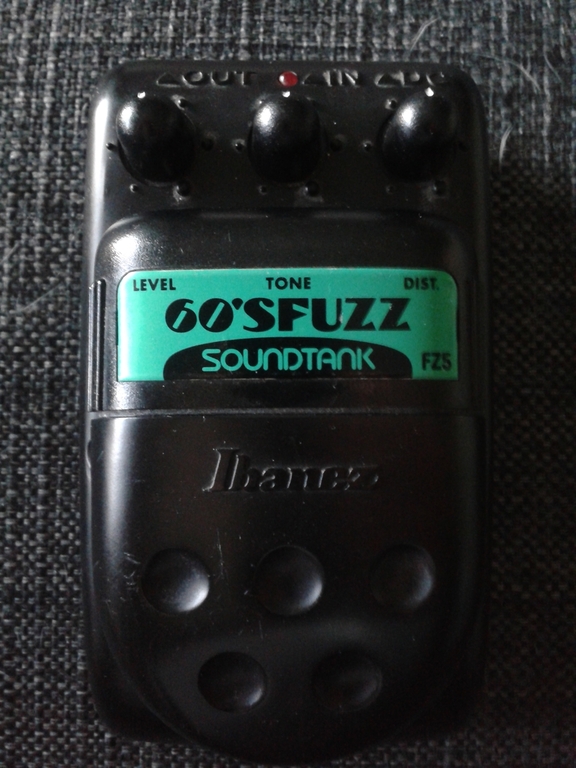
Ibanez FZ5 60’s Fuzz from Soundtank series in plastic enclosure, made in Taiwan. Manufacture date unknown due to missing label that’s been ripped off by velcro at some point before this landed to my care (Grrrrr!).

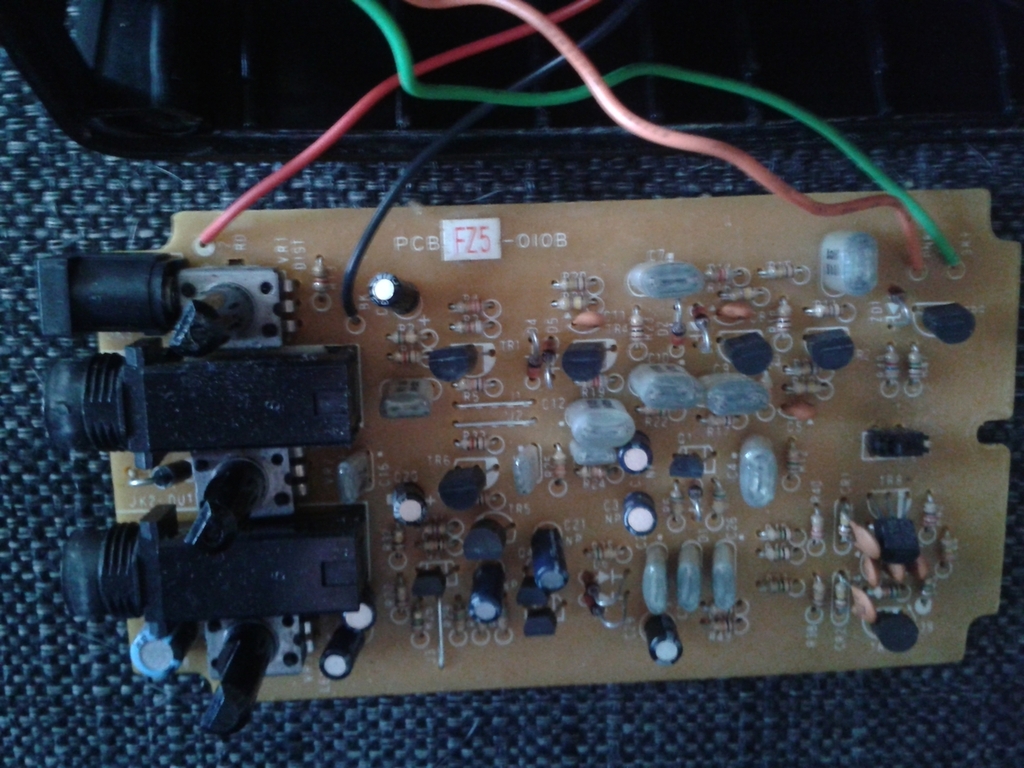
Techically pretty close to Ibanez OD850 and OD9 (which are damn close to BMP), with some value changes to every single spot of the design, plus completely rewritten tonestack and output driver. The design has remained, but the 60’s Fuzz has been around as metal boxed SF5, then plastic uniform typefaced FZ5 and finally this – FZ5 with its own font and Soundtank “logo”. I’m thinking about getting another one of these, preferably metal boxed one to keep as original and tinker around with this individual. Mainly because i can’t trace this unit back to it’s origin without the serial number. I could take closer look at date codes on components, which should give out estimate that should suffice. Either way, this one is from newer manufacture date, probably from 96-98.. I’m quite interested about modding one to OD850/OD9 specs. This time that won’t happen with just swapping components. The board will need some work too.

FZ5-guts

Good thing there’s room on that board. Note the sticker placed on the PCB label. As stated above, the design used to be SF5, so the PCB type remains as such – only with a sticker saying that it is now “FZ5”.

How does it sound?
Not too great i’m afraid. May be because of the tonestack, but it literally sounds like BMP held down by pack of wild horses. The fuzz is in there, but it’s on the brink of choking to scon at five o’clock tea. It’s a Fuzz. Wich is a good thing. Modding some other companys work should always mean that the end result should be better than the original. This is not the worst effect i’ve had, not even the worst i’ve seen this year. Still nothing to write home about. Probably marketing guys at Ibanez wanted it to sound more mainstream than BMP/OD850, which resulted in adding modified tone control that sucks the life out of it – and other fault is leaving the recovery gain too low. Funny thing is that you can get modern BMP reissue for a lot cheaper than this. One of the few bad (re)designs in Soundtank series. Good to have, but as it is.. Don’t see myself using it a lot.

Ibanez CR5 Crunchy Rhythm

CR5What is it?
Ibanez CR5 Crunchy Rhythm from Soundtank series in metal enclosure, made in Taiwan around 1989-90.

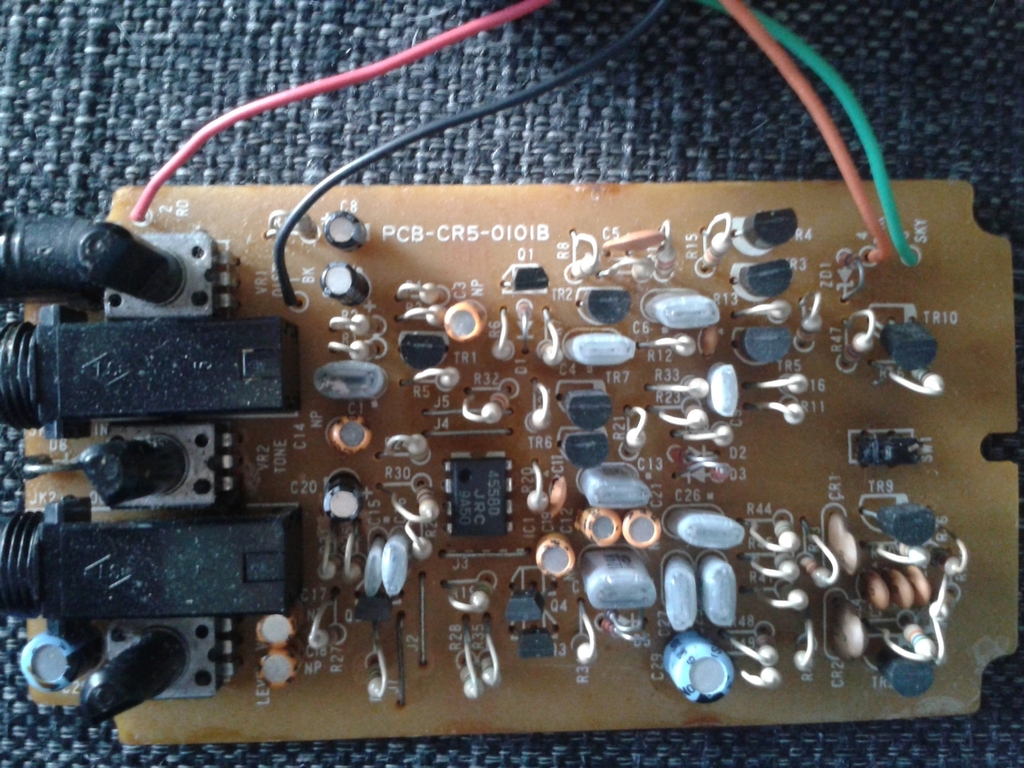
It is a design that differs from usual TS and/or Voodoo Labs overdrive topology. Boosting, bluesy overdrive with discrete differential pair to determine which parts of the signal get to Si diode hard clipping before the tone driver. Since the 70s and early 80s, it’s been hard to come up with even remotely original overdrive designs, but this one has some out of the box thinking incorporated. Schematic can be found on the 8bitsindgenug site. It is well worth taking a look for what’s happening in there. The gain/distortion stage makes me smile, as it’s definitely something you don’t see in every OD design around.  My unit is in a metal case and has very small number as a serial. I think it’s safe to assume that this particular unit was made in 1991, when the first (metal boxed) Soundtanks were introduced to the public.

CR5-guts

JRC4558 is there to drive the tone control and other half is used as output buffer. Not sure why the IC half is used as a buffer, as it could have been just as well used as the first gain stage – instead of the lone 2SC1815Y that drives the differential pair. This is part of the reason i care deeply for Ibanez boxes. Even the commercially dullest, most underrated pedals can have good sounding, innovative stuff inside them.

How does it sound?
Not too far off from likes of Boss BD-2, even though these two designs are completely different. Resemblance to few other “dumble” styled overdrives should be mentioned here. It has good output level, and real nice, softer texture to the dirt. It keeps the frequency responce well in tact, so it can be used as a really good sounding preamp in beginning of your effects chain. All that in a metal box that just rocks. This model is getting rarer every day, especially the one in metal enclosure. So if you get a chance to score one for cheap – do it without hesitation. It will be worth it. Definitely one of the greatest boxes in Soundtank series.

Ibanez TM5 Thrashmetal

TM5

What is it?
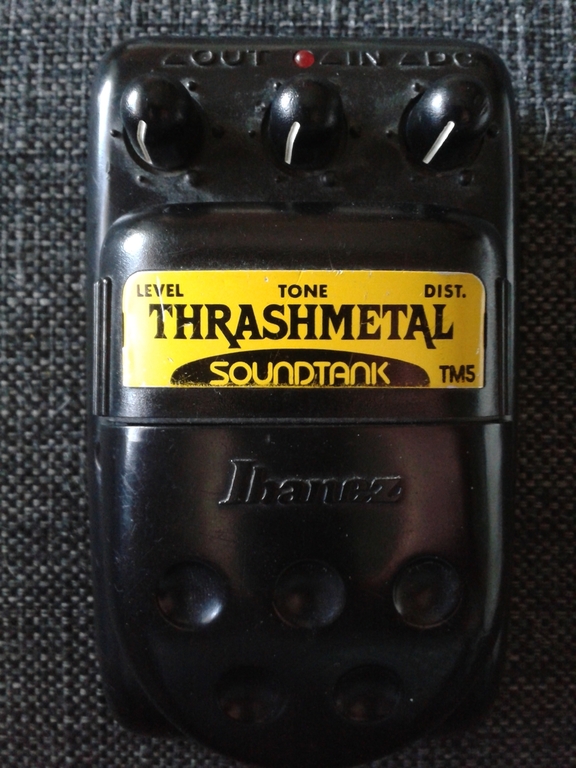
Ibanez TM5 Thrashmetal from Soundtank series in plastic enclosure, made in Taiwan around 1994-1996

Serial starting with 184 points to early-mid nineties date due to this being with its own type font. Earlier ones should be with uniform type face and so are the metal cased units. Serial is quite low for the box having its own typeface, so i’m assuming this is one of the first batches of TM5s with this font. Thrashmetal was apparently pretty popular pedal back in its day – and no wonder. It is very doog effect pedal, despite to popular disbelief that Soundtanks suck. They don’t. Period. This, like almost every tank in my collection, needed a new switch. Simple, low cost procedure which will give a new life for the box. Mods? No. This puppy won’t need any to sound good. Dirk hendrik has drawn a beautiful schematic for this. Schematic refers to metal cased unit, so there are some slight changes between later units and the first ones. Mainly the opamp used.

TM5-guts

For this unit, the opamp has 6552 413 printed on it, so it is in fact a Panasonic AN6552 – which is cited as Panasonic’s clone of NE5532 in some audio tweaker scenes. Apparently the first versions accomodated JRC4558 chips, but i strongly believe there’s no audible difference. Circuit has some details in common with Proco Rat, the main gain stage and hard clipping included. Rest of the circuit has not that much to do with a Proco design, with its discrete gain stages and active filters and other tricks. Simple, neat and very decent thing to have.

How does it sound?

Real nice. In my opinion, this is definitely one of the best designs in the whole Soundtank series. The short sustain with relatively high gain makes this circuit sound exactly like all the great bands that made 80’s thrash what it was at its best. Circuit isn’t metal in the way kids today see metal. It still offers that natural, amp-like super tight, accurate thrash sound, usually associated with 80s-90s Marshall distortions.  It may be worth mentioning that it doesn’t sound like a Rat at all. It sounds like i need to get a skateboard again.

Ibanez TS5 Tubescreamer

Let’s start out with underrated, yet obvious classic.

TS5

What is it?
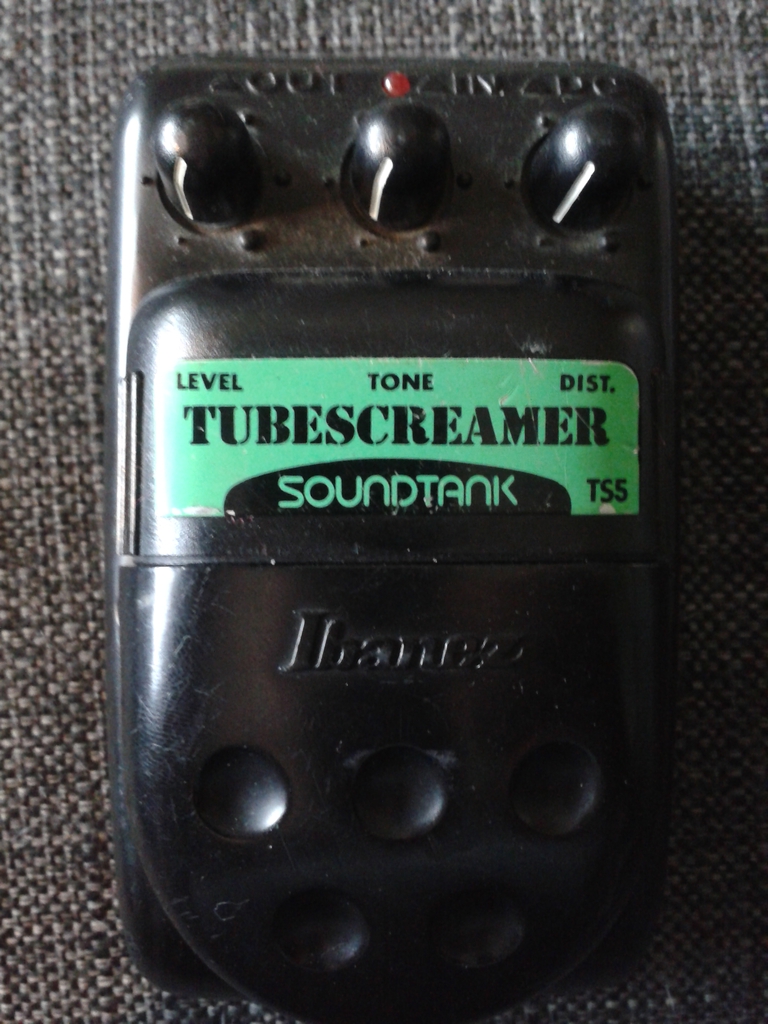
Ibanez TS5 Tubescreamer from Soundtank series in plastic enclosure, made in Taiwan around 1992-1995

This unit has serial number starting with 107, which suggests that it is early Taiwanese Tubescreamer with plastic enclosure. I’m not 100% sure about the serial numbers and how these tell the exact date, but the metal boxed Soundtanks i have all have their serials starting with 001 and the newest plastic one i have has it’s serial starting with 424. All Soundtanks have 6 figure serial numbers. For being from the early half of the 90’s, this unit is in fair condition. Like most of the tanks i’ve ever had, this one had bad connection on its switch. I swapped that for new Alps drop-in replacement and it is playable once again. The 9V battery snap was apparently broken somewhere along the way. It was replaced with cheapest possible soft headed snap by the previous owner. The wires were soldered on to the original snap’s wires. Nothing wrong with that – but the new joints were insulated with office friendly see through tape. I also swapped the snap for hard shell one and used some heat shrink to get it neat.

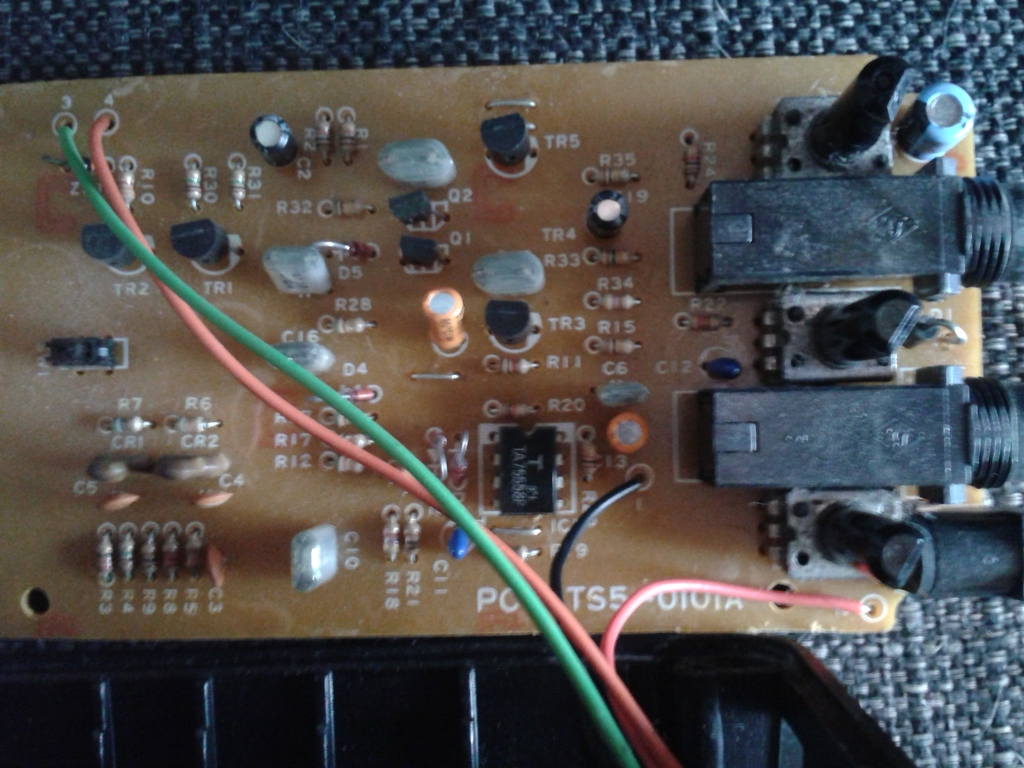
TS5-guts

As the photo shows, the board has TA75558P chip in it, which makes the board exactly 1:1 with current Maxon/Ibanez TS9 reissues. Yes. I’ve though about modding it. I won’t. Because of the reasonable condition and early serial, i’ve decided to keep this one as original. I could try to score another one and replace the chip with JRC4558D on that one – and of course, swap the two resistors at the output to make it TS808. Update! I bought another, newer unit in worse condition than this and modded it to FYA Electronics Arrow mod specs.

Schematic and tons of other information, plus many DIY projects on this circuit are widely available. Since the circuit is exactly like all the other Tubescreamers, i’d suggest that you read more about it from geofex’ classic article, “The Technology of the Tube Screamer“.

How does it sound?
Well. What do you expect? Circuitwise, it is 1:1 with TS9, so it won’t sound anything different from new store bought TS9. It sounds reasonably good, even with the expected mid hump, harsh unnatural dynamics and relatively low output level.  Output level is my opinion – TS’ are not boosters, but they do have sufficient output levels that go easily over unity. This may be heresy, but i’ve never been too much of an fan of Tubescreamers. There are a lot better overdrives out there. But yes. This one sounds 1:1 with TS9.

Newer posts »

© 2025 killall -9 humans

Theme by Anders NorenUp ↑