Tag: Overdrive (Page 5 of 5)

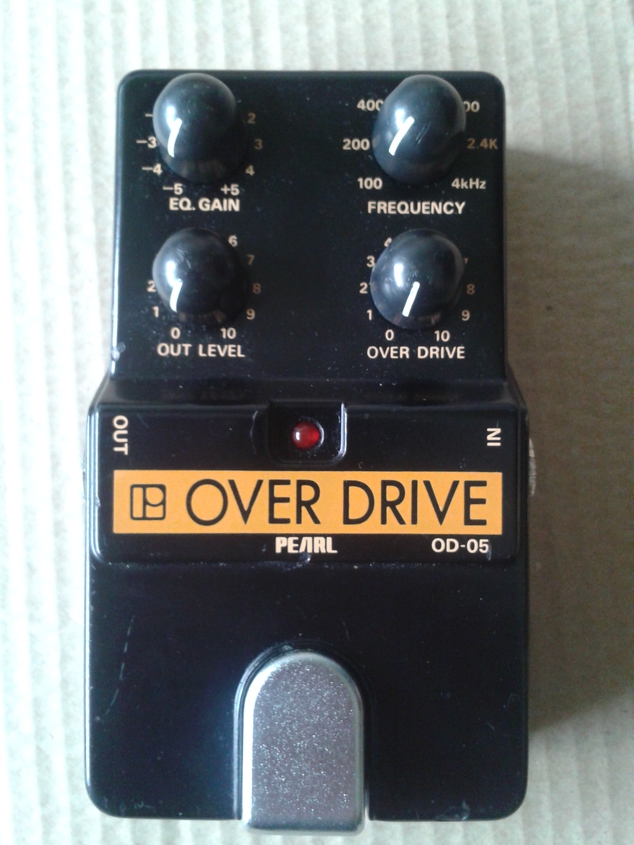
Pearl OD-05 Overdrive

Pearl-OD05

What is it?
Pearl OD-05 Overdrive. Made in japan, early eighties.

This must be one of most desired overdrives on the planet. And for good reason i might add. I don’t know how many units were made, but the amount must be a lot. There’s almost always one for sale on eBay, so this ain’t exactly a rarity but the prices these go for do tell us something.

Opening the unit’s six screws show peaceful board with strong, solid traces and neat, professionally made solder joints. Just what one would expect from japanese early eighties pedal.
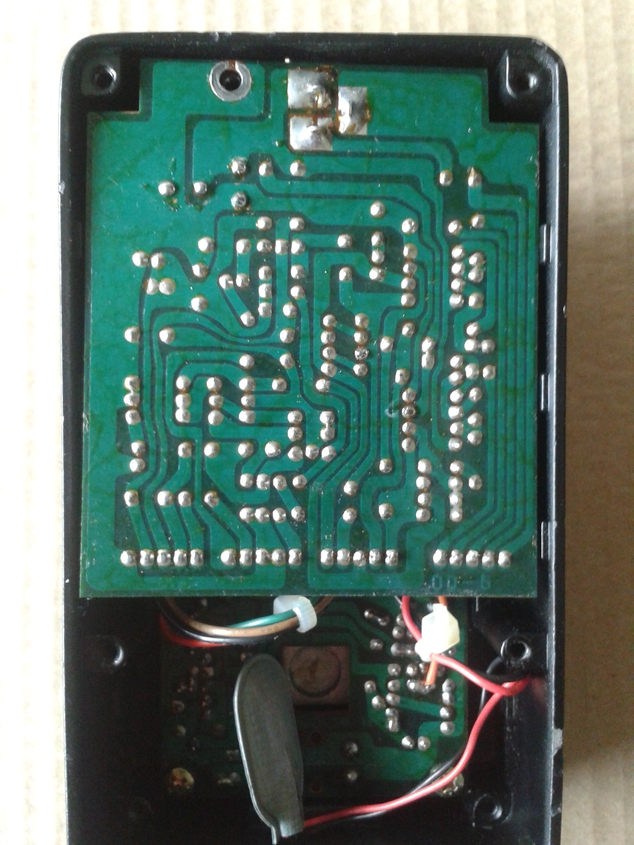
Pearl-OD05-guts2

There  is an factory schematic available online (plus numerous DIY projects), which opens up what this design is made of. There’s a buffer first, then a slight boosting gain stage to drive the  semi-parametric EQ. Couple of filters follow, and then the main gain stage. This has symmetrical clipping diodes in feedback loop of non-inverting amplifier. Something that we see quite often in overdrives that try to emulate tube saturation. And of course, an output buffer. All this with electronic JFET switching and well designed ins and outs.
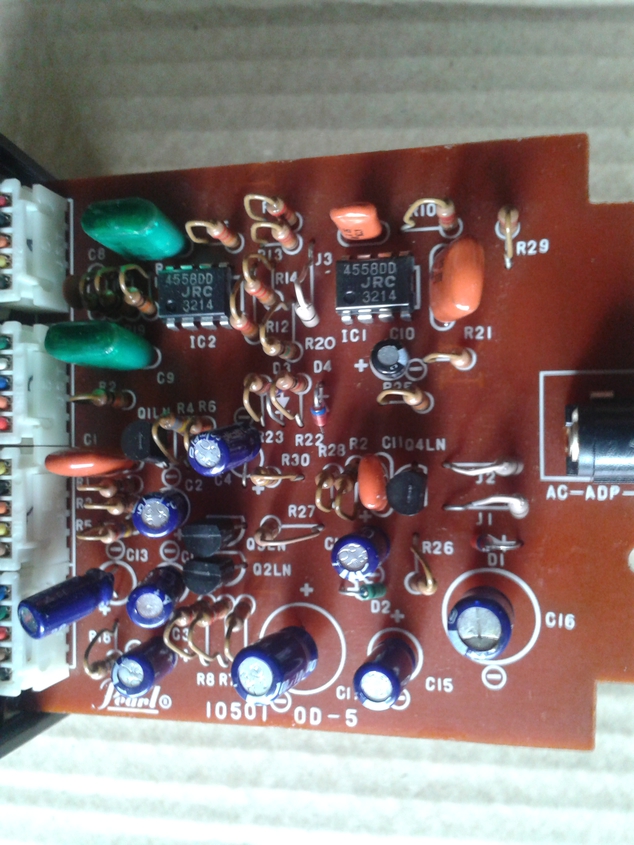
Pearl-OD05-guts3There’s two JRC4558D dual opamp and a handful of transistors in the signal path. The output level is sufficient as the main gain stage is there just before the output buffer. This way the tone control or filters won’t affect the output.

Well made boxes indeed. I think the prices are going to slightly rise on these units in next ten to twenty years. It is a classic without massively marketed reissues – actually, no reissues exist at all.

How does it sound?
Natural sounding overdrive with great addition of semi-parametric EQ to tune it to suit your guitar better than most other classic overdrives. The sound has some same characteristics as your Tubescreamers, but the EQ lets you control the hump point. It sounds very good and usable. Recommended pedal. Strongly recommended.
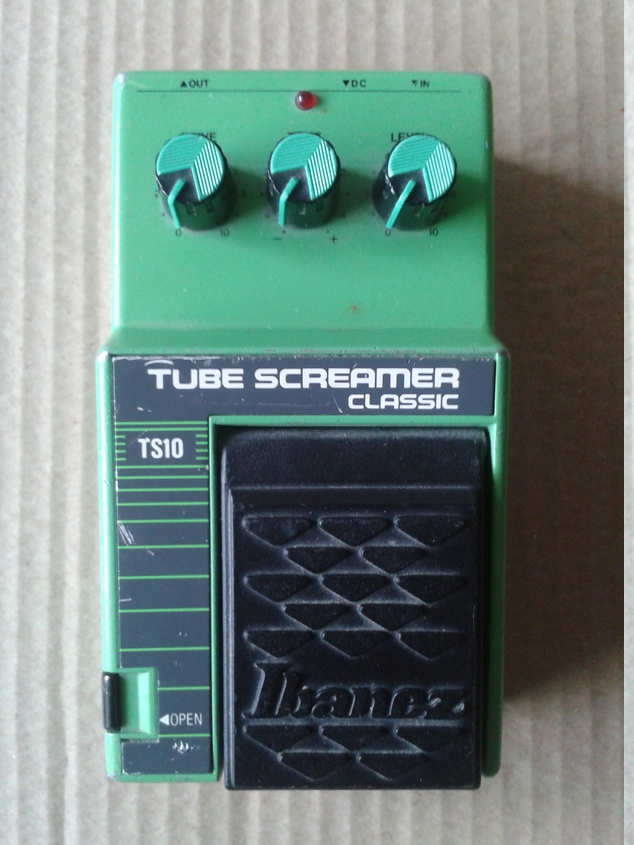
Ibanez TS10 Tube Screamer Classic

Ah. Back to the old tricks with yet another Tube Screamer.

TS10

What is it?
Ibanez TS10 Tube Screamer Classic. Later version, made in Taiwan late 80s or early 90s.

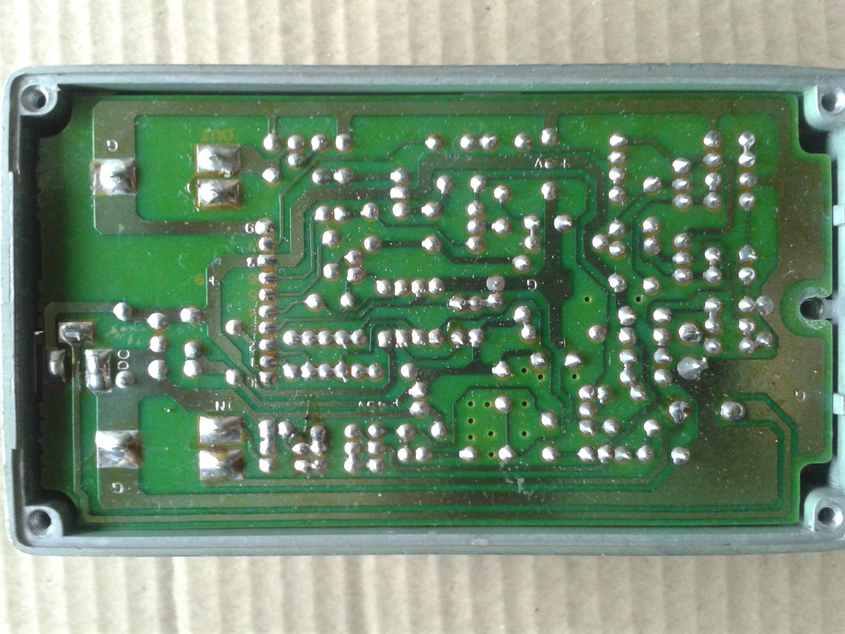
So it is TS9 with one resistor added before the inverting input of the opamp. These taiwanese units tend to sell for less than current TS9 reissues, so modding one might not be such a bad idea. Personally i’m happy that this post leaves me only with TS7 to cover from the standard tubescreamers – as it gets quite boring to try to find something to write about a box that one has written about twice already. TS7 has something more to offer than just one added 220R resistor.

TS10-guts1

Dull as expected. In more ways than one. The enclosure may not be as sturdy as 9-series boxes, but for some reason i find this type of box soothing. Featurewise, placing of the jacks is the biggest difference between this and the nine series TS.

TS10-guts2mods

The photo above is taken after i modded other one of my taiwanese units. One with a keen eye should be able to catch all the components that have been swapped. Hint: original unit has 5% carbon film resistors and transparent mylar caps. Okay. I’ll let you know everything there is to know. The one resistor in the middle of the board is swapped from 220R to 0R. The inverting input components have been replaced – minimum drive setting up, more bass and more overall gain. Also the 51p ceramic cap is swapped for multilayer type. The two resistors on the bottom left are the two resistors that make this a TS9. Swapping all the mentioned values will result the circuit being transformed from TS10 to TS808 on steroids.

How does it sound?
As all the rest of the Tubescreamers. Without the mods it sounds pretty much 1:1 with TS9 and TS5. It can (and probably should) be modded into something that simply sounds way better. But still. In its heart it will always be just a tubescreamer. The sound i personally won’t ever be using for anything.

Danelectro DO1 Daddy-O Overdrive

DO1-Daddy-O

What is it?
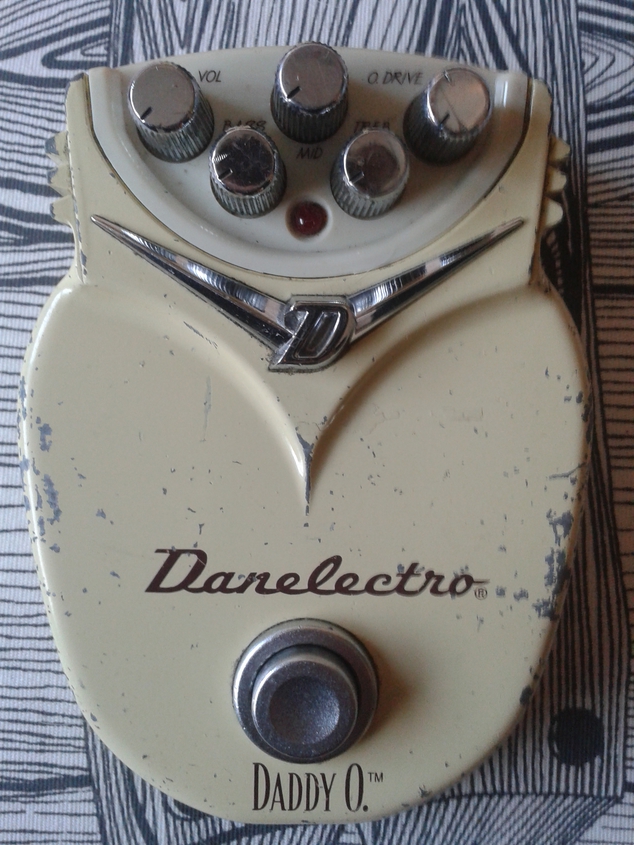
Danelectro DO-1 Daddy-O overdrive, built in 1996.

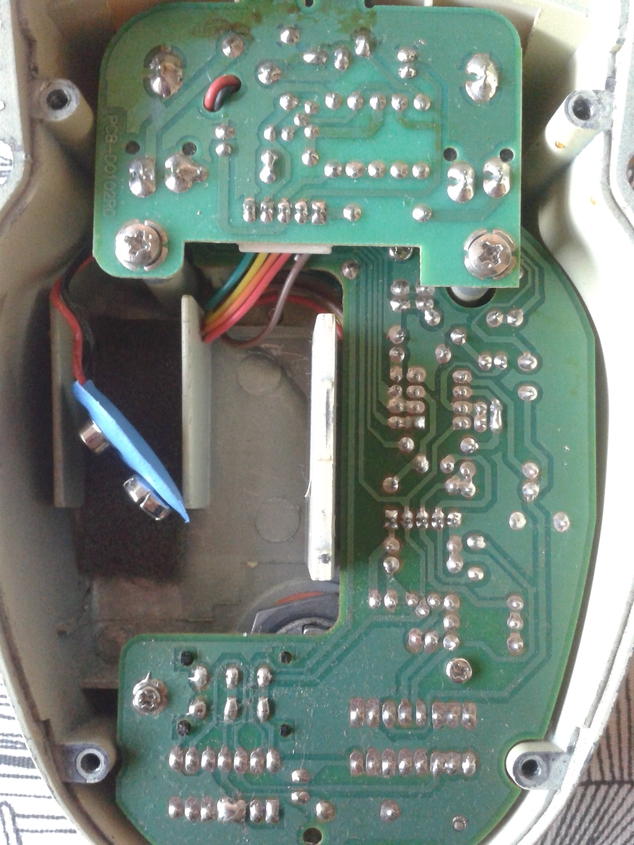
Got mine through ebay for a very reasonable price. Some natural road worn, sratches and paint chips. It’s good only either in this condition or as a mint. Quite happy with aesthetics. Inside, there are two boards screwed on the very sturdy design enclosure. I think these could easily outlast humankind.

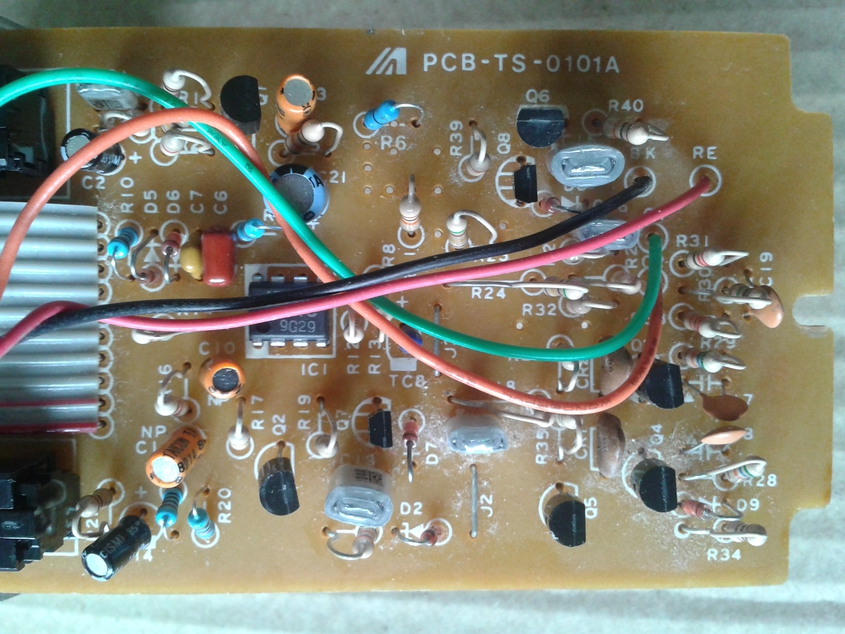
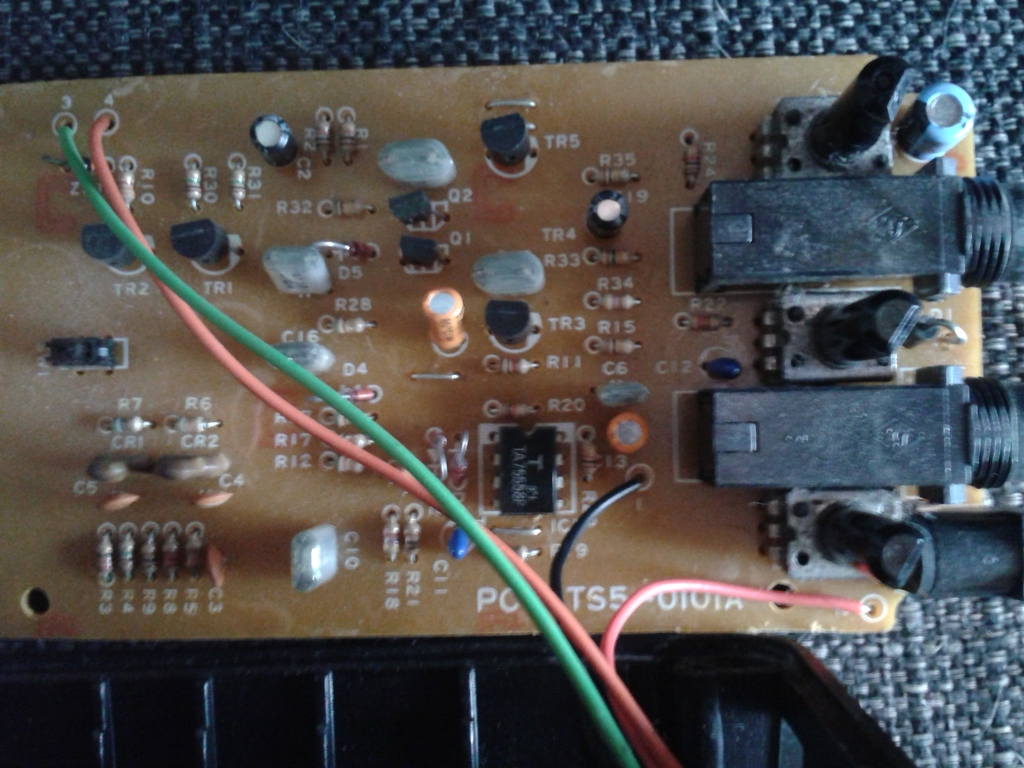
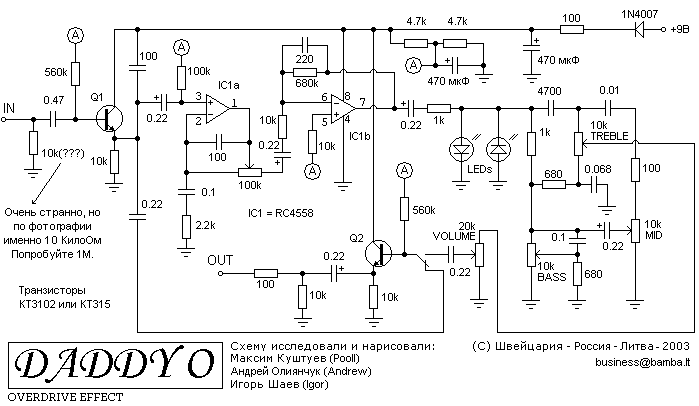
Neat and well designed board. According to russian trace of the unit from 2003, topology goes as follows: Input buffer taking care of the bypass splitting -> variable gain stage -> another gain stage -> hard clipping LEDs -> three band tone control -> volume control -> output buffer. Pretty standard stuff. Vref voltage is divided with 4K7 resistors, so i think that draws more current than it would need.

DO1-Daddy-O-guts

Schematic is not too far off from some Marshall designs like Drivemaster and Bluesbreaker, but there are differences. Traces are modern, but still look eye pleasing and neat. The construction and soldering also look like it’s done the way these should be done. Don’t know why these units have such a bad rep as they do. They are well made and they sound…

How does it sound?
Really good. Due to it being close to designs mentioned above makes it very usable with its 3 band eq controls and nice range of gain from mild overdrive to distortion. It is a redesigned Marshall, and it is at least as good as its predecessor. And what kind of distortion? Think of original Marshall Drivemaster making out with Mad Professor Sweet Honey OD with added 3 band EQ.  Very underrated overdrive pedal. One of the greatest examples why Danelectro pedals appeal to me.

Ibanez TS9 Tube Screamer (Reissue)

TS9

What is it?
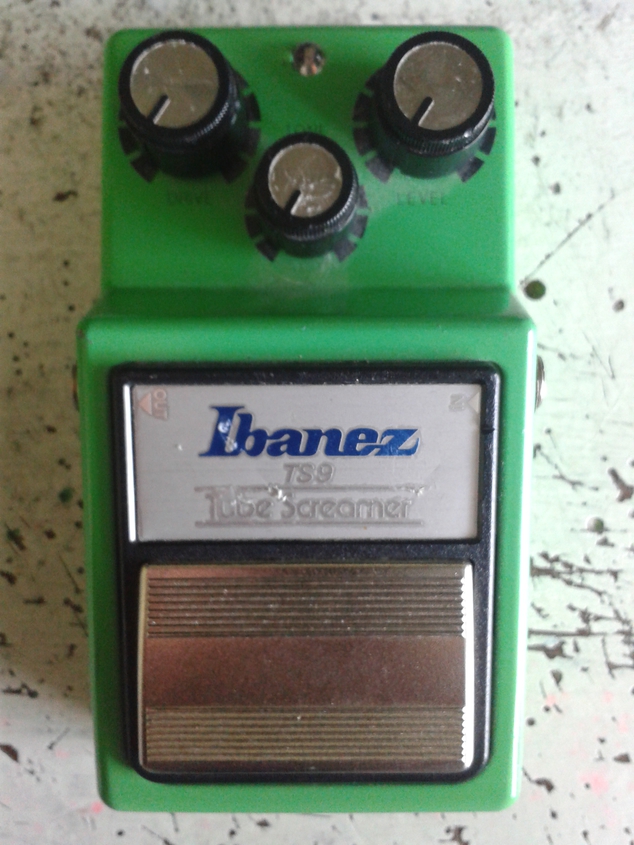
Ibanez TS9 Tube Screamer Reissue, made in japan. According to my guess on the serial, this is probably made in 2008. Got it used but in fair condition.

This must be one of the pedals with most information written. Sad thing that the reissues aren’t getting as much attention. No one seems to care about dating back the serials on these. Oh well. Teared mine open, and the box is exactly like the original 9-series boxes from the early 80s. The bottom insulation is better and non-removable though. The sight that welcomed me was like meh. Modern looking traces on modern thickness board. Not the acidy cool traces, nor the thick board that spreads confidence. All three of my Soundtank TS5s has thicker board than this specimen.

TS9-guts2

Components are close to the original, which makes this function like the older units. This specimen even has the JRC4558D chip in it. Not sure if there really is an audible difference between 4558 and TA75558. I’ve modded couple units before and tried both on with a DIP8 socket. Slipping in to heresy section, i personally believe that NE5532 is the best suited chip for this circuit.

Once again, refer to GEOfex article for more information on the circuit itself.

TS9-guts1

This one will surely get modded if i come across another unit for reasonable trade or price. Designwise this reissue is really nice pedal. Soundwise…

We could have a debate on if this design gets better with true bypass. My personal view is no. True bypassing buffered effects with electronic switching should only be done when there is something very wrong with buffering or there’s too low input impedance which leads to pickup loading and therefore oscillation. Hype of true bypass just isn’t worth it. I’ll talk more about this issue at some point. Maybe on some Colorless writings chapter…

How does it sound?
Well. What can i say? The cold dead hands slaps you on the top of your head. Unless. You have super sucky pickups. Then this puppy rocks. Sounds exactly as it should. Mid-honkin, bass-strippin medium overdrive with medium output. For live situation to get your mids heard over everything else. Not for anything else. A classic one trick pony. Prime suspect for modding the inverting input for more bass and gain.

Danelectro DJ1 Pastrami Mini Overdrive

DJ1-Pastrami

What is it?
Danelectro DJ-1 Pastrami Mini Overdrive. First in Dano’s mini boxes. Got this from a friend. Thanks Mr. Järvi!

Not bad at all. Like many in this series, the soldering leaves me wanting more quality, but otherwise there’s not that much bad to say about this. The schematic can be found on FSB. There’s nothing new or super special in there, just succesful mash of basic gain and recovery stages with LED clipping.

Designwise this is definitely a great overdrive with personal character. With this simple design, i’m really not interested if it is supposed to be a copy of some popular design. It doesn’t sound like any of the big names, so i’d leave it at that.

DJ1-Pastrami-guts

I’ve built a clone with my own mods to this as it bothered me that the level control mixes the makeup/recovery gain stage input with gorund. This method doesn’t leave enough room for low gain and volume maxed. Also, bigger resistor to set lowest possible gain higher than stock will be a good idea. My mods have the original level control transformed into a SWTC2 and the new level control taken to more conventional place – the output. LED clipping is at home on this design.

How does it sound?
Think of your weekend morning rice crispies. Crunchy medium gain with moderate output. Usable and recommended crunch. The LEDs give out their trademark sound for clipping on this one. After playing with one of these intensively, one can spot the sound of LEDs being used as clippers on other designs too.  Easily the best OD/Dist unit in this series.

MXR Distortion+

MXR-Dist+

What is it?
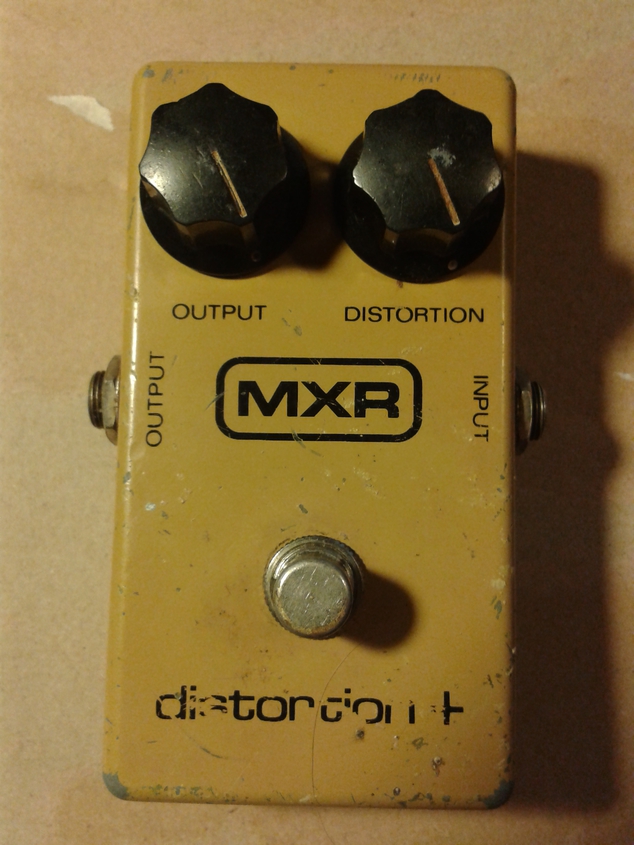
MXR Distrotion+, block logo and no LED. Dating back all the way to 1977.

Got this unit as an addon to one special deal. The deal was so good that i thought that someone was trying to to setup a oldschool swindle and rip me off of my money. Turned out that “too good to be true” deal was in fact true. Ended up with metal boxed SF5 and TS5 and this unit for a price that you’ll never see. Let the sum be a secret between me and the seller (Thanks Marko!), who bought this used back in 1990.

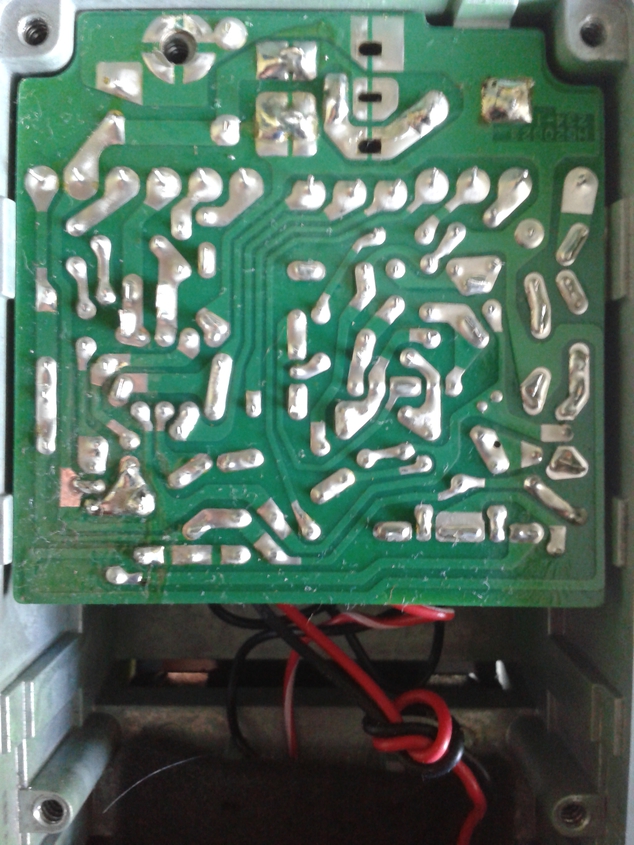
MXR-Dist+guts1

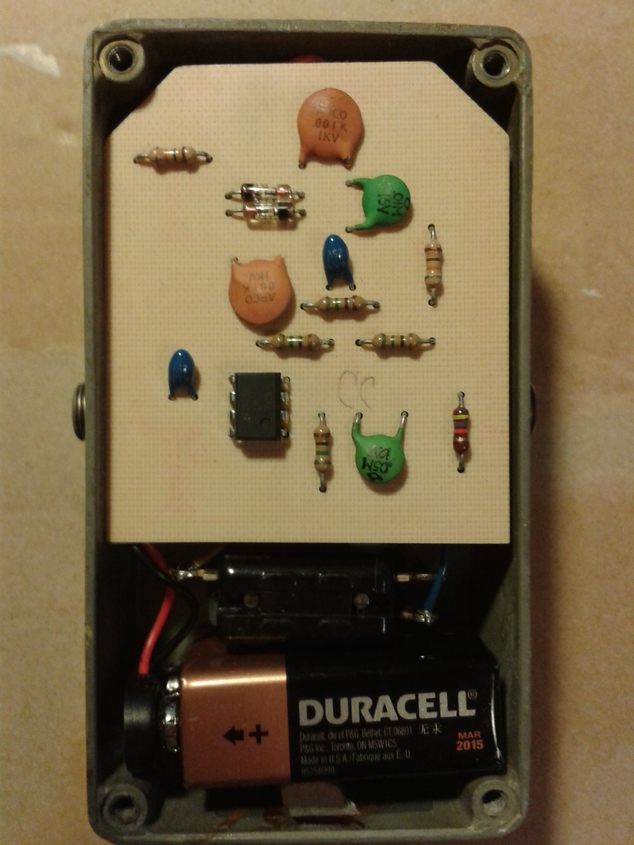
First of all, the unit was not in working condition. Opened it up and it was pretty obvious why it wasn’t working. The input jack and board input were shorted and the output jack didn’t connect to anything. I measured the switch, and while it was a bit wonky, it worked. Used some solvent to clean it and now it works almost as new. Soldered the mixed wires to their rightful places and tried again. Nothing. Seller told me that the pedal might have had an incident where it was fed a wrong polarity. Since the design doesn’t incorporate any sort of polarity protection as it’s meant to be used with battery only, one of the previous owners drilled a hole to the front panel to place a battery adapter to original battery snap. The snap was gone too. All the components measured correct, except for the UA741 opamp. The output pin was getting nearly 8 volts while both inputs measured correct near Vref voltages.  So my diagnosis was that the opamp had suffered a trauma from reverse polarity and that had burned the chip to the point where it leaked most of the supply voltage to the output of the opamp. As i don’t have notable vintage supply of 35+ year old components, i had to sub that opamp for LM741, which is the same thing – just manufactured a lot later. After those repairs the circuit fired up.

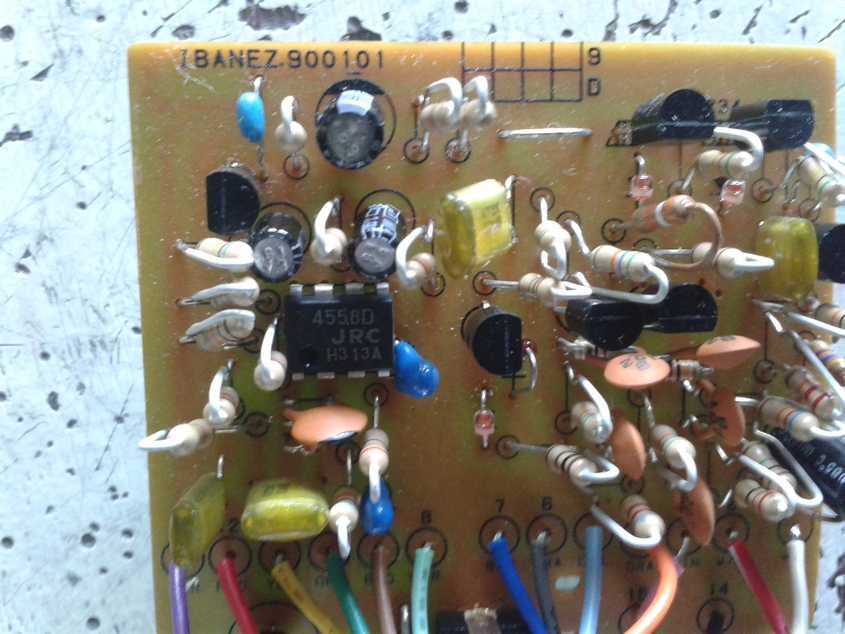
MXR-Dist+guts2

The pot codes show that the pots were manufactured in the week 21 of 1977, so it is safe to assume that the pedal was built in 1977 or early 1978 at latest.

The Alalogguru’s  schematic is simple to read. There’s one gain stage that feeds the hard clipping stage created with two 1N270 germanium diodes, which then pushes the signal to output. What i find to be the most interesting thing about this pedal is that the board isn’t fastened to anything. It just sort of floats in there with all the components bent horizontal.

MXR-Dist+guts5

The components and the topology are on spot when comparing this and the current Dunlop reissue. All the other things are not. The switching (may be better in new one), the jacks and the board itself. Jacks and switching are not bad in original, although some tone sucking may occur due to input of the board being connected all the time. My suspicion cling towards the board. On original the traces are far away from each other and there’s no ground fill at all. The sturdy box takes care of all the shielding needed. The reissues have clustered the board with massive ground fills that even go over the traces. In theory that shouldn’t affect the sound at all, but…

MXR-Dist+back2

The bottom plate is a thing of beaty too.

How does it sound?
Astonishingly good. There’s at least three million kilometers between this and the new Dunlop made reissue. The tone really puts my praising of the OD250 reissue to the test. The output is lowish, but enough beat the clean signal fair and square. This creates the best tones with distortion knob maxed or near maxed. May be in part because of the components age, but damn it sounds good.

Warm, soft overdrive that sounds like analog heaven with both, single coils and humbuckers. Too bad that these are getting rare and the reissues aren’t helping those who want the sound. At all.

DOD Overdrive Preamp 250 (reissue)

DOD-250

What is it?
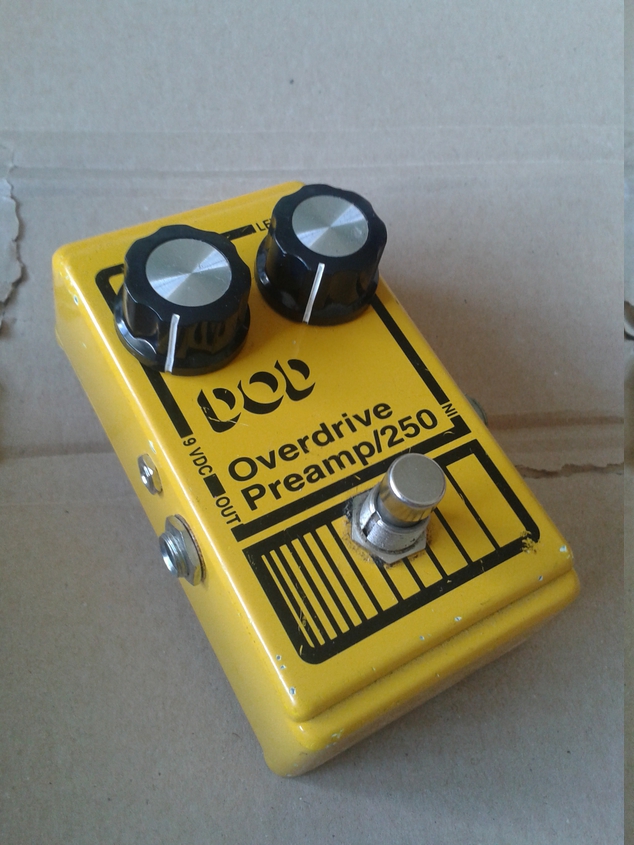
DOD Overdrive Preamp 250, 90’s reissue in yellow first series style enclosure. Made in china.

This is one of those boxes that everyone should play with at some point in their life. If for anything else, for the feel of that heavvy duty box. The base design topology is pretty much verbatim with MXR Dist+ and probably a hundred other boxes from end of the 70’s up to today.  There are differences though. And good thing there are. As in my opinion, modern Dunlop made Dist+ reissue with UA741 and Ge diodes just suck. But before anything else. Let’s just open this up and see what’s inside.

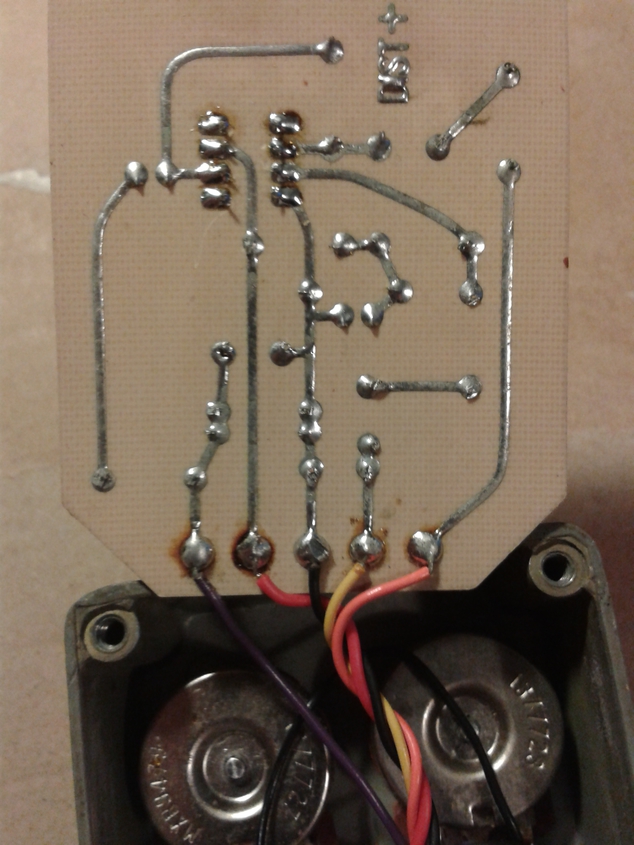
DOD-250-1guts1

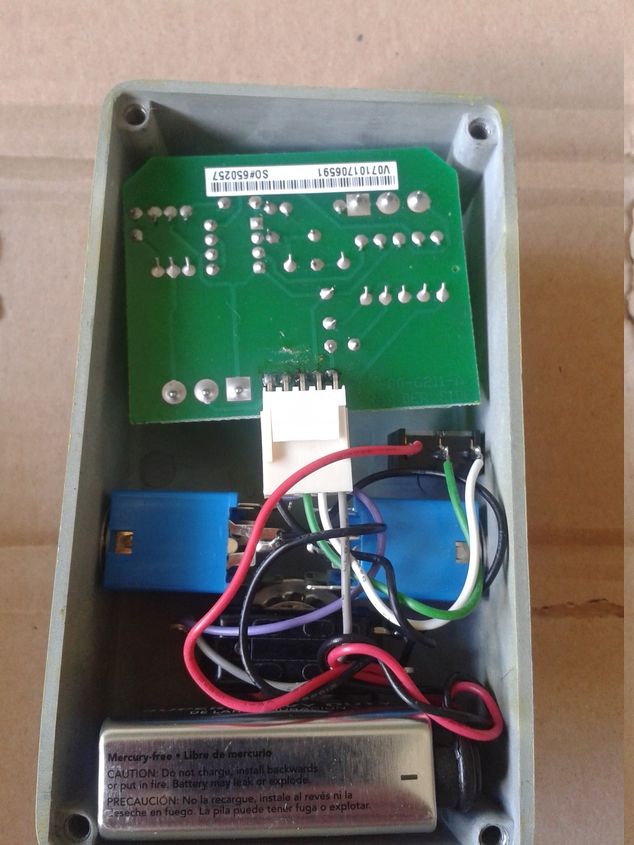
Looks quite modern with neat thin circuit traces and connector. Plus the blue jacks. Sadly, no date printed on the board. I really wish that it had a date in there. Would make the guessing process less valid. Components are often good place to start the process. So let’s see what lies underneath that board!

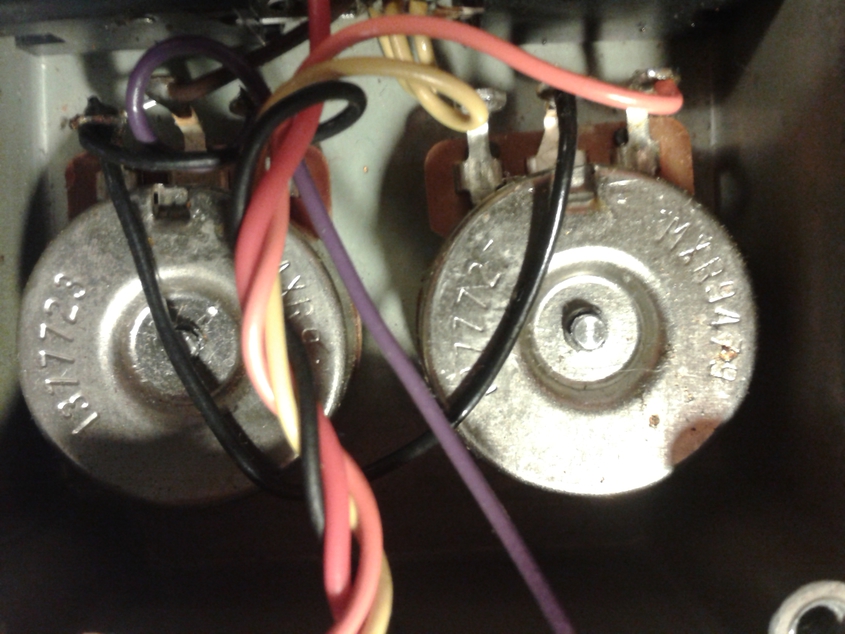
DOD-250-1guts3

There is a dual opamp  in here!

Some documented units here at the internet have KA4558 chip instead of RC-branded one, so that should be a clue. Oldest Fairchild Semiconductor’s datasheet for KA4558 chip i could find is dated 2001, so i do believe that the units featuring Texas Instruments RC4558P are older than 2001. Drop a comment if you know the exact dates when these were made with KA and RC branded  chips. I’d be more than interested to know. The print on the chip is 66CRDYN, which tells me absolutely nothing. I’ve read that usual way for printing manufacture date on the chips is with four digits. Two for year in question and other two for the week of that year. Apparently not for TI chips.

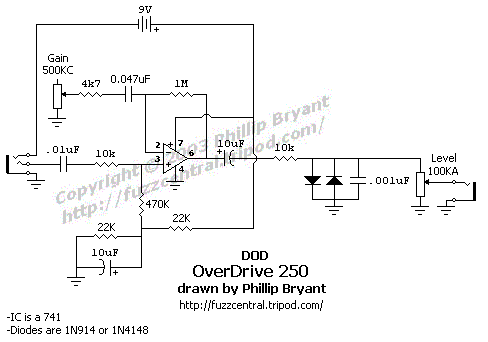
The dual chip can be found only in these reissues. Original design is with UA/LM741 single opamp. Schematic for both versions (one with old single opamp and the one with dual opamp) can be found online, and checking them both out would be recommended. The dual opamp version just omits the other half of the chip completely by grounding the inverting input and shorting the output and non-inverting input. The other half is used as in original. So it is basically just wasting the other half, while staying true to the original.
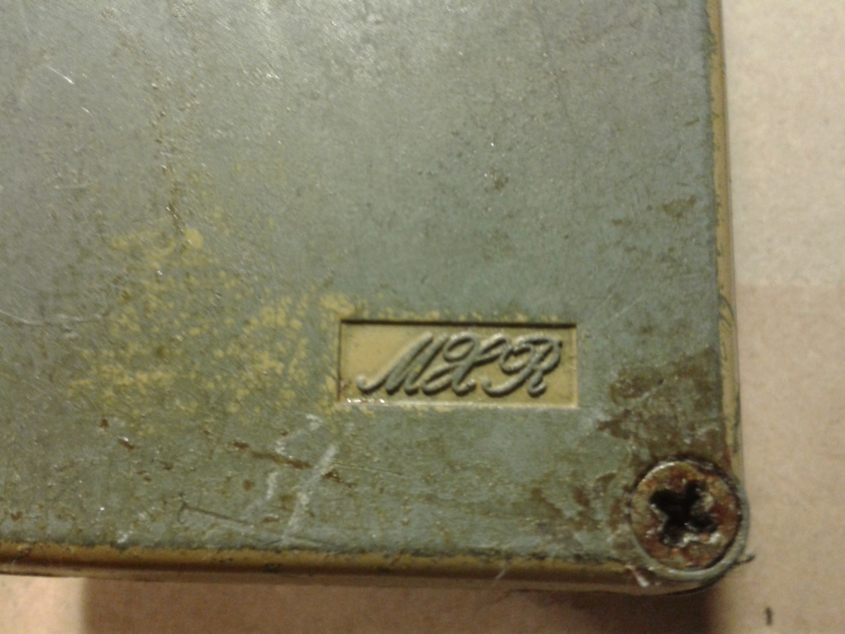
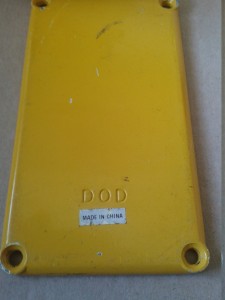
The box itself is quite loyal copy of the original with the stamp on the back. But there’s also a aluminium sticker that tells us where this unit came from.

DOD-250-2backplate

How does it sound?
Just amazing. For me, this one sounds way better than any of the single opamp versions i’ve tried. I actually cloned this version of the circuit for myself and i’m using this clone on my main pedal board. Once cloned, i can have standard 2,1mm DC jack and an indicator LED – Wouldn’t want to harm my original to incorporate those features. I use it to boost the rhythm riffs on choruses. Just a tad of boost and mild overdrive in addition to my mildly overdriven base sound. It just brings the songs alive. In my opinion, this is just the perfect overdrive/booster. Better than all the rest. I know some people will disagree. And they are welcome to disagree all they want. I just don’t see myself fastening any other design to my board as an overdrive anytime soon.

Ibanez CR5 Crunchy Rhythm

CR5What is it?
Ibanez CR5 Crunchy Rhythm from Soundtank series in metal enclosure, made in Taiwan around 1989-90.

It is a design that differs from usual TS and/or Voodoo Labs overdrive topology. Boosting, bluesy overdrive with discrete differential pair to determine which parts of the signal get to Si diode hard clipping before the tone driver. Since the 70s and early 80s, it’s been hard to come up with even remotely original overdrive designs, but this one has some out of the box thinking incorporated. Schematic can be found on the 8bitsindgenug site. It is well worth taking a look for what’s happening in there. The gain/distortion stage makes me smile, as it’s definitely something you don’t see in every OD design around.  My unit is in a metal case and has very small number as a serial. I think it’s safe to assume that this particular unit was made in 1991, when the first (metal boxed) Soundtanks were introduced to the public.

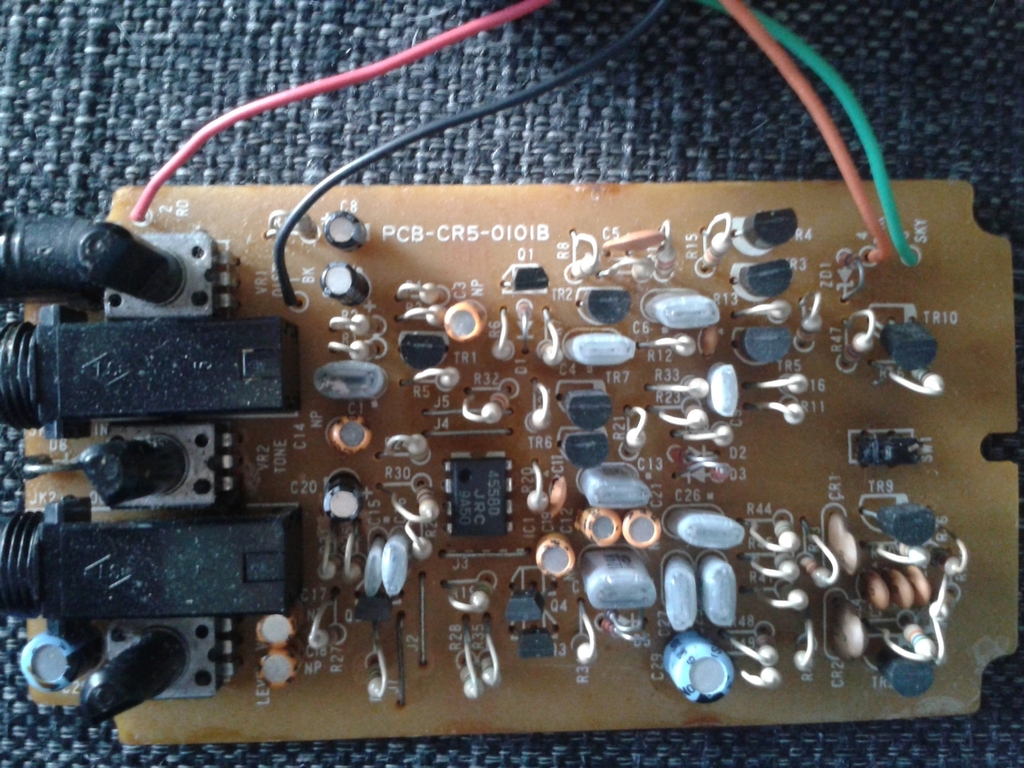
CR5-guts

JRC4558 is there to drive the tone control and other half is used as output buffer. Not sure why the IC half is used as a buffer, as it could have been just as well used as the first gain stage – instead of the lone 2SC1815Y that drives the differential pair. This is part of the reason i care deeply for Ibanez boxes. Even the commercially dullest, most underrated pedals can have good sounding, innovative stuff inside them.

How does it sound?
Not too far off from likes of Boss BD-2, even though these two designs are completely different. Resemblance to few other “dumble” styled overdrives should be mentioned here. It has good output level, and real nice, softer texture to the dirt. It keeps the frequency responce well in tact, so it can be used as a really good sounding preamp in beginning of your effects chain. All that in a metal box that just rocks. This model is getting rarer every day, especially the one in metal enclosure. So if you get a chance to score one for cheap – do it without hesitation. It will be worth it. Definitely one of the greatest boxes in Soundtank series.

Ibanez TS5 Tubescreamer

Let’s start out with underrated, yet obvious classic.

TS5

What is it?
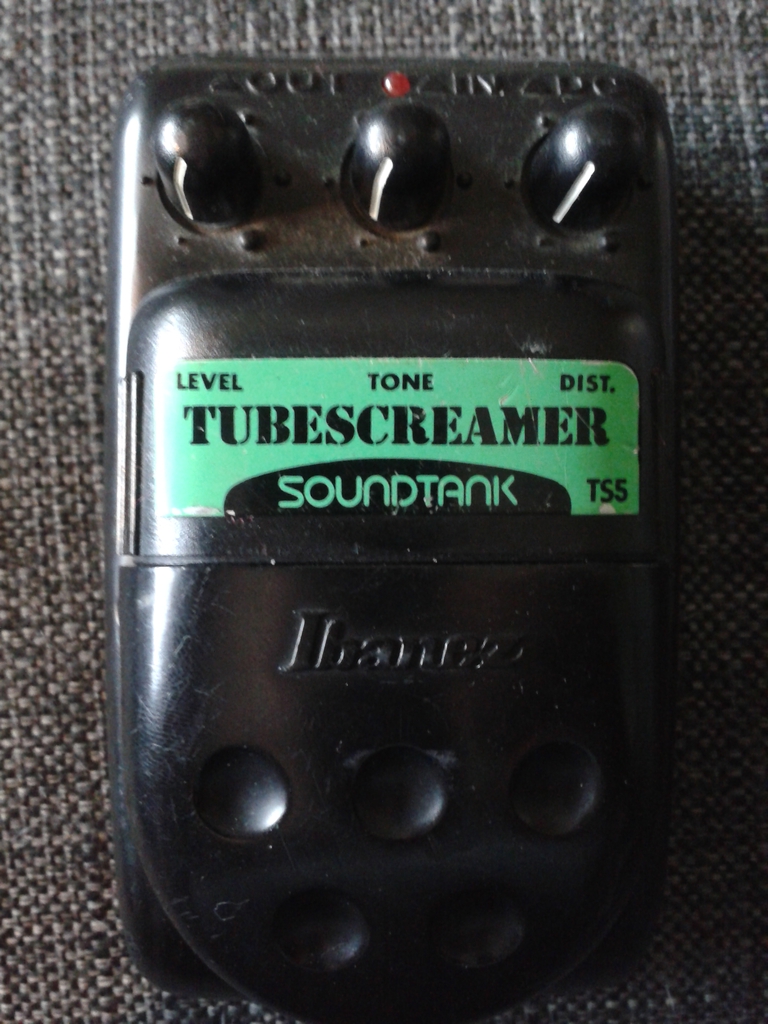
Ibanez TS5 Tubescreamer from Soundtank series in plastic enclosure, made in Taiwan around 1992-1995

This unit has serial number starting with 107, which suggests that it is early Taiwanese Tubescreamer with plastic enclosure. I’m not 100% sure about the serial numbers and how these tell the exact date, but the metal boxed Soundtanks i have all have their serials starting with 001 and the newest plastic one i have has it’s serial starting with 424. All Soundtanks have 6 figure serial numbers. For being from the early half of the 90’s, this unit is in fair condition. Like most of the tanks i’ve ever had, this one had bad connection on its switch. I swapped that for new Alps drop-in replacement and it is playable once again. The 9V battery snap was apparently broken somewhere along the way. It was replaced with cheapest possible soft headed snap by the previous owner. The wires were soldered on to the original snap’s wires. Nothing wrong with that – but the new joints were insulated with office friendly see through tape. I also swapped the snap for hard shell one and used some heat shrink to get it neat.

TS5-guts

As the photo shows, the board has TA75558P chip in it, which makes the board exactly 1:1 with current Maxon/Ibanez TS9 reissues. Yes. I’ve though about modding it. I won’t. Because of the reasonable condition and early serial, i’ve decided to keep this one as original. I could try to score another one and replace the chip with JRC4558D on that one – and of course, swap the two resistors at the output to make it TS808. Update! I bought another, newer unit in worse condition than this and modded it to FYA Electronics Arrow mod specs.

Schematic and tons of other information, plus many DIY projects on this circuit are widely available. Since the circuit is exactly like all the other Tubescreamers, i’d suggest that you read more about it from geofex’ classic article, “The Technology of the Tube Screamer“.

How does it sound?
Well. What do you expect? Circuitwise, it is 1:1 with TS9, so it won’t sound anything different from new store bought TS9. It sounds reasonably good, even with the expected mid hump, harsh unnatural dynamics and relatively low output level.  Output level is my opinion – TS’ are not boosters, but they do have sufficient output levels that go easily over unity. This may be heresy, but i’ve never been too much of an fan of Tubescreamers. There are a lot better overdrives out there. But yes. This one sounds 1:1 with TS9.

Newer posts »

© 2025 killall -9 humans

Theme by Anders NorenUp ↑