Author: mirosol (Page 6 of 29)

Ibanez PPE-1 DCP Parametric EQ

Ibanez-PPE1-ParaEQWhat is it?
Ibanez PPE1 Parametric EQ from DCP series. Made in japan around1989.

There may be a reason for this series being scarce for those who want them. These may not be as relevant for today’s guitarists as they were back in the 1987, when the line was released. At that time, the digital gadgets were still all the rage and since it was the coolest thing ever, the consumer was bound to pay premium for the new and exciting technology. At the time of the initial launch, this EQ cost the same as two and a half 10-serie graphical EQs. And to be completely honest, the 10-series graphical EQ is way more relevant today than this. Plastic housing being the biggest factor. The DCP serie had six designs in it. The delay and modulation delay may still be the most sought after units in Ibanez back catalog. It’s a rare occasion that these will cheap today. As always, once i had a chance to get one, i did.

Ibanez-PPE1-ParaEQ-guts1

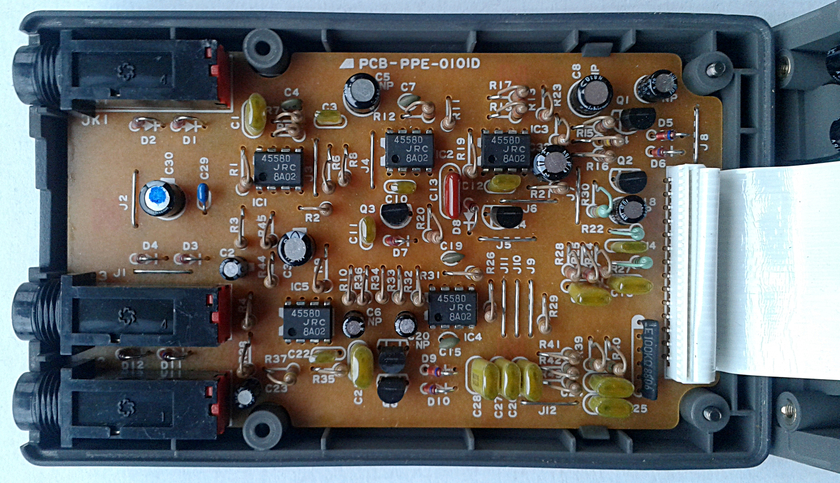
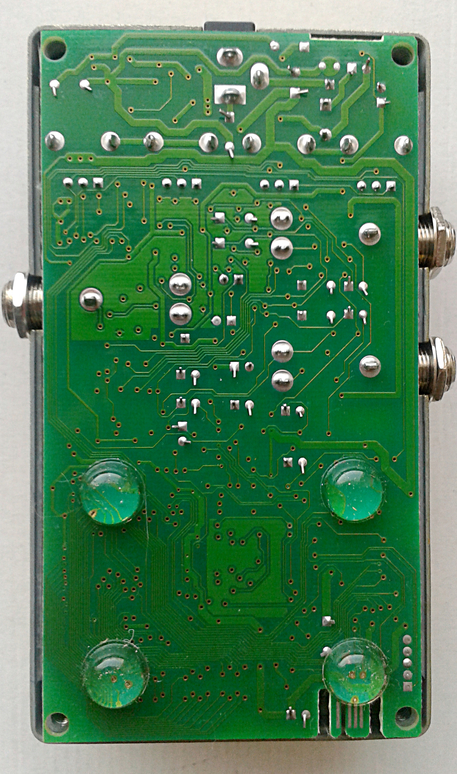
As with the most of the designs, the effect itself is all analog. As the bottom board shows, it’s more or less the same style, high quality Maxon board with your average JRC4558s on board. Board mounted jack etc. But. Once we open the whole thing up and check the upper board, that’s where things get quite interesting.

Ibanez-PPE1-ParaEQ-guts2

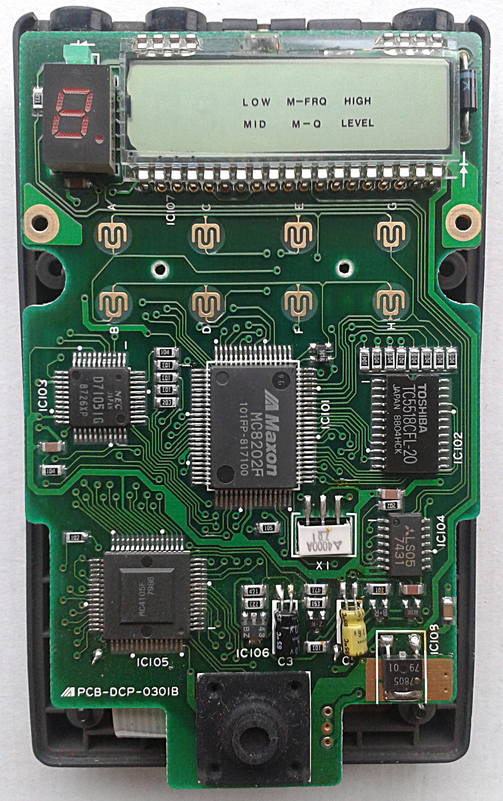
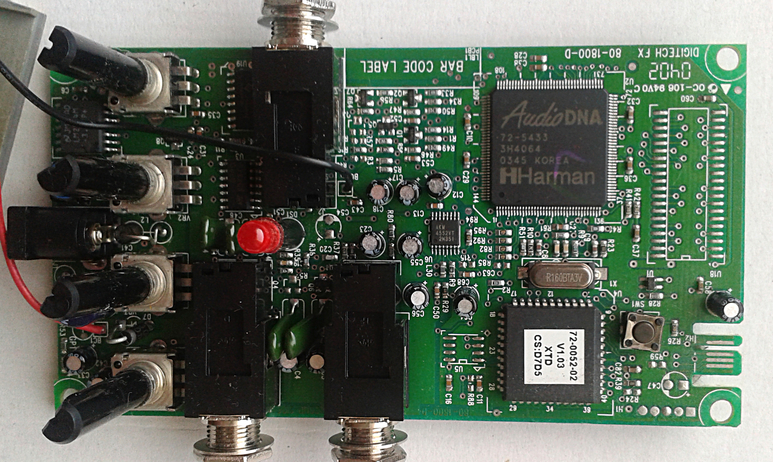
All the controls are handled digitally, while the signal path is taken care by the analog board. Let’s not forget that the unit has memory bank for saving the settings and even more importantly, the is a LCD display. Push buttons may still not be as easy to use as traditional potentiometers, but come on. This is the s*it. The highest technology in all the pedal world in 1989.

Ibanez-PPE1-ParaEQ-guts3

Mids are controlled as full parametric and there are separate controls for highs and lows. Making the pedal capable of boosting and cutting desired frequencies in very effective manner. While those digital controls may not be as easy to use, they do offer way higher accuracy. Oh how do i wish this wasn’t plastic…

How does it sound?
Awesome. In a good way, harsh and accurate. The level of boosting when maxed is somewhere in vicinity of the ye oldee Renometer. Blood curling accuracy with very little distortion and none of the mushiness. Where the pedal itself may not be relevant today, the tone sure is. Great, precise controls and extremely good sound that doesn’t feel like it’s coming from a small form plastic thing. Great sounding piece of Maxon design history. If you get a chance, try one out. It will sound different than the package suggests.

Marshall RG-1 Regenerator

Marshall-RG1-Regenerator

What is it?
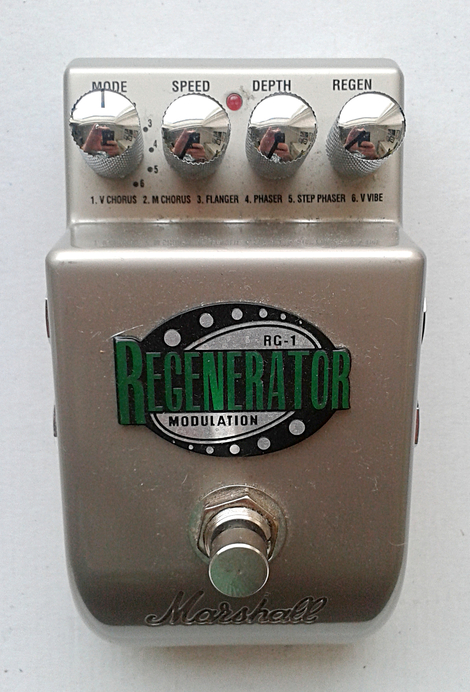
Marshall RG-1 Regenerator multi-modulation effect. Made in china, possibly around early 00’s

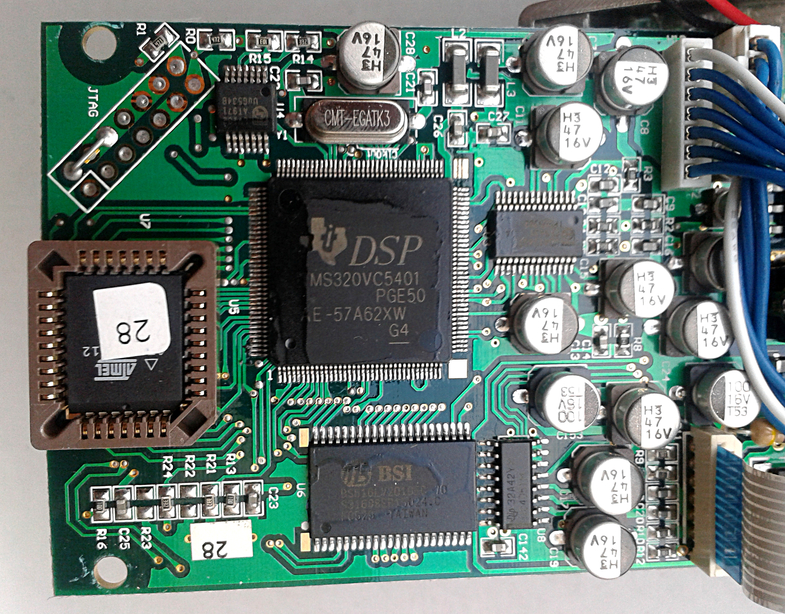
Digital chorus/phase/flange multieffect in the small metal series? Apparently yes. And once we open it up, there’s very little doubt of what the design is all about. Yup. It’s exactly the same board as seen in Echohead and Reflector.

Marshall-RG1-Regenerator-guts1

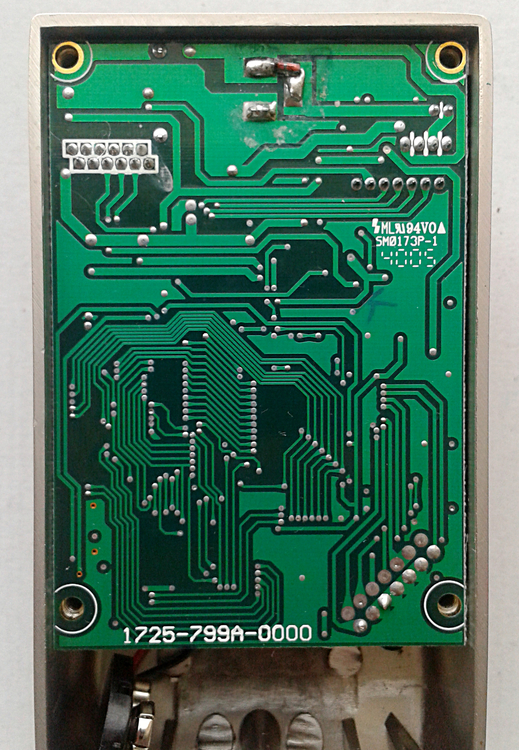
All these three are sisters with the same topology of TI DSP, Atmel and BSI chips. As we’ve seen with many other modern digital designs, the electronics are all the same, but the code burned n and the label on the top are the only differentiating factors.

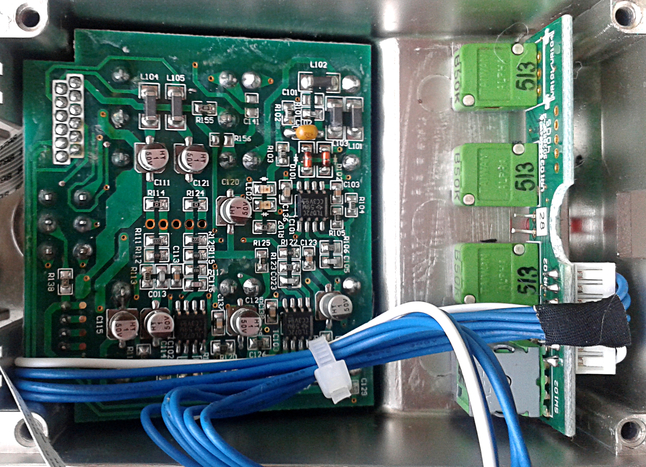
Marshall-RG1-Regenerator-guts2

Mostly the pedal is well made and definitely represents the top quality of current chinese manufacturing. It could be that the Marshall quality control is strict, or at least stricter than for what we find in many other current chinese made brands with a low price point.

Marshall-RG1-Regenerator-guts3

I recently saw a same enclosure used with completely different brand on eBay. Sort of like when Daphon started to sell their own “soundtank-like” pedals as E10-series. Wonder how the british mother company feels about that. Anyway. The pedal has decent set of features and while the digital point makes the sound boringly predictable..

How does it sound?
It is still quite versatile sounding unit. Lacking in taste, scent and personality, but still pretty good. Two chorus modes are not surprising, as the flanger, phaser and vibe modes. The step phaser tries to mimic the random stepping of the Boss PH-3, and succeeds to a certain level. The expression pedal input is a very nice feature that adds a lot usability to the tones produced. To sum it up, this would be a nice entry level multi-modulation pedal for anyone who may need one. Nothing great, but nothing too disappointing. These are widely available and one should be able to score one for peanuts as used unit.

Colorless writings, part 21 – Shoulders of the Giants

Your title doesn’t give much hints this time…

That may be true. I was planning on calling today’s article “evolution”, but backed out. Granted, that would have been more informative. The issue i wanted to discuss is how everything came to be. From a story about The Kinks razoring small speakers in the early sixties to modern high end multieffects that cost more than custom guitars. What happened in between those two points? Between the very first Tone Bender and Kemper Profiling amplifier? A lot. What we are looking at here is a span of 50 years, from around 1965 to 2015. For this time, the guitars have been more or less the same. Only with a few “innovations” along the way. Most of these have failed hard, as the first guitars and basses with onboard effects did. It seems that those onboard effects come back every now and then, but they will never be a sufficient hit. Robotic tuners have been around for 30 years and still never sold well. Reissues of 50’s, 60’s and 70’s Fenders and Gibsons are still selling well. All the modern additions just seem to lower the true value of the instrument. Most players will not go further than using a floating, locking tremolo. That’s pretty much the only big “improvement” that is widely acknowledged. Ok, maybe an occasional Tremsetter is allowed or some high end brands may make their guitar bodies out of aluminum, but that’s it. Aside from hype creating websites or paid print articles, i have not heard anyone praising the current Gibson Minetune robots. Somehow i think that will pass too. And yes, there were the Line6 Variax guitars too. Got a friend who plays with one actively in a band? Thought so. Neither do i.

It may always come down to “if it ain’t broken, don’t fix it”. I believe this is  the reason why guitars have not evolved as much as the electronics. But how did electronics take so many and so big leaps forward? I believe this is due to the fact that many effects and amplifiers are not as unbroken as guitars. The Tone Bender had room for improvement and that got us the Fuzz Face. Roger Mayer came up with Octavia by blasting a (sort of an) tweaked Fuzz Face trough a small signal transformer and signal rectification. Then there was the Jordan Bosstone that did things in a manner that’s not too far from operational amplifier done with discreet transistors. And as the commonly used germanium transistors had one true fault (temperature changes kiled the tone), the next step was to use integrated circuits for their stability. Use of these chips also opened another realm of tones. And voilá, now we had Dan Armstrong Blue Clipper, followed by MXR Distortion + and DOD OD250. And soon someone in asia was to improve on those with Tubescreamers and OD-1s and number of other, similar designs. This took only ten to fifteen years. Then came the 80’s.

The time where digital was all the rage?

Up until mid-80’s the analog was the one and only option. Then the “digital” became a huge selling point. Just like early stereos were nothing more than a mono speaker pushed out of two cones, the digital was not always the digital we know today. And as the real processing power in a 80’s Digitech multieffect was what it was, the results were often close, but not close enough. As digital effects go, we need to transform the guitar’s signal to a digital form first, apply the effect and turn it back to analog state. This conversion was crucial part in digital effects and it usually required a lot more power to achieve the same things the analogue world had faithfully done over the years. This simply meant that the rack mount effect was the next logical step. It was later in that decade when manufacturers started to move the rack effects back to the pedal form. One of the most successful endeavors was the Boss RV-2 Digital reverb.

Late eighties and nineties was the greatest era for cheap plastic pedals that were mostly analog. The key word is “cheap”. Designwise this era was just reinventing the wheel. The same circuits from past decades were simply toned down in cheaper and smaller form. Of course, as with all evolution, there were tons of improvements on the old designs. I’d be wasting a lot of my valuable time if i was to list every single tubescreamer, rat and big muff derivative made between 1985 and 1999. Number of those derivatives did really improve the original design and some of them are still pretty relevant today.

What about the “attack of the clones”?

I’d be lying if i tried to pin out when there was a time for the “clones”. Every single item modifying your guitar’s tone is always a derivative of something else. I’ve said this so many times before, but there is only so many ways to hook up a transistor or an opamp. All analog effects are small signal amplifiers with filtering and possibly signal clipping. Even analog delays, choruses, tremolos, flangers, autowahs and so on, are all using the same semiconductors for amplifying and filtering. Even those digital effects must have unity amplifiers before their AD-conversion. And after DA as well. So in fact, it’s all the same.

And what comes to “clones”, those have been around since  the beginning of effects. Just compare the schematic of the first Tone Bender against a schematic of a Fuzz Face. And do the same thing with Blue Clipper against Dist+ against OD250.

What’s even more interesting is the number of modern digital effects that have the same board and DSP design for several different effects. Only the code  inside is the differentiating factor. And since these pedals often pack a punch of modern PC’s and/or smartphones, the quality of the tone is usually good. Not necessarily great, but good. In a sense, these are the modern clones. More processing power equals better modeling of analog circuits. If i was to make a guess, i’d say it’ll take at least a decade to model a transistor based fuzz to a degree that it’ll sound close enough. Those uncontrollable overtones of overdriven semiconductors are not there yet. So those Kempers and alike are basically a straight evolved descendents of Strymons and alike, which are basically just evolved descendents of those rack mount effects that were huge in thte 90’s. And those? They were just a logical follower for the previous tone shaping devices. So everything was and is just an attempt to push the previous device just a bit further and make it sound better. Every single designer stands on the shoulder of a giant. The previous designer that made a circuit to sound closer to his/her preferences.

Ibanez PT999 Phase Tone

Ibanez-PT999-PhaseTone

What is it?
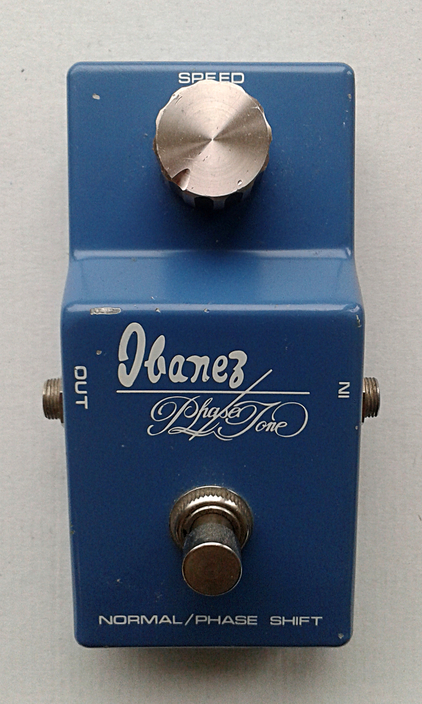
Ibanez PT999 Phase Tone. Made in japan by Maxon around 1976.

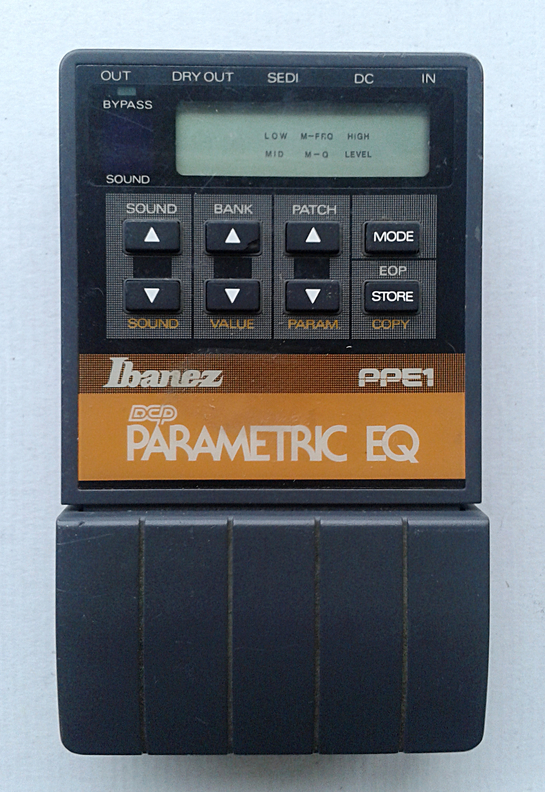
These units apparently are not as rare as i thought. I suspect that the number manufactured was very high as there seems to be several units available in shops and auction sites even right now. Apparently the units sold very well back in the day. I had a hunch i was not going to buy one of these, since the prices around were looking quite ridiculous. Ranging from around 200 to nearly 500 euros. But, as it turned out, someone had one in a very condition and was willing to pass it over to me with reasonable price tag. The unit was and is in very good, slightly used condition with only small chip on the side panel.  Apparently someone has made it to squeeze the battery snap adapter for the power supply.. This is shown in the photo.

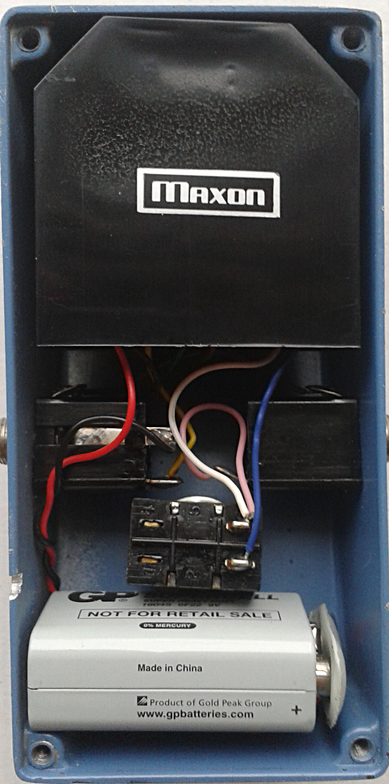
Ibanez-PT999-PhaseTone-guts

The board is fixed inside a plastic container. Since there is nothing wrong with my unit, i didn’t feel like forcing it open. What comes to electronic design, we have quite standard four stage JFET-based phaser. Dirk Hendrik has a schematic up on his site. The schematic shows a modern Maxon reissue, but i’m pretty sure the main circuit is the same. I’m sure that these originals from mid-70’s did not have dc jacks or indicator LEDs in them coming out of the factory at all. No other surprises, but overall feel is still stronger and prettier than what we find in similar designs. And then for the most important part.

How does it sound?
Amazing. Great soft analog feel that doesn’t spoil the tone of your guitar. While there are similarities with MXR Phase 90, the sound here is just better. Well balanced depth and sufficient speed control are basically everything that you would need. Additional dc jack and more modern switching could be in order, but those do not affect the tone. Which is just sweet as honey. Praised classic and for a good reason. Recommended phaser.

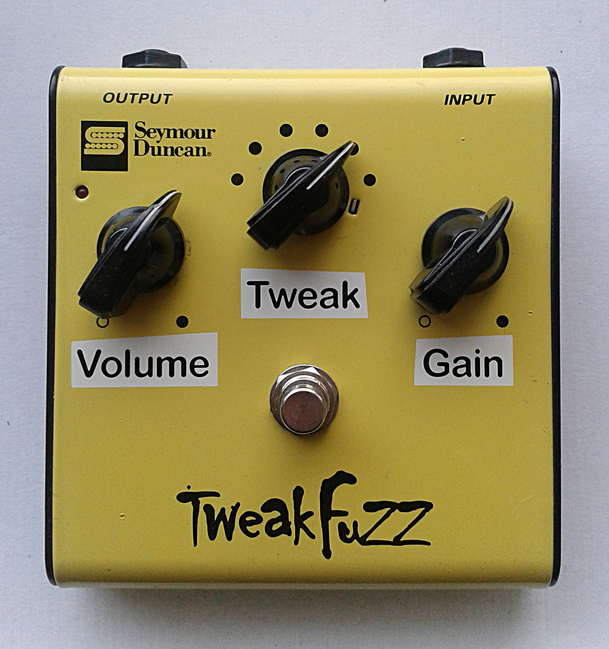
Seymour Duncan SFX-02 Tweak Fuzz

SeymourDuncan-SFX-02-Tweak Fuzz

What is it?
Seymour Duncan SFX-02 Tweak Fuzz from the first Seymour Duncan effect series. Possibly from mid 00’s.

The  first series of stompboxes from highly regarded pickup manufacturer? Sure i wanted to see what was going on for myself. I believe the number of manufactured units is rather high and since most of the designs in this first series were priced neatly, they were bound to sell some. But my guess is still – not enough. As we’ve seen with various brands, if a design is a hit, it will stay in production for ages. Wonder if we’ll see a reissue of this at some point. Chances are, no, but still. It would be interesting.  Once i got mine, i took it out for a spin. And tore it open, as usual.

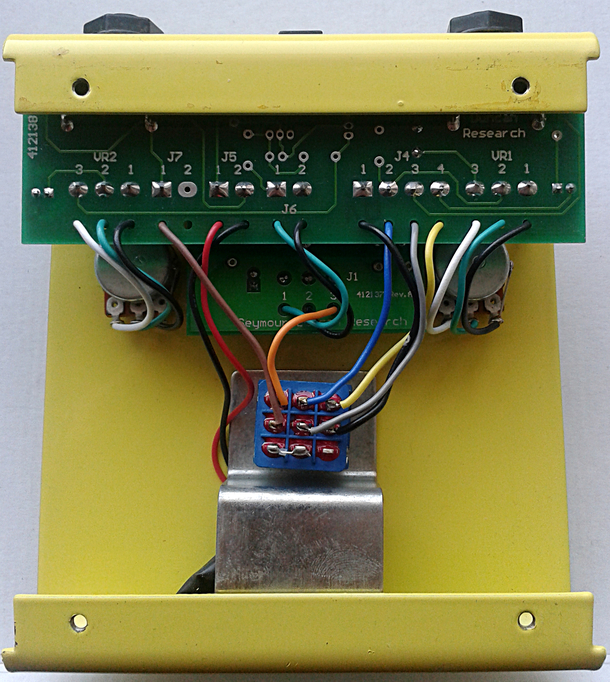
SeymourDuncan-SFX-02-Tweak Fuzz-guts1

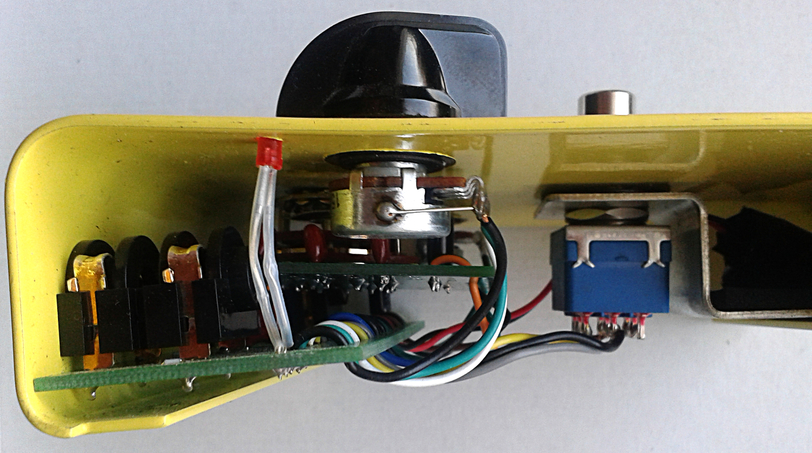
There’s two small boards stacked inside. Other for controls and other for the main circuit. Boards are fastened to the box with  pots and jacks. Not a bad thing to see. There’s true bypass switching in place with industry standard three pole switch. Neatly done either way. The battery slot isn’t too easy to access and requires one to remove the bottom plate and its four screws to reach it. But then again. Who uses batteries anyway..

There’s been a traced schematic around for years. Couldn’t find it right of the bat, but one should be able to find it through internet archives with little detective work. It’s Analogguru’s work (and truly amazing work indeed) and it shows us what this thing is made of. The “tweak” control is the key. This control simply changes the value of the input cap from thin sounding small value to fat sounding, larger value. Rest of the circuit is slightly tweaked Fuzz Face.

SeymourDuncan-SFX-02-Tweak Fuzz-guts2

And since it is nothing more but a silicon Fuzz Face, it suffers from the same culprits this classic circuit has always suffered. This being the mediocre output level capability with modern output guitar pickups. But that’s at least partly, compensated with sturdy feel and decent looks. Switchable input cap for a classic circuit may not be enough to create an individual hit.

How does it sound?
Really good. The classic Fuzz Face sound with six different tone settings from thin and nasal to big and fat. Actually, i hear no difference between this unit and quite a few higher end/boutique FF derivatives. And the tone of that blue Dunlop reissue is in tact. This truly shines with single coils or humbuckers with vintage output (less than 10K). For the availability and price, this is very tempting alternative for current big boxed FF reissues. My guess is that these will have their reputation and price  going up in the future. Or this could be one of many slightly tweaked derivatives that will simply be forgotten. Only time will tell.

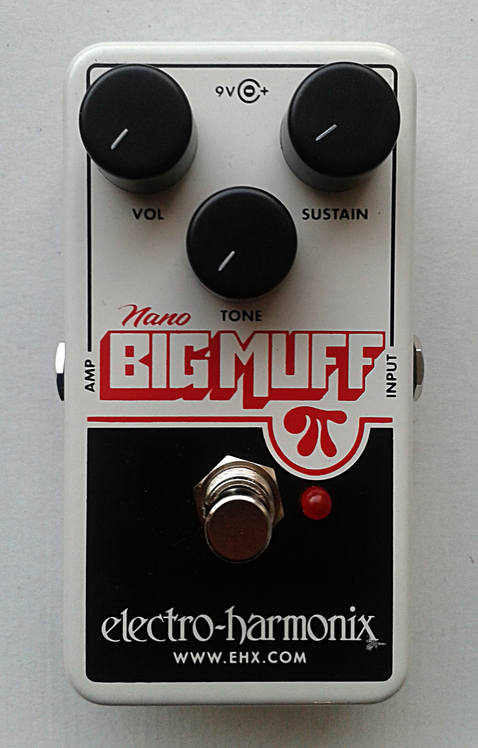
EHX Big Muff Pi Nano

EHX-BMP-nano

What is it?
Electro-Harmonix Big Muff Pi Nano. Made in NYC, 2013.

Ok. This took them long enough. The massive Big Muff enclosure is sort of an visual trade mark for this obviously classic fuzz/distortion, but there’s been Little Big Muff out for a long time. Little BMP being the same circuit, but just in a 1590BB-sized box and with mostly SMD construction. We all know the circuit doesn’t require the huge box, even with through hole parts since dozens of other brands and boutiquers have been offering their tweaked clones ages. And usually in a smaller, 1590B, or 125B sized enclosure. In my opinion, the size form factor does matter to a degree. B-box always trumps the bigger ones (but if we go smaller than that, my interest drops lower than hell). So, in a sense, EHX releasing a BMP in a smaller form was just a matter of time. Chinese cloners are currently selling similar circuits in A-sized boxes, but i do hope that EHX doesn’t go there. Ever.

EHX-BMP-nano-guts

Looking at the circuit and checking out the treasure cove for BMP information, The KitRae’s Big Muff Page, the design for this one is the same as for current huge box reissue and Little BMP. Our basic four gain stage design with the middle ones having diodes for clipping. Exactly like all the other discrete semiconductor BMP versions. Circuit is actually very close to Little BMP with through hole transistors, diodes and a few key capacitors. And since this is electronically the same as current ones in bigger boxes…

How does it sound?
It sounds exactly like the others. Big and creamy with decent output levels. As with all BMPs, the  sound is at its greatest with clean amps and medium to low output pickups. The design and the sound it represents has endured time extremely well. There have been some changes in the design over the decades with all of them having a lot in common, while still sounding different. This and all the others post-2000 units sound more or less the same. With a few exceptions. Still, no surprises. Just the classic tones in a extremely usable format.

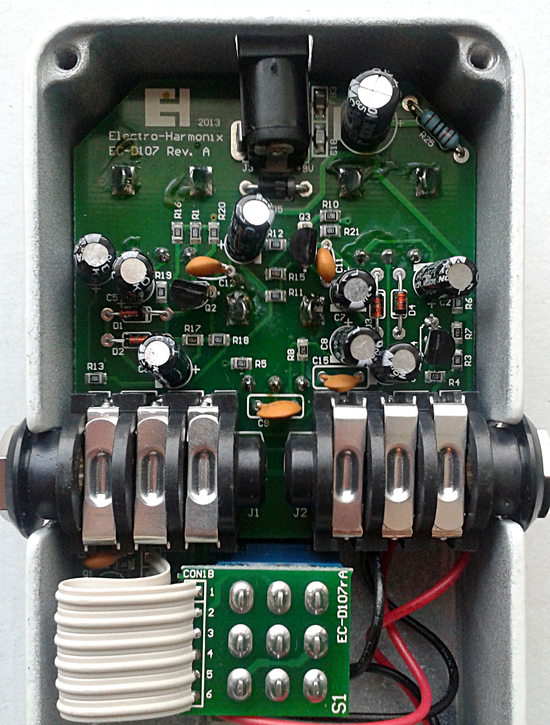
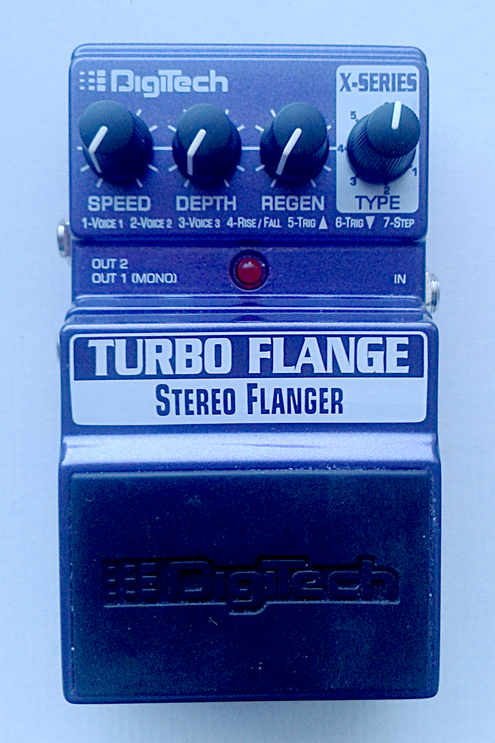
Digitech XTF Turbo Flanger

Digitech-XTF-TurboFlanger

What is it?
Digitech XTF Turbo Flanger from X-series. Made in china around late 00’s.

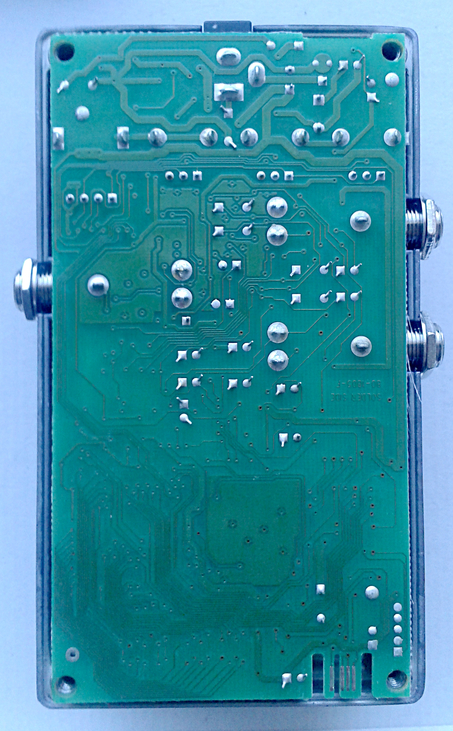
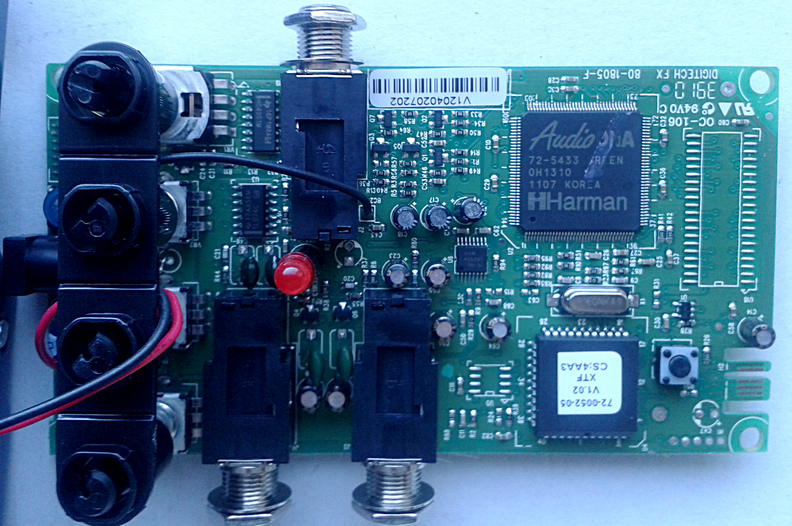
Saw this going for a decent price and just couldn’t let it go. Played around with it for a while and i was ready to call it before opening the bottom. Not an exception to the rule, but simply yet another Digitech board shared with the rest of the series. Opening it confirmed my suspicion. As with almost all X-series pedals, this too has the same board with same chip as the others. The PCI-style interface pins on the lower right corner is a dead giveaway.

Digitech-XTF-TurboFlanger-guts1

So the design is nothing to write about since i’ll be just repeating myself over and over again. The code, box color and the labels are the only thing separating this from all the other boxes from X-series with a switch as a right hand side knob. So instead of going through the general idea of digital effects again, let’s just focus on the features instead.

Digitech-XTF-TurboFlanger-guts2

For controls, the Speed, Depth and Regen (a.k.a. feedback) are quite the standard. For analog designs, the additional controls usually affect the delay time and therefore alter the overall tone. After all, all the flangers are effects that have a LFO (low frequency oscillator) controlling the delay line time in sync with the LFO. Turbo Flange here doesn’t say anything about the delay times, but it has seven modes to go with. Voices 1-3 are pretty standard flangers, and same could be stated about the rise/fall and trigger up/down modes. For most interesting part, the 7th mode is 7-step which randomly (at least it seems random) selects the next step frequency in the LFO pulse. This would have blown my socks off if i hadn’t seen similar feature before. That’ll be Boss PH-3.

How does it sound?
If this wasn’t so sterile in its tone, i’d rank this very high. I could see myself using this for parallel guitar loops when recording. Maybe even for a bass with similar application. The seven modes offer quite a nice set of different digital flanger modes. My gut feeling is that this sounds very decent for an all digital unit. However, it’s not even close to the greatness of Ibanez DFL, which has nice digital design that springs from the analog world. This one here is simply a digital software effect in a stompbox form, with relatively low power consumption. Good, but maybe still not good enough. The 7-step mode is great thing to have on a flanger and it’s not every unit that you’ll come across to have this feature. Probably most of the VST-plugins will carry this feature, but you most likely will not carry VST-plugins in your pedal board. I like it, but not enough to call it great or a favourite.

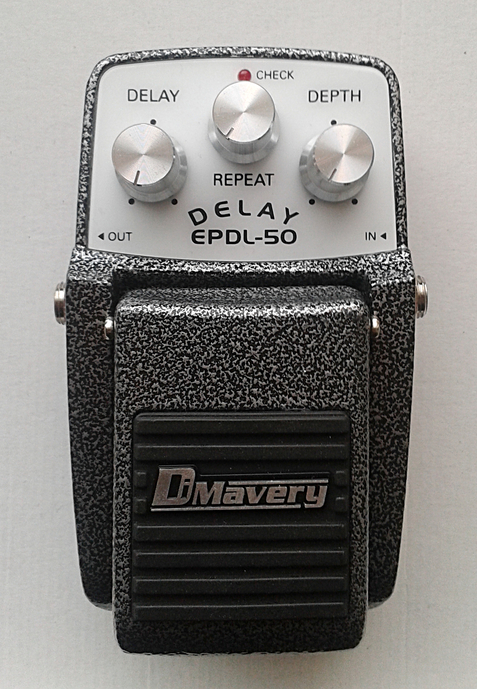
DiMavery EPDL-50 Delay

DiMavery-EPDL50

What is it?
DiMavery EPDL-50 Delay. Made by Daphon in china around late 00’s or early 10’s.

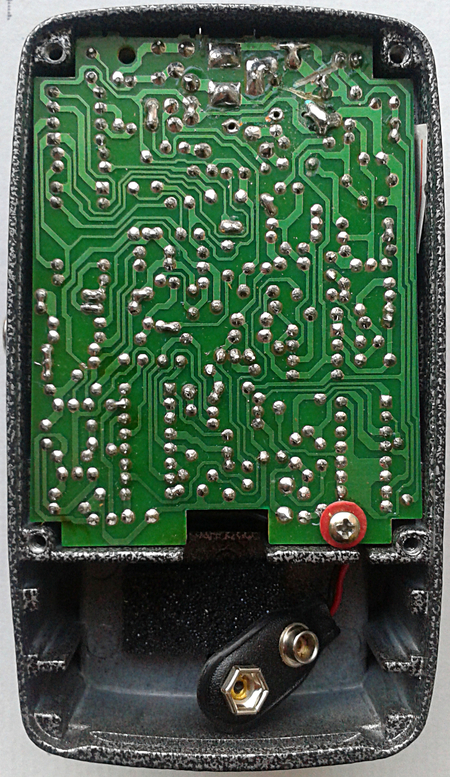
I was on the hunt for the original Daphon branded E20DL as it’s apparently the same circuit as for Daphon E10AD. The reason for hunting down a low end brand’s delay unit? The schematic for E10AD on Dirk Hendrik’s archives suggest that the design is actually very close to certain Maxon developed analog delays. And since this chinese manufacturer was responsible for producing the plastic Ibanez soundtanks, my interest raised too high to resist getting one. Daphon branded units are pretty scarce here in europe, so i just couldn’t find one. What i did find was a DiMavery branded version of the E20DL from a german retailer. And the price was decent enough too. The shipping cost wasn’t cheap, but that’s mainly due to the unit weighting a ton. Once the parcel arrived, it was time for a test run and to see how the unit was made. First thing that caught my eye was the horrid “quick fix” (TM) on the boards dc jack side. As the number of solder joints shows, there will be a lot of components in there.

DiMavery-EPDL50-guts1

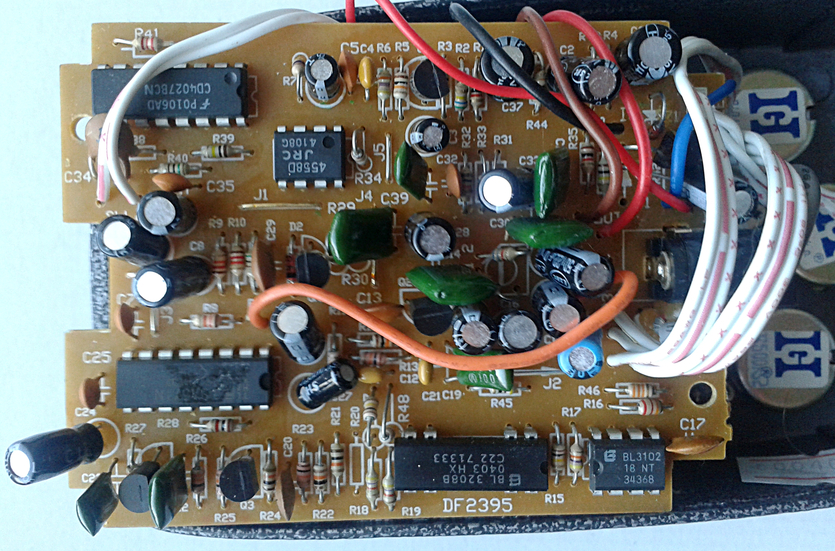
And there are. Most of the board design looks a lot like the ones we see in every Soundtank. So everything’s in order so far. The DDB is modern BL3208, a 2048-step BBD. The noise content for the delay line is tamed with a compander. In all, pretty straightforward analog design in a box that’s way sturdier than most others. Weighting in at about 700 grams, the box is definitely one of the sturdiest of all.

DiMavery-EPDL50-guts2

The enclosure may be great, but. What comes to build quality, i’m not too impressed. Insides are made with cheapest parts available, and while the workmanship beats most Danelectro mini series units, it’s still sub-par when compared to Ibanez Soundtanks. Which is pretty odd, since we are talking about the same factory. Maybe the profit margin for current OEM’d boxes is less than what it was with Ibanez. Either way. This represents the cheapest metal housed analog delay in existence. Sad thing, but low price point doesn’t usually add up to high quality. And. I’m afraid there’s more.

How does it sound?
If we start by playing around with slap back type delay times, set the feedback accordingly and dial the mix to suitable levels. Then, this is very nice effect with smooth and soft analog feel to its tone. I’d estimate the maximum delay time to be something like 300ms. But there’s an issue. If and when the delay time is set above half turn, there is distinct higher frequency distortion present. My guess is that this is due to slightly misbiased BBD. And since the board doesn’t have a trimmer, this can’t be remedied simply with a screwdriver. So as it is, the short delay times work well and sound good. Longer times are next to unusable. I bet this could be modded to work better, but i haven’t found it in me to do so. Maybe some day. On the other hand, the distortion on long times in addition to self-oscillating feedbacks do make this very reasonable and cheap analog delay unit for all you noise heads. Looking for a hifi analog delay? Look somewhere else.

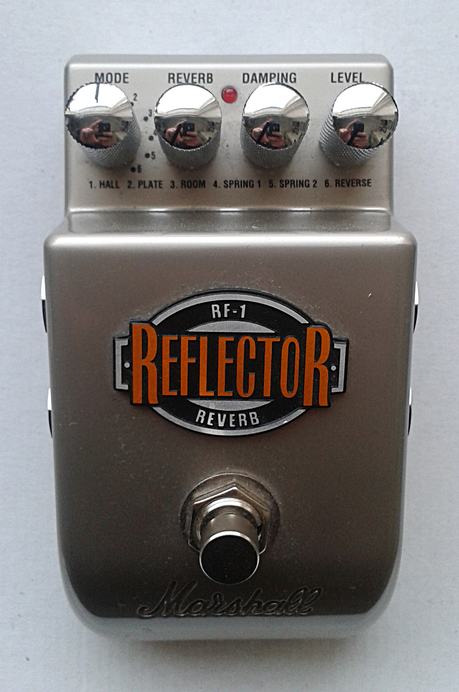
Marshall RF-1 Reflector

Marshall-RF1-Reflector

What is it?
Marshall FR-1 Reflector Reverb. Made in china around early 00’s.

Where all the dirt pedals in small metal series have board designs of their own, the digital ones are, well. Exactly what you’d expect from them. This fact makes the digital designs in this series the most dullest boards. This doesn’t mean that there is anything wrong with the pedals, it’s just that the boards give out a medium intensity meh-factor when you stumble across exactly the same board design in two or more separate effect models.

Marshall-RF1-Reflector-guts1

As for the Echohead i posted earlier, this one holds the same boards, same chips and same filtering and mixing. Meaning that the differences between the Reflector and the Echohead are in code, screen printing and label badge on the surface. The electronics are exactly the same. While the guts contribute to noticeable meh, this still doesn’t mean there anything wrong with the design.

Marshall-RF1-Reflector-guts2

But since the Texas Instruments DSP, Atmel and BSI controllers are in place with crystal oscillator for the clock, i find very little to say about this unit from the electronic point of view. Sure. I could repeat everything i stated on the Echohead post, but there is very little point in that.

Marshall-RF1-Reflector-guts3

Besides, the design is complex and since it shares the same principles as all the other digital effect with its switching, buffering, AD/DA and so on, there’s not much to say. The real topic rises when we start playing. Electronically and by box design, this is what it is supposed to be. A solid chinese made Marshall box. Even though the pedal is pretty much the same as Echohead, the code and the modes are great. As with Echohead, the basic controls are level, or mix, followed by damping and reverb time. There is stereo output and even a place for expression pedal (which i haven’t tried with this one yet). Then, the six modes…

How does it sound?
Here’s the thing. These modes do not disappoint. Hall, plate, room and two slightly different spring modelling modes are good. Decent amount of hifi is present, but not enough to reveal the horrid truth of those too high resolution rack mount reverbs. Those rack mount units are useful for vocals and possibly drum tracks, but for guitar use, too high resolution does not sound right. This can be explained by guitar’s frequency bandwidth isn’t the same as for the instruments mentioned above. Too high resolution usually results in too bright and sharp tone. With this pedal, the brightness is in perfect balance with your guitar’s tone. Sure, the digital versus spring tank. We could discuss this for hours and still end up by saying both are good. Digital will never be able to act as the actual springs, but the effect with this and similar digital reverbs  will suffice to almost everyone. But wait a minute. There’s one more mode we didn’t cover. The reverse. I’m not going to say a lot about it, but it is fun to have a pedal with reverse reverb.

Digitech XTD Tone Driver

Digitech-XTD-ToneDriver

What is it?
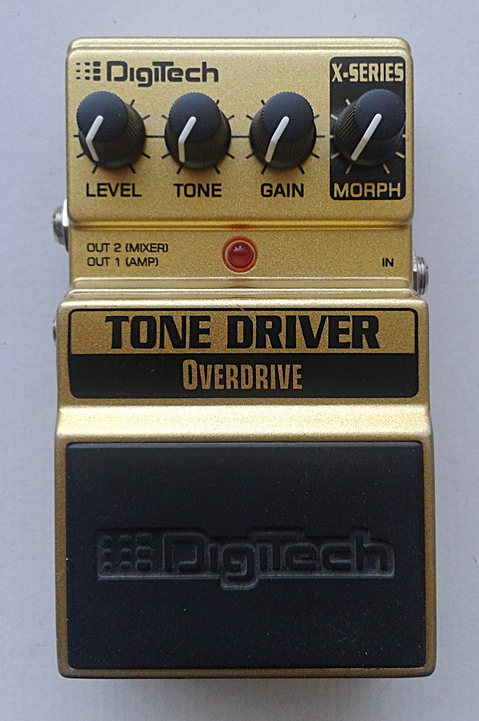
Digitech XTD Tone Driver Overdrive from X-series. Made in china around late 00’s.

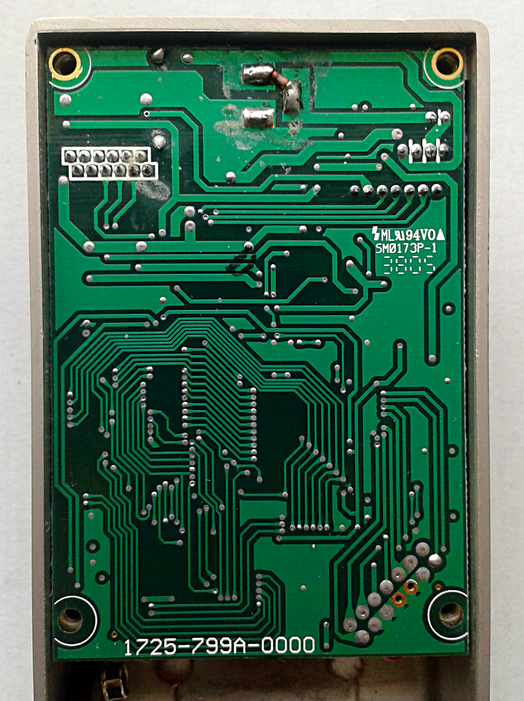
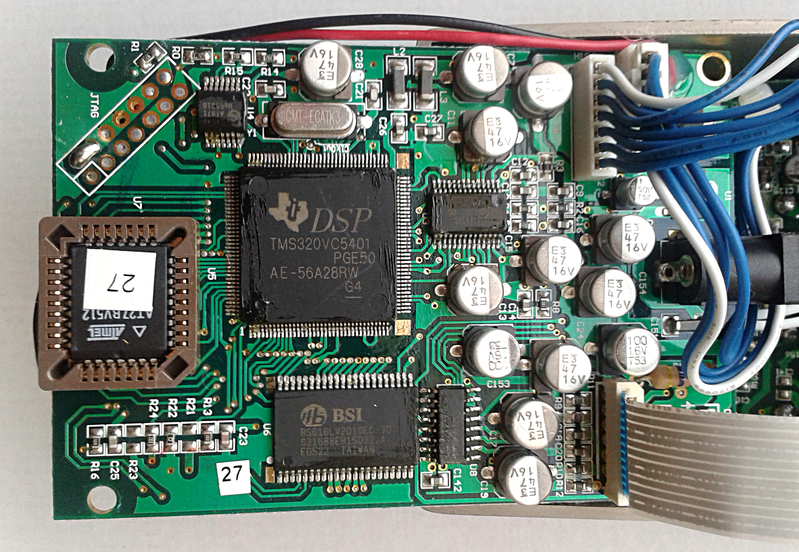
Usable and quite frankly, decent sounding cheaper drive pedals are pretty common nowadays. This is one of those that you can score as used for peanuts. Or next to peanuts at least. Got the unit for cheap and after trying it out, i wanted to see what was inside. Screwed the bottom plate off and first thing to jump out was the PCI-style connection on the lower corner. No doubt about it. The circuit shares the same base with all the other X-series pedals with a pot as the right hand side knob instead of a switch.

Digitech-XTD-ToneDriver-guts1

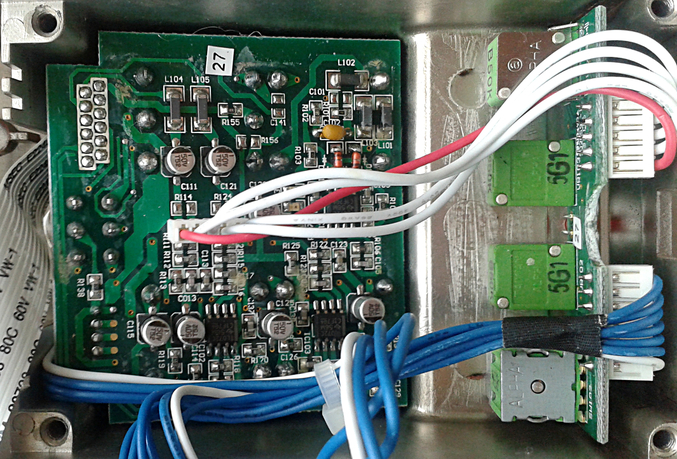
As far as i can see, the board design is exactly the same as for the other driver pedals in the series. Only things that differ are the code inside, colour of the box and the printing on it.

Digitech-XTD-ToneDriver-guts2

We got our basic controls with volume, tone and gain. And the Digitech exclusive, the “Morph” which acts like a voicing control. Morph shifts the overall frequencysort of like a wah or parametric EQ would do. In essence the unit is pretty much digital equivalent of D-series Bad Monkey or Screaming Blues. Meaning that the D-series pedals act like analog effects do, while this one here…

How does it sound?
The first impression on the tone was pretty pleasing. But after a few short minutes i noticed the overtones had a pattern that just didn’t feel right. That was of course due to digital nature of the unit, making the tone just slightly duller than what we find in the most generic and dull Boss effects. I’m not deeming this unusable. Mainly because it’s not. It is quite boring without scent or taste, but it gets the job done. If the job is to slightly boost your tone, then you can’t go too wrong with this cheapo. Will this ever see much use in my possession? No. Like for all the drivers in this series, there is nothing you can’t get out of your post 2002 digital multieffect. For fusion jazz player, this is recommended unit. Use it for fusion jazz, and i don’t have to listen to its tone. Works and sounds decent, but not great in any way.

« Older posts Newer posts »

© 2025 killall -9 humans

Theme by Anders NorenUp ↑