Category: Ibanez (Page 5 of 6)

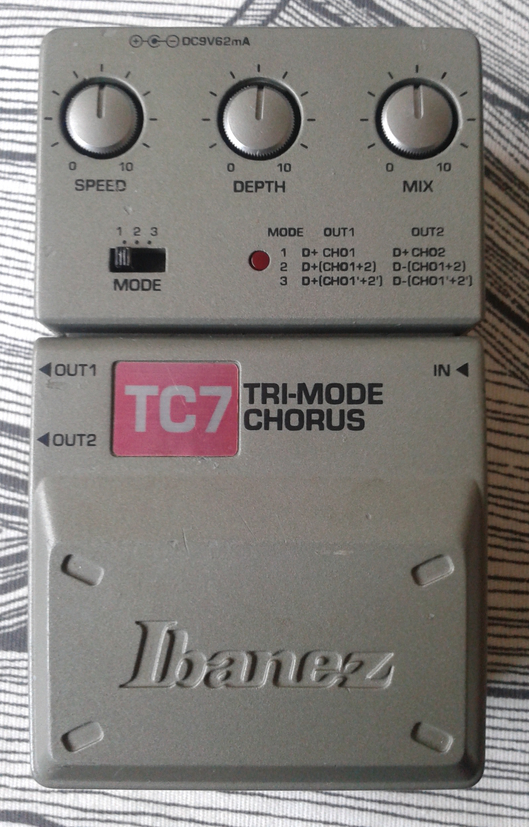
Ibanez TC7 Tri-mode Chorus

TC7What is it?
Ibanez TC7 Tri-Mode Chorus from 7/Tonelok series, made in china. Stamp on the enclosure suggest the build date to be around 2005.

Now here’s the first! There’s not a hint of blue on this box! And in other news, the three modes are quite interesting – at least on paper. There are basically two separate delay circuits for two separate choruses that are simply out of phase with each other. And there’s only one LFO driving those delays. Tri-mode in this case means that the first gives out mono chorus and splilts the clean signal to second output. Second mode is for out-of-phase stereo output and the third widens the delay time range and has both outputs active. Quite usable options.

Ripping one open shows a highly populated board with crowded joints and modern traces.
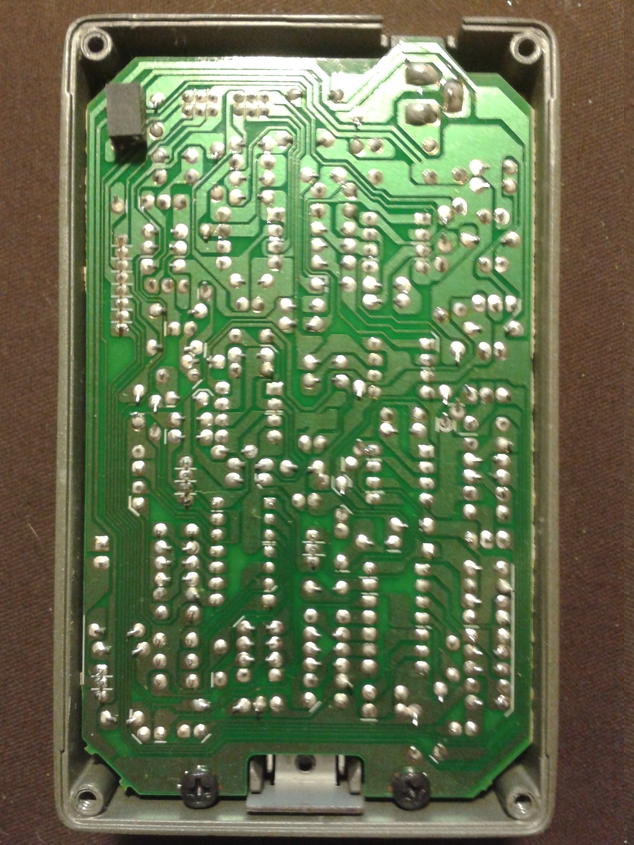
TC7-guts1

As with all 7-series boxes, the insides are made of five different boards. Well made solid build with pin terminals instead of board to board wiring to connect boards to each other.
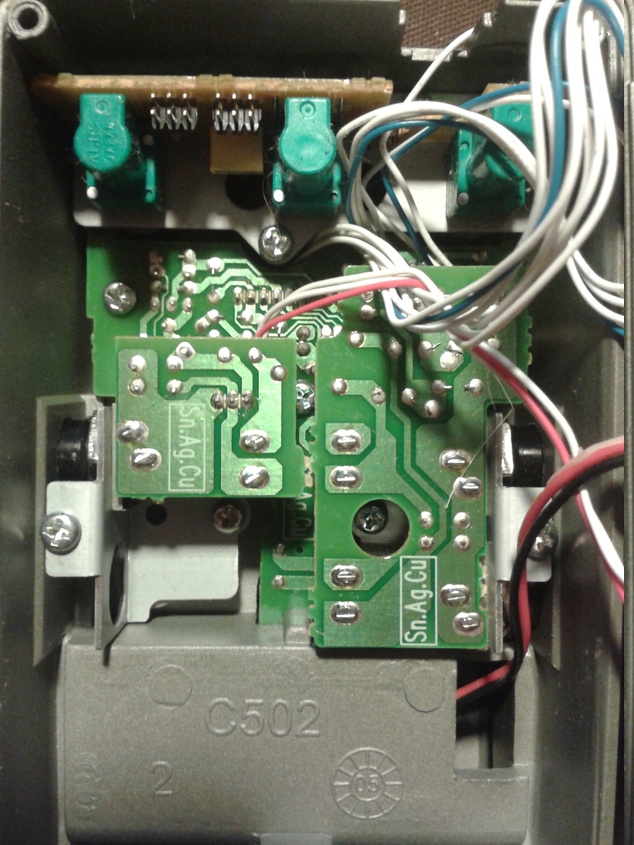
TC7-guts2

Work is neat in many ways, which validates the point that there are good manufacturers in china. I do not know which of the companies have built these, but they probably should be credited.

Down to the design itself. Couldn’t find a schematic right off the bat, but i assume that the TL022 is used as LFO and JRC4562s are taking care of buffering, mixing and driving for the different outputs and modes. So there’s one LFO driving the two Mitsubishi M65850 digital delay chips.
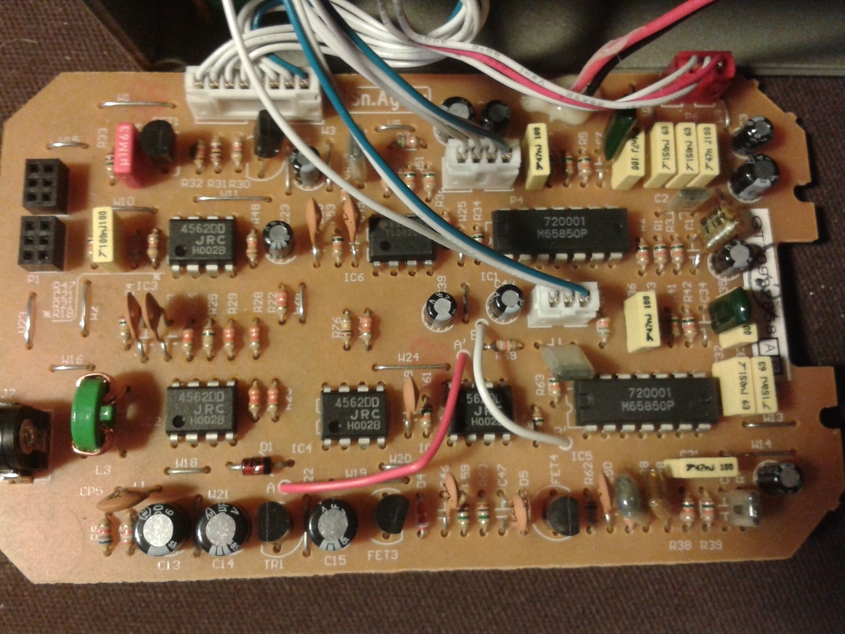
TC7-guts3

M65850 isn’t that widely used digital echo/delay processor as some others. But it has quite interesting datasheet with notion to Karaoke on it (check it out on AllDataSheet.com). So i suspect one should be able to find those chips from inside a number of different karaoke devices.

How does it sound?
Solid and trustworthy. Nothing too special in the sound, but at the same time it does have some personal character to it. The longer delay times found on third mode have similarities to a flanger design, offerign quite wild and swirly choruses. Not completely unlike vibe effects out there. Not bad at all. The fact that the delay line isn’t your standard BBD or digital chip may be the root of the personality found here. Well designed.

If i needed to drop all other choruses from my collection and leave only three, this one would probably make it to the ones i’d keep.
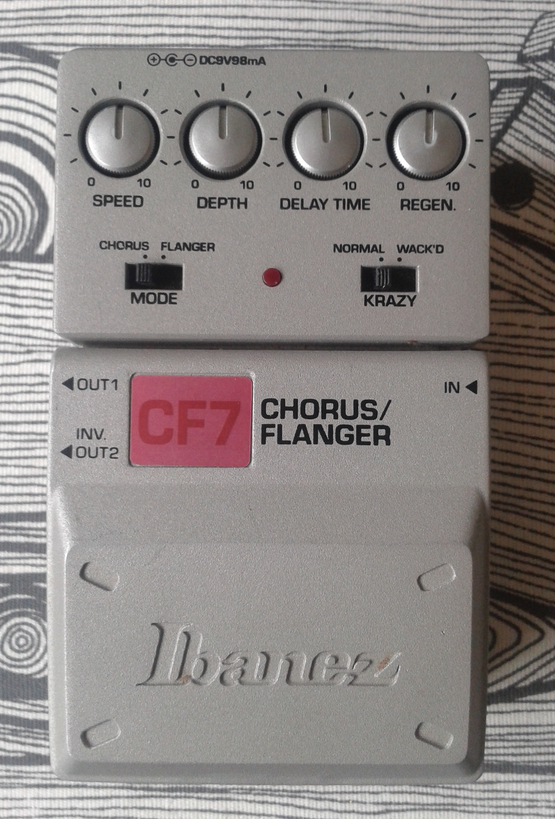
Ibanez CF7 Chorus/Flanger

CF7What is it?
Ibanez CF7 Chorus/Flanger from 7/Tonelok series. Made in china.

One of the more complex designs on the series offers digital chorus and flanger. No blue here either. But then again, it is a flanger too. Got mine for standard market price for used unit and almost pulled my hair off once i opened to parcel. I do not mind the nicks and scrathes, but one should never (NEVER) sell a pedal with “in good condition” label if it really isn’t so. This one had all sorts of crud and human waste on it. That can be addressed with a towel and a considerable amount of turpentine. But the lost bottom rubber and dual-lock-velcro over the serial number is not exusable. Not in any way. So the bottom is practically raped and there’s no chance of salvaging the serial nuber as it’s just a paper sticker fastened to the type plate. I did let the seller know…

CF7-guts1

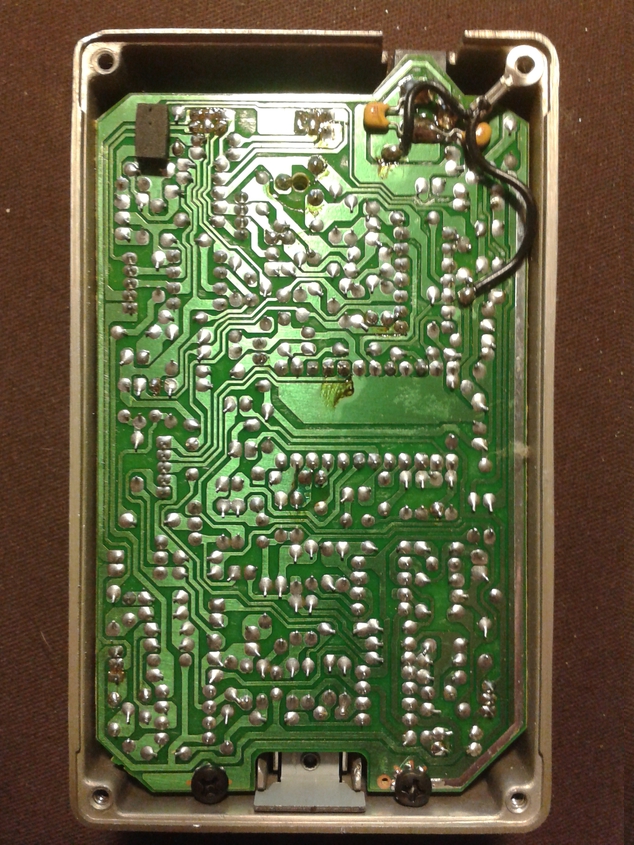
The horror didn’t even end there. Just check what’s going on in the picture above. To this day i have no clue what he was trying to do with adding two more caps and soldering the wire to the solder side of the board. Could be as it is supposed to be in the original, but i highly doubt it.

CF7-guts2

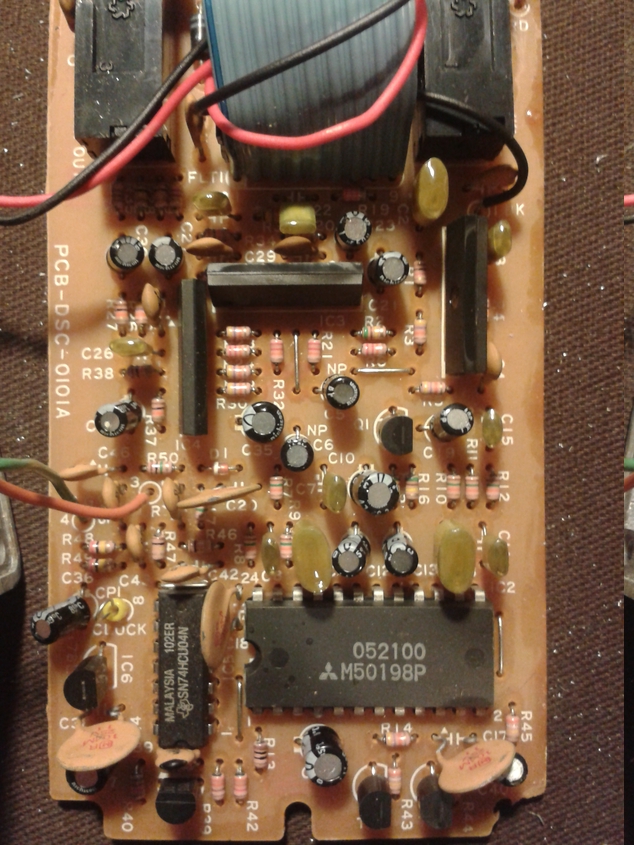
The source of all the crazy sounds is M50198 digital chip. The same one used in DSC10 and many other Ibanez digital effects. This time the designing engineer put the chip a good use and took it even further. The design has even more similarities with DSC10, but it has evolved to the next level. The “Crazy” switch seems to affect the overall delay time, but it is labeled as it is. With options for “normal” and “wack’d”.This is in my opinion a landmark in digital flangers. A flanger’s what it really is, although it can be used as a sub-par chorus as well.

As for the beaten and mistreated unit? I’m definitely on the look for reasonably priced replacement in a better condition. Once i find one, this one will have to go.

How does it sound?
In the gut of the metal worm! Blasted! Weird and good with enough options to drown you. From mellow classic chorus and flanger tones to metallic, cold chorus to shattering digital flange. Think of this as a bastard child of DFL Digital Flanger and DSC10 Digital Chorus. To me, this one is the shit. Amazing and very usable sounds for many purposes. Classic to noise.

Ibanez BC10 Stereo Bass Chorus

BC10What is it?
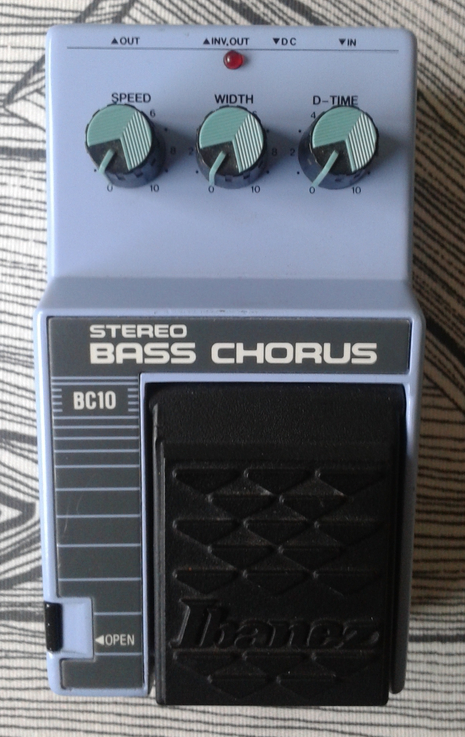
Ibanez BC10 Stereo Bass Chorus from 10/Power series. Made in japan around late 80’s.

As with CS5/BC5 covered earlier, the circuit is more or less verbatim with CS10. Funny. Four pedals equal one design, or the other way around. And the colour is… Slightly darker-or-more-violet-than-SC10-blue. As with its guitary brother, SC10, the BC10 has also three controls. With, Speed and Delay Time. If i haven’t written it already, the controls stand for: Width – the intensity of the LFO sweep affecting the delay circuitry, Speed – this one is changing the LFO speed and Delay Time – affecting the length of delay getting swept by LFO and BBD clock timer.

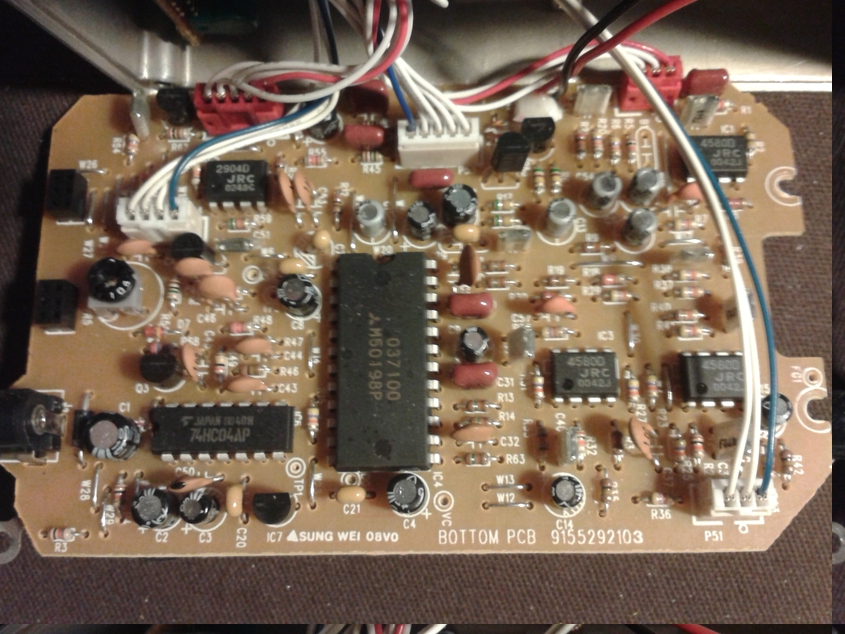
BC10-guts1

Modern board with modern traces. Very neat and professional soldering. The board size is not larger than what we find on Soundtank series, so it’s funny how the board here looks this crowded – even with LFO moved on the control board. Stereo output inverts the phase, so once again i’d recommend to try it as a stereo device.

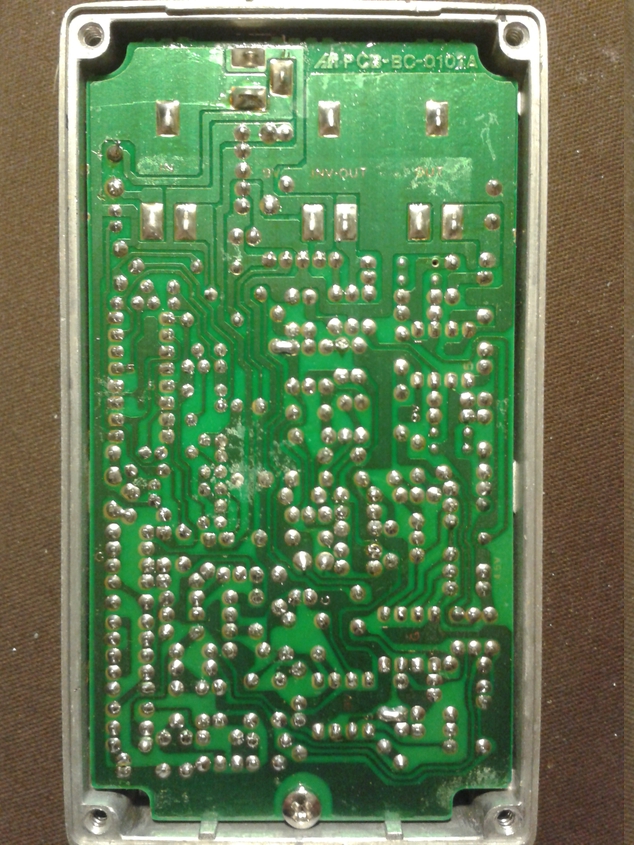
BC10-guts2

The component side says it all. 1:1 board to SC10 Super Stereo Chorus. Some of the cap values are different, but otherwise the design is verbatim.

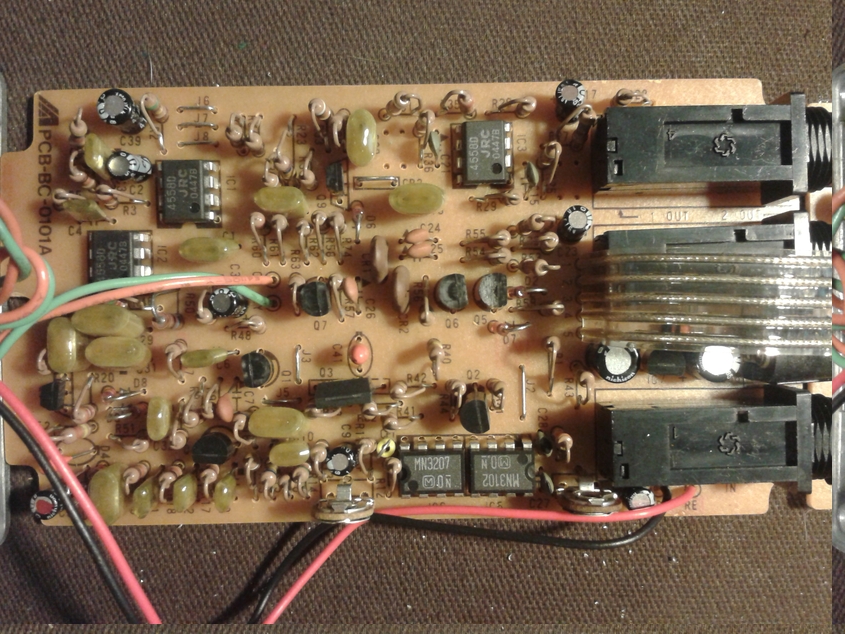
BC10-guts3

Upper board shows the LFO and controls. The controls are not complete workalike of SC10, with mild differences on the max speed and width. This may be diue to component tolerances and if so, the individual boxes of the same product will yield slightly different results. Damn i’m loving the analog circuits.

How does it sound?
With the minor differences on the circuits, this one sounds and feels pretty much the same as SC10. Just slightly fatter. If i place all four of these in series (CS5, BC5, CS10 and BC10), the differences are very minimal. Which is interesting and fun. Maxon engineers could have just created one circuit, preferably the one found on this one (BC10) and use that board and design for all the rest.

It sounds very good. Mellow, soft and fat(ish). Again, as with soundtank equilevant, the bass version lets more lower frequencies through, resulting in slightly softer sweep. Very good chorus to have.

Ibanez SC10 Super Stereo Chorus

SC10What is it?
Ibanez SC10 Super Stereo Chorus. 10/Power series box, made in taiwan  late 80’s.

You guessed it. Blue as it should be and without the stereo output circuitry, this looks like close match to Cs5 Super Chorus. According to schematic found online, the design is almost verbatim to CS5 – or one could argue (and be correct) that the CS5 is almost verbatim to SC10. The main (and only) difference is the output section.

SC10-guts1

SC10 has splitted output unity drivers for stereo output where the CS5 has only one output driver. The boards are nothing alike in layouts, but the electronic design is nearly the same. Except the added output driver here inverts the phase of output signal for its channel, giving out the perfect bi-phased chorus output. (Sorry for super crappy photo below)

SC10-guts2

The delay and timer circuitry is created with 3102/3207 pair, and LFO is driven by TL022. Maxon engineers have apparently solved most of the possible clock bleed issues by taking the LFO on the control board instead of main board. The main board only having the mixers, buffers  and delay circuitry on it.

Quite standard design with no surprises. Solid.

How does it sound?
If i only had this and CS5 in reversed order, i would probably love this one more. Basically because the sound is pretty much the same. But i happened to get CS5 first, so that one made a bigger impression on me. Usable chorus. The addition of delay time control opens a lot of new worlds. One can easily use this as mild and focused chorus, or tweak the delay time to make it sound monstrous. Versatile and good basic chorus.

Ibanez DSC10 Digital Chorus

DSC10What is it?
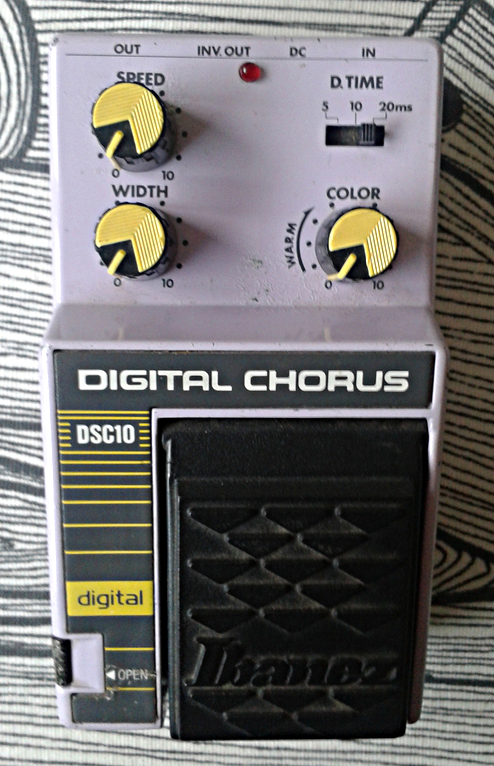
Ibanez DSC10 Digital Chorus from 10/Power series. Made in japan, late 80’s.

Refined chorus in 10 series with more controls than usual. And it’s digital. So prepare yourself for some iron worm action. Well. Not exactly. At first glance, this seems like very desirable unit with lots of options. In the end it sort of lets you down. The controls are “Color” and “Delay time” switch in addition to standard width and speed. “Color” is a passive low pass filter control, which i think got included because the design team wanted it to sound and feel like analog devices. The idea in this control isn’t too far away from the Rat’s “filter” control. Otherwise, from functional point of view, there are two outputs that are out of phase with each other. So stereo use is more than recommended. Letdown comes from the fact that it just tries to be one of those omni-choruses, where everything from mild ear pleaser to noise monster is possible. It isn’t.

DSC10-guts1

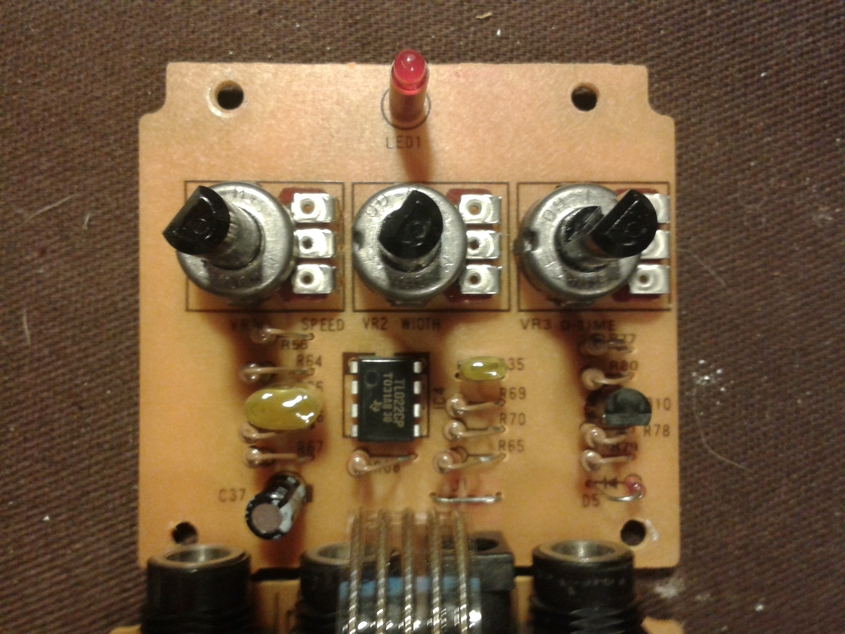
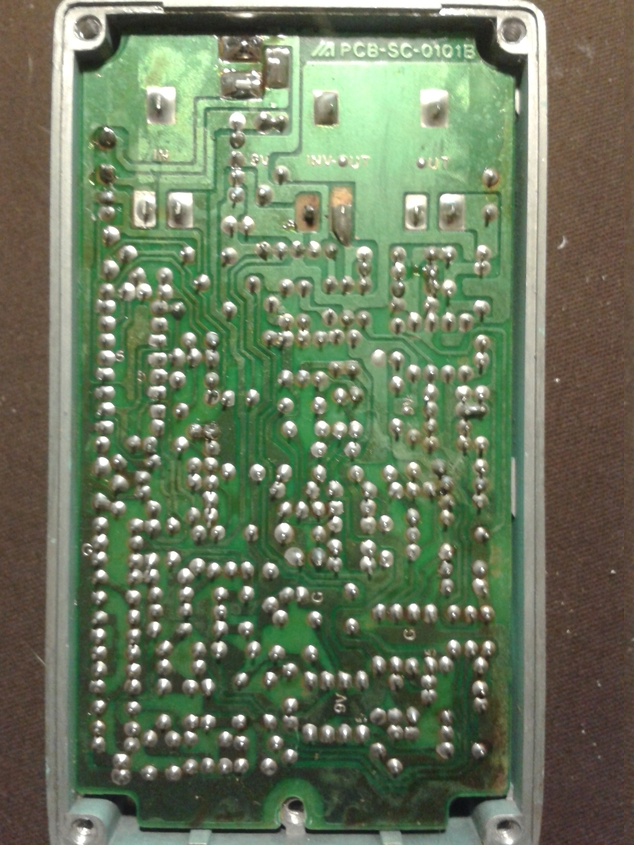
You’ll find the schematic from Dirk’s archive of the most beautiful traces known to man. Removing the bottom plate shown the well and tightly designed layout. Packed with noticeable accuracy (again, sorry for bad photos). Modern traces can’t turn me down this time. Just look at the joints and parts placement. There isn’t much symmetry, but the amount of stuff fit in there is respectable. Now we should talk a bit about the schematic…

DSC10-guts2

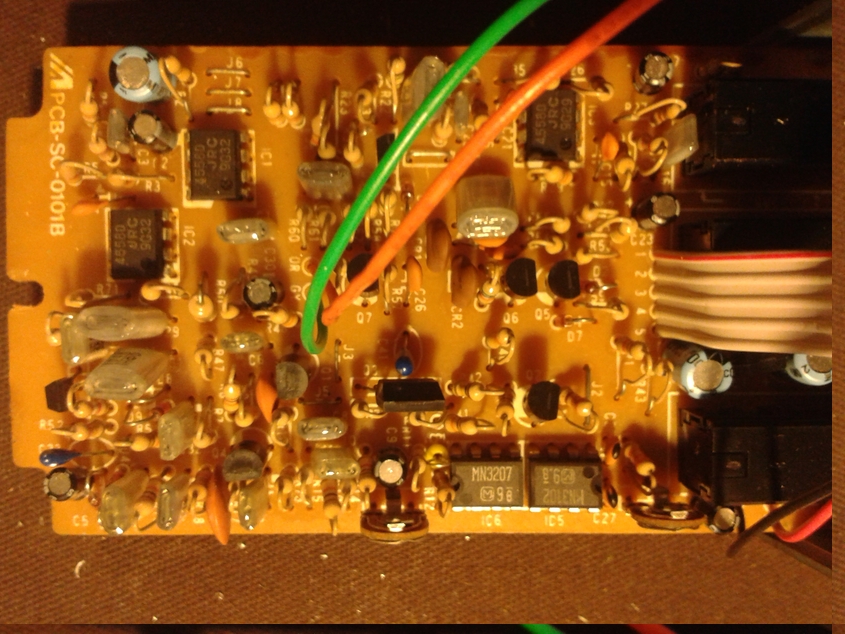
Motorola M50198 chip is the key here, basically just replacing the need for BBD pair in clock and delay purposes. That is one cool huge chip (i currently have no idea whatsoever how those work). The input buffering and phase inverting output drivers are your common parts. Rest of it. Not so much. In addition to the main delay circuit being a digital one, the LFO is created with JRC2904D. The 74HC04 Hex Inverter that we commonly find in electronic switching flip-flops has parts of it used as sort-of buffers between the LFO and the digital delay chip. Yeah. I know. I lost myself in there too.

DSC10-guts3
As shown on the last picture, the LFO is placed at the control board, between the pots and the switch. Due to my current knowledge, i simply cannot shed any more light on the subject. But it is beautiful pedal on the inside. More than just beautiful.

How does it sound?
Meh. Sad thing really. A rare Ibanez moment of stunning beauty and nearly unusable sound. The controls and the effort on the design let me believe much more until i played with it. On maximum time/width/delay time and minimum color setting, it does get somewhat close to a flanger style chorus. The sound behind the color control really bothers me. You can achieve the same “warmth” with dialing your guitar’s tone know down. Both methods can give you something that’s close to vibe-style effect but not quite.

It does have some potential and it’s not completely in vein. But it doesn’t make it even close of the top ten choruses i’ve played. If you’re planning on getting a Power series chorus, then i’d suggest to look for SC10 or BC10 instead of this one.

Ibanez BC5 Bass Chorus

BC5

What is it?
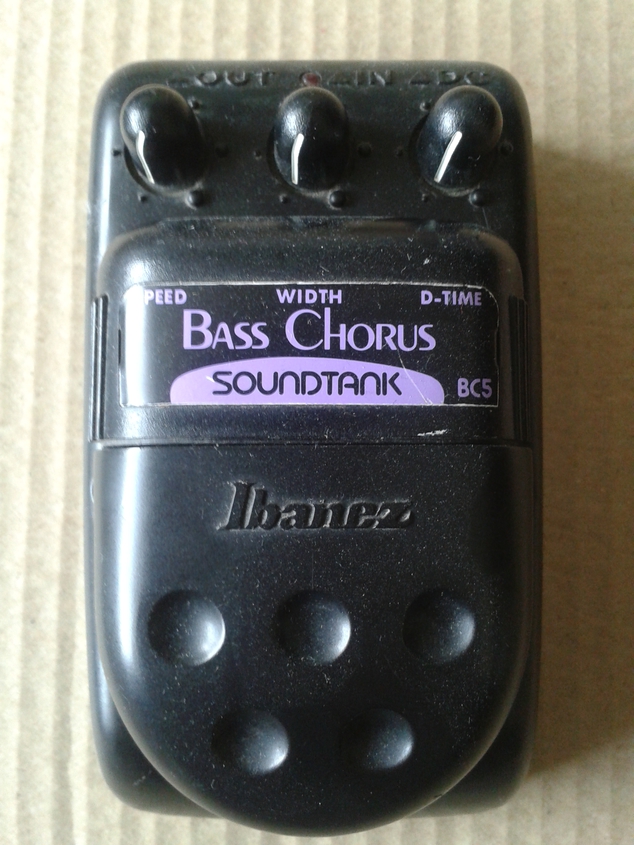
Ibanez BC5 Bass Chorus from Soundtank series, made in japan in mid-to-late nineties. Serial number is in millions, so it’s safe to assume this is late 90’s unit.

To me it seems like the bass effects are mainly distortions, autowahs and lots of choruses. Bassists are left out on many things as most of the pedals are intended to be used with a guitar. For some reason almost every brand that sells guitar choruses also sell bass choruses. The difference between the two? Mostly just a cap job to let more of the lower frequencies through. There are couple of pedals in Soundtank series that are like broters and sisters. Reverse the colours on the top label and swap couple of caps. That’s it.

BC5-guts1

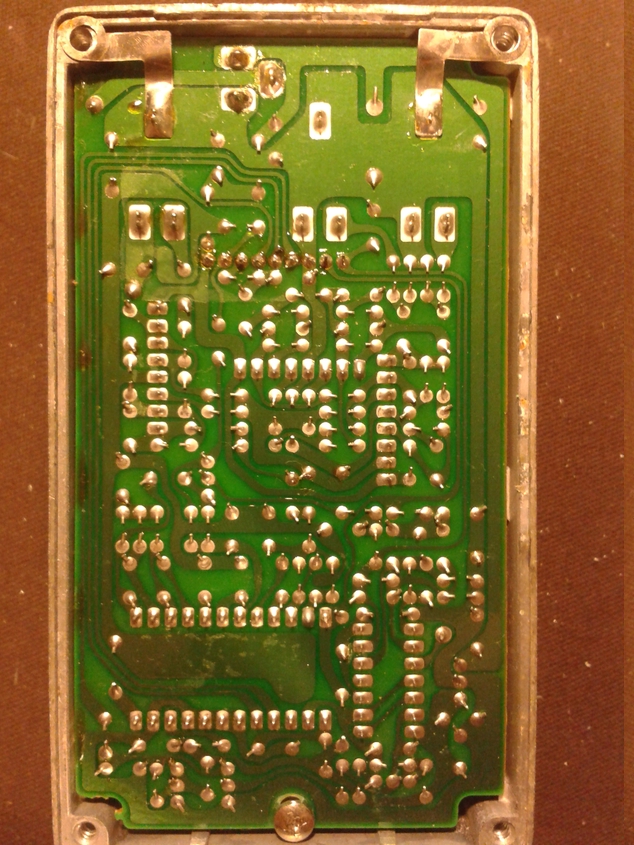
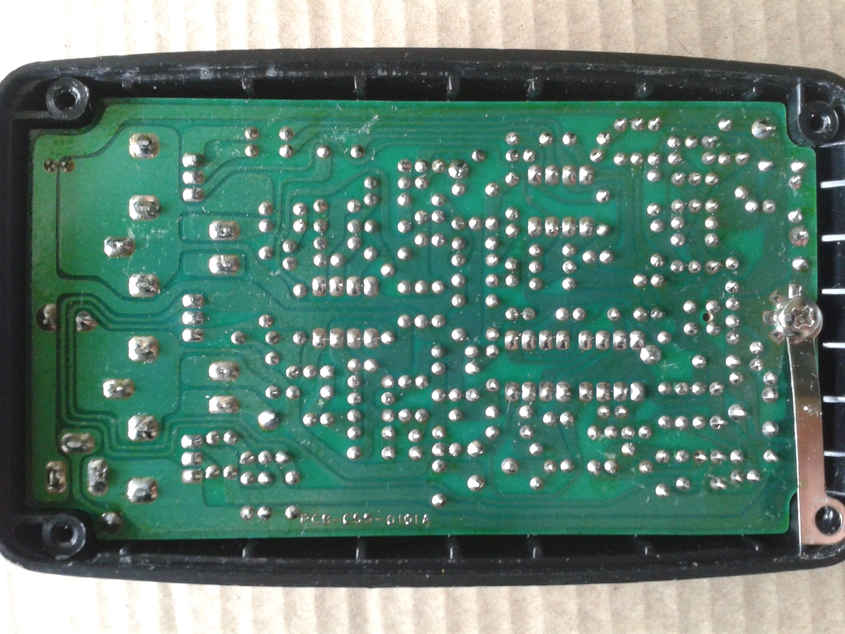
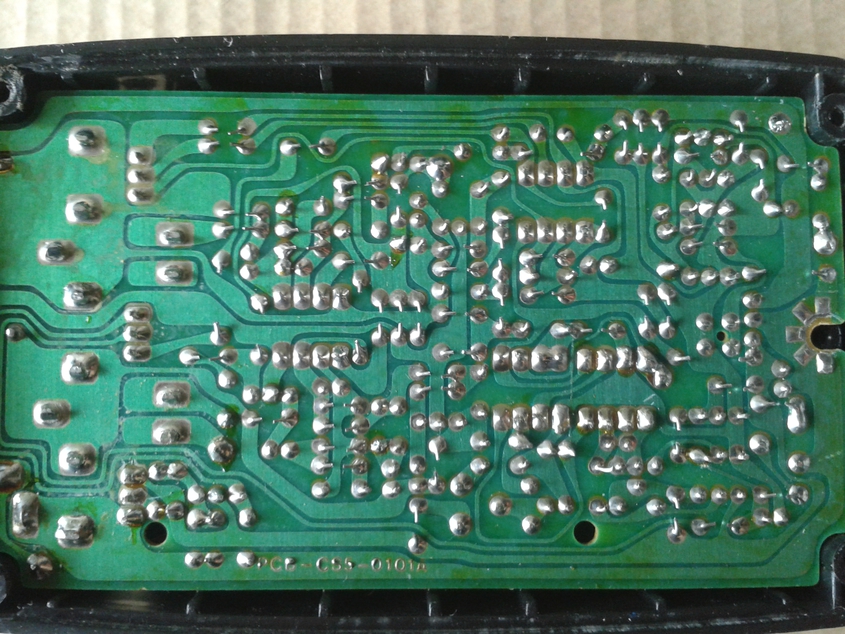
Take a look at the board. It clearly has CS5 marked on the solder side. Although the board doesn’t look like the board on CS5 (that i covered very recently), it is the same board. The picture below shows that Maxon used the same boards for both units and replaced the label with a sticker – as seen on Soundtank SF5/FZ5 (that i covered a lot earlier). The components used are different. Where my specimen of CS5 has 1/8W resistors mounted axially, the newer board labelled BC5 has 1/4W resistors. The traces do not look alike. Those look much more modern on this unit, which makes me think that this is just newer unit than my CS5.

BC5-guts2

Topologically BC5 and CS5 are the same circuit. Some of the values may be altered, but i couldn’t find a schematic to confirm. And yes. I’m just too lazy to check this units component values against CS5. May it be whatever. These are well built units with lots of user value left in them. Swap the switch and you’re good to go.

How does it sound?
If there is any difference between BC5 and CS5, you’ll need to focus if you want to hear it. In fact i placed both pedals on my desk, tuned the delay time, width and speed to match each other and played away. Pressed both switches at the same time with indicator lights not visible to me. One out of every three times i guessed wrong which unit was active. The bass version sounds probably a hint thicker and fatter, but that’s it. The units are basically identical. So this might even be better for guitarists who want the fat with their cold , haunting gothic chorused guitar leads.

Ibanez CS5 Super Chorus

Let’s have a full month of posting only choruses as pedal pots. Why? Because i can.

CS5

What is it?
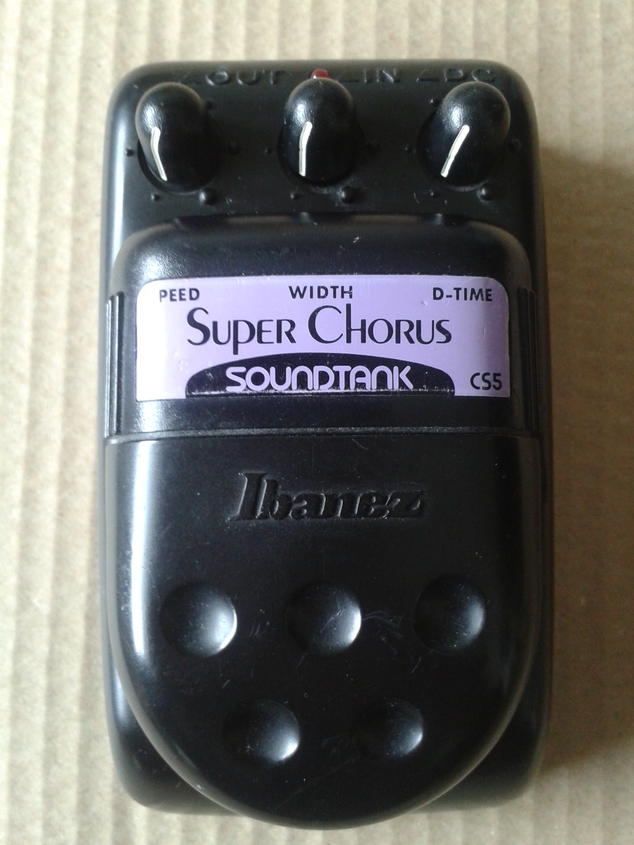
Ibanez CS5 Super Chorus. Soundtank series unit in plastic enclosure, made in taiwan in mid 90s.

I may not be the biggest chorus user there is. I’m really not even sure how and where i would use one. Of course, i’ve used a lot of choruses while recording, but mainly for opening up some synth tracks, rather than using them with guitar. Choruses lie somewhere in the middle ground from vibes, phasers and flangers. There’s always an LFO that creates the modulation pulse. Which then usually controls the delay timer, which then controls the delay itself, creating sweeping chorus effect for the pre and post effect mixing amplifier.

CS5-guts1

Ibanez CS5 Super Chorus is no exception. TL022 as LFO and NM3102/NM3207 pair for analog delay. 1458 takes of the mixer duties. Circuit is quite standard for a chorus, expect for the delay time control, which adds a lot of versatility and definitely is not as standard control as width/depth and LFO speed controls. Guess that’s what makes this Super. For those interested, the schematic is up at SchematicsUnlimited.com

CS5-guts2

To me, it looks like the design is very close to Ibanez CS9 Stereo Chorus, but with added delay time control. So in a way, this is better than its great predecessor.

Board, design, traces and components are well in line with the better standard boxes of this series. Only culprit is – you guessed it – the switch. After swapping it, this one runs like a very nice charm again.

How does it sound?
Good. With these controls, it is very versatile sounding chorus that can do both, hard and soft chorus from fast to slow, from natural to harsh. Basically the sound that makes this one very nice effect, even if it is housed in a plastic box. One of the greatest designs in the series.

Ibanez MF5 Modern Fusion

MF5

What is it?
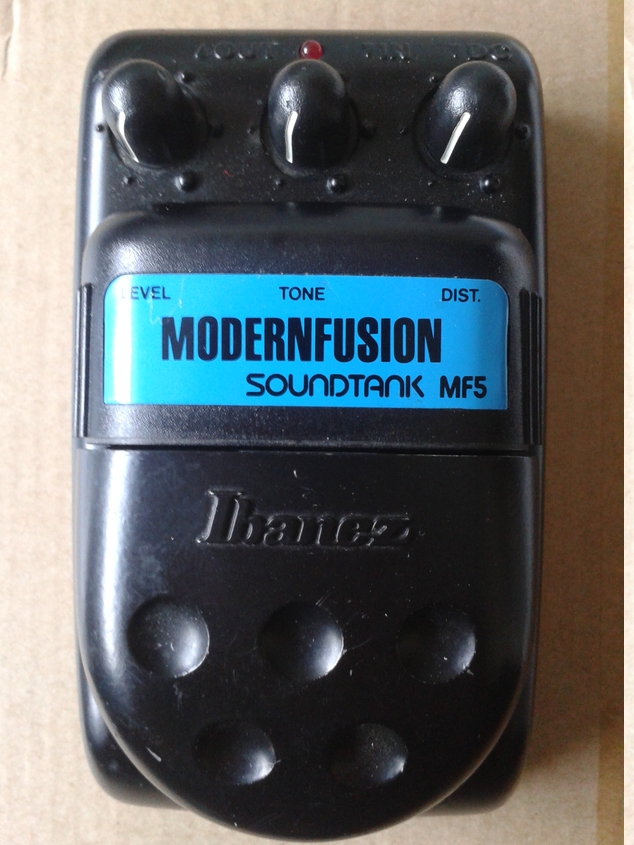
Ibanez MF5 Modern Fusion distortion from Soundtank series. Housed in metal enclosure and made in Taiwan in 1989.

Already had the plastic one, but saw this for sale with a reasonable price tag. The switch is in perfect working condition and i believe this hasn’t been opened up before, not even once. Only bad thing about this unit is that it sounds really bad with no real value for me. That may also explain the near mint condition and working switch though. But a collector can’t help himself… Apparently these units were a failure, as the manufacturing seems to be suspended before the series got their own typefaced labels.

Get your mullet out and put your silk shirt on. As the name suggests, the year is 1989. White suit pants and PRS guitars on a sunny jazz festival stage comes to mind. And to me, that’s not too pretty sight. This thing nails the yuppie adult jazz distortion just as it is. Shoulder pads.

MF5-guts1

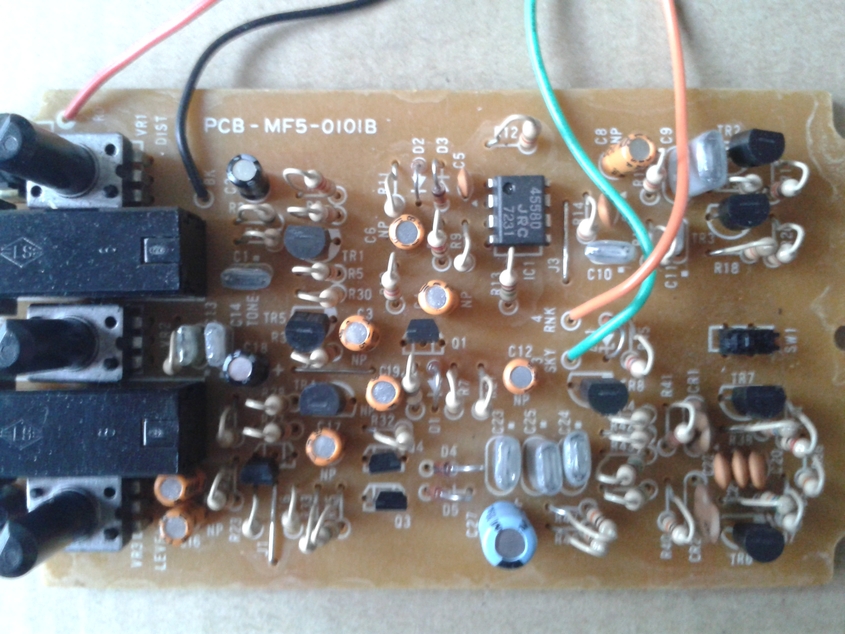
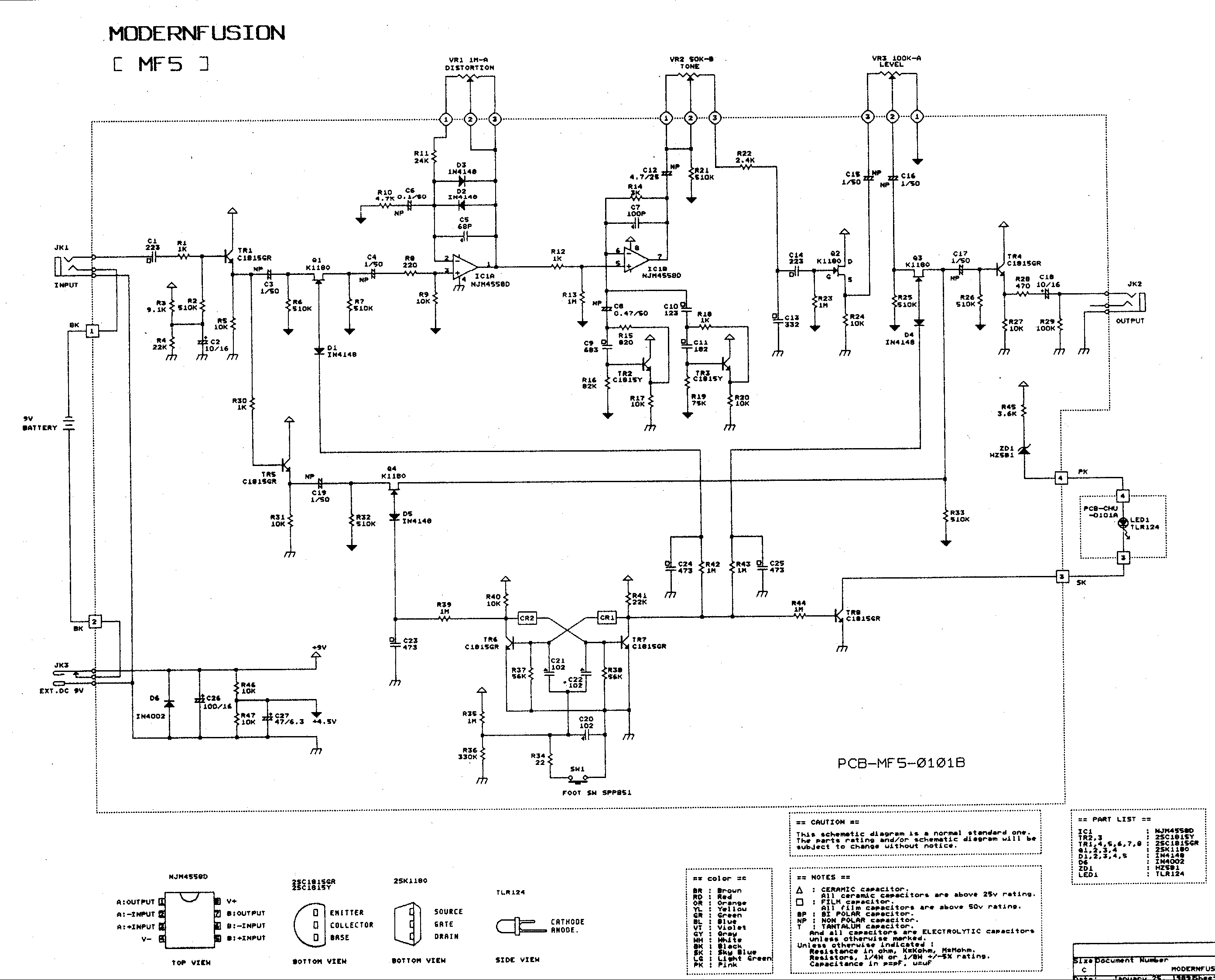
Board traces are modern and quite dull. The schematic is available online and it shows the design having slightly tweaked TS-like first gain stage after the Ibanez standard input buffer. That is follewed by two gyrators and semi-active tone control. Then to a JFET buffer  before volume control and a standard output buffer after that. For those who are capable of coming up with your own mods, i’d recommend to tweak the hell out of those gyrators. Maybe even snip the gyrator transistor drains, so that the full frequncy contect from the clipping amp gets through. I konw. Pretty drastic. But i think you’ll have a hard time if you’re thinking this may be usable without any mods.

MF5-guts2

All in all, the frequencies tamed by the gyrators offer stability that’s not very common. From electronic point of view, the filtering is too much. Thus that’s what’s making it the Modern Fusion, the only and the most boring adult jazz distortion there is.

How does it sound?
Surprisingly bad. If i was to dig up one good thing about the adult orientated distortion sound this unit offers, that would be the consistency. The distortion is so squeaky clean that it kills all possibility of sweet harmonic overtones. Once you bend your strings around the 12th, it still remains sterile. Now that’s a feature you don’t run into too often. Treble content is clipped much louder than the bottom, so in best case scenario – playing with hot jazz neck humbucker one can get relatively useful tones. But let’s face it. This is probably the worst design in the whole series. Trumping even The Cyberdrive and the Autowah.

Ibanez TS9 Tube Screamer (Reissue)

TS9

What is it?
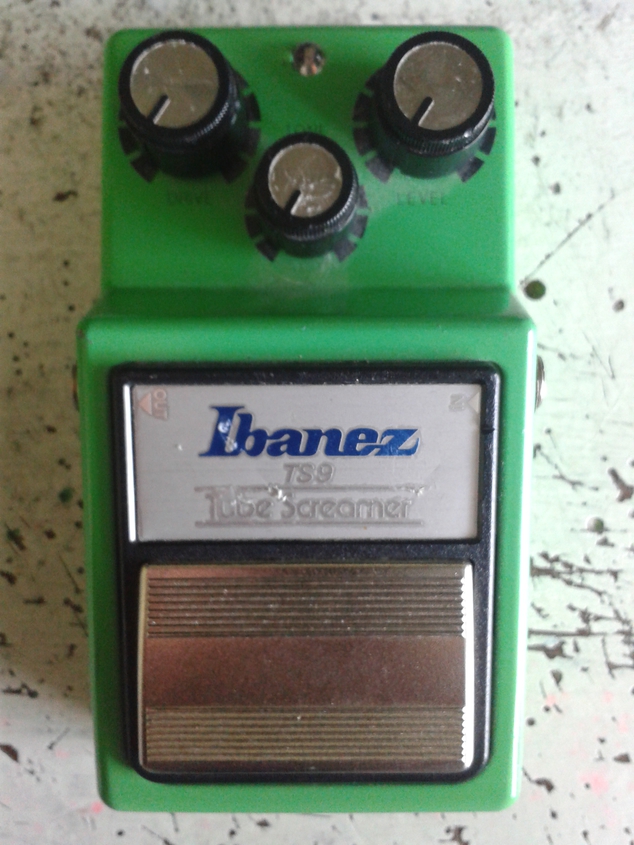
Ibanez TS9 Tube Screamer Reissue, made in japan. According to my guess on the serial, this is probably made in 2008. Got it used but in fair condition.

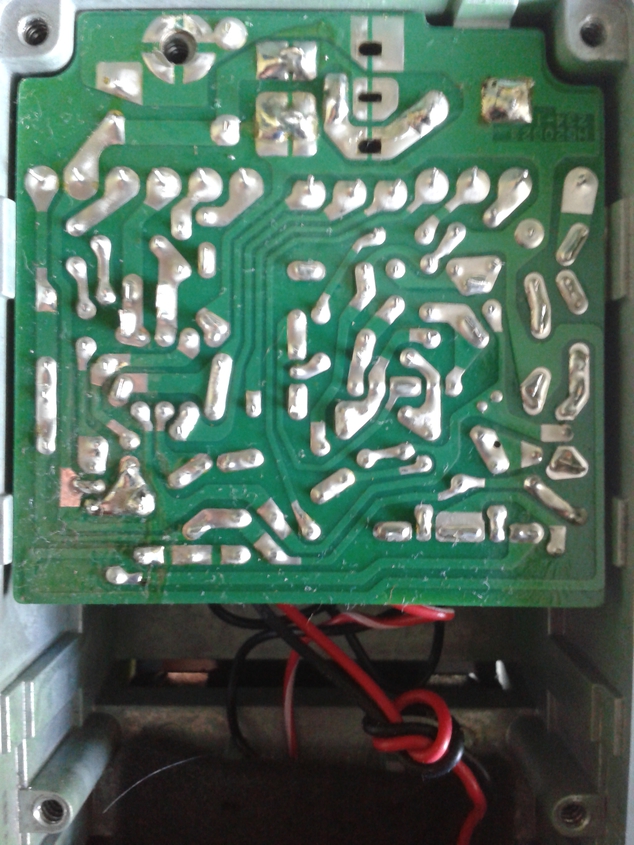
This must be one of the pedals with most information written. Sad thing that the reissues aren’t getting as much attention. No one seems to care about dating back the serials on these. Oh well. Teared mine open, and the box is exactly like the original 9-series boxes from the early 80s. The bottom insulation is better and non-removable though. The sight that welcomed me was like meh. Modern looking traces on modern thickness board. Not the acidy cool traces, nor the thick board that spreads confidence. All three of my Soundtank TS5s has thicker board than this specimen.

TS9-guts2

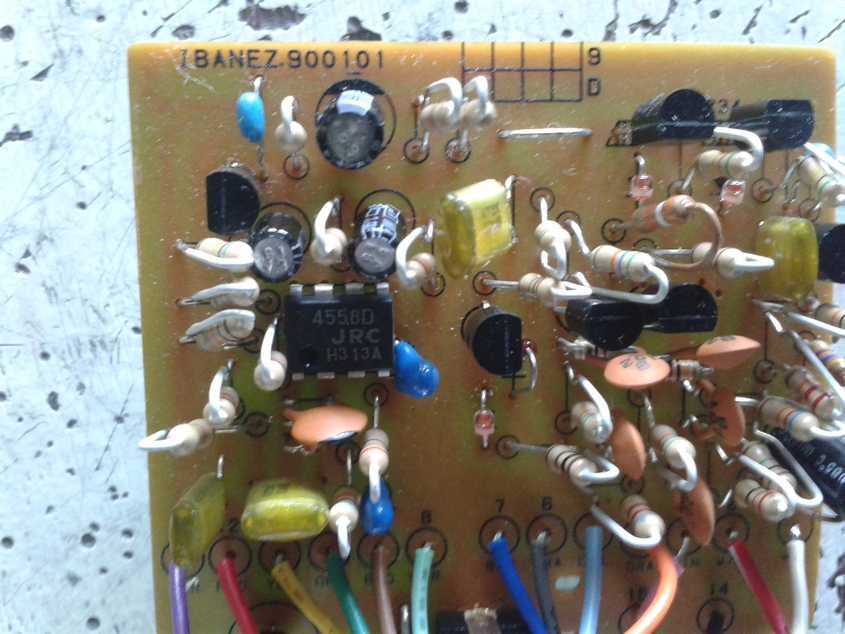
Components are close to the original, which makes this function like the older units. This specimen even has the JRC4558D chip in it. Not sure if there really is an audible difference between 4558 and TA75558. I’ve modded couple units before and tried both on with a DIP8 socket. Slipping in to heresy section, i personally believe that NE5532 is the best suited chip for this circuit.

Once again, refer to GEOfex article for more information on the circuit itself.

TS9-guts1

This one will surely get modded if i come across another unit for reasonable trade or price. Designwise this reissue is really nice pedal. Soundwise…

We could have a debate on if this design gets better with true bypass. My personal view is no. True bypassing buffered effects with electronic switching should only be done when there is something very wrong with buffering or there’s too low input impedance which leads to pickup loading and therefore oscillation. Hype of true bypass just isn’t worth it. I’ll talk more about this issue at some point. Maybe on some Colorless writings chapter…

How does it sound?
Well. What can i say? The cold dead hands slaps you on the top of your head. Unless. You have super sucky pickups. Then this puppy rocks. Sounds exactly as it should. Mid-honkin, bass-strippin medium overdrive with medium output. For live situation to get your mids heard over everything else. Not for anything else. A classic one trick pony. Prime suspect for modding the inverting input for more bass and gain.

Ibanez CP5 Compressor

CP5

What is it?
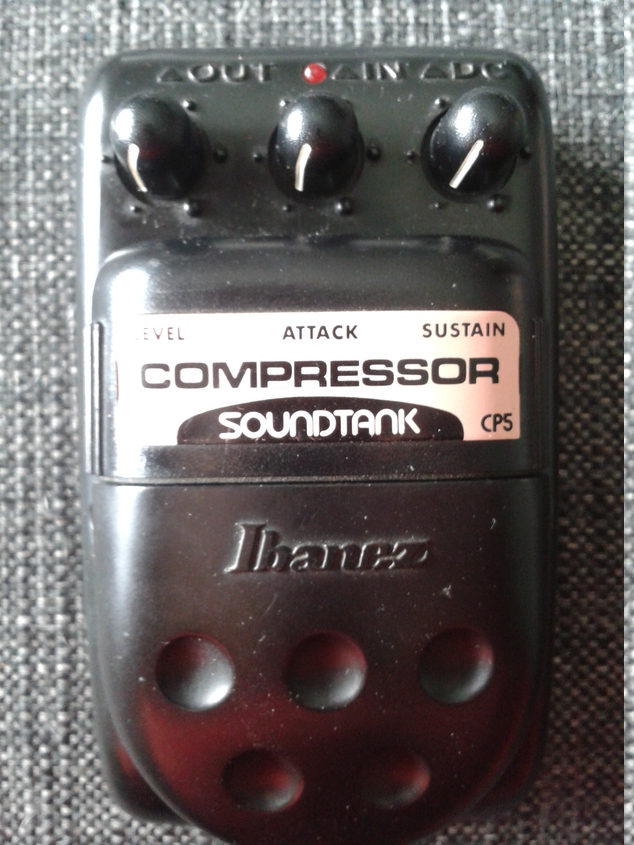
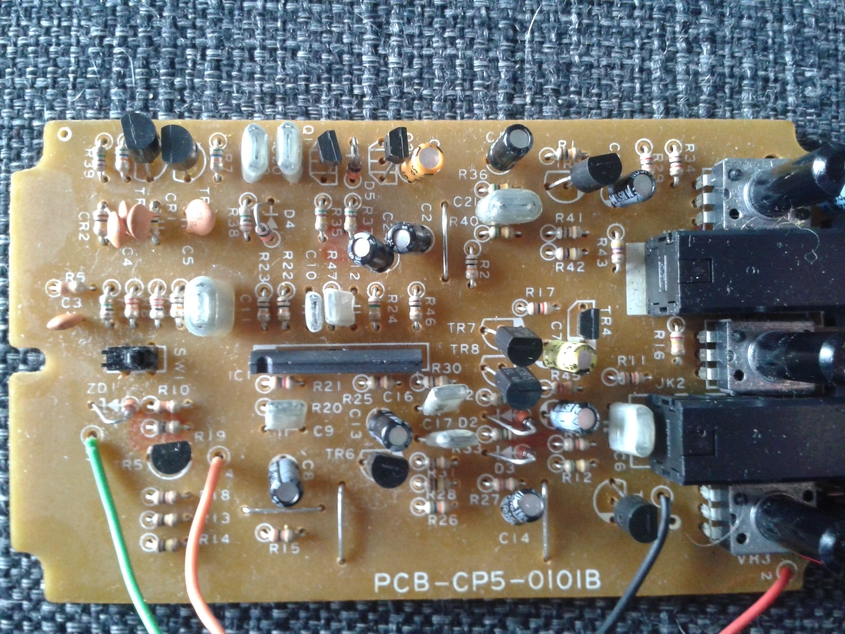
Ibanez CP5 Compressor from Soundtank series in plastic enclosure. Serial points to somewhere around ’95-97. Date is based on a educated guess, as always with these.

First off. Ibanez compressors tend to use somewhat obscure OTA replacement in a few designs. The 9-pin  SIP-chip in question is BA6110, which is in fact a VC opamp. The datasheet doesn’t have a word about transconductance. It does talk about voltage controlled amplifiers, filters and oscillators. While the chip is way different from the obvious CA3080(A/E) found in MXR Dyna, Ross Comp and about a hundered different derivatives, it can do the same thing. Ibanez uses the same SIP-chip in only tremolo it ever produced, the TL5 – only there the VCA is harnessed to be used with LFO instead of controlling it with the input signal’s voltage. More about the tremolo once we get to it.. This post is about the compressor.

CP5-guts

To study the schematic, you can check it out on Dirk’s page. His trace is beautiful work of art as always. All the other stuff going on with the circuit are relatively close to Dyna/Ross, so the base design is and isn’t a ripoff at the same time. I’m not quite familiar where in the Ibanez/Maxon design timeline did the BA6110 chip arrive, but it seems that the Master series CPL was the first one. Followed by CP10 and this circuit. Which are, all three of them, pretty much the same thing. In other words, an VCA adaptation of CP9, which uses more traditional LM16900 dual OTA. Which is, CP9 i mean, actually Dyna/Ross comp with dual OTA (second half unused). So the histroy behind this Soundtank CP5 is pretty clear. This time, the design revamped by the Maxon/Ibanez  team is better than the original.

I can say this with confidence. All four mentioned above do work and sound a lot better than currect Dunlop/MXR version of the Dyna.

How does it sound?
One of the great ones. Where as MXR Dyna is a lot more like shock effect with it compressing way too much even on minimum settings – This one can be used on all the time without excess noisy mushiness. Of course it can be turned to the max, which makes it quite close to Dyna. In a few words – Really good sounding compressor with classic feel to its sound. Doesn’t give you as much noisy mush as CA3080 designs, but good compression that thrives with a telecaster.

« Older posts Newer posts »

© 2025 killall -9 humans

Theme by Anders NorenUp ↑