Page 25 of 29

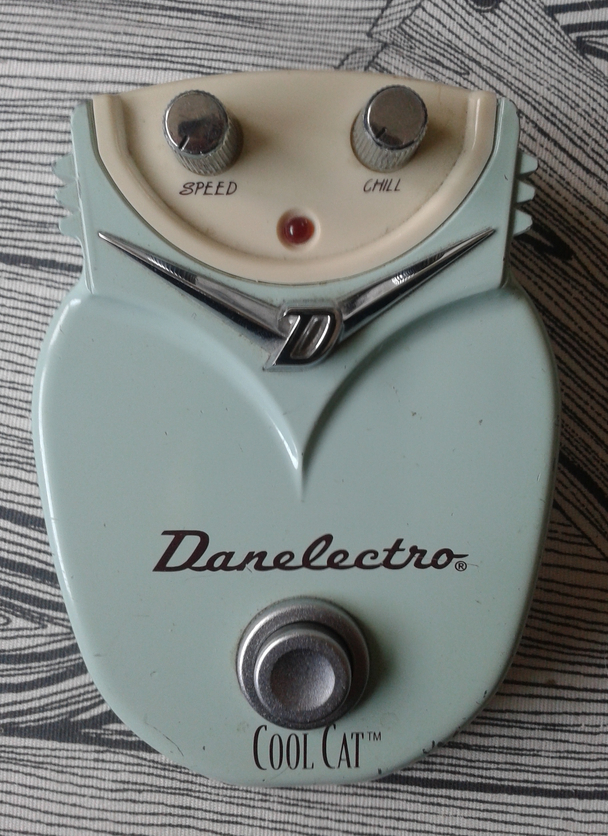
Danelectro DC-1 Cool Cat Chorus

DC1-CoolCat-ChorusWhat is it?
Danelectro Cool Cat Chorus, later 9V version, made in china around 1999-2000.

Earlier versions were fed with 18V supply and supposedly sound even better. My unit is the later one with standard 9V input, making it very common and easy to obtain chorus box.. Got it for a reasonable price a long time ago. Comparison between the two versions would be very nice thing to experince. Oh well. I guess i’ll just have to keep an eye out for the old one. The 9V supply is way more popular and easier for people to use. So i see Dano’s point in changing the supply for later models. By my experience (and due to not having played with original 18V version), this is the king of all choruses. Built to take a large hit from a large beaver. On the negative side, the box is big.
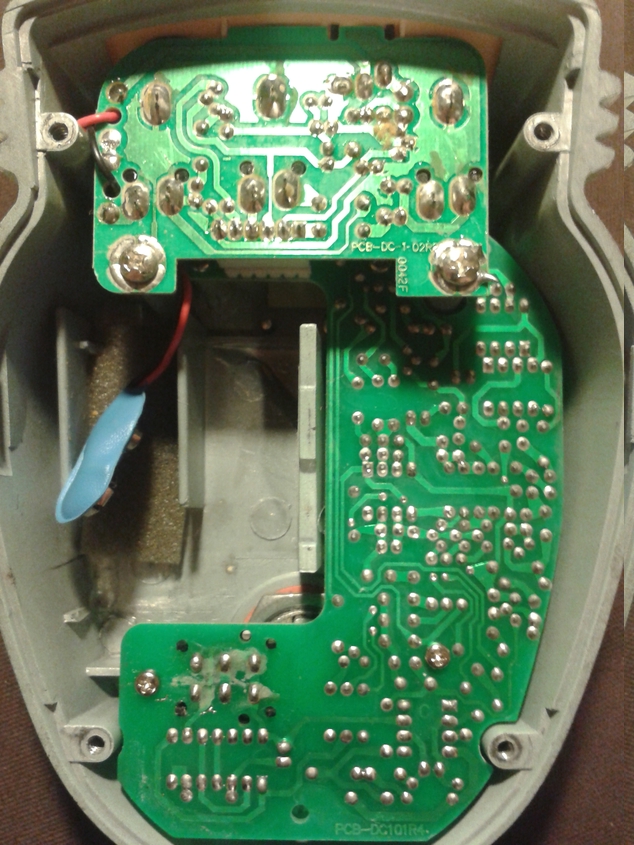
DC1-CoolCatChorus-guts1

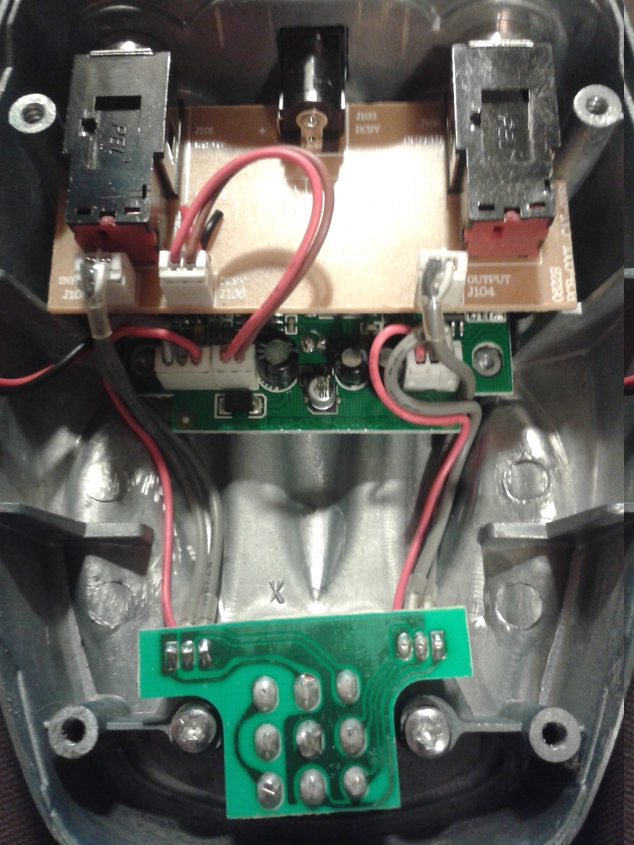
The traces are sturdier than on most factory pedals in the same price range. Soldering is also neat with just a tiny hint of sloppiness around here and there.

The Danelectro way of building these things is admirable. Circuit boards stacked and cut to fit the enclosure perfectly. Techinally the designs is your standard 3102/3207 timed chorus with standard controls of LFO speed and width/depth, that is now called “chill”.
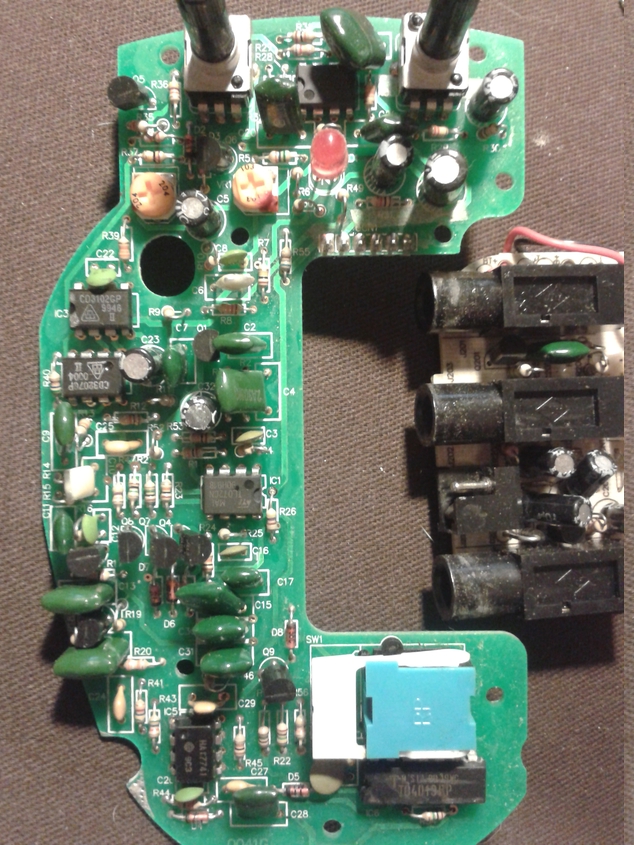
DC1-CoolCatChorus-guts2

By today, i still have not seen one of these units with a broken or non functional switch. Maybe i just don’t know about those cases, or they just last time way better than other similar plastic solutions. I have heard complains about the plastic jacks, but i’ve personally never ran into problems with those either.
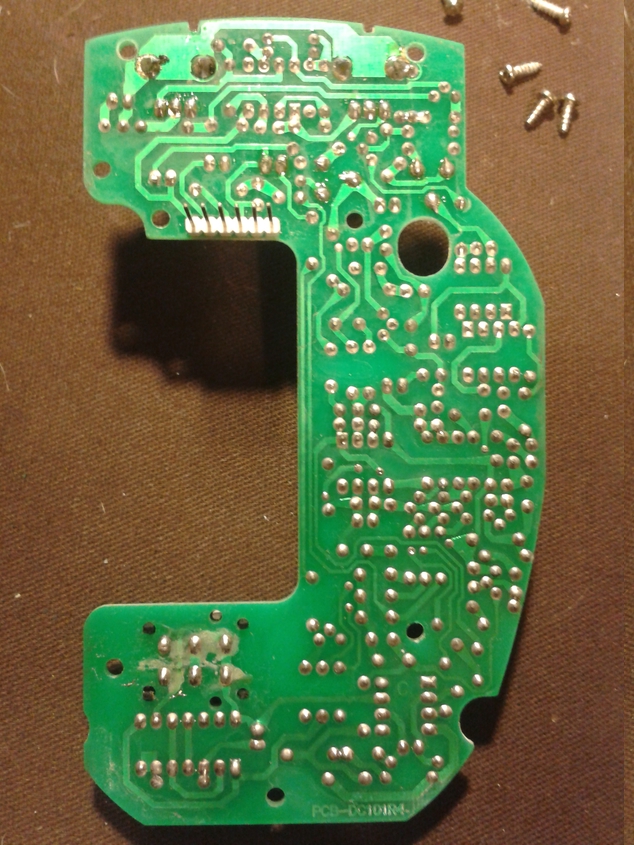
DC1-CoolCatChorus-guts3

All in all, there are lots of similarities between the “original” series and later mini series, including the switching (which is not bad), the pots (not that bad either) and the jacks (not great, but not too bad). So the main difference between these and some of the mini series boxes is the metal vs. plastic enclosure.
This. Definite workhorse.

How does it sound?
Like a landmark for soft analog choruses. Doesn’t bend to extreme settings, but does the thing i expect it to do and does it really well. If i was to use a chorus on my board, this would be very high on the list. Did i already mention it sounds soft and pleasing on all possible settings? Guess not. But it does.

Danelectro CC-1 Chorus

CC1-ChorusWhat is it?
Danelectro CC-1 Chorus from Cool Cat series, made in china around 2004.

Got this unit used for a very reasonable price. That reasonability ended once i openend the parcel. Bottom was velcroed and the type plate was long gone. Those do not contribute to the sound in any way, but i’m usually after pedals that are in good or better condition (unless they are more rare and more collectible). As this series is not at the highest spot on my collector’s list, i think i can live with the faults. It is quite interesting how and why most manufacturers choose blue as a colour for their choruses. Dark or light, but most of them are blue. If not blue blue, then light or dark, but still blue.

CC1-Chorus--guts

The Danelectro method of creating effects has mostly been interesting. If you take a look at any board from the “original” series or from mini series, you’ll notice that the boards are designed and cut per the enclosure. Rather than making the enclosure to house the circuit. In this case the two stacked boards are really small and leave a room for a battery in the middle.

Next issue i’m  going to need to raise with these boxes is the switching. Danelectro had a long experience in electronic switching which wasn’t that bad at all. Only couple of the mini series boxes were reported to be sucking the bypassed tone, but when we leave the plastic momentary switch solution aside, the switching was (and still is) not bad. So the choice to go for sometimes unreliable 3PDT standard true bypass leaves me puzzled. Will it make the effect better than its electronically switched, buffer bypassed peers?

How does it sound?
Good with quite wide range of settings.  it has your standard depth and speed controls in addition to “mix/eq” control which acts more like a mix than eq. Nice cheap pedal. Nothing to shout about, but well working and reasonably good sounding chorus. Small footprint for pedalboards can be counted as a plus.

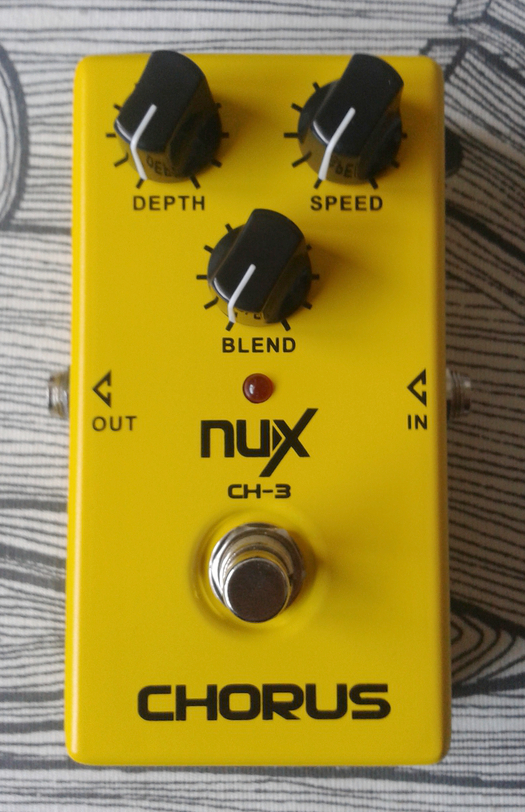
Nux CH-3 Chorus

Nux-CH3What is it?
Nux CH-3 Chorus from Nux’s analog pedal series. Made in china, 2013.

There is something appealing in these super cheap new chinese pedals. I have no idea whatsoever what is the amount manufactured, but these are mostly well made and fine sounding boxes. I’m fairly convinced that china will be new japan in decade or two. After all, the japanese electronics were considered crap all the way up to mid 80’s. What chinese pedal industry would need now is tighter quality control for components and a few good graphic designers. Most Joyos and Calines with horrible graphics you can find on ebay are now even pricier than when they were first introduced. There’s not much appeal in those. At least not for me. So it’s good that we finally have a chinese brands that try. No comic sans as labels and Nux’s even have their own, reasonably stylish logo.

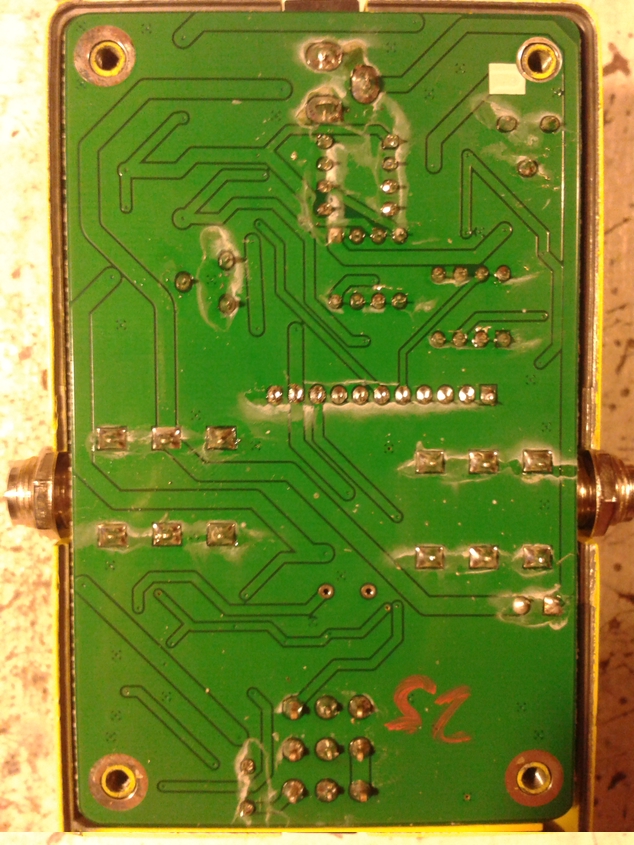
Nux-CH3-guts1

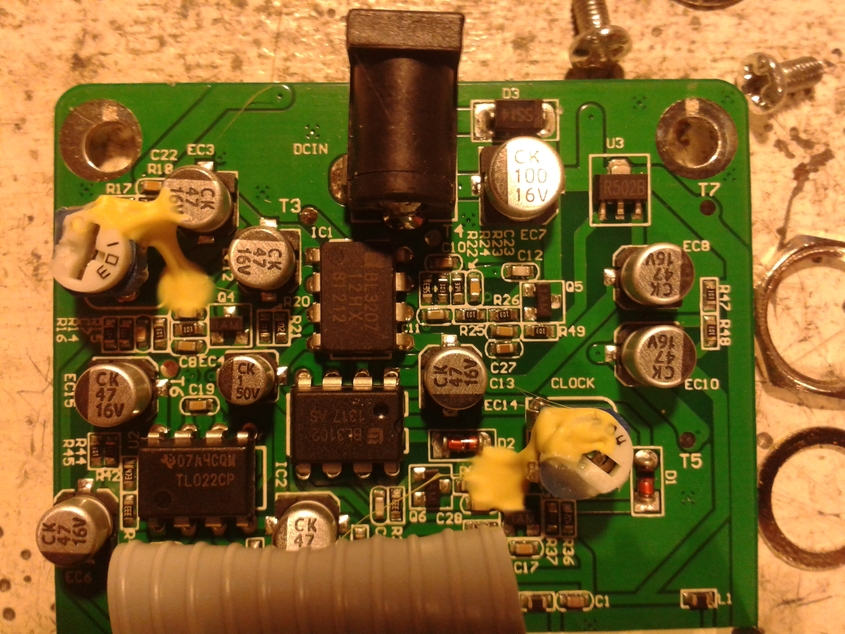
Opening the box up shows the Nux standard designs idea. Two boards stacked and through hole components seem to have solid connections, but with residue as usual. Switch is standard 3PDT mini stomper wired as true bypass. There’s the same goo locking the 6mm top adjustment trimmers and the top board ribbon cable connection.

Nux-CH3-guts2

3102/3207 pair is responsible for the chorus delay and TL072 is used for LFO. So it’s safe to say that the design is so far pretty standard analog delay chorus. The third knob, blend, adds a nice flavour. You can dial this to the max which by itself sound “out there”, but then you can blend it with the clean signal. More uses for ugly chorus sounds! Yay.

There’s again just one piece of bad news. I seem to be repeating myself, but i would have gladly paid 50 cents (or $1-2 even) more for these Nux units – if they just would have better quality pots. The pots just feel cheap and turn too easily. Bad decision to save money. Because of the poor feel on the pots, i suspect these units will never get the attention nor userbase that they would deserve. From electronical point of view i mean.

How does it sound?
Nice. Extra nice. From clear and mild signal widening to near flanger styled massive sweeping. Wide control range and you just can’t go wrong with 3102/3207 based choruses. Or you can, but not with this thing.

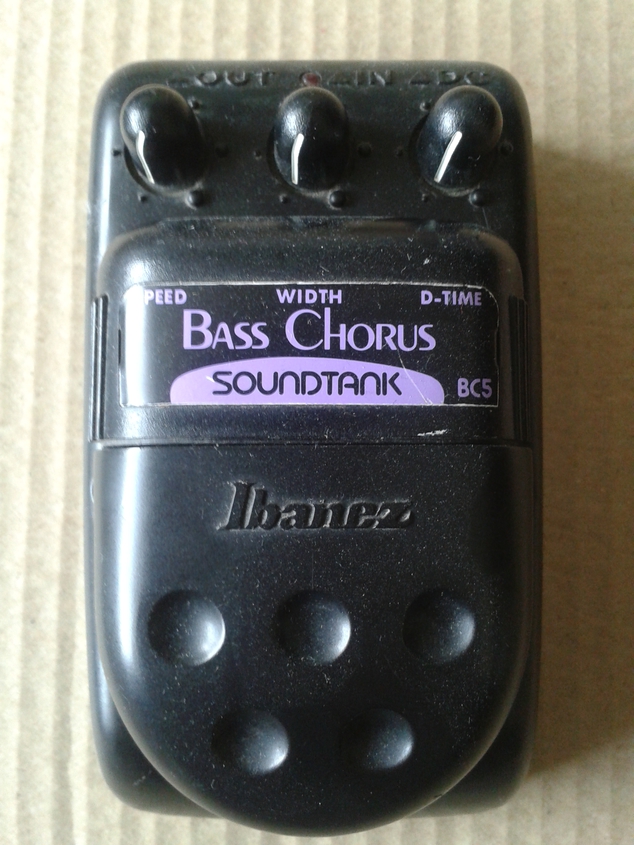
Ibanez BC5 Bass Chorus

BC5

What is it?
Ibanez BC5 Bass Chorus from Soundtank series, made in japan in mid-to-late nineties. Serial number is in millions, so it’s safe to assume this is late 90’s unit.

To me it seems like the bass effects are mainly distortions, autowahs and lots of choruses. Bassists are left out on many things as most of the pedals are intended to be used with a guitar. For some reason almost every brand that sells guitar choruses also sell bass choruses. The difference between the two? Mostly just a cap job to let more of the lower frequencies through. There are couple of pedals in Soundtank series that are like broters and sisters. Reverse the colours on the top label and swap couple of caps. That’s it.

BC5-guts1

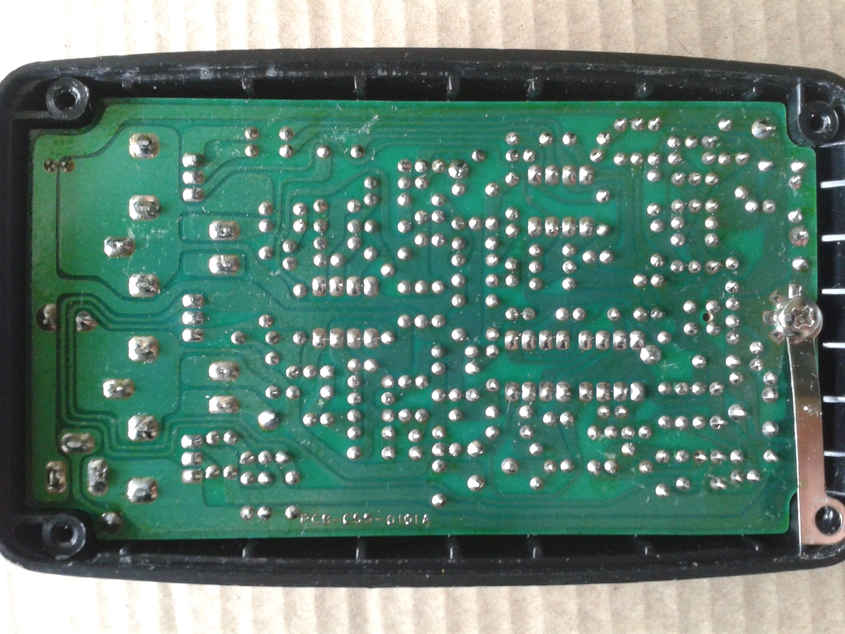
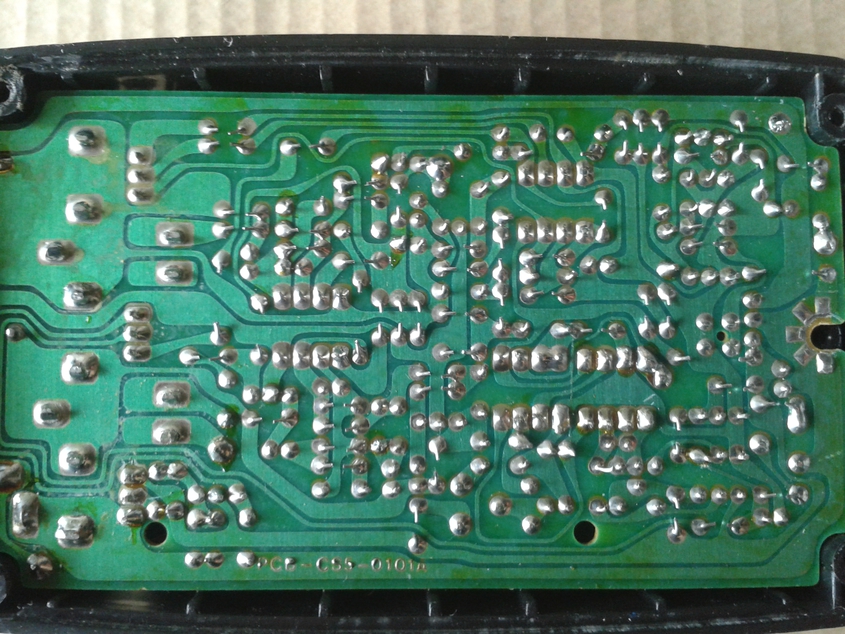
Take a look at the board. It clearly has CS5 marked on the solder side. Although the board doesn’t look like the board on CS5 (that i covered very recently), it is the same board. The picture below shows that Maxon used the same boards for both units and replaced the label with a sticker – as seen on Soundtank SF5/FZ5 (that i covered a lot earlier). The components used are different. Where my specimen of CS5 has 1/8W resistors mounted axially, the newer board labelled BC5 has 1/4W resistors. The traces do not look alike. Those look much more modern on this unit, which makes me think that this is just newer unit than my CS5.

BC5-guts2

Topologically BC5 and CS5 are the same circuit. Some of the values may be altered, but i couldn’t find a schematic to confirm. And yes. I’m just too lazy to check this units component values against CS5. May it be whatever. These are well built units with lots of user value left in them. Swap the switch and you’re good to go.

How does it sound?
If there is any difference between BC5 and CS5, you’ll need to focus if you want to hear it. In fact i placed both pedals on my desk, tuned the delay time, width and speed to match each other and played away. Pressed both switches at the same time with indicator lights not visible to me. One out of every three times i guessed wrong which unit was active. The bass version sounds probably a hint thicker and fatter, but that’s it. The units are basically identical. So this might even be better for guitarists who want the fat with their cold , haunting gothic chorused guitar leads.

Ibanez CS5 Super Chorus

Let’s have a full month of posting only choruses as pedal pots. Why? Because i can.

CS5

What is it?
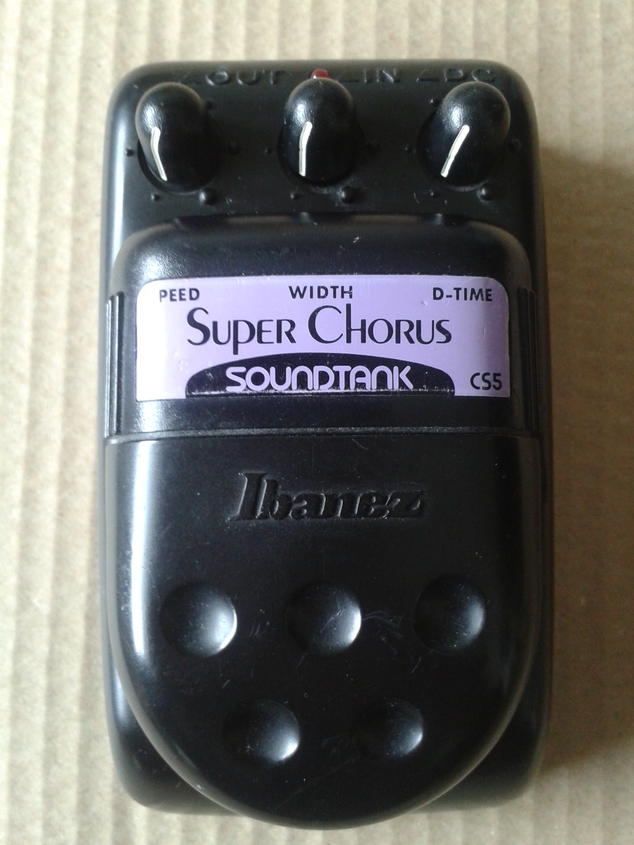
Ibanez CS5 Super Chorus. Soundtank series unit in plastic enclosure, made in taiwan in mid 90s.

I may not be the biggest chorus user there is. I’m really not even sure how and where i would use one. Of course, i’ve used a lot of choruses while recording, but mainly for opening up some synth tracks, rather than using them with guitar. Choruses lie somewhere in the middle ground from vibes, phasers and flangers. There’s always an LFO that creates the modulation pulse. Which then usually controls the delay timer, which then controls the delay itself, creating sweeping chorus effect for the pre and post effect mixing amplifier.

CS5-guts1

Ibanez CS5 Super Chorus is no exception. TL022 as LFO and NM3102/NM3207 pair for analog delay. 1458 takes of the mixer duties. Circuit is quite standard for a chorus, expect for the delay time control, which adds a lot of versatility and definitely is not as standard control as width/depth and LFO speed controls. Guess that’s what makes this Super. For those interested, the schematic is up at SchematicsUnlimited.com

CS5-guts2

To me, it looks like the design is very close to Ibanez CS9 Stereo Chorus, but with added delay time control. So in a way, this is better than its great predecessor.

Board, design, traces and components are well in line with the better standard boxes of this series. Only culprit is – you guessed it – the switch. After swapping it, this one runs like a very nice charm again.

How does it sound?
Good. With these controls, it is very versatile sounding chorus that can do both, hard and soft chorus from fast to slow, from natural to harsh. Basically the sound that makes this one very nice effect, even if it is housed in a plastic box. One of the greatest designs in the series.

Ibanez MF5 Modern Fusion

MF5

What is it?
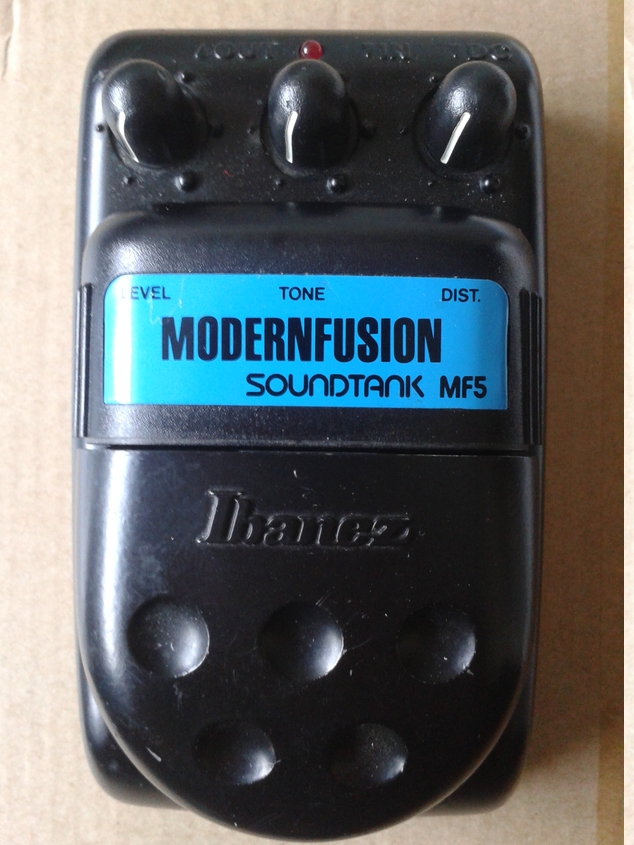
Ibanez MF5 Modern Fusion distortion from Soundtank series. Housed in metal enclosure and made in Taiwan in 1989.

Already had the plastic one, but saw this for sale with a reasonable price tag. The switch is in perfect working condition and i believe this hasn’t been opened up before, not even once. Only bad thing about this unit is that it sounds really bad with no real value for me. That may also explain the near mint condition and working switch though. But a collector can’t help himself… Apparently these units were a failure, as the manufacturing seems to be suspended before the series got their own typefaced labels.

Get your mullet out and put your silk shirt on. As the name suggests, the year is 1989. White suit pants and PRS guitars on a sunny jazz festival stage comes to mind. And to me, that’s not too pretty sight. This thing nails the yuppie adult jazz distortion just as it is. Shoulder pads.

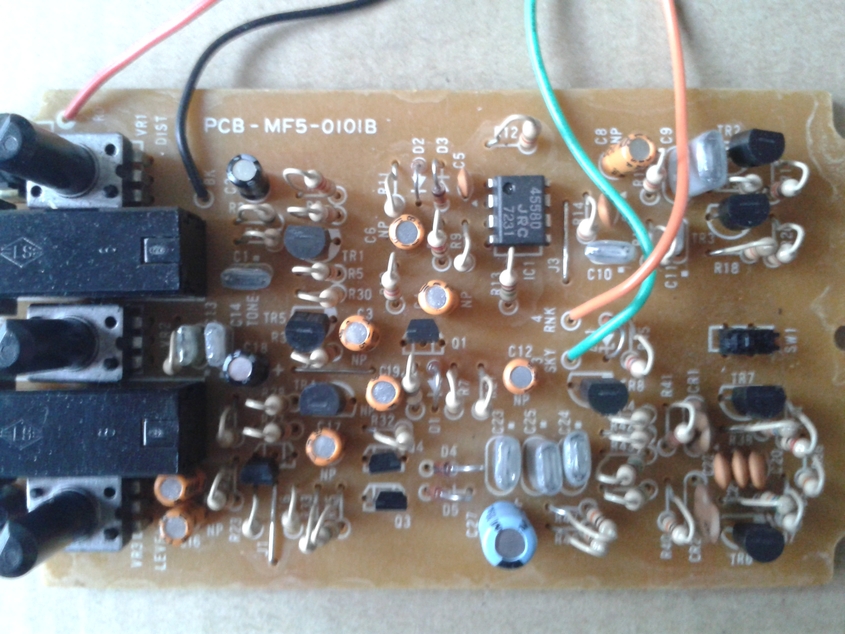
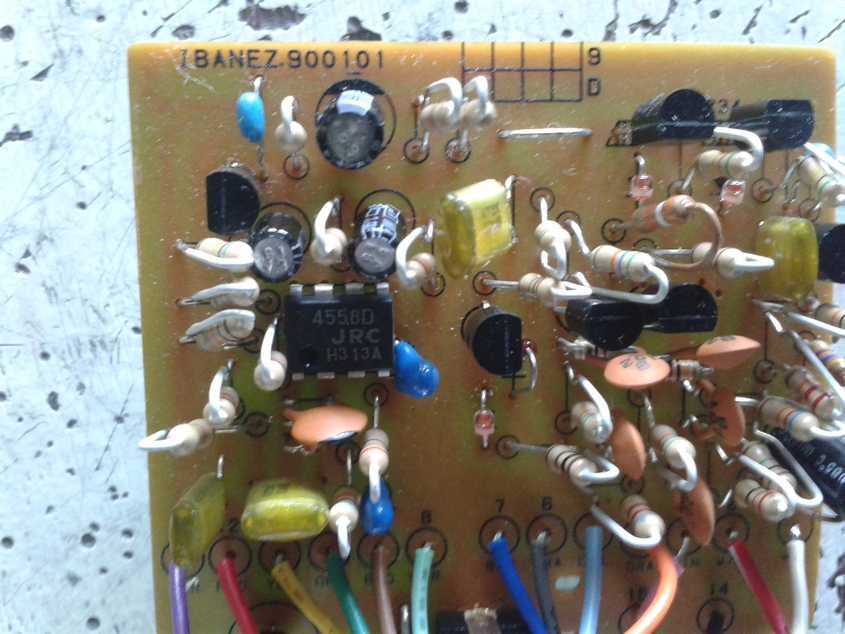
MF5-guts1

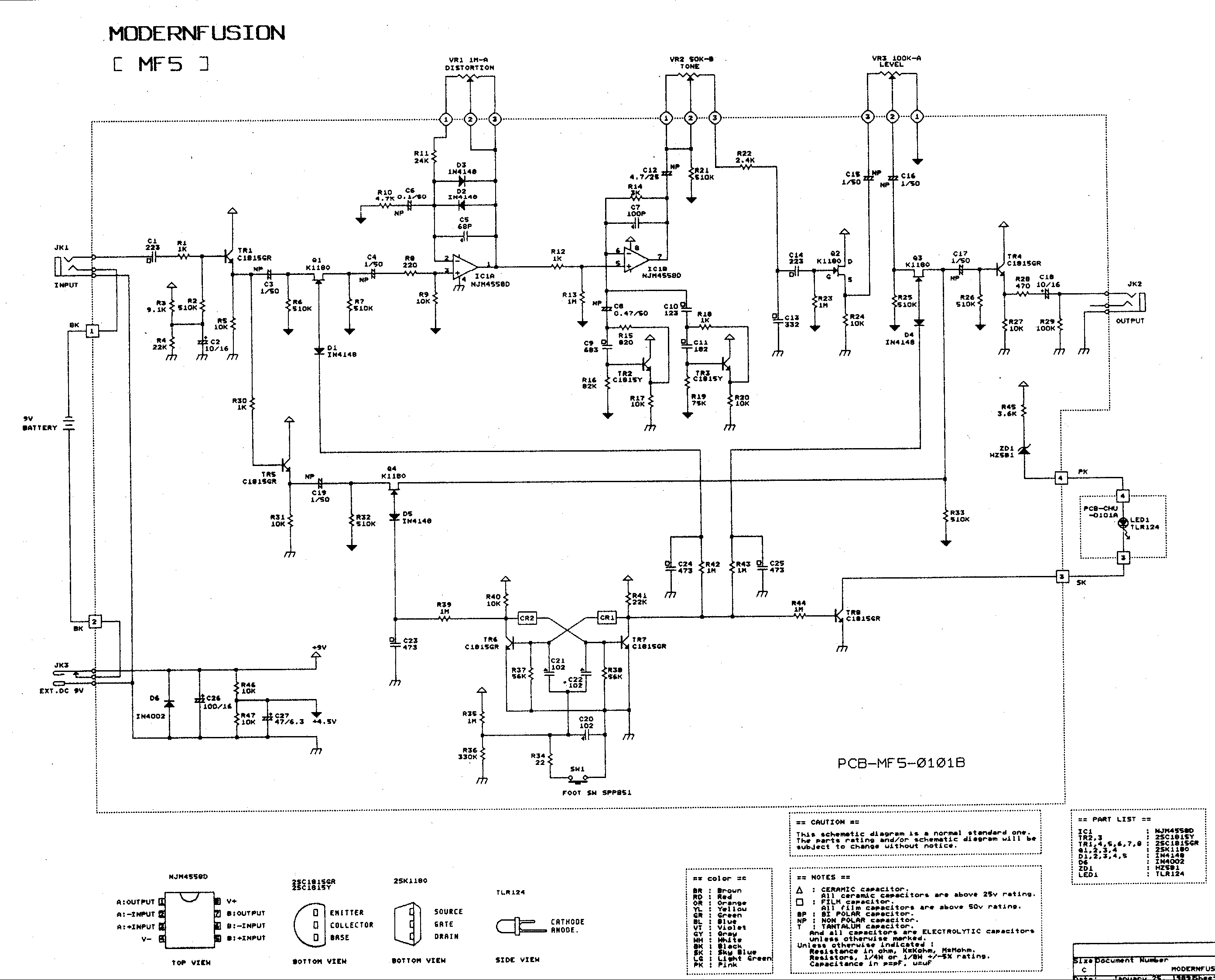
Board traces are modern and quite dull. The schematic is available online and it shows the design having slightly tweaked TS-like first gain stage after the Ibanez standard input buffer. That is follewed by two gyrators and semi-active tone control. Then to a JFET buffer  before volume control and a standard output buffer after that. For those who are capable of coming up with your own mods, i’d recommend to tweak the hell out of those gyrators. Maybe even snip the gyrator transistor drains, so that the full frequncy contect from the clipping amp gets through. I konw. Pretty drastic. But i think you’ll have a hard time if you’re thinking this may be usable without any mods.

MF5-guts2

All in all, the frequencies tamed by the gyrators offer stability that’s not very common. From electronic point of view, the filtering is too much. Thus that’s what’s making it the Modern Fusion, the only and the most boring adult jazz distortion there is.

How does it sound?
Surprisingly bad. If i was to dig up one good thing about the adult orientated distortion sound this unit offers, that would be the consistency. The distortion is so squeaky clean that it kills all possibility of sweet harmonic overtones. Once you bend your strings around the 12th, it still remains sterile. Now that’s a feature you don’t run into too often. Treble content is clipped much louder than the bottom, so in best case scenario – playing with hot jazz neck humbucker one can get relatively useful tones. But let’s face it. This is probably the worst design in the whole series. Trumping even The Cyberdrive and the Autowah.

Danelectro DO1 Daddy-O Overdrive

DO1-Daddy-O

What is it?
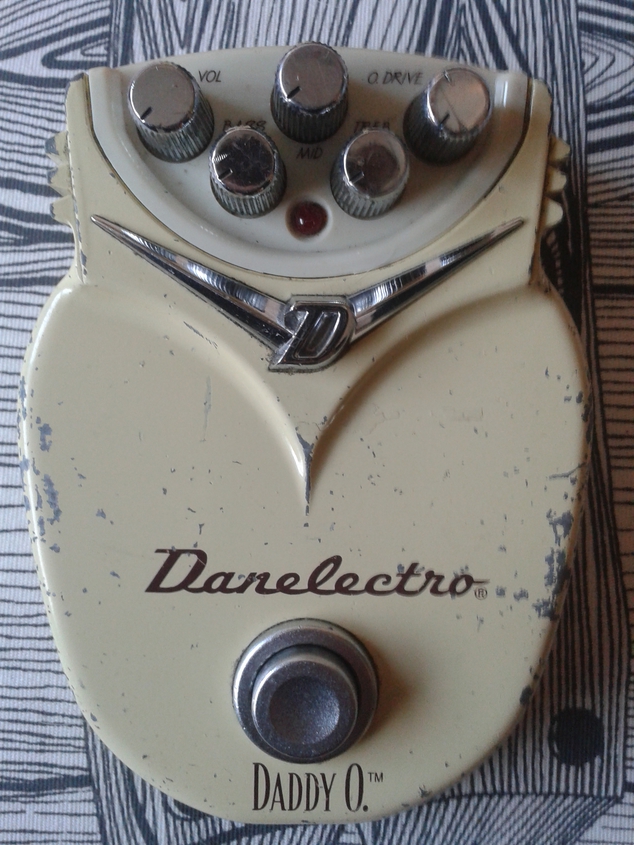
Danelectro DO-1 Daddy-O overdrive, built in 1996.

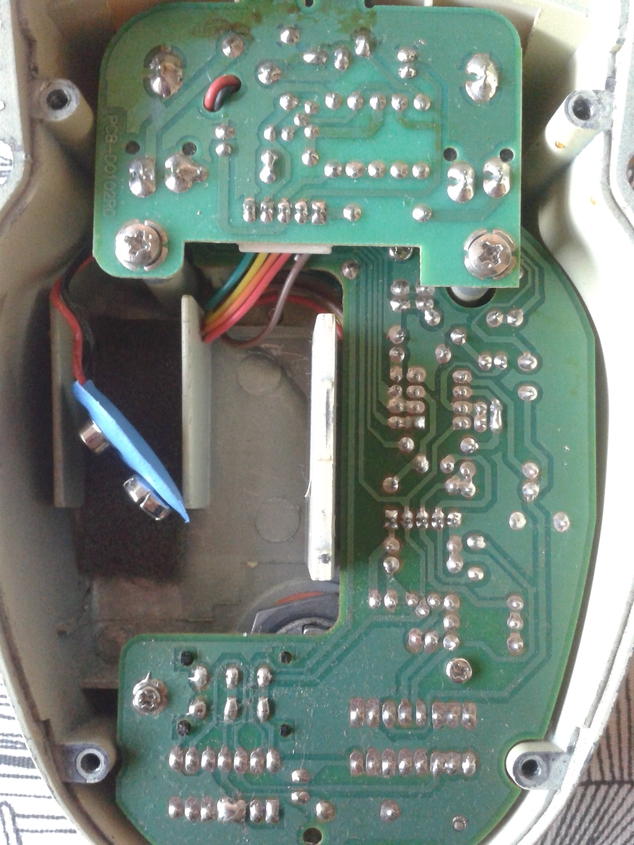
Got mine through ebay for a very reasonable price. Some natural road worn, sratches and paint chips. It’s good only either in this condition or as a mint. Quite happy with aesthetics. Inside, there are two boards screwed on the very sturdy design enclosure. I think these could easily outlast humankind.

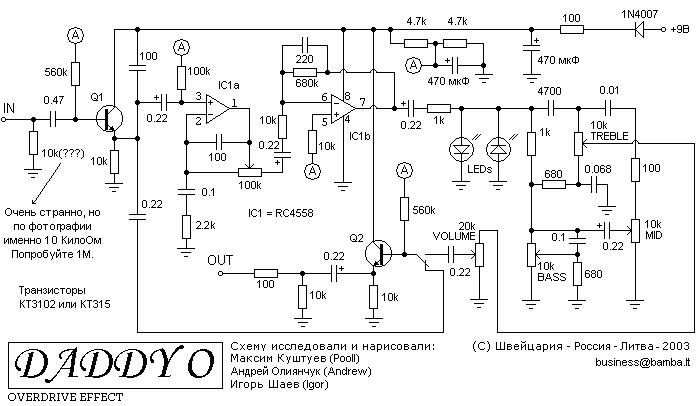
Neat and well designed board. According to russian trace of the unit from 2003, topology goes as follows: Input buffer taking care of the bypass splitting -> variable gain stage -> another gain stage -> hard clipping LEDs -> three band tone control -> volume control -> output buffer. Pretty standard stuff. Vref voltage is divided with 4K7 resistors, so i think that draws more current than it would need.

DO1-Daddy-O-guts

Schematic is not too far off from some Marshall designs like Drivemaster and Bluesbreaker, but there are differences. Traces are modern, but still look eye pleasing and neat. The construction and soldering also look like it’s done the way these should be done. Don’t know why these units have such a bad rep as they do. They are well made and they sound…

How does it sound?
Really good. Due to it being close to designs mentioned above makes it very usable with its 3 band eq controls and nice range of gain from mild overdrive to distortion. It is a redesigned Marshall, and it is at least as good as its predecessor. And what kind of distortion? Think of original Marshall Drivemaster making out with Mad Professor Sweet Honey OD with added 3 band EQ.  Very underrated overdrive pedal. One of the greatest examples why Danelectro pedals appeal to me.

DOD FX33 BuzzBox

DOD-FX33-BuzzBox

What is it?
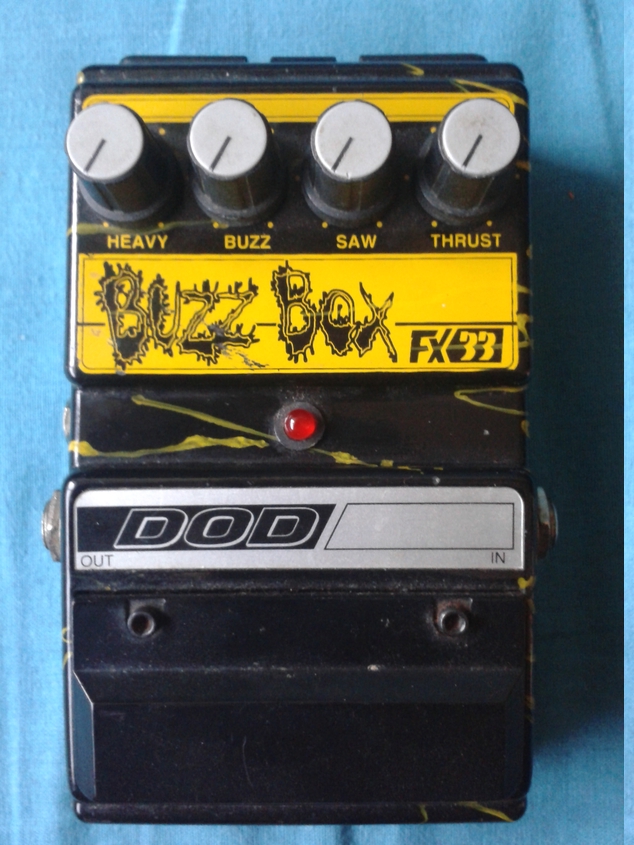
DOD FX33 BuzzBox, made in USA around 1995.

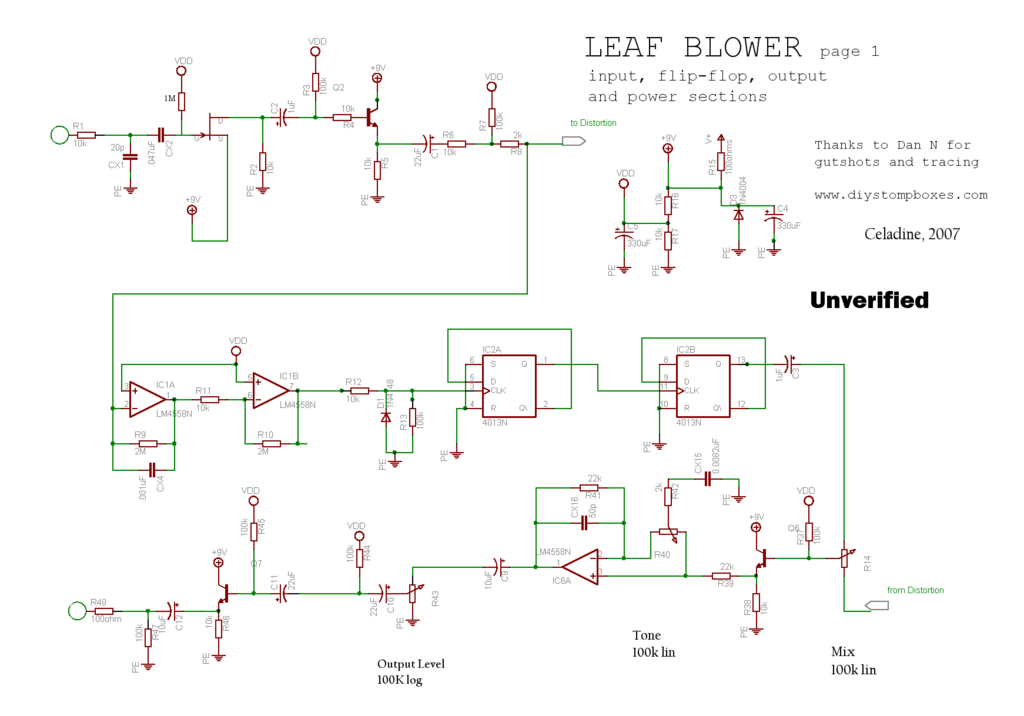
Now here’s something you won’t see everyday. When something is worth overdoing, let the DOD engineers show you the real way of the beast. Design is just sick. The America’s Pedal article on the history of the design is a very good read. There is a schematic available online, named Leafblower. It’s drawn by Celadine and it is spread accross two pages. It’s not that complicated, but still a big design.

DOD-FX33-BuzzBox-guts1

So in fact the design has distortion and octave divider in parallel, which is nothing too special when compared to other low octave divider circuits around. But this time the voicing and gain are set quite perfectly for extreme buzz. The controls work well, even though the names are gibberish. Heavy is controlling the mix between distortion and low octave output, Buzz acts as distortion control, Saw as tone and Thrust is your overall output level.

DOD-FX33-BuzzBox-guts2

As a nice curiosity, there’s a sticker inside with ” Dana B 232″ printed on it. These units usually sell for a lot. I happened to be quite lucky and got one from a friend in a trade that was good for both of us. Thanks Markus.

Due to the circuit being more complicated than its peers, it’s not your average suspect for cloning. After all, there are three dual opamps and a CD4013 flip-flop in addition to a few transistors and clippers. But from economical point of view a reissue should be welcome.

How does it sound?
Massive low octave noise monster. Some folks claim it to sound like a Rat driving a Bluebox, but to my ears it’s not even close. Think of two DOD Grunges in parallel and blasting the resulting hyper distorted signal through quadruple bass booster that has all the frequencies divided into lower octaves ála Bluebox. Yes. It is that sick. in the same time this sounds like a mash of a leafblower, a vacuum cleaner and a demon possessed NES system on speed.

DOD FX66 Flashback Fuzz

DOD-FX66-FlashbackFuzz

What is it?
DOD FX66 (V) Flashback Fuzz. Made in china around 2000.

DOD has only produced two fuzz pedals in all of its existence. That’s not much. Plus both fuzzes in DOD back catalog are not fuzzes in traditional manner. Neither of the designs are transistor based, nor rely on own unique design. Both of them are rehashes of previously released circuits and they share PCBs with their predecessors. Where FX52 is basically a revoiced FX50B, the FX66 Flashback Fuzz is revoiced FX66 Grunge. A few interesting details can be read at America’s Pedal website. Lack of 6 components and some value swapping can apparently make a completely new effect.

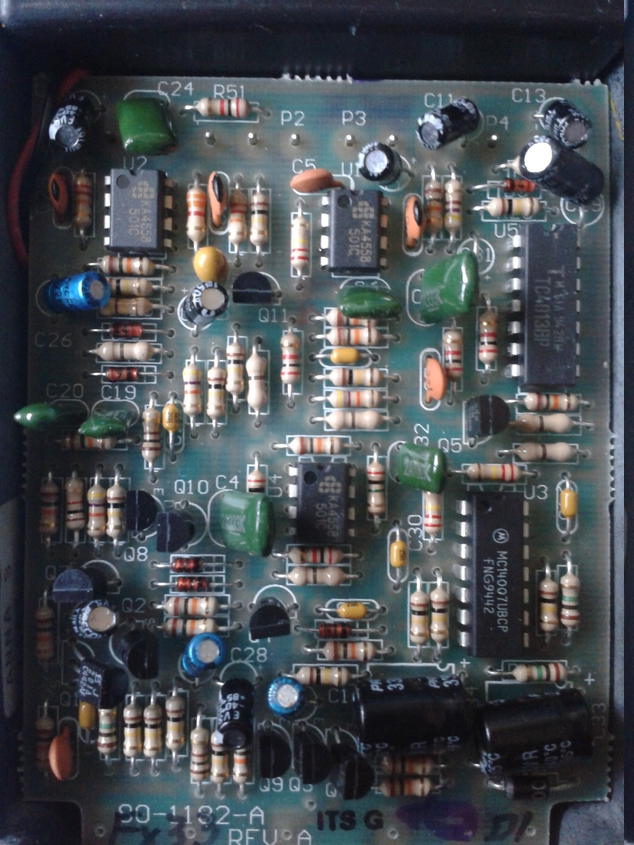
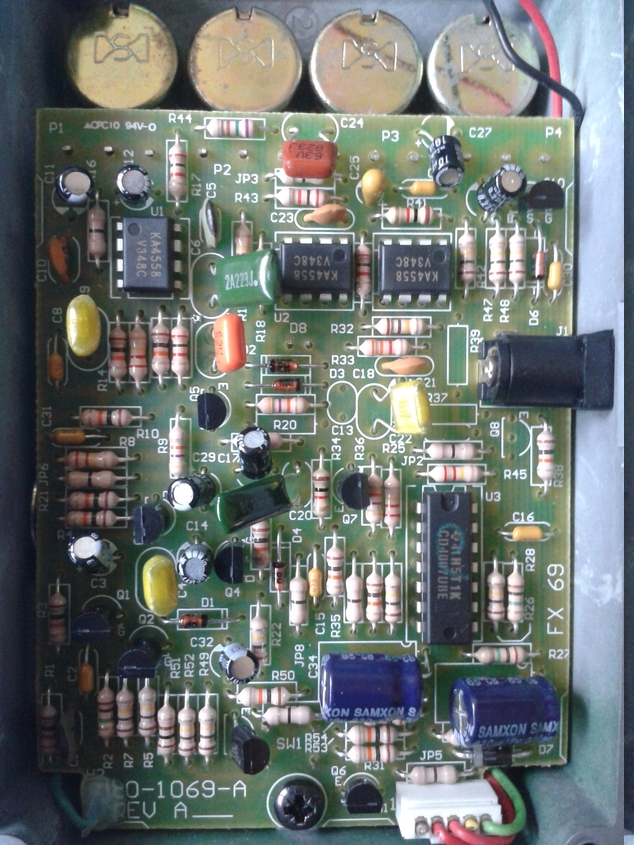
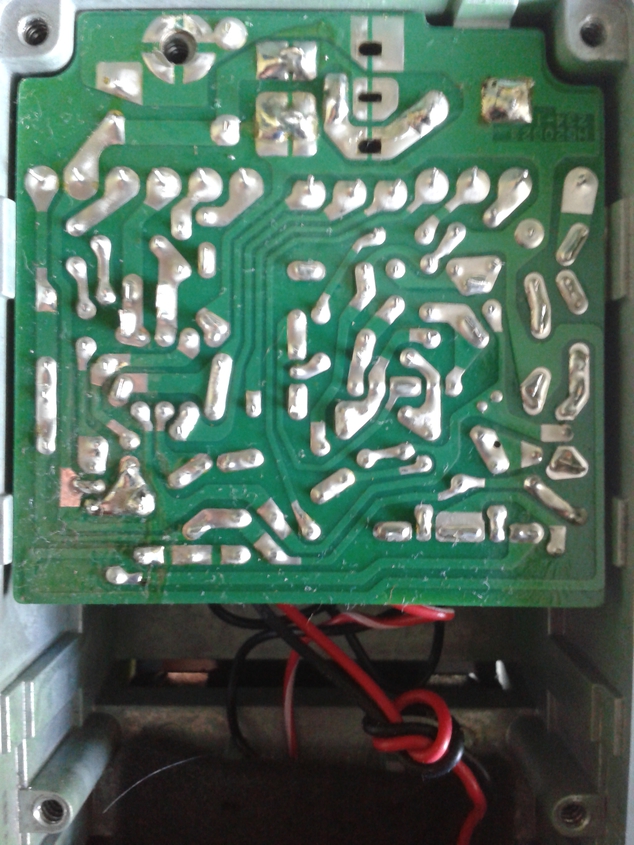
DOD-FX66-FlashbackFuzz-guts

Note that the board has FX69 printed on it. Funny how tweaking the board really changes the characteristics. This doesn’t share anything else with the Grunge, except for the PCB, electronic switching and power filtering. Don’t know how the engineers at DOD pulled this off, but the result isn’t that bad.

In reality i was after the first production run US made unit, but this one was the only one i could find. And it suited my wallet too.

How does it sound?
Not bad at all actually. There is definitely some of that Fuzz Face analog feel in there, but it’s not really that close. It sounds more clinical than simple FF circuits, while still remaining quite musical. There is a lot of fuzz character in its sound, which is amazing as it still has nearly the same topology as FX69 Grunge. Quite usable, even though the uncontrollable overtones and glitching scratches are limited to minimum with all opamp and clipping diode design. I would personally recommend trying one out if you get a chance.

Ibanez TS9 Tube Screamer (Reissue)

TS9

What is it?
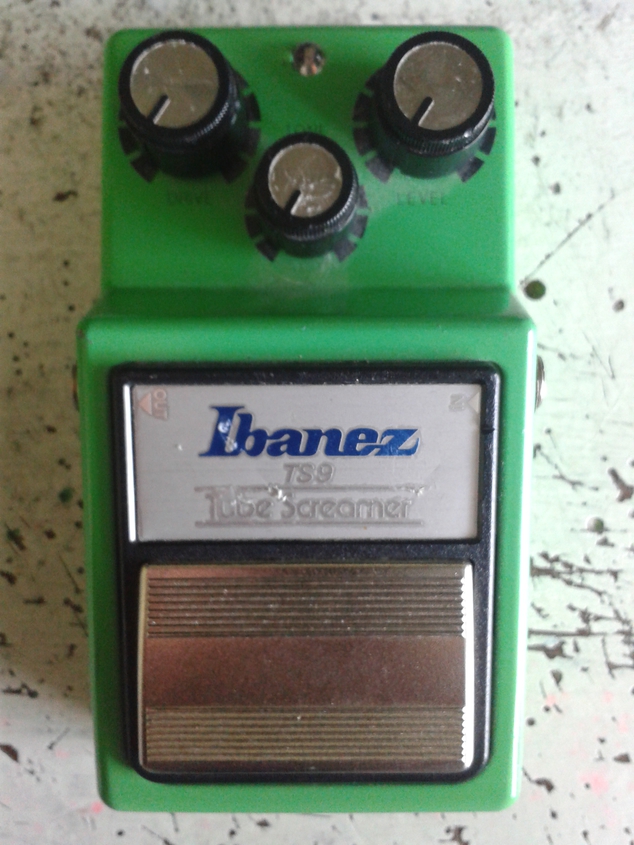
Ibanez TS9 Tube Screamer Reissue, made in japan. According to my guess on the serial, this is probably made in 2008. Got it used but in fair condition.

This must be one of the pedals with most information written. Sad thing that the reissues aren’t getting as much attention. No one seems to care about dating back the serials on these. Oh well. Teared mine open, and the box is exactly like the original 9-series boxes from the early 80s. The bottom insulation is better and non-removable though. The sight that welcomed me was like meh. Modern looking traces on modern thickness board. Not the acidy cool traces, nor the thick board that spreads confidence. All three of my Soundtank TS5s has thicker board than this specimen.

TS9-guts2

Components are close to the original, which makes this function like the older units. This specimen even has the JRC4558D chip in it. Not sure if there really is an audible difference between 4558 and TA75558. I’ve modded couple units before and tried both on with a DIP8 socket. Slipping in to heresy section, i personally believe that NE5532 is the best suited chip for this circuit.

Once again, refer to GEOfex article for more information on the circuit itself.

TS9-guts1

This one will surely get modded if i come across another unit for reasonable trade or price. Designwise this reissue is really nice pedal. Soundwise…

We could have a debate on if this design gets better with true bypass. My personal view is no. True bypassing buffered effects with electronic switching should only be done when there is something very wrong with buffering or there’s too low input impedance which leads to pickup loading and therefore oscillation. Hype of true bypass just isn’t worth it. I’ll talk more about this issue at some point. Maybe on some Colorless writings chapter…

How does it sound?
Well. What can i say? The cold dead hands slaps you on the top of your head. Unless. You have super sucky pickups. Then this puppy rocks. Sounds exactly as it should. Mid-honkin, bass-strippin medium overdrive with medium output. For live situation to get your mids heard over everything else. Not for anything else. A classic one trick pony. Prime suspect for modding the inverting input for more bass and gain.

« Older posts Newer posts »

© 2025 killall -9 humans

Theme by Anders NorenUp ↑