Tag: Distortion (Page 4 of 7)

Hughes & Kettner Warp Factor

HK-WarpFactor

What is it?
Hughes & Kettner Warp Factor from early 00’s.

The unit here has seen a lot of use before landing in to my collection. There are good reasons for pros and cons and both are weighting more than with usual pedals we see. Since the positive notions are all mostly on the sound, i think it’s best too look at everything else first. Opening the bottom plate shows a massively sized modern board with lots of joints.
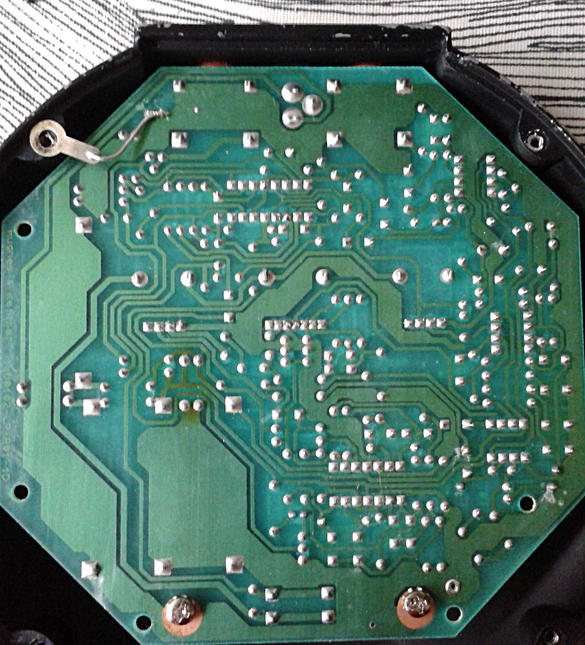
HK-WarpFactor-guts1

Flipping the board over. Everything is board mounted and number of through hole components is high. Not a bad looking board design, but as i am a huge fan of symmetry, it doesn’t mean that much. Note the four 2200µF filtering capacitors. That’s what we’ll need when the design calls for 12V AC power supply. The supply is rectified to DC on board, which does explain a part of the board and enclosure size. The schematic can be found on the web (try freestompboxes.org), but since it isn’t behind simple image search, i’m not posting it for now.
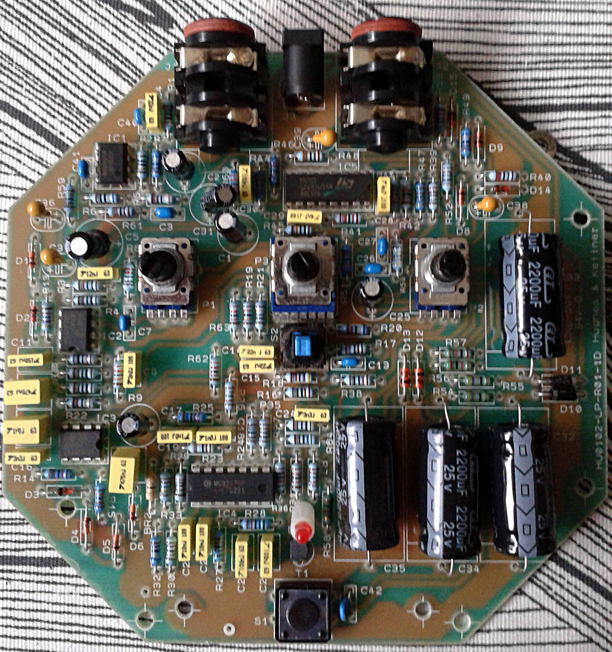
HK-WarpFactor-guts2

Design is rather huge, and the power supply section spews out +15V and -15V, with reference voltages per each polarity. We could say the unit runs at 30V. So this time there is a fairly good reason for running the effect with 12V AC supply. Circuit design and supply together, however, make the pedal big. And to have a need for 12V AC supply may also be a hassle. But then again, the 30V swing offers headroom that we won’t reach with with 9V DC supply.

As for features, we have electronic bypass switching, level and gain controls, plus a deep tone control called warp. The sub switch boosts lows and low mids to a degree which is rather impressive.

Now, if the size was a bit smaller and this accepted more usual power supply…

How does it sound?
F*n awesome. From Marshall 2203 JCM800-styled massive rock overdrive/distortion to sheer metal madness, this unit sounds great on any volume level. From bedroom practice amp level to loud rehearsals and gigs. I’ve been a fool for many metal distortions before, but  none of them has ever left a impact of this size. Usually the drive/gain setting for metal distortions works in maximum setting or in some cases at minimum as well. For this one, the control range is simply usable all the way of the sweep. Added low frequencies from the sub switch make Boss HM-2’s crushing lows feel like a mosquito passing by. While the usability may be limited, we still have a colorful range from rock overdrive to rock distortion to metal distortion to massive metal sounds. Very impressive pedal.
Danelectro CM-1 Metal

CM1-Metal

What is it?
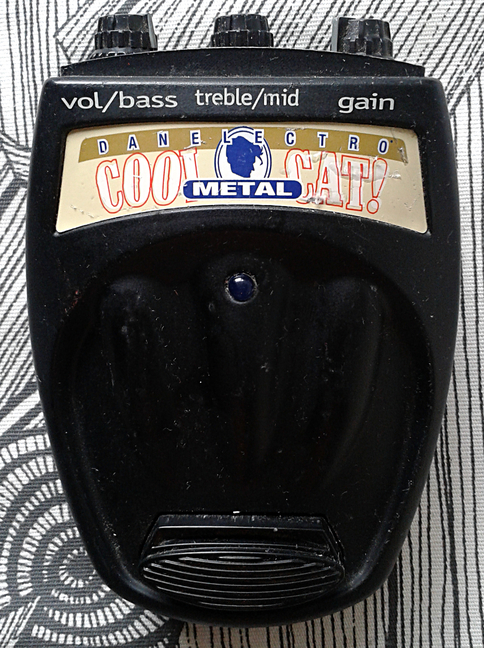
Danelectro CM-1 Metal from Danelectro Cool Cat series. Made in china late 00’s.

Another metal distortion. While Dano’s Cool Cat series has pleasing and personal enclosure, most designs seem to be simple rip offs with very little original in them designwise. Currently i’m not sure what this particular unit based on, but everything about it is pretty much on par with all the other units in the series.

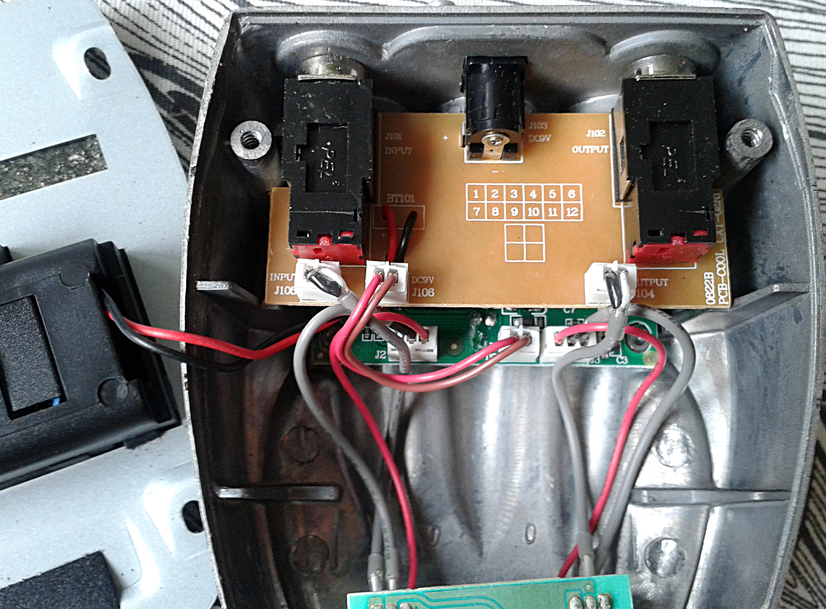
CM1-Metal-guts1

We’ll find three separate boards inside. One universal for 3PDT stomps switch, one for in/out/dc jacks. These boards are, like i said, universal and the same ones are used throughout the series. The bottom board is the effect. Construction is mostly SMD with couple of the caps being metalized polyester. Three oapms are running the show.

CM1-Metal-guts2

I’m pretty sure this is a slightly modified derivative of some other pedal. Just can’t point my finger to any directions right now. While it may look pleasing, the control knobs are horrible. Sure they are meant to be “set and forget”, but that set once part is killing me. Dual pots with stacked concentric knobs are not a bad thing if executed like in many boss pedals. Here, the turning of the either level usually results in both setting being shifted. Annoying.

I’d be rather interested to find out what this is based on. If you have any solid information, drop a line in the comments. I may study the connections at one point. If i happen to get interested enough.  To sum it – Standard metal distortion. Not bad, but not too great either.

How does it sound?
Like so may other motal distortions. EQ section is powerful and gain plus level setting are sufficient. The overall tone reminds me a bit of Boss HM-2, but here we have separate mid control. I do find this usable metal distortion, but it’ll always stay behind HM-2 and HM-3. I’d say this goes to the same category with DOD American Metal and Death Metal. Again, not bad, but not too great either.

Boss ML-2 Metal Core

Boss-ML2

What is it?
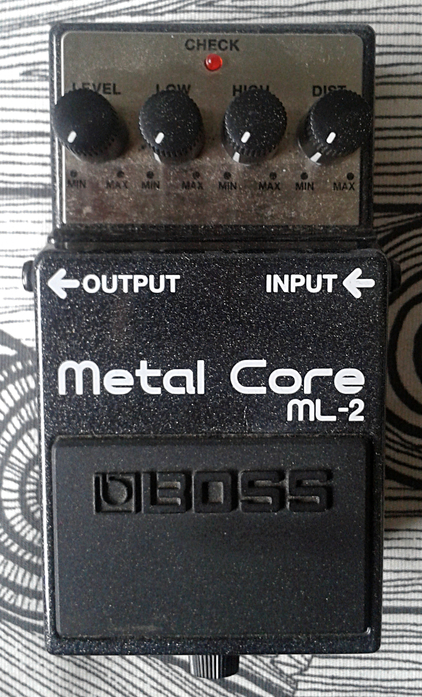
Boss ML-2 Metal Core from compact series. Made in taiwan in january 2009.

Sure, i was interested in this due to its reputation. This is supposedly the meanest metal distortion there is and i’ve heard good things about it from people who i share a lot of opinions on sounds. So i grabbed one. I’ll get to the sound part later, but even though i agree on pedal tones with only few people.. This isn’t one of those where i agree. This unit took me by surprise. First question mark rose when i opened the bottom plate.

Boss-ML2-guts1

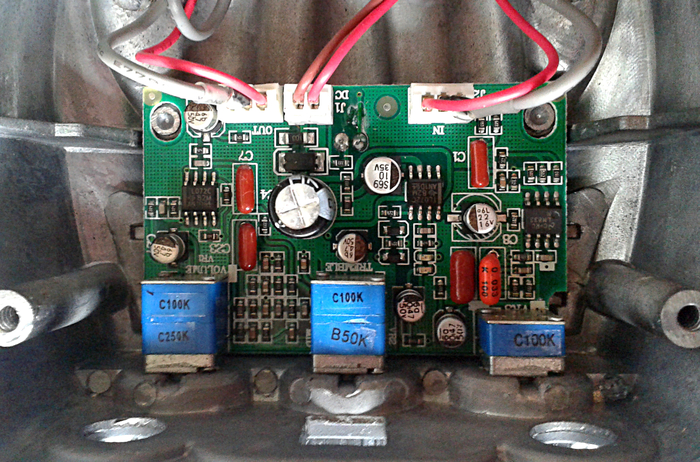
And the second one when i turned the board over. I would have never guessed by the demos and the praises i’ve heard that this would be a digital distortion. Constructed in the most boring way with all SMD and powered by what appears to be Roland branded DSP processor. The crystal clock is placed right beneath it. There are a couple of 1458 opamps in there too, but most of the design goes way over my head.

Boss-ML2-guts2

As for controls we have standard level and distortion knobs in addition to high and low controls. I’m not sure what the designer was after and why this design ended up this way. Maybe it was to recreate the designs that became classics by updating them with a digital counterpart? The EQ may be the best part of the circuit, but…

How does it sound?
I’m sad to turn to my prejudice on digital drive designs, but this time it is warranted. Even though the EQ controls try their hardest to mimic the gyrators of HM-2 and HM-3, the crushing and soaring this one tries to produce makes me feel uncomfortable. There is enough gain and while marketing suggests this to be answer to modern, next generation of metal players tonal needs, i can’t do anything else but disagree. Metal distortion, yes. Good sounding one? No. The sharpness and unnatural honk of all digital and/or modeling drives is present. No wonder guitar music is at its all time low.

Paired with a delay and used for those 80’s german detective tv series anthems – maybe (Although, you’ll get closer to that with Digitech RP-6). For anything else? Try HM-3 or MD-2.

Boss HM-3 Hyper Metal

Boss-HM3

What is it?
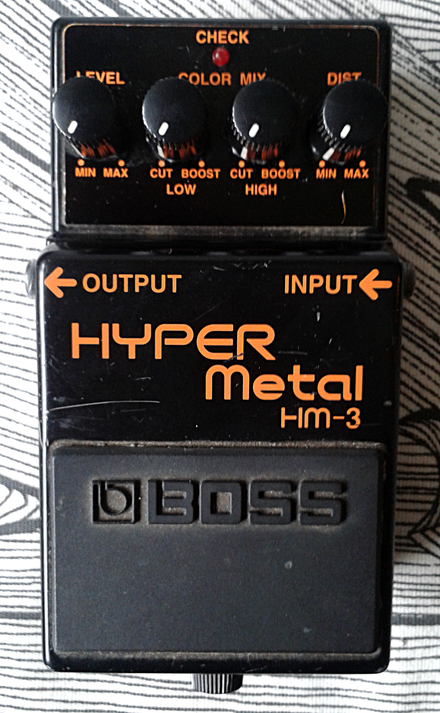
Boss HM-3 Hyper Metal from Boss Compact series. Made in taiwan, march 1993.

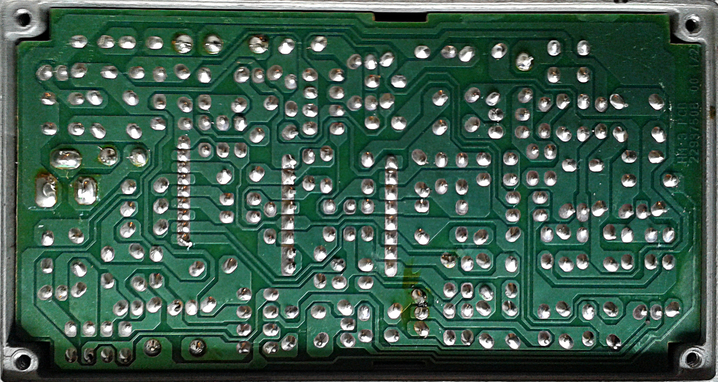
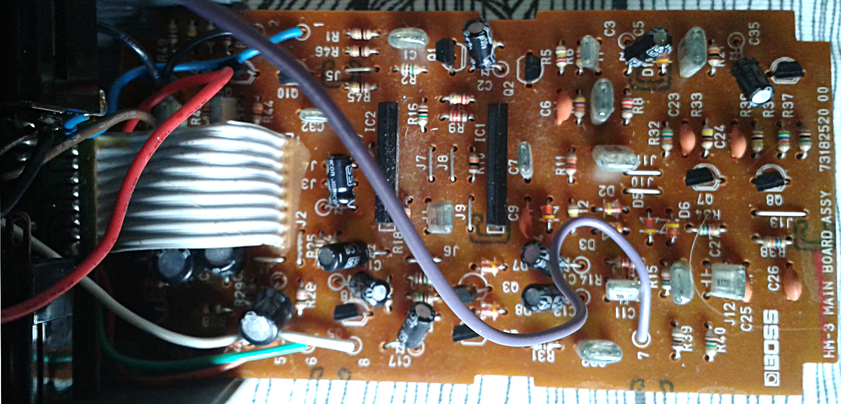
The younger brother of since discontinued HM-2. Similar controls and expectance for similar sounds was high to say at least. This time there is some symmetry on the board design and even those machine like autorouted traces do not bother me that much. Not exactly sure how accurate the schematic up at FIS is, but i’m thinking the base topology is correct. So we have a design that’s somewhat close to HM-2, with the triple gyrator EQ tha has two controls and three separate clipper stages.

Boss-HM3-guts1

As usual for many Boss boards, the opamps are SIP devices. The asymmetrical clipping amp with distortion control is made of one opamp channel and NPN/PNP transistor pair. Still quite similar to the HM-2. In build quality and and housing issues, this doesn’t stand out of Boss Compact crowd. Solid, but dull.

Boss-HM3-guts2

All of the features feel a lot like HM-2 Heavy Metal, but power supply requirements are updated to be more modern and well..

How does it sound?
Actually better than the praised older brother. To my ears the distortion is slightly thicker, fatter and lows feel even more crushing with its soaring highs. The overall tone manages to stay quite defined even thought the amount of distortion is impressive. If i was to use metal distortion on my board, this would most likely be it.

Digitech DSB Screamin Blues

Digitech-DSB-ScreaminBlues

What is it?
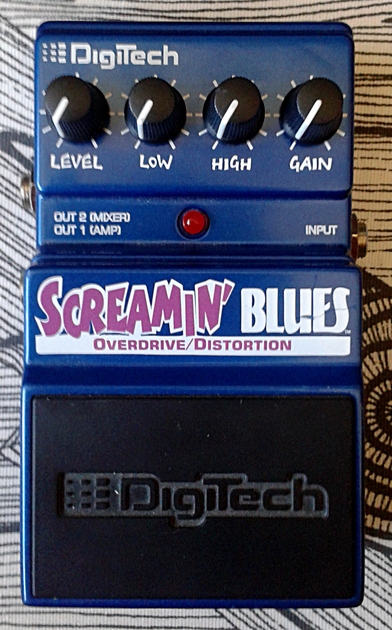
Digitech Screaming Blues Overdrive/Distortion from “D”, or “Distortion” series. Made in china around mid 00’s.

When DOD seized to produce the later versions of the famous overdrives like FX50B, their closest successor would be the DOD FX102 Mystic Blues overdrive. When DOD seized to exist, the next step for the design was the Digitech Screaming Blues. In retrospect, the design analogy would be somthing like OD250 -> FX50 -> FX50B -> FX102 Mystic Blues -> DSB Screaming Blues. So is it a direct descendent of OD250 overdrive/preamp? I’d say sort of. Not that direct, but descendent nonetheless. Granted. The design differences between OD250 and Screamin’ Blues couldn’t be more a part, but then again, the FX50B isn’t that close to either one. All this may be be speculation, but the timeline matches.

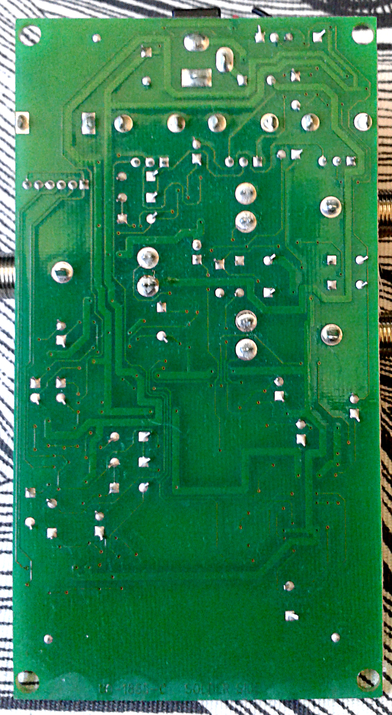
Digitech-DSB-ScreaminBlues-guts1

Modern, dull traces on a board where there’s room to do anything. Once again, this shares the electronic switching part of the board design with all the other “Distortion” series pedals. The buffers and in/out section appears to be the same too. As we can see from the photo below, the gain pot is dual gang, while the EQ section doesn’t differ that much from a Bad Monkey.

Digitech-DSB-ScreaminBlues-guts2

Standard mix of panasonic and mylar caps with all SMD resistors and semiconductors. Not too eye-pleasing, but the reason for the units greatness doesn’t come from the design. It comes through use.

How does it sound?
Defined, clear overdrive. Where as the Bad Monkey takes the prize with honking mids alá Tubescreamer, this one stays way more transparent and natural. Where does the “Blues” part in the name originate, i can’t say. But its armed with fairly versatile EQ section, ranging from thin and piercing to blasting lows and literally screaming highs and the drive control range is rather pleasing too. It surely goes from mild overdrive to big distortion. I don’t have a lot of bad things to say about this unit. It’s not super great, but it isn’t bad at all.

For the current market of used units, you should be able to score one for peanuts. It never hurts to have a usable, defined sounding pedal – may it be rather generic – in your bag. Especially when it sets you back a 20 bucks.

Marshall GV-2 Guv’nor Plus

GV2-Guvnor

What is it?
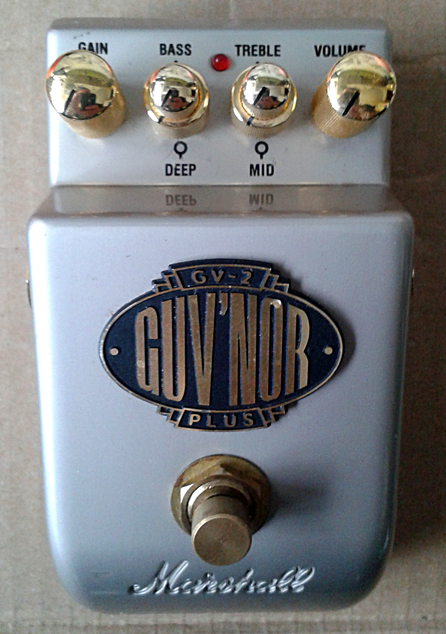
Marshall GV-2 Guv’nor Plus. Made in china around early 00’s. Don’t know if there is any official name for this series of pedals, so i’m calling it “Small metal series”.

The original Guv’nor design was a bit of a hit. Not in least due to Gary Moore, who was doing the best promotion possible. Either way, the success of the original unit was little off from questionable. Somehow most folks only reacted to the pedal ten or more years late. I’ll be talking more about the original Guv’nor in a post about original Guv’nor when the time comes. Anyway.

This unit is successor for the original Big Black Guv’nor. With added “Deep” control and a complete redesign, the design team must have had a goal of having the (in)famous tone intact, while modernizing the behavior and sound.

GV2-Guvnor-guts1

Board design matches the rest of the units in the series with its modern dull traces with autorouted visual feel to them. Otherwise the labor looks fine and this series boxes are well made. Should last your use and abuse for times to come. Schematic appears to be available online. This version of the factory schematic addresses a few issues on the board. First of all, some folks have found the tone stack to be nothing close to their preferences. So there are notes how to match yours to the original, black Guv’nor. And other thing. This addresses a considerable design flaw. There is a 470pF capacitor from after the volume control to ground. I have no idea what the designers were after, but value of 470pF will dump everything that would be called bright to the ground. Meaning that with this cap on board you are bound to lose a lot of highs. Sure. You could swap the cap for something like 47pF to have a way better higher frequency response. But is seems that many people want to omit that cap altogether. And i can’t blame them.

GV2-Guvnor-guts2

The dual operational amplifiers are once again TL072, manufactured by Texas Instruments. It is not a bad opamp and it surely seems to be a weapon of choice for almost every Marshall pedal. The clipping diodes are in hard clipping configuration, just like found in older Guv’nor version. So there are similarities, while the overall complexity of the circuit here is noticeably higher.

GV2-Guvnor-guts3

The circuit inside the box is made of three boards. One for the main board, one for controls (which are, no surprise, a 9mm pots with two of them having dual separate sweeps) and one for switching. The hot glue in there doesn’t look that good. Otherwise the build quality is decent.

The controls are your standard three band hi/mid/low for EQ, wich offers nice versatility. Other standard controls are gain and volume. The “Deep” control controls lower mids of the frequency scale from scooped to boosted.

How does it sound?
Certain qualities to the sound are per the original, nowadays a classic Guv’nor. This simply sounds way more muddy and undefined due to that single capacitor noted above. Three band EQ is nice thing to have and it follows the basic principles of the tone controls found in Marshall amplifiers. With the lower mids on a “Deep” knob, the tone controls are very nice and should be enough to please any tweaker. Volume levels are sufficient and the gain range goes from mildly overdriven tone to near massive distortion. But for the muddy and undefined.. You’ll be better of with some other pedal. Or you could just simply snip the C22 cap off the board.

For the price – it is an ok pedal. Not too great, but not that sucky either. One of the worst in the series, but still slightly better than many other manufacturer’s distortion units. Go figure. I don’t see myself using this for anything though.

Danelectro DJ-13 French Toast Octave Distortion

DJ13-FrenchToast

What is it?
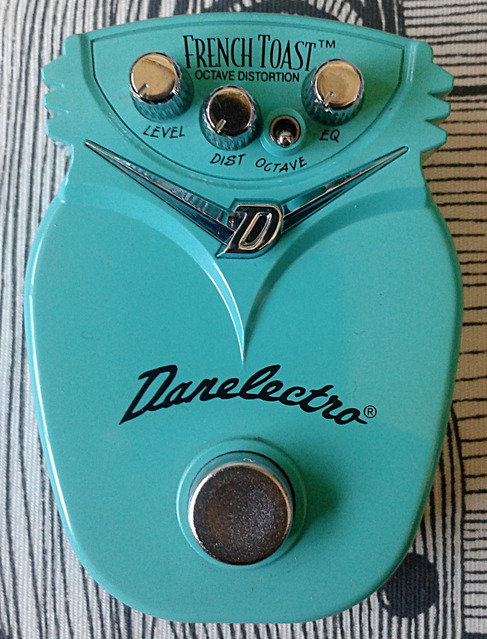
Danelectro DJ-13 French Toast Octave Distortion. Made in china around mid 00’s.

This one is one of the more classic designs in the series. The internet reveals that the design is 1:1 with a classic fOXX Tone Machine with added standard Dano Mini series electronic bypass switching. In other words, it is a four transistor fuzz that features a switchable octave up. There are a few schematics available, here’s one from Gaussmarkov.

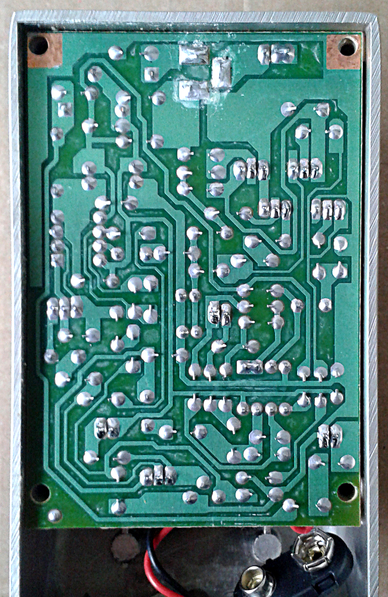
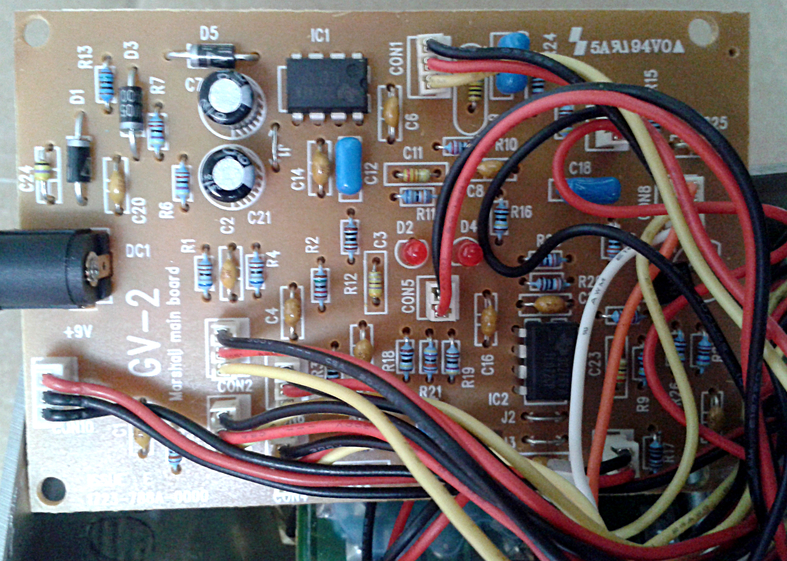
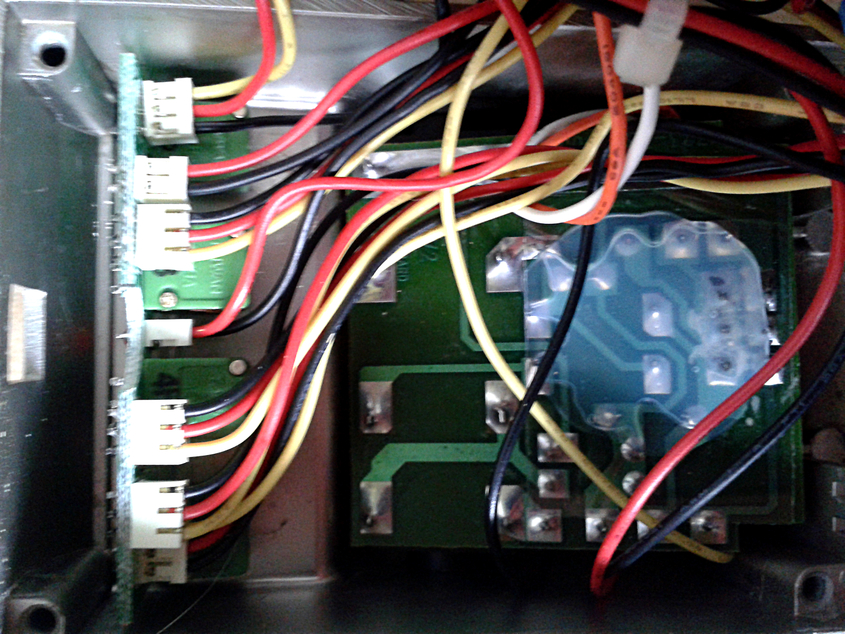
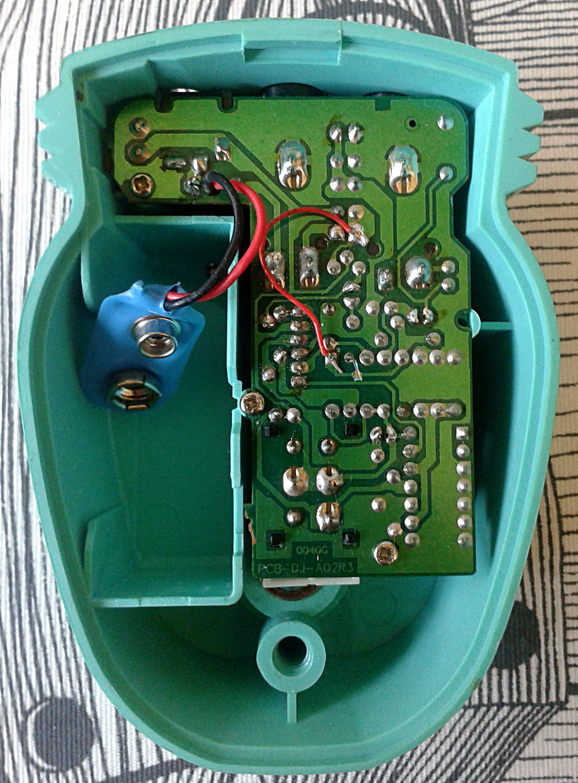
DJ13-FrenchToast-guts

Looking at the schematic shows an gain stage at the input, followed by a transistor stage that is responsible for the octave up. This stage uses two germanium diodes to mangle the signal in octave mode. Diode arrangement isn’t completely different to one found in latter version of Roger Mayer’s Octavia, while the setup leading to those diodes is. On this point we have our “gain” control. Yup. You can call it what ever you want, but it is simple volume control setting the level for the next stage. After that there’s one more driver stage pushing the tone control, which isn’t completely different to one found in Electro Harmonix Big Muff Pi. Not completely alike either. Finally, there is one more gain stage before pushing the signal to the the final volume control.

There have been numerous boutique clones of the Tone Machine around for years, but seeing one coming in this price range by big brand was new and exciting to me. This, in addition to Chili Dog Octave (and a few others), are the greatest offerings in Mini Series. Definitely recommended pedal – if you can look beyond the plastic housing..

How does it sound?
Wild and great. Amazing redesign if the Tone Machine. Mean, piercing up octaves. It’s in no way clean or dull, but lively with tons of harmonics, for both non-octave and octave modes. For the price – this is the closest you’ll get to having a classics Tone Machine sound.

Marshall JH-1 The Jackhammer

JH1-JackHammer

What is it?
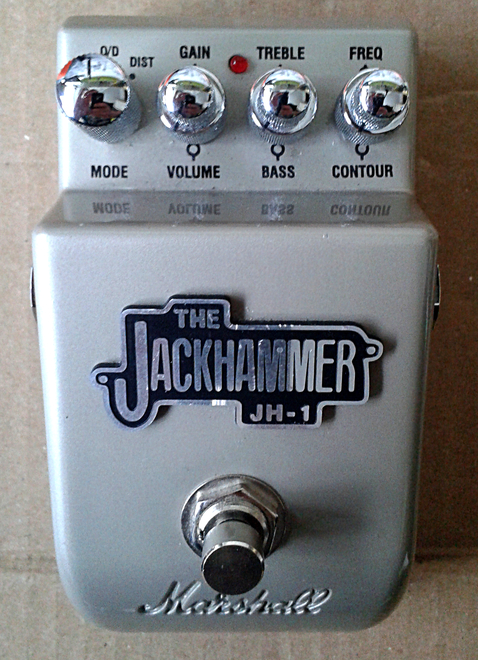
Marshall JH-1 Jackhammer Overdrive/Distortion. Made in china in mid 00’s.

We’ve seen a few of these units that combine two popular dirt effects – the overdrive and the distortion. So far i haven’t come across an unit that would excel in both. First analogue would be Boss OS-2, which is terrific distortion, but super sucky overdrive. But. More about the sounds later. Let’s rip this puppy open and see what’s inside.

JH1-JackHammer-guts1

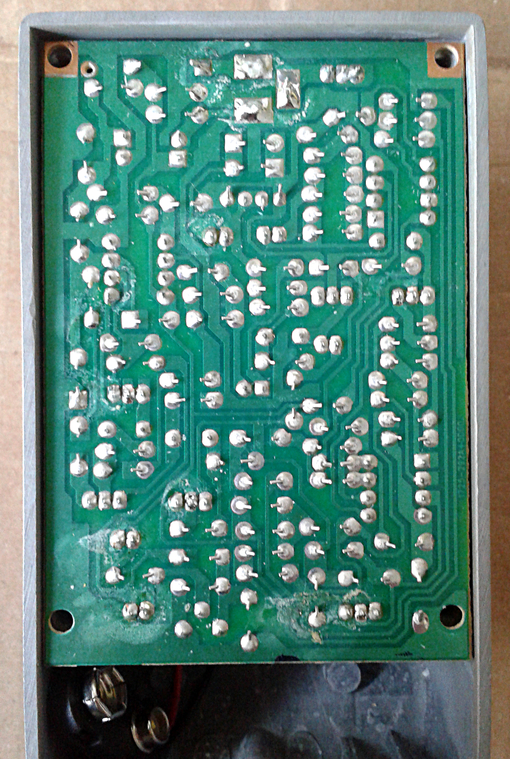
As with all the small metal series boxes, the traces are clinical with autorouted feel to them. The soldering work is very chinese from 2005. Not bad, but i’ve seen a lot better. Lots of praise comes from using through hole components. Overall feel is a lot sturdier and these units really feel like they are built to last. The off board wiring is done with terminal sockets. Looking at the component side of the board, the opamps providing the boost and gain are Marshall’s weapon of choice number one, the Texas Instruments TL072. It is a very nice sounding opamp for most occasions, like the big black Bluesbreaker. Here, the designiing engineers have wanted to take a bit too much gain out of them – resulting in opamp clipping with not-so-great decay on the release. Sort of reminds me of main stage distortion of the transistor based amplifiers. Yup. It is that good sounding. It is, of course, masked by the clipping diodes when gain pot is set at over half of its sweep. There is a factory schematic floating around the webs…

JH1-JackHammer-guts2

There is two pairs of clipping diodes. The first pair are 3mm red LEDs and the second pair are your standard 1N4148s. The design doesn’t seem to offer a lot of surprises. After a quick look, it seem like the OD/Dist rotary switch is basically cotrolling the clippers.

I guess the board could be tweaked to sound, well. Generally better, but this unit will never become a DIY favourite. Why? Let me tell you why. There are six pots and a switch in addition to semi-complex circuit and one of those pots is a reverse logarithmic dual gang. So anyone trying to fit a clone of this one in 1590B sized enclosure is either insane or very adventurous. The pots control gain, volume, treble, bass, frequency and contour.

How does it sound?
If we start with the distortion side, there’s not much good to say. It’s muddy and unarticulate no matter what the settings are. That is just simply bad. But. Once we turn the rotary switch to Overdrive side. That’s when to tone opens up and controls start to feel correct. Open, bright and with enough controls to match any guitar and amp combination. The overdrive is very versatile and actually very good effect. Where as Boss OS-2 sucks on overdrive mode, but shines bright on distortion, this one is exactly the opposite. The distortion is the kinda sound that i don’t think i’ll find any use in anything. But the overdrive. That’s well worth spending the $30 on this Marshall unit. Well worth it.

Ibanez SS20 Session Man II

SS20

What is it?
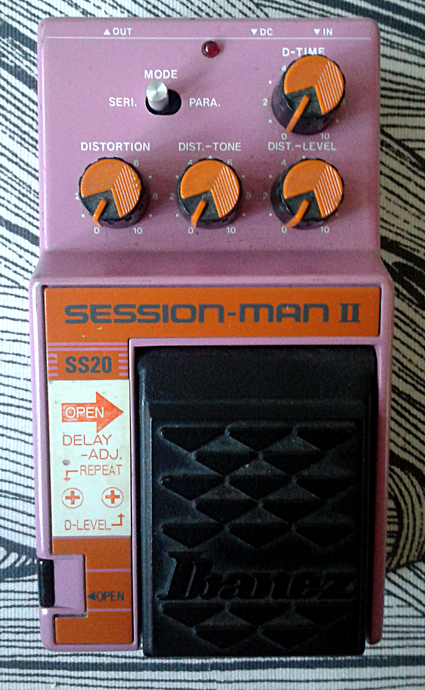
Ibanez SS20 Session Man II Distortion/Delay multi-effect from Power series. Made in japan in mid 80’s.

Ok. Apparently the first session man wasn’t a flop enough. Sharing parts of the design with the first Session Man “multi-effect”, this unit pairs a nasty, short delay to what appears to be the same distortion section as in SS10. Board designs are completely different, as delay and chorus do not necessarily walk with the same footprint with each other. It must have taken a lot of work to create this. As features go, this one has your standard distortion controls, Level, Tone and Distortion. In addition, there is delay time control and series/parallel switch for the delay. Sticker on the left hand side of the battery lid tells us there’s more. Under the battery lid, there are holes, so that two trimmers can be accessed with a screwdriver. Those controls are a nice addition. Left trimmer controls feedback, or amount of repeats and the right one controls the overall mix of the delay.

SS20-guts1

Board design is on par with all the other Power series boxes. Same semi-dull traces as with most of them. But as always with effects that are feature packed, this one has quite a few components in there. The design has a lot of tweakability to offer. And all the features do look very interesting on paper. Distortion and delay in the same enclosure with reasonable amount of control over the features? I think at least firm is making notable amounts of money with similar features today..

SS20-guts2

I have no idea about the number of units manufactured, but i suspect the number is rather low. These don’t seem to move much on auction sites and the prices are, well. Low. It is a full analog device and while the features seem promising…

How does it sound?
Good? Not so much. The distortion part is pretty much 1:1 with the open, uncompressed distortion that the SS10 Session Man offers. So turn the delay level down to nothing and you have a reasonable distortion. Do whatever you want to the delay section and you’ll probably still want to turn it all the way down. Delay is simply set for way too short delay times, making this a reasonable contender for DOD Hard Rock Distortion. But not much more. Nice novelty effect, but i think it sounds a bit more useless when compared to SS10. If you want one, make sure you don’t pay too much for it. As that would possibly make you feel bad.

Boss HM-2 Heavy Metal

Boss-HM2-HeavyMetal

What is it?
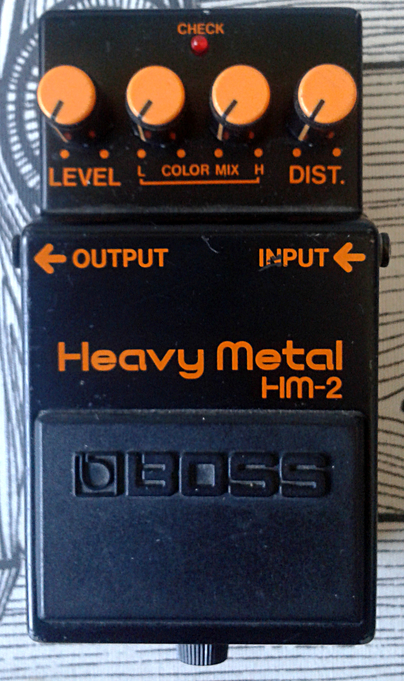
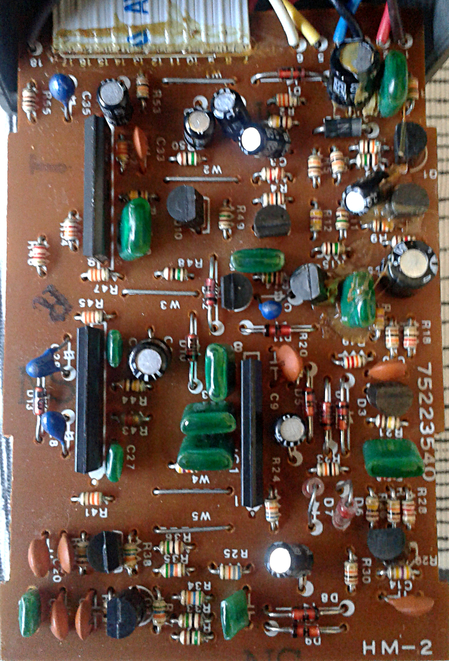
Boss HM-2 Heavy Metal distortion. Made in taiwan, early 1988. It has six number serial with leading zero, so that makes the unit one of the very first taiwan made HM-2s

If you have not heard anything about this distortion, you must have been living under a rock. It is one of the most desired Boss pedals ever, mainly due to swedish death metal frenzy back in the 90’s. The classic Daniel Ekeroth youtube video clip tells you everything you need to know about it. Due to it being in production from 1983 to 1991, the numbers are limited. There’s still plenty of them around, but since many death metal players try to get their hands on every single unit that they come across, the collectibility of these units is high. And the fact remains, it is the only pedal out there that gives you the authentic swedish death metal sound. Daniel is right about Metal Zone having nothing on this. They are very different designs. According to Effectsfreak, these should usually sell for less than $100, but i’ve seen units in good condition sell for a lot more. Well. It’s been over 20 years since Boss stopped making these, so some of the units must be dead and gone, others in use and some of them are in the hands of collectors. I smell prices rising r in the future.

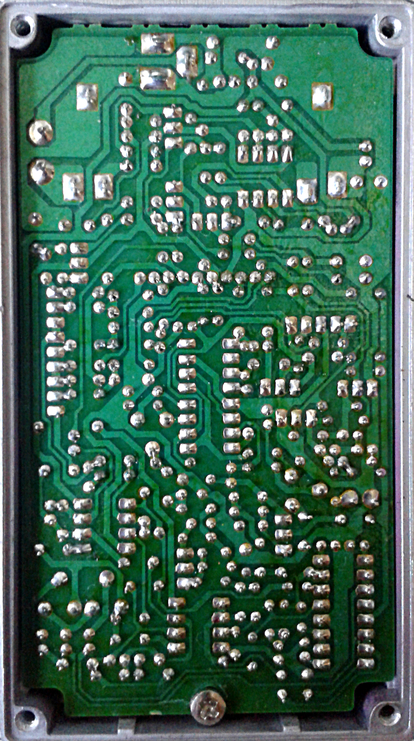
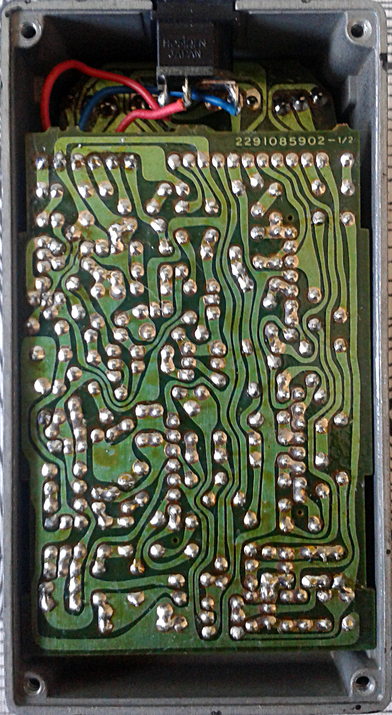
Boss-HM2-HeavyMetal-guts1

Board is looking very appealing for a Boss design. Acidy styled strips with a crowded board always induce goose pumps. Apparently the board design has remained exactly the same when manufacturing moved from japan to taiwan.  If we take a look at the schematic (courtesy of hobby-hour.com), we see the distortion section after the input buffering/switching network to be quite unusual. Notice how the distortion control is wired – on the CCW end of the sweep it has maximum resistance between inverting input of the asymmetric clipping amp and ground (a similar method we’ll find on OD250/Dist+ gain control). While it’s doing that, it also tames the NPN/PNP transistor network that acts a pregain circuit. Once turned CW, the pregain has more effect – while the clipping amp is pushed to it’s potential. Ingeniously simple. After the asymmetric clipping amp we have two clipper pairs before there’s a buffer. After that buffer is the section which makes this a HM-2.

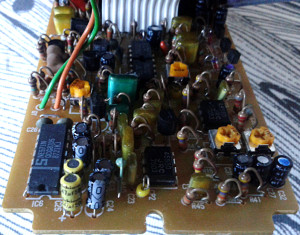
Boss-HM2-HeavyMetal-guts2

I bet the designer thought that simple clipping amp and the clippers after it weren’t enough for a design they were about to call Heavy Metal. Overall sound is fairly deformed at this point. The key ingredient is here – the three band active, Q boosting gyrator filters that offer up a big amount of boost for their selected frequencies. Low band is there to give out crushing lows and the upper two are controlled by Color Mix High control. This boosts mids and highs.

After that there’s a recovery stage, followed by standard level control and output switching/buffering. Rather complicated design, but successful in more ways than one. The gyrators mimicking EQ boosts are a thing of their own, but the pregain stage described above looks even more interesting.

On the negative side? Noticed the 330R resistor and D1 diode on the schem? Yup. This unit is meant to be used with idiotic Boss ACA power supply. Diode and resistor drop the unregulated 12V DC from ACA supplies to ~9V-ish. This unit cannot be used with standard regulated 9V supply. Or it can, but then you’ll need to daisy chain it with other pedals to counteract the effect of those components. If you are to try one with modern, standard pedal power supply, you’ll find the LED to light up dim and the sound being quiet octave up distortion. I know many people who have thought their units are broken due to this feature…

How does it sound?
Like swedish death metal from the 90’s. It is definitely not an overdrive, so don’t be surprised when you can’t get that bluesy tone out of it. It is a Heavy Metal distortion and very good one in what it does. The clipped frequencies stay consistent and the distortion is overwhelming and crushing – yet still defined. Color Mix is effective pair of controls, and with these the tone can be tweaked to match your guitar and your favourite frequencies. I still think you’ll want to max all the controls and learn a Entombed riff or two. I don’t blame you.

Here’s a quote from original marketing material: “Also, the HM-2 can be effectively used even with a single coil pickup guitar with low output level, because of its high gain.” – No disputing that.

Some of you know that i like MD-2 Mega Distortion a lot. This one could be considered as MD-2’s ancestor witth HM-3 Hyper metal on the on the same linear line of evolution. That would be a lot closer analogy than bringing MT-2 in to this equation. Super high gain usability. There’s a lot of crushing for this circuit to do yet.

« Older posts Newer posts »

© 2025 killall -9 humans

Theme by Anders NorenUp ↑