Tag: Distortion (Page 6 of 7)

Ibanez SS10 Session Man

SS10

What is it?
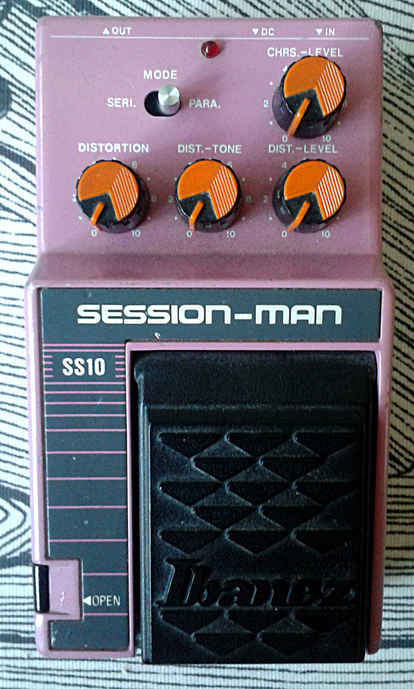
Ibanez SS10 Session-Man Distortion/Chorus from Power series. Made in japan between 1986-89.

Mid 80’s was a perfect time to try out stupid things like to combine distortion with other type of effects in small pedal enclosures. DOD did it, Boss did it and of course, Ibanez did it. The idea of mixing distortion with chorus seemed like something that i wanted to try out. The great thing with the Session Man is that there’s a switch that places the chorus in parallel or in series with the distortion to create different soundscapes. The bottom knobs control the distortion with standard parameters (level, tone, gain) and the upper knob determines the level of chorus mixed with the distortion. The chorus doesn’t have any controls, other than the mixer level. Sure, there are trimmers for those parameters inside, but it is basically fixed to one depth and one speed.
SS10-guts1

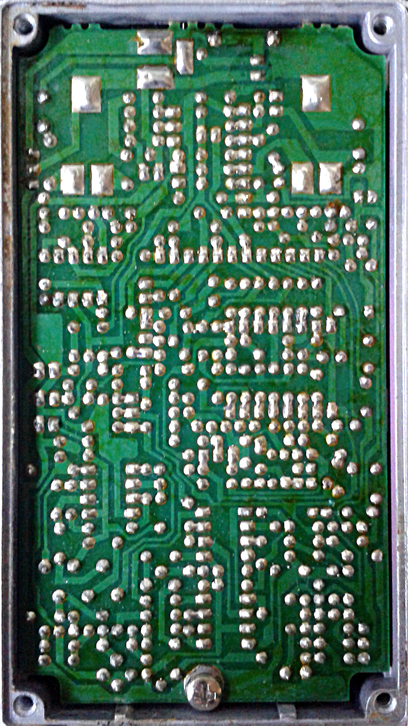
For all analog distortion and chorus delay circuitry, the board looks like it’s well used space. Turning the board around reveals crowded and crammed circuit with a lot of components. The yellow trimmers are for tweaking the chorus. I couldn’t find a schematic to see everything there’s going on.
SS10-guts2

From these crappy photos and being inside my unit, i can tell that there’s a BBD pair handling the choruses timed delay, one opamp acting as LFO ans SIP opamp driving the distortion. The SIP may be a good choice, since  there’s a lot of stuff going on on the board.

These seem to be somewhat collectible units. As a niche novelty items, i think the value is correct. But as a usable, unique sounding guitar effects? Not so sure.

How does it sound?
First of all, the distortion isn’t too bad. Quite open and dynamic, without the flattening compression that most distortions offer. Now, when we engage the chorus in parallel, i’m like “why?” The chorus is so mild that it hardly does anything, even when maxed. Anything good that is. The chorus is a lot more overwhelming in series mode, but still. Why? The parallel setting is a thing of its own, but if i wanted to chain a chorus and a distortion after each other in a studio environment, my choice would not be SS10. For a live setup maybe. But even then i’d rather use a utility box to engage both with a single stomp.

These combination pedals are nice curiosities. As these come, the SS10 isn’t the worst of them by far. It could even serve a purpose on some situation.
Morley DDB Diamond Distortion

Morley-DDB-DiamondDistortionWhat is it?
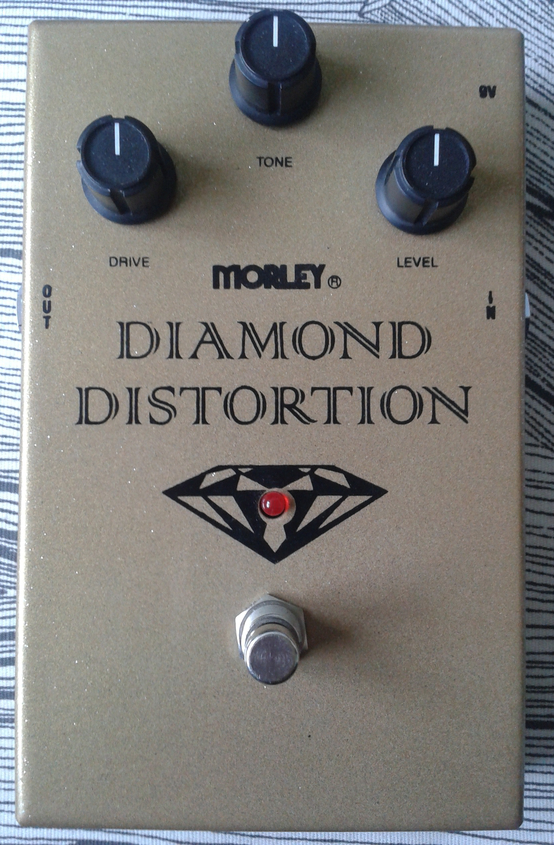
Morley DDB Diamond Distortion from so called “Jewel box” series. Made in US between 1995-98.

My passion for pedals and effects is something that i don’t quite understand myself. This series is perfect example. I seem to like stuff that may not be worth it. Morley is best known for their wahs and wah derivatives. But there are some non-rocker pedals in their back catalog too. The four units in the series all share the same project box. Thin, wide and very, very long. The measurements are far away from the sidelines, missing the ballpark completely when it comes to usability. The boxes take up a half of your pedal board, but they do look pretty cool otherwise.

Morley-DDB-DiamondDistortion-guts1

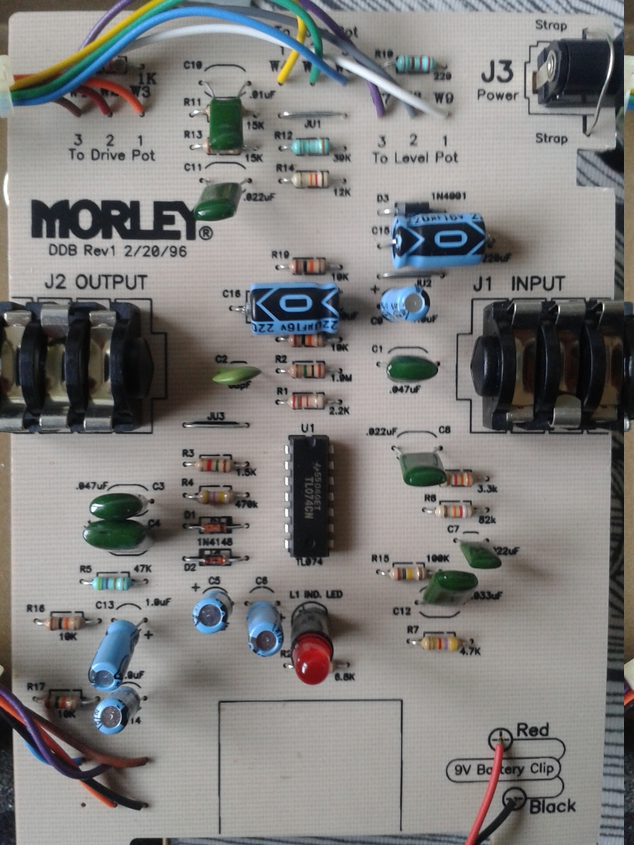
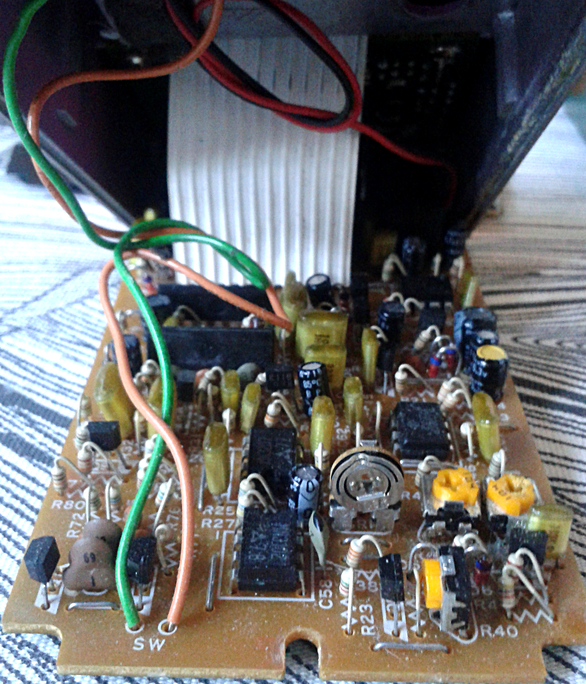
Spacious board layout shows that the same circuit could have been fitted in 1590B (or MXR-style) enclosure without issues, even using through hole components including 0,6W resistors and still there’s enough room for a battery slot. As with a few other Morley distortion designs, there is TL074 quad opamp and silicon diodes as clippers in the feedback loop of the main gain stage. Standard three controls of Level, Gain and Tone. Nothing too special in the design, just straight forward buffer -> gain stage -> recovery stage -> tone control -> buffer. The schematic is available at Morley’s site. The schematic says it’s “revised” and dates back to ’97. Wonder what, if any, differences there are between that document and the earlier one.

Morley-DDB-DiamondDistortion-guts2

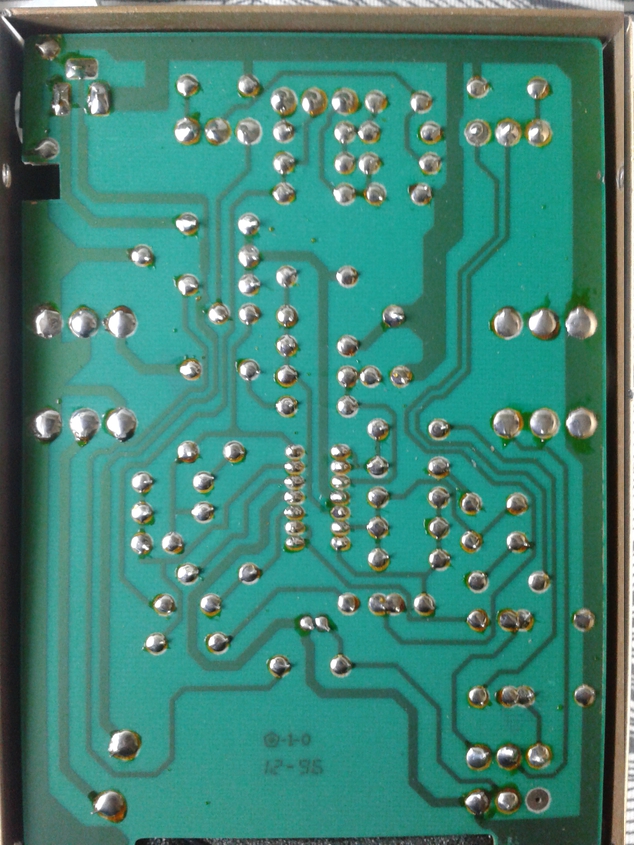
As the strip side picture of the board shows, the strips are a little wider than usual. The component side shows the massive room between the components without any symmetry or other visual candies.

As a side note – if you’re about to open your box up for any reason, keep in mind that the grounds for the left and right side of the board connect only through the weakest part of the board, between the battery hole of the PCB and the bottom end of the box. This is very stupid decision for the PCB design as the thin stripe of board can be easily broken. One can of course take a wire from jack ground to another to ensure that the box stays running for ever, even if that strip of board was to crack at some point due to opening the box up.

How does it sound?
Not bad overdrivish distortion. Not too great either. For your standard driven Marshall JCM900 sound, just turn the volume and tone to the max. It is usable, but with nothing special. The overall tone reminds me a lot of original MXR Dist+. The gain knob takes you from mildish overdrive to heavier overdrive. Other controls are pretty much useless. Nice novelty item as everything in a “jewel box” should be. It just doesn’t sound great enough to leave an impression. Talk about severe meh-factor.

Boss MD-2 Mega Distortion

Boss-MD2

What is it?
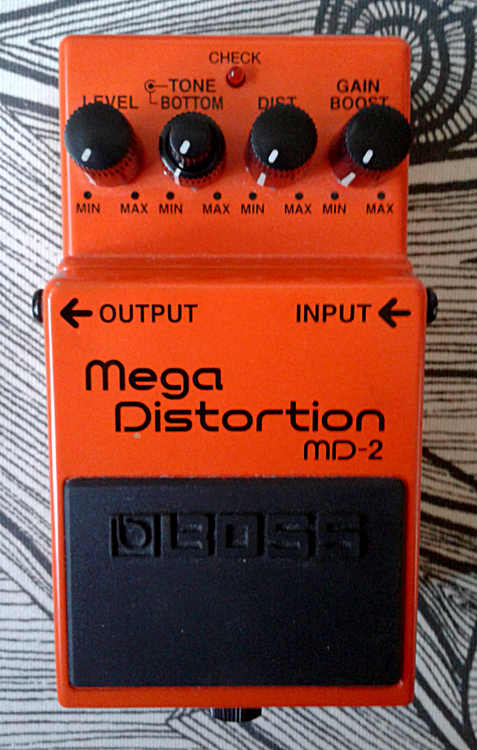
Boss MD-2 Mega Distortion, made in Taiwan in february 2009.

Got the unit in very good condition for a fair price – without a box and papers, but still nice. Actually i got this on the same day as the Morley Crystal Chorus. So, of course, i hooked them both up for testing at the same time. Oh boy. Let’s return to that in a bit.

Boss-MD2-guts1

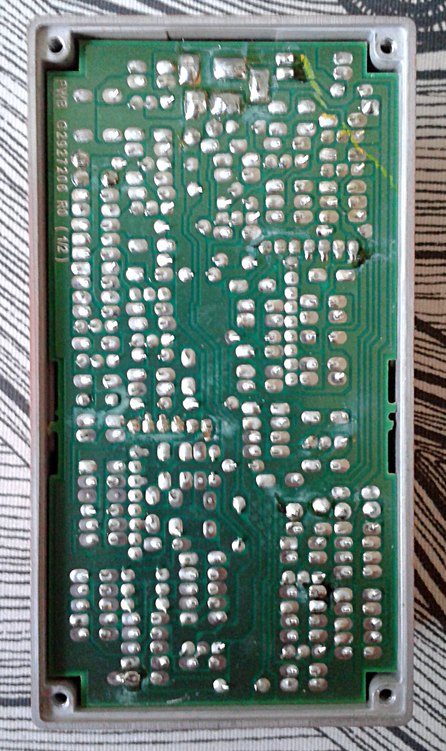
Modern looking traces on a filled board. This time, a space well used. The amount of gain the two SIP opamps and a handful of transistors deliver is respectable. The design that has basically five stages amplifying and/or driving the signal, with no diode clippers and manages to keep the massive noise content away is quite respectable too. Aside the buffering and standard Boss electronic switching, there’s a discrete JFET opamp acting as first gain stage. This stage offers the Gain Boost control too. Which is followed two standard gain stages. After that there’s very peculiar looking differential stage, followed by active tone control leading to standard level control. Not simple in any way. You can check the schematic out at FreeInfoSociety‘s page.

Boss-MD2-guts2

That peculiar differential stage i mentioned.. I’ve not seen that configuration exactly like that before. If it is something standard i’ve missed, please let me know. I may dig deeper in to the idea at some point to satisfy my curiosity. Anyway. This is standard Boss box that would normally, even with one interesting stage on the signal path, raise not much more than meh. But this time…

How does it sound?
Like a very pleasant surprise. I don’t think i’ve heard distortion as thick and saw waved before. Massive amount of gain with sufficiently low noise levels. The amount of sheer distortion is so high, that the sound is no more distorted in traditional sense. It reminds me a lot more of a tight and thick saw wave synth sound. And as i previously didn’t know where or when to use chorus effects to get something decent out of them.. This box solved it. Place a soft analog chorus in front of this one and be prepared for total angry synth mayhem. So far, this is the greatest distortion to me in all of Boss’ lineup. So. I’d sum this one up as so over the top distortion, that it isn’t one in the vast number of normal distortions. Quite nice to run into something like this instead of thousands of standard distortions.

Ibanez CD5 Cyberdrive

CD5

What is it?
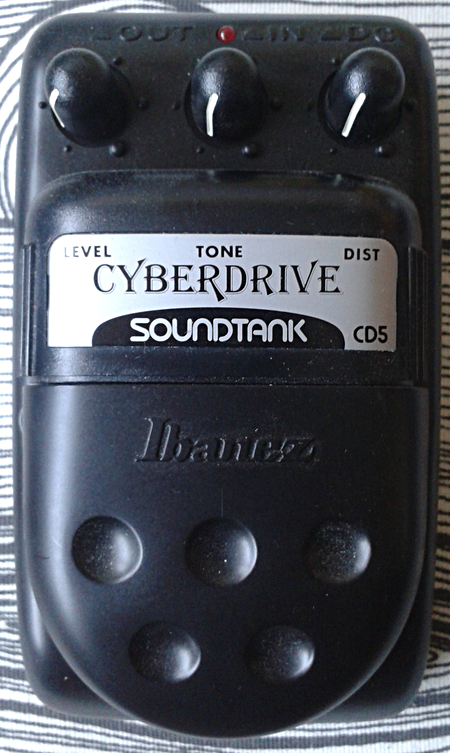
Ibanez CD5 Cyberdrive, fixed wah distortion from later Soundtank series. Made in taiwan late 90’s.

Ok. I’ve said this before. There’s one sub-genre of distortions that just isn’t for me. This being the fixed wah distortion. And here’s the Ibanez’ take on one with modern, dull traces and nothing earth shattering. Well. Not completely like that. There are couple of interesting things in there. That won’t mean that the unit is anything more than piece of unusable junk, but those couple of pointers are good to know before throwing your 15 year old birthday gift away. You won’t be in for a bucketful of cash, but just don’t throw it away yet.

Funny how this and my Dano Grilled Cheese are the two units in perfect condition. Both are quite old units, but it seems like neither of them has seen any real use since they were bought from music stores years ago.

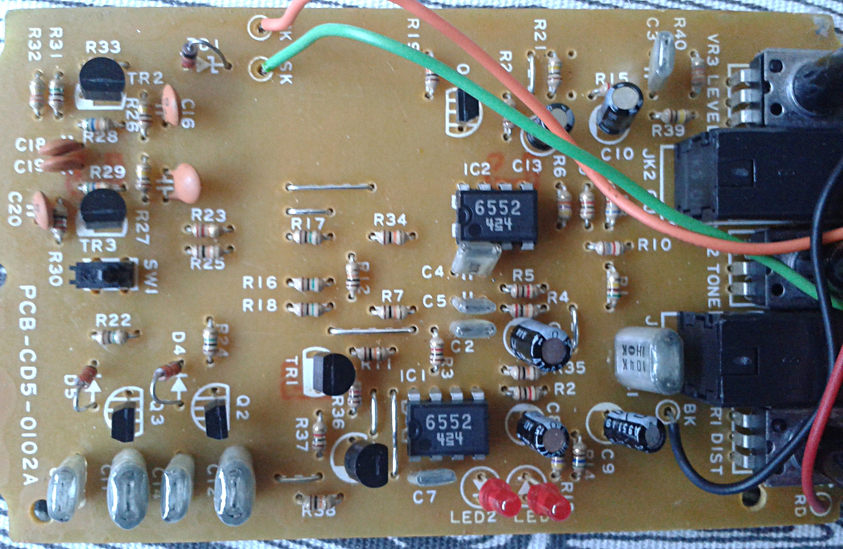
CD5-guts1

Once i opened the bottom plate, the feeling of “meh” was overwhelming. To my eyes, this is the ugliest board in the whole series. But now that we got most of the trash talking out of the way, we can dig in and see what we’ll find. Dirk Hendrik has drawn a schematic, so take a look at it next. Now. You can see the red LEDs for clippers and that the main gain stage is sort of like a Rat/TS hybrid. Those LEDs are in feedback loop of an non-inverting amplifier and the gain setting components at the inverting input are creating two frequency/gain networks alá Rat. The distortion side is quite simple but still appealing, even there’s nothing special about that.

CD5-guts2

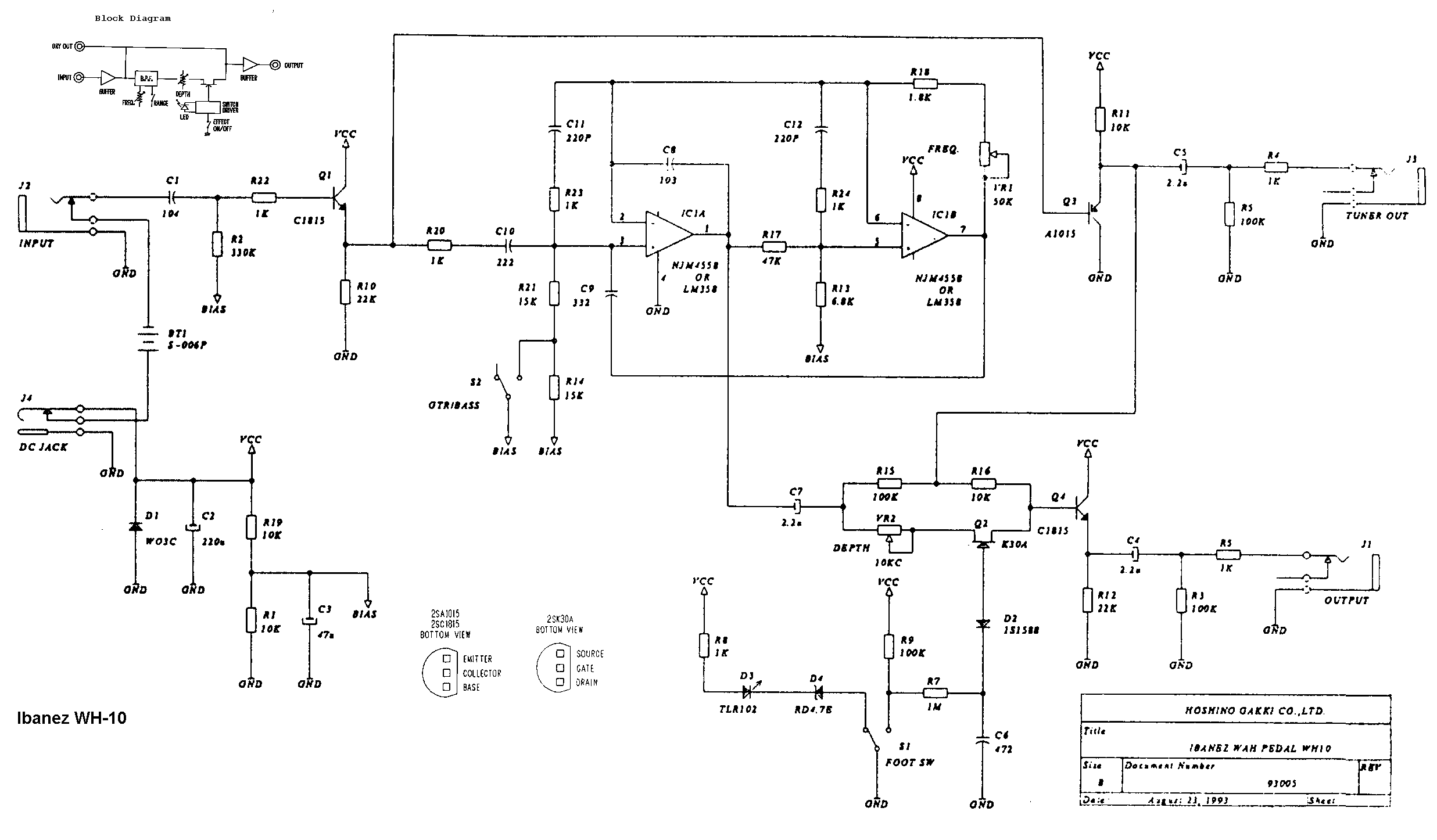
Some of you may have noticed that the input buffer splits the signal and passes it to tone “tone” control driven by another dual opamp. That topology reminds me of something. Now where have i seen that before.. Here. So you have a decent distortion and a tone control that is in fact 1:1 with Ibanez WH10 (and WH10v2) Wah pedal.

Now you know what it’s made of. It is a curiosity. Quite unusable one, but still a curiosity. One could take a wah enclosure and mount the board inside and probably even make it switchable with standalone WH10 circuit. Would make pretty cool high gain distortion wah.

How does it sound?
Engineers have been after something new and this is the result. It sounds like a high gain distortion and a inductorless wah in fixed position. That’s what it is and that’s what it sound like. Sad that we can’t separate the two. The distortion by itself wouldn’t be bad and the wah by itself isn’t bad – we know this from playing around with the reissued WH10v2. But these two combined.. No. I could see myself using this pedal in a studio, if i was to record some thrash- or mathmetal solos. But there’s not much chance of that happening, so the unit will probably stay in the cabinet with all my other Soundtanks.

Suitable for hair metal of the late 80’s and early 90’s. For anything else? There are other pedals.

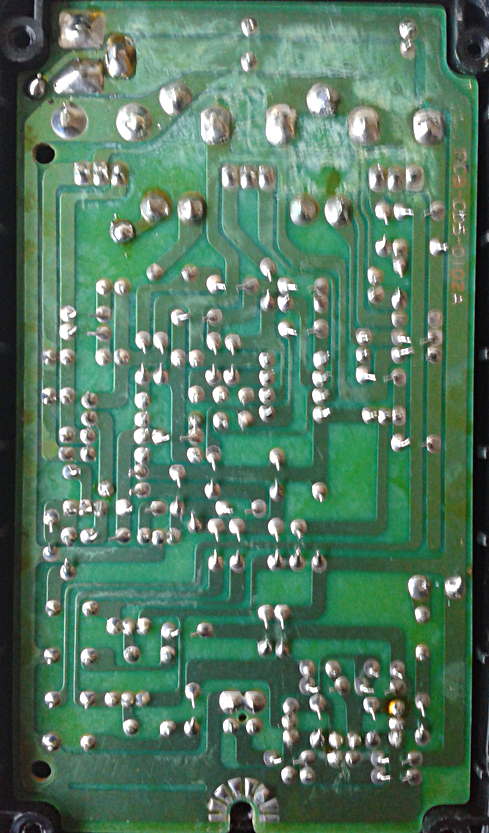
Morley JDB Just Distortion

Welcoming the new year 2014. And I’m starting this year with a real oddity.

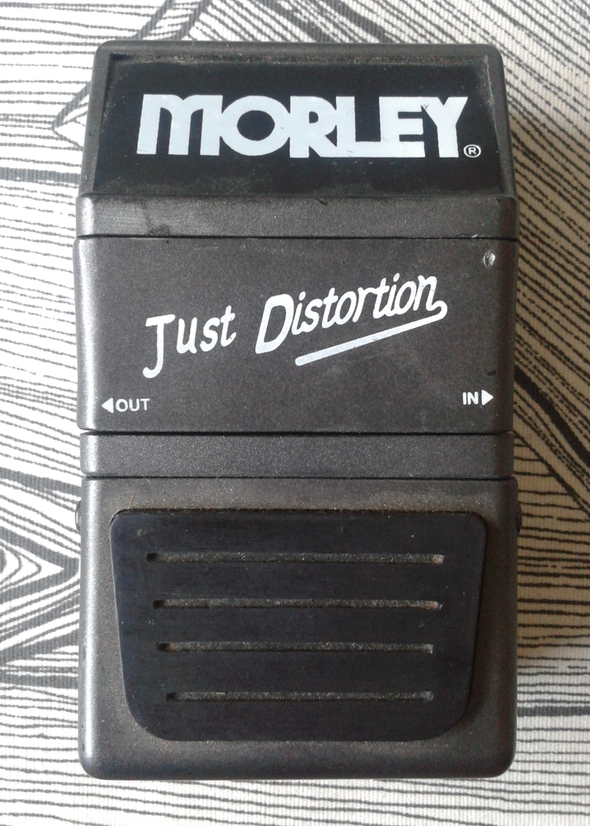
Morley-JustDistortionWhat is it?
Morley JBD Just Distortion. Real oddity. Made in china in the 90’s.

Ok. So the Morley engineer thought that it is a perfectly sound idea to create a pedal with no controls at all. The trust and belief for the design had to be strong. This must be one of the only distortion designs with no controls at all. There are some fuzzes around with only level control, but this unit here takes the grand prize. Here’s a quote from the “manual” (which is one tiny piece of cardboard):
The Just Distortion is exactly what the name implies; Just Distortion. No bells, no whistles,
just great distortion at a great price. What, no knobs?! We designed the pedal with a preset distortion setting. Great for all types of music and playing styles.

Morley-JustDistortion-guts1

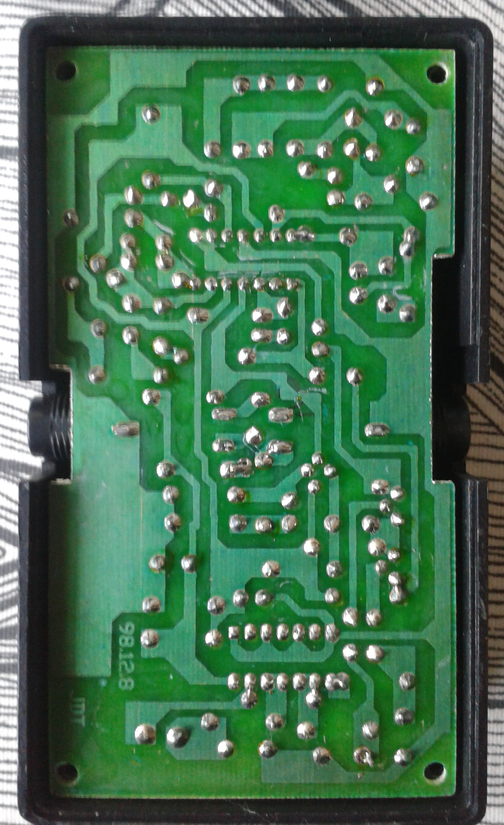
Box is all plastic and i think this one is far from unbreakable. Would not dare to stomp on this with my heavily overweight slob of a body. The traces are a lot wider than what you’d expect though. So the circuit inside isn’t that bad. The design itself is something you would expect from Morley. A quad TL074 opamp with 1N4148 diodes for clippers. Although named correctly, the schematic found online can’t be for this unit as there are no trimmers for gain/tone/volume on the board – like drawn on that schematic.. That’s why i’m not including the link as usual.

Morley-JustDistortion-guts2

We’ve seen missing controls like the “gain” from Digitech DDM Death Metal, but that was simply right thing to do to take off from the design. Here.. I’m not completely convinced if no controls was the right decision. On the other hand, the enclosure is among the worst plastic ones ever made. I’ve seen some other pedals in this same style of box, but just can’t remember what the brands were. So i’m guessing that this was a commercial test to see if it will sell. No wonder it didn’t. Other than the well made board, i really have nothing positive to say. Bad design, ugly and brittle plastic box and the sound…

How does it sound?
Apparently the mid honk is the coolest thing in the world. Sounds like a bastard child of  Boss DS-1 and Ibanez TS9 with no controls. Soundwise, the pedal does not convince me much. Honking mid-gained unit. It has some personality to it and part of that comes from you not being able to tweak it. Think of Rocktek DIR-01 with all the controls maxed. That box should not have any controls even though it does. This one? Could it sound any better with controls? Not sure. Only good thing i can think of is the fact that these are pretty rare and becoming more rare everyday.

Boss MT-2 Metal Zone

Boss-MT2

What is it?
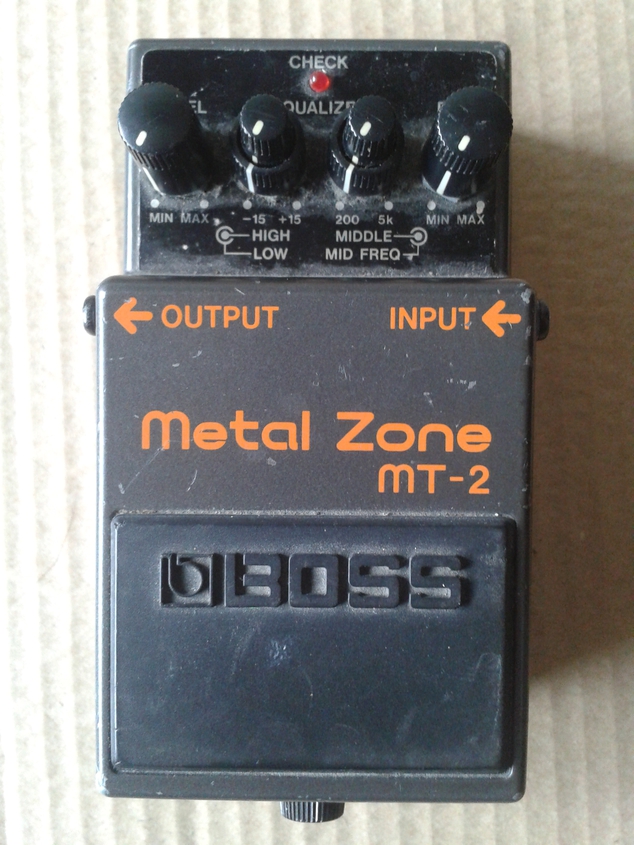
Boss MT-2 Metal Zone Distortion. Made in Taiwan in january 1999.

While the design seems to be quite a standard for metal players, it doesn’t move me that much. The eq section with half parametric mids is well designed and definitely the best part of this pedal. The schematic shows that the design is probably one of the biggest analog distortions around. Several gyrators in addition to several gain stages and fairly complex EQ. These are the things your Metal Zone is made of.

Boss-MT2-guts1

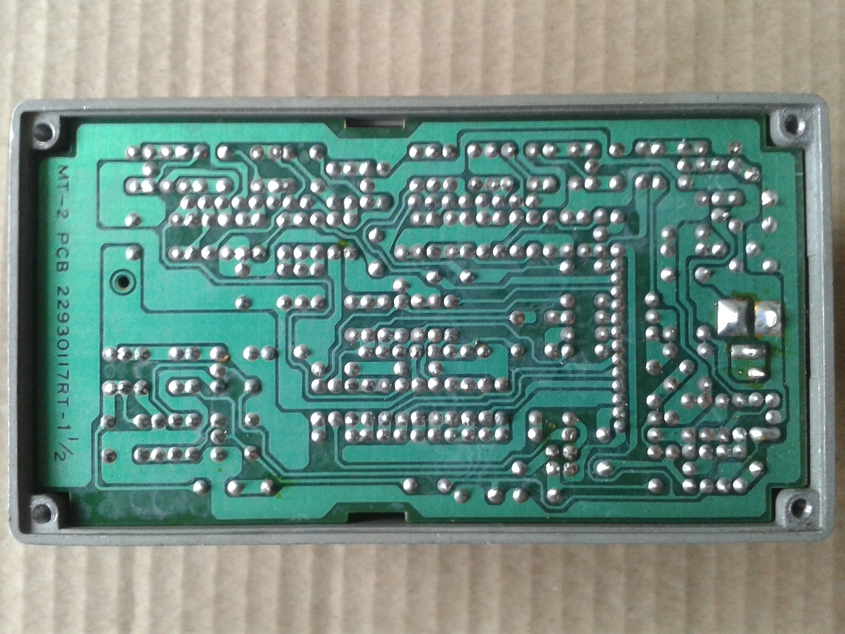
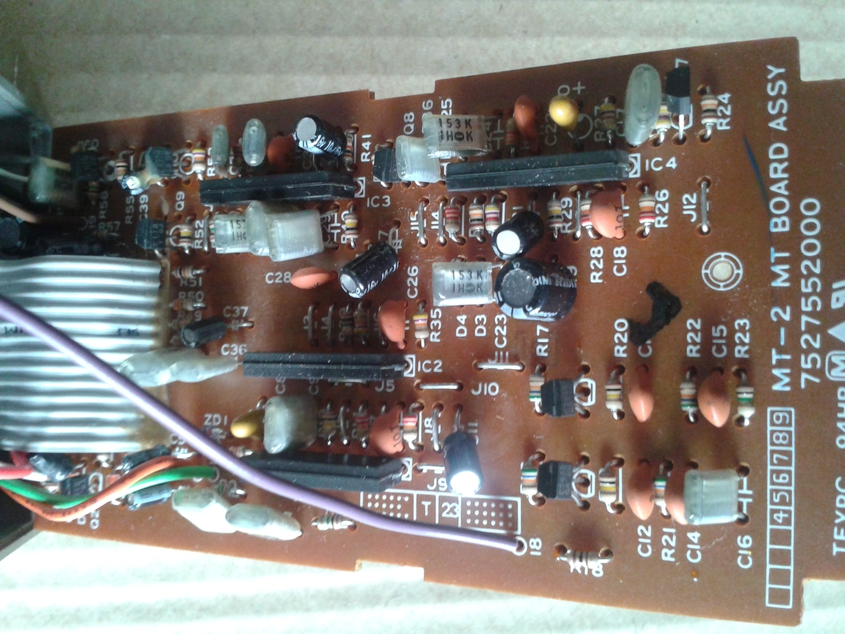
SIP opmaps on a crowded board with modern style techical looking traces. The board material makes me wonder if this unit is in fact older than i originally thought. When i hadn’t checked the serial number decoder to confirm…

Boss-MT2-guts2

Due to the price of used units this will probably never make it to DIY favourites. Maybe it is just a good thing. Too much of gain may not always be an advantage when the goal is to keep the sound reminding you of a guitar. Besides the EQ, the controls are Distortion and Level. Latter is good to have as this one can reach the unity level in early part of the sweep. For distortion control.. I have no clue why it is there. There’s basically 269 degrees of unusable area on the sweep.

To me it seems like this design has been sort of an competition. How much distortion and gain can you get out of 9V operated pedal without oscillation or massive noise content?

How does it sound?
As your standard ultra high-gain distortion with reasonably loud output should. This sound has been more or less the standard for ripping death metal since its inital release in 1992. EQ section adds a lot of usability, while the distortion control is completely useless. Or have you ever heard or seen someone to use MT-2 with minimal or even moderate distortion setting? I sure haven’t.

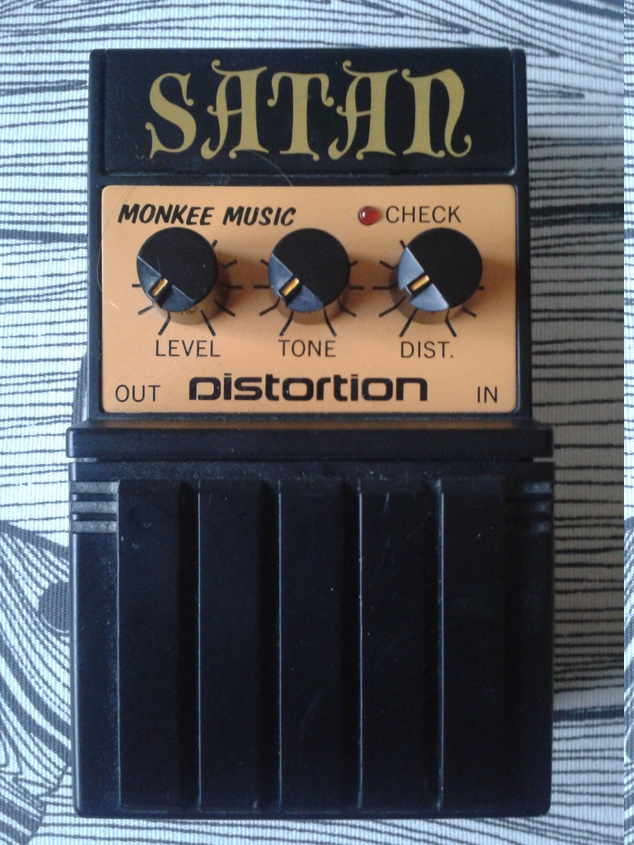
Monkee Music Satan Distortion

MonkeeMusic-Satan

What is it?
Monkee Music Satan Distortion, made in japan in 1989.

Ok. It has super cool font saying “Satan” on it. It is made of plastic and it is apparently japanese 1:1 clone of  Rocktek DIR-1 Distortion. When i say it’s made of plastic, i do mean that. Even that the outer shell is made of cheapest materials possible, the insides are not that bad. There are couple other pros in it too.

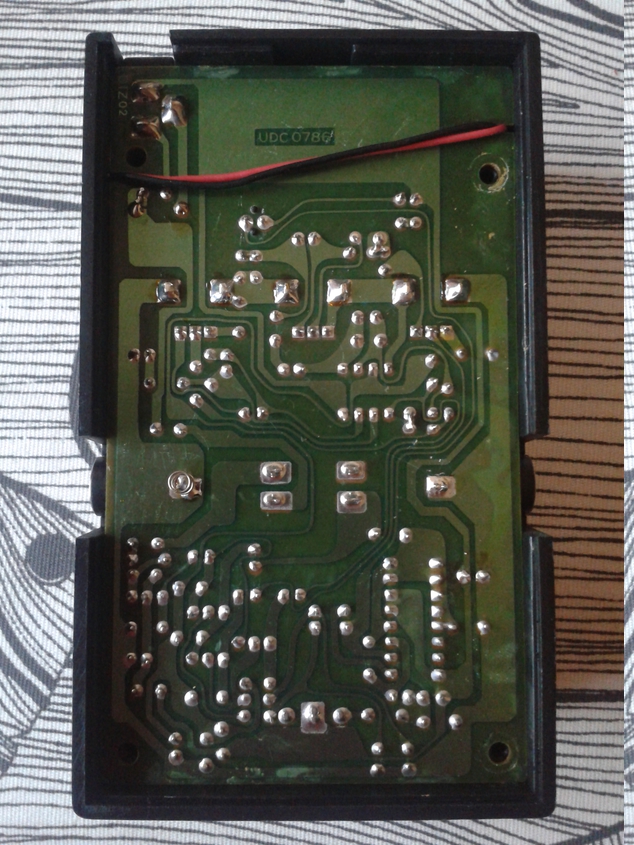
MonkeeMusic-Satan-guts1

The board mounted jacks are held in palce with plastic holders, not completely unlike the older Yamaha box jack’s pull relief solution.  Which in my opinion is a nice method. This keeps the strongest pull/strain away from the jacks. As some of you may know, the plastic on plastic is better than metal on plastic. Traces have that japanese  clang to them and the soldering is solid and professional looking.

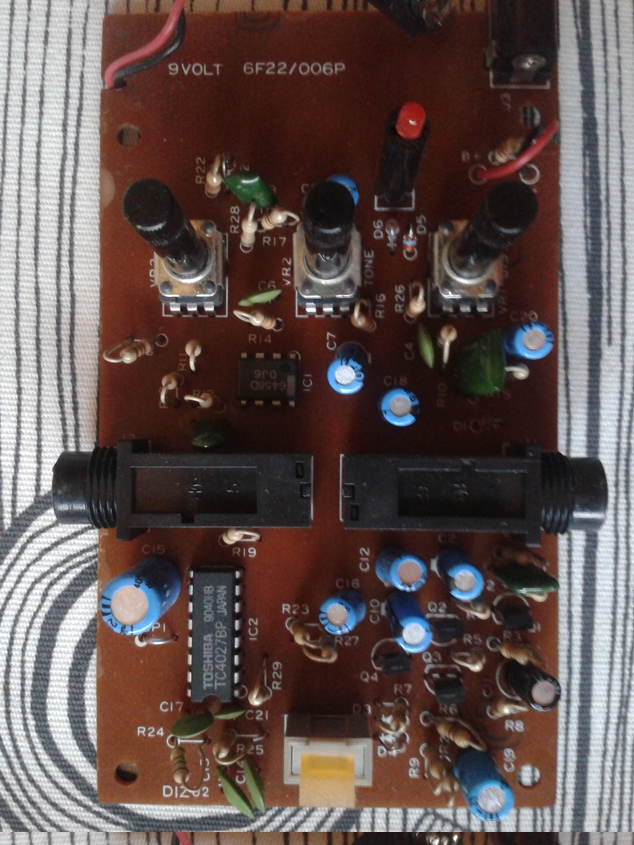
MonkeeMusic-Satan-guts2

Components, excluding the momentary bypass switch seem to be all good. Even the switch doesn’t have any issues, but i do believe this unit has not seen much use in its existance. As the unit is 1:1 with Rocktek DIR-1 Distortion, there is a traced schematic up at Freestompboxes forum. Although you need to be logged in to see it.

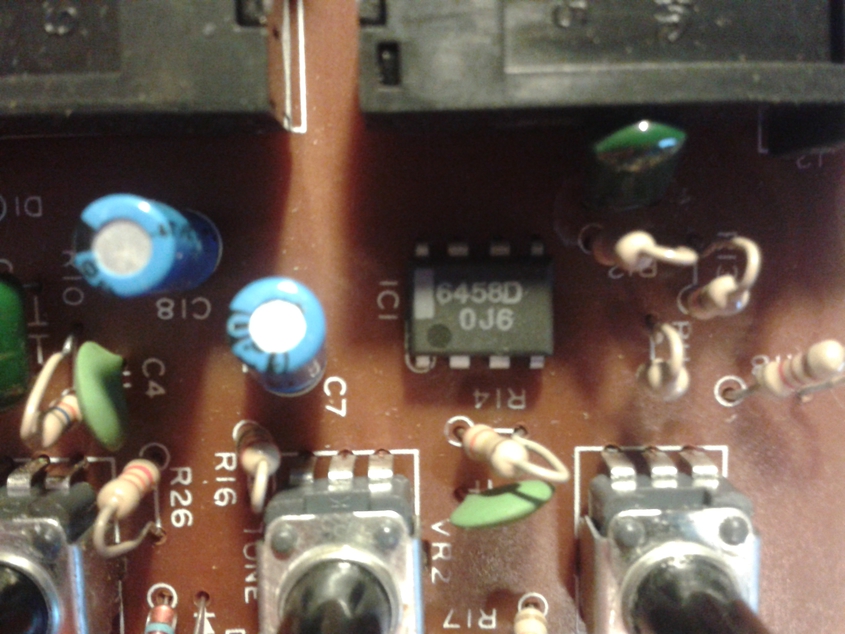
MonkeeMusic-Satan-guts3

The main driver is 6458D, which is old Sanyo chip with some similarities to JRC4558. Sanyo model however is quite more high-end audio product. The datasheet is available online. I’m tagging this as “Other Brands”, as this unit is apparently only Monkee Music brand box ever manufactured.

How does it sound?
I’ve heard this type of distortions before. Below unity and basically just one tone you can get out of it. It’s not that bad of a distortion, but all the controls are pretty much unnesessary. You’ll need to have everything maxed to have a reasonable result out of  this box.  It’s that classic 80’s/90’s distortion sound that everyone is familiar. Relatively high gain. The lower than unity output level is the worst culprit in addition to weak plastic enclosure. Prime suspect for modding and /or rehousing. But for that – i’d suggest to get Rocktek DIR-01 as this Satan Distortion seems to be quite rare specimen.

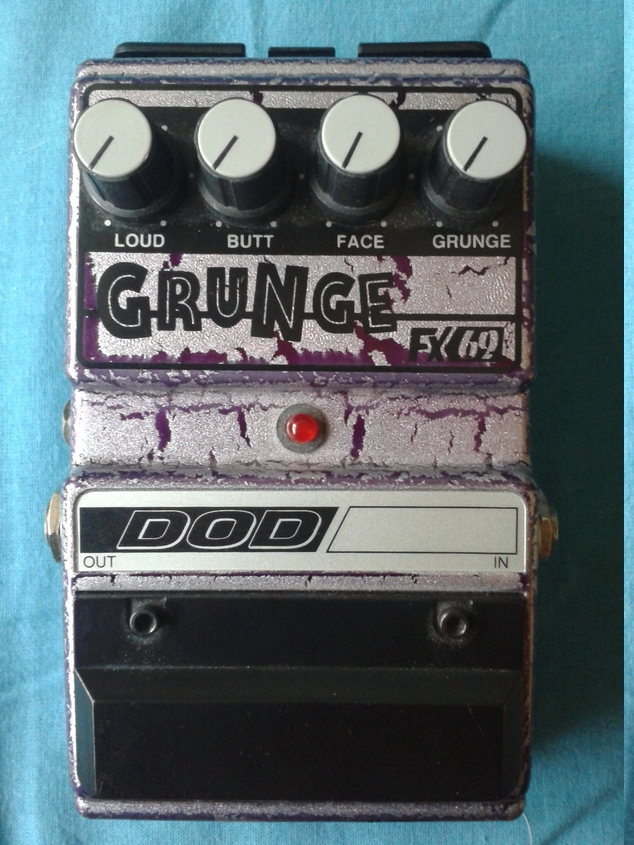
DOD FX69 Grunge

DOD-FX69-Grunge

What is it?
DOD FX69 Grunge, made in USA around 1995. Board revision is “B”, but the box is per 1993 version.

The DOD engineers were probaly after the sound of Kurt Cobain’s Boss DS-1/DS-2 and the Mudhoney fuzzes that were taken over the top. Or then it was just a plan to make a lot of money out of the genre that hadn’t too much to do with the pedal’s sound. There are conflicts between the sources about mr. Cobains use of this make. I personally feel that the most accurate version of the truth is told at Kurt’s Equipment website, stating the Nirvana’s guitar tech as a source for the information. So the throwing the pedal at the audience is probably just a myth. May it be what ever. Let’s check the pedal itself out and not focus on who did what 20 years ago.

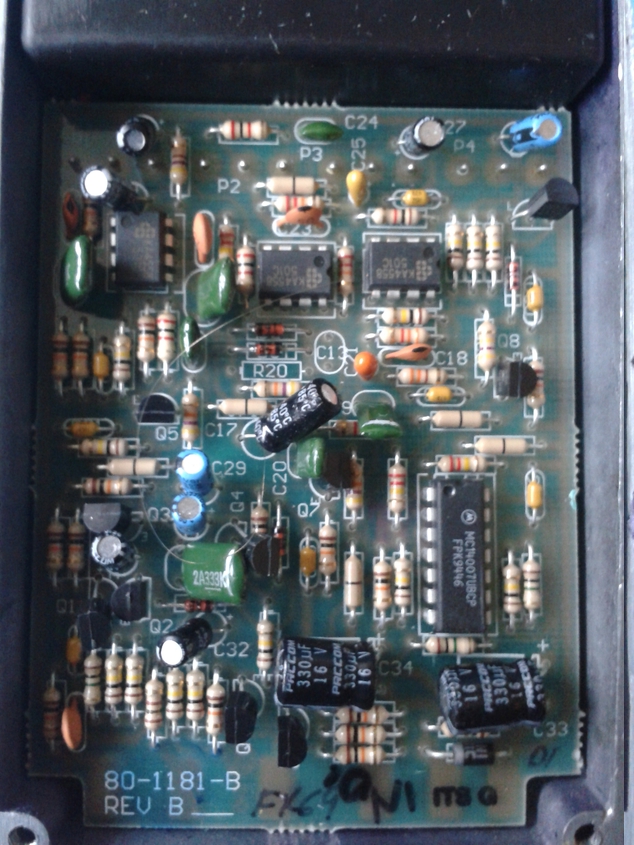
DOD-FX69-Grunge-guts

There’s standard DOD electronic swithching and lots of gain stages and filters. Schematic is available online and it shows the signal path to be buffer -> filtering gain stage -> passive filter -> main gain stage -> hard clipping -> dual gyrator filter stage -> tone control (active lows and passive highs) -> one last driver for tone control -> output buffering. Yeah. Simple. But all that is needed to create horrid amount of gain and keep the audible oscillation and too much excess noise from completely ruining your sound.

So it’s a fairly complicated super high gain distortion with reasonably good eq section. Does it really depict the sound of the genre? Probably not. DOD already had numerous “metal” pedals in its lineup. What makes this all special is the fact that marketing is completely in reverse. Most of he ones that are branded as metal distortions are lower gain devices and FX69 Grunge is definitely at its best when used for metal distortion tones. Now, who of you metalheads want to use pedal with “Grunge” written on it for your lead sounds? How come i see no hands raised…

How does it sound?
Weird. At the same time amazingly good and utterly bad. Very few “standard” designs leave you feeling this baffled. Maybe it’s a good thing to get feelings out of a pedal. At least it does raise an opinion out of almost everyone. You’ll either love it or hate it. There’s no meh-factor on this one.

If you are after that buzzsaw sound, then the Grunge may be just the right pedal for you. It’s even underrated and highly praised at the same time. DOD grunge – the paradox of all well selling pedals. I’m basing the sales argument on the fact that Digitech is still selling the same circuit on its D-series, which makes the design over 20 years old and it has apparently been on the market since the initial release in 1993.

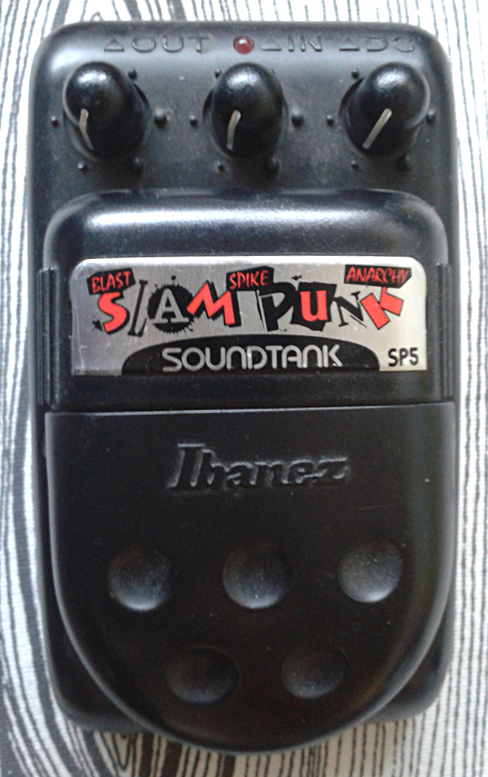
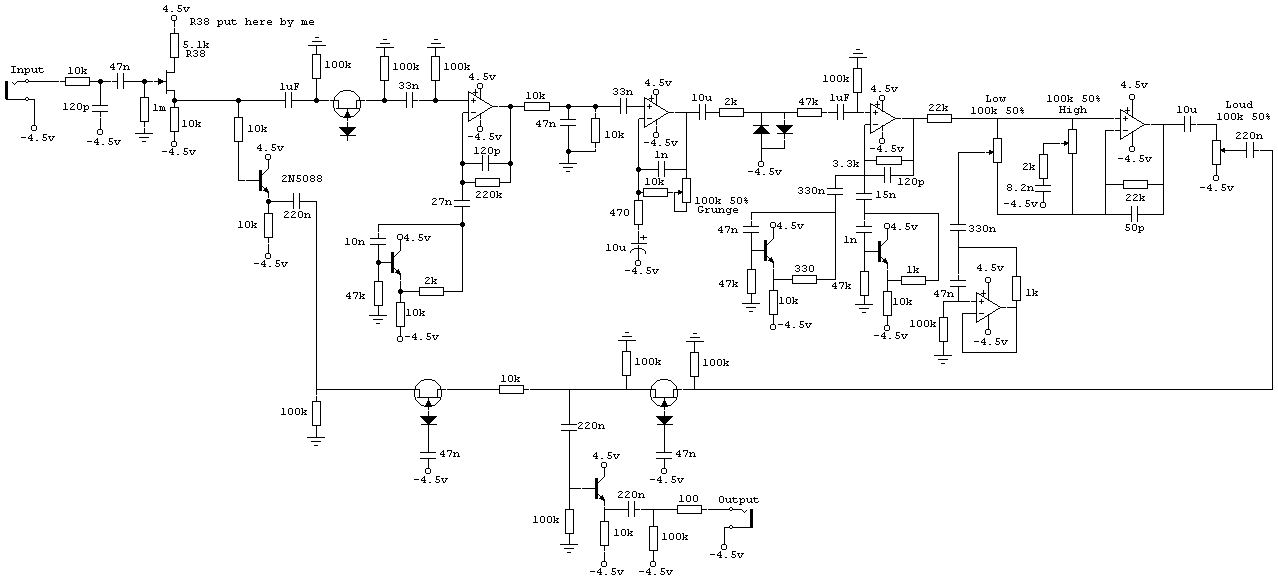
Ibanez SP5 Slam Punk

SP5

What is it?
Ibanez SP5 Slam Punk distortion from later Soundtank series. Made in taiwan, mid to late 90’s.

One of the soundtanks that i had a pleasure of being in contact with before acquiring one. I did a rehousing job with true bypass for a friend and played with the circuit before letting it go. I knew then already that i may need to clone this circuit for myself, and maybe mod it slightly to lose some of the low cut that the original pedal had. Not much, but still the original had slightly clinical bottom end. After building couple of clones, to no surprise, i found another healthy original for reasonable price. This puppy is that one and i’m not letting it go.

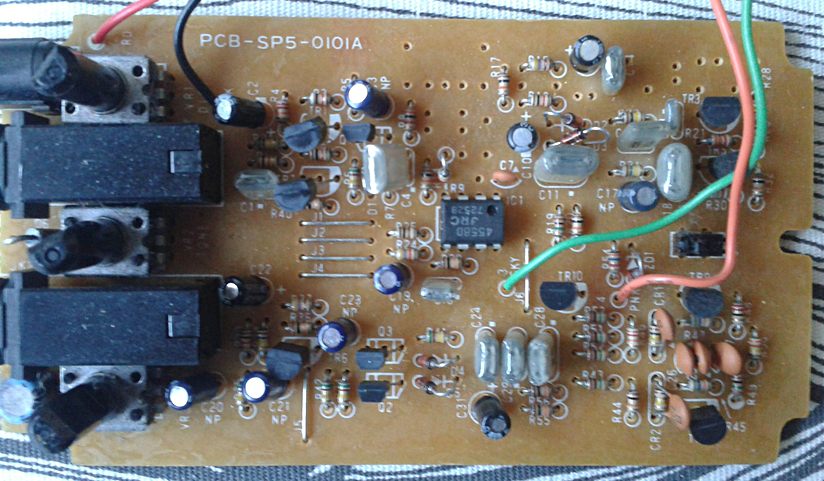
SP5-guts1

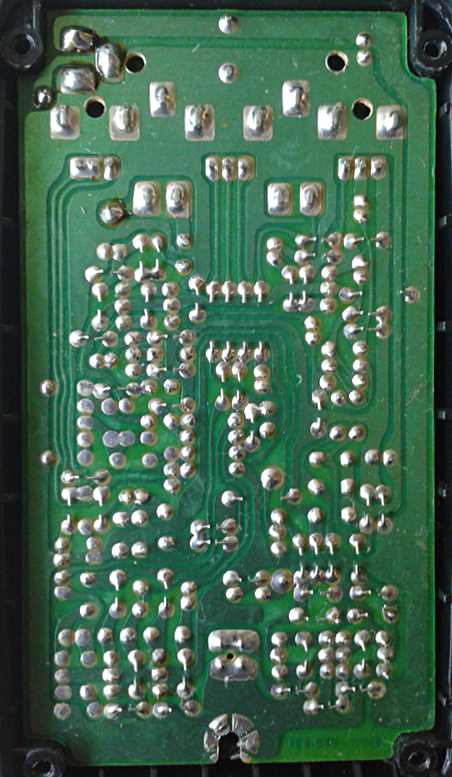
The board has standard taiwan modern traces. Take a note of the empty, unmarked holes. The board has SP5 printed on it, so the exactly same board hasn’t been used for another desing in this series. But i do believe the layout without the silk screening has been.

However. The schematic is up at 8bitsindgenug. It shows some similarities to ProCo Rat and other Ibanez designs based on it. The board has a lot of room on it.

SP5-guts2

Even though the Soundtanks aren’t getting the appreciation they should in general, this one is one of the most underrated pedals in the series with Black Noise and a few others. Nevermind the plastic housing. The sound is there, regardless of the box.

How does it sound?
High gain accuracy and definition, but still usable as a very nice overdrive. Think of Social Distortion’s “When the angels sing”. This pedal pretty much nails that overdriven/distorted base sound. No doubt this pedal wasn’t used on the recording, but the sound is close. Anyone mocking this one as a plastic cheap crap should play with one and say that again.

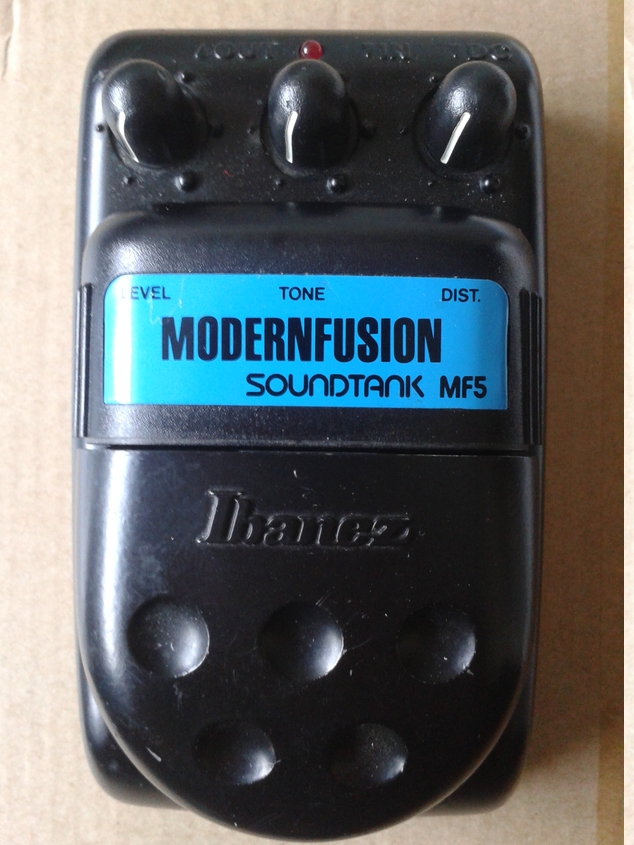
Ibanez MF5 Modern Fusion

MF5

What is it?
Ibanez MF5 Modern Fusion distortion from Soundtank series. Housed in metal enclosure and made in Taiwan in 1989.

Already had the plastic one, but saw this for sale with a reasonable price tag. The switch is in perfect working condition and i believe this hasn’t been opened up before, not even once. Only bad thing about this unit is that it sounds really bad with no real value for me. That may also explain the near mint condition and working switch though. But a collector can’t help himself… Apparently these units were a failure, as the manufacturing seems to be suspended before the series got their own typefaced labels.

Get your mullet out and put your silk shirt on. As the name suggests, the year is 1989. White suit pants and PRS guitars on a sunny jazz festival stage comes to mind. And to me, that’s not too pretty sight. This thing nails the yuppie adult jazz distortion just as it is. Shoulder pads.

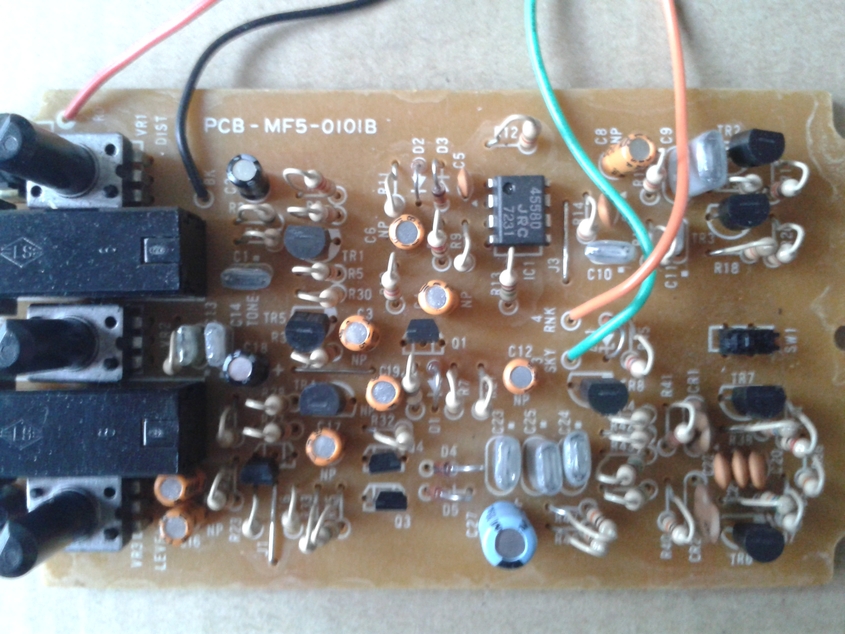
MF5-guts1

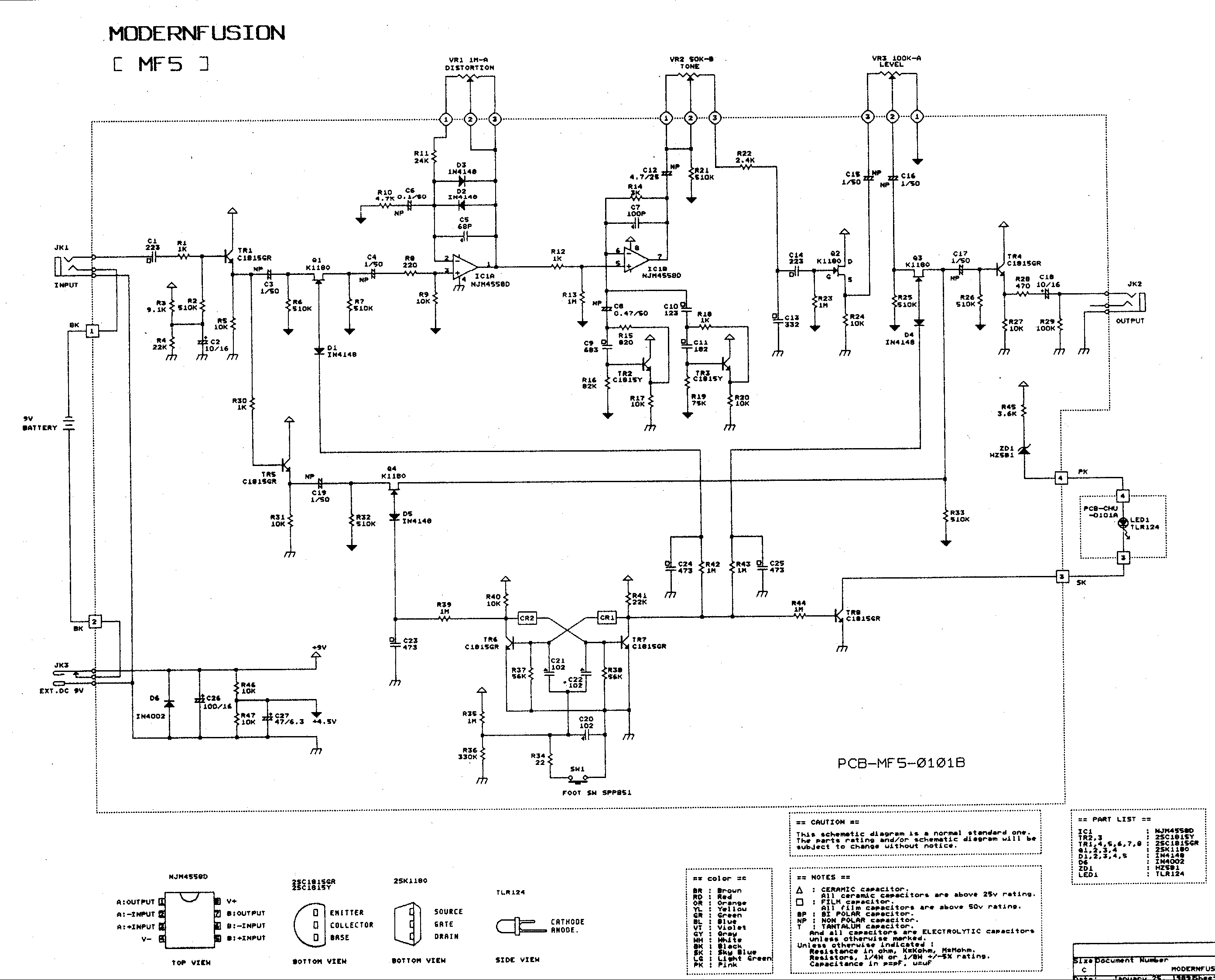
Board traces are modern and quite dull. The schematic is available online and it shows the design having slightly tweaked TS-like first gain stage after the Ibanez standard input buffer. That is follewed by two gyrators and semi-active tone control. Then to a JFET buffer  before volume control and a standard output buffer after that. For those who are capable of coming up with your own mods, i’d recommend to tweak the hell out of those gyrators. Maybe even snip the gyrator transistor drains, so that the full frequncy contect from the clipping amp gets through. I konw. Pretty drastic. But i think you’ll have a hard time if you’re thinking this may be usable without any mods.

MF5-guts2

All in all, the frequencies tamed by the gyrators offer stability that’s not very common. From electronic point of view, the filtering is too much. Thus that’s what’s making it the Modern Fusion, the only and the most boring adult jazz distortion there is.

How does it sound?
Surprisingly bad. If i was to dig up one good thing about the adult orientated distortion sound this unit offers, that would be the consistency. The distortion is so squeaky clean that it kills all possibility of sweet harmonic overtones. Once you bend your strings around the 12th, it still remains sterile. Now that’s a feature you don’t run into too often. Treble content is clipped much louder than the bottom, so in best case scenario – playing with hot jazz neck humbucker one can get relatively useful tones. But let’s face it. This is probably the worst design in the whole series. Trumping even The Cyberdrive and the Autowah.

« Older posts Newer posts »

© 2025 killall -9 humans

Theme by Anders NorenUp ↑