Tag: Distortion (Page 5 of 7)

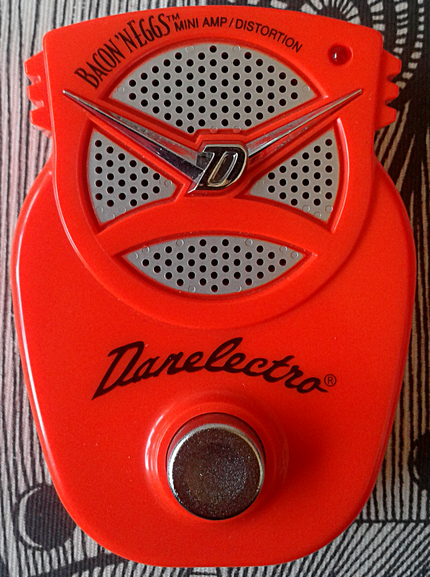
Danelectro DJ-16 Bacon ‘n’ Eggs Mini Amp/Distortion

DJ16-BaconnEggs

What is it?
Danelectro DJ-16 Bacon ‘n’ Eggs Mini Amp/Distortion from Dano Mini series. Made in china around mid-00’s.

This was difinitely one of the Danelectro units that i didn’t have much interest towards. But as collector, i didn’t have much choice but to get one. This unit i got cheap from the local music store. It was cheap to begin with, but the personnel at the store had misplaced the original cardboard box, so i got it even cheaper. First thing that occured to me was that this could probably be used with the pedalboard meant for the series as a last unit. That way one could have a tuner, three effects and an amp in one easily carried box. Yeah. I know. The tuners suck, but still that could be something fun. Tried this out at home and noticed a few things that piqued my interest.
DJ16-BaconnEggs-guts

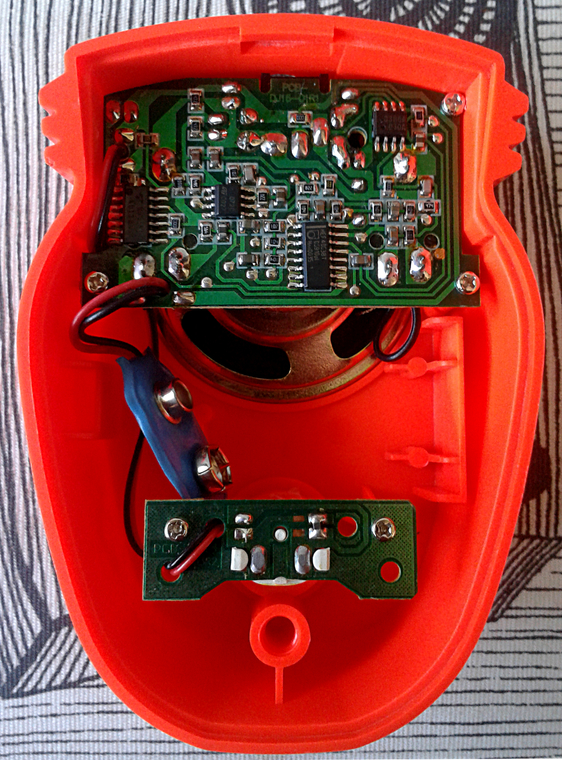
First of all, the unit acts as an amp when there is no cable at the output jack. Second, the amplification is done with single chip and with amplifaction on, one can’t turn off the distortion. That is a lot of SMD connections on a board that small. The bypass works when output cable is attached, so part of the circuit must be for that too.

As an practice amp? No way. Strange bird of all the effect pedals? Yes. Strange thing to be in existence.

How does it sound?

As an amplifier – horrible. 9V supply is doing everything it can to provide something like 2 watts of sheer power, which is then pushed on to a two inch speaker. The resultin “tone” is harsh, loud, cold and about a hundred worse adjectives. But. When used as a distorion effect pedal and the amp feature disabled, it’s not bad at all. Should it be used on your rig to give distortion? You might want to try it out, but my guess would still be no. In general, the distortion sound and feel is quite close to a control-less, maxed out MXR Dist+ with some peorsonal character in it. Not bad. Still a bit strange thing to be using in any setup.
Ibanez FC10 Fat Cat Distortion

FC10

What is it?
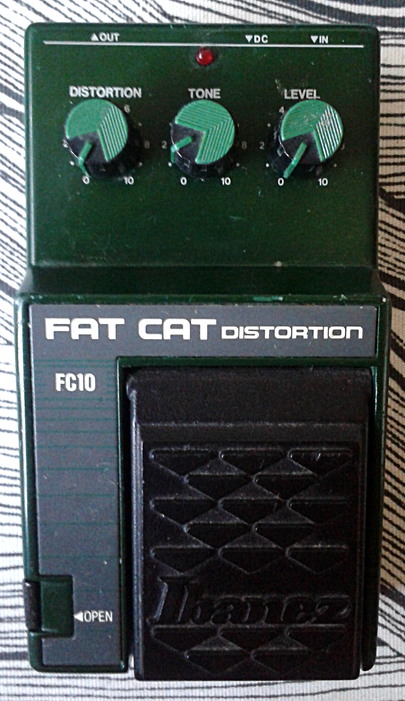
Ibanez FC10 Fat Cat Distortion from Power series. Made in japan between 86-89.

The first Ibanez take to replicate the ProCo Rat was a success of its own. A buffered Rat with standard Ibanez electronic JFET switching. Sure there are numerous other Ibanez takes on the Rat later on, most with more drastic changes on the designs, but this one – It’s pretty much one to one with the original Filter control reversed to act as a more commonly used tone configuration. Solid dull traces and everything is as everything is with most of the Power series boxes.

FC10-guts1

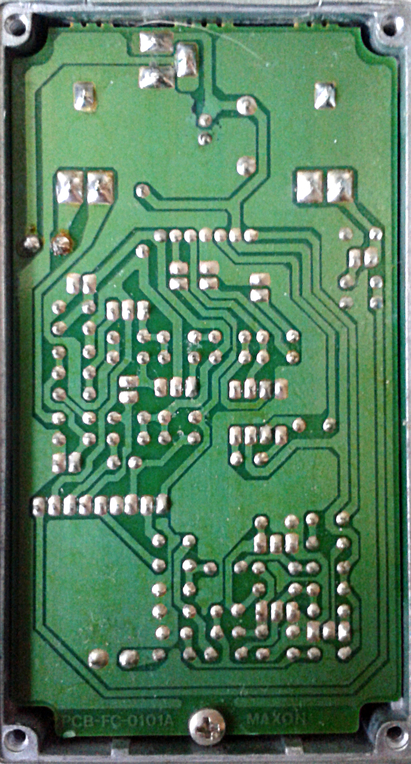
There are various schematics available, but from the experience, the one at Dirk’s page is the correct one. The board has a lot of room on it. The switching section is located at the lower left corner, so the size of the effect itself is just small. Due to asymmetry of the component layout, this one gets a harsh judgement from me. There’s enough room to paint pictures with the layout, but no.

The chip in the Fat Cat is JRC5534 single opamp, which has the needed compensation and balance features. Those are, however, in between other pins than in the original choice in Rats, the LM308. So one can’t turn his/her FC10 into 1:1 Rat by just swapping the opamp to ProCo specs.

FC10-guts2

For the units i’ve seen on sale, they all went immediately. I don’t think the unit is that rare, it just seems like it is very desired distortion. And by considering the sound, i do get it.

How does it sound?
Like a Rat with a way higher input impedance. Meaning that your pups won’t load as much as they do on the original Rat/Rat2. Aside from Tone control working in more conventional manner, there just isn’t too much of a difference to the sound. The changes are for the better, so this might be a nice option. If you can, get one. For cheaper than a reissue ProCo Rat/Rat2 that is.

Ibanez MT10 Mostortion

MT10

What is it?
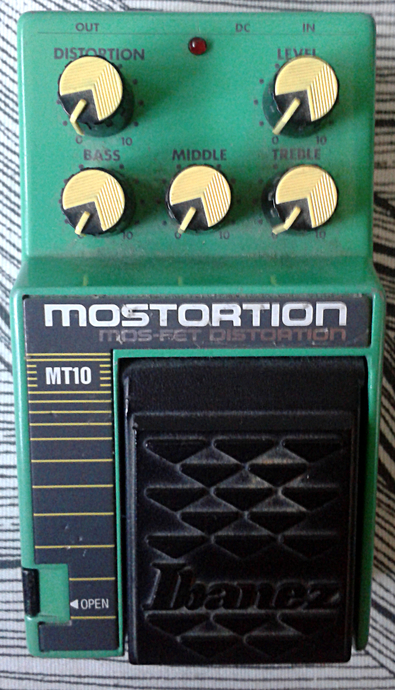
Ibanez MT10 Mostortion MOS-FET Distortion from Power series. Made in Japan, late 80’s.

As the Ibanez Power series pedals come, there aren’t that many original designs that have risen into cult status and are priced as such on the used pedal market. The MT10 Mostortion is one of those, filling this void with OT10 Octaver. Both of these are sort of one offs in the Ibanez back catalog. Where the OT10 is the only Octave effect from Ibanez, the MT10 is the only MOSFET (metal oxide semiconductor field effect transistor) based overdrive/distortion and it has three band EQ as well. I try to think of other Ibanez driver pedals with Bass/Mids/Treble controls.. Nothing comes to mind (ok, the Tubeking distortion etc. but let’s just say that three band EQs are not a standard Ibanez way of doing things). Saw this unit for sale with a reasonable price and i just couldn’t let it go.

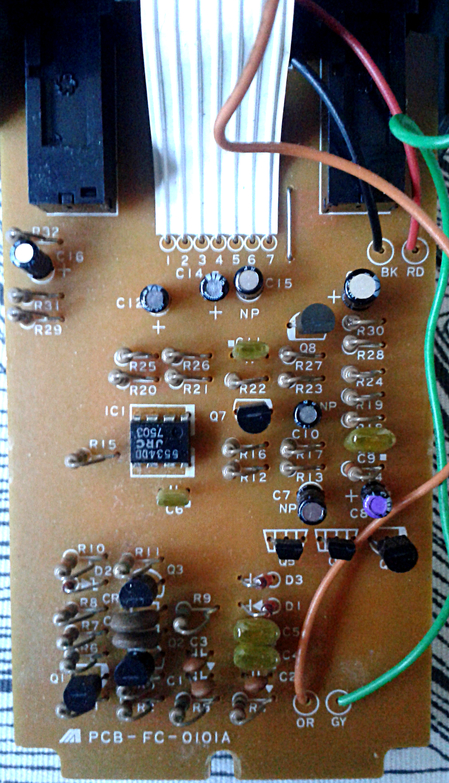
MT10-guts1

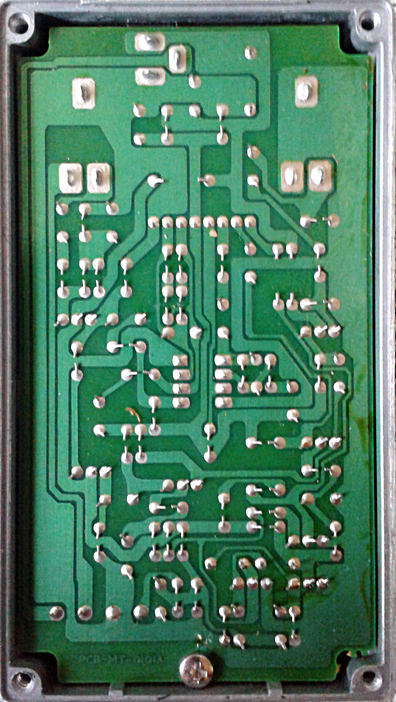
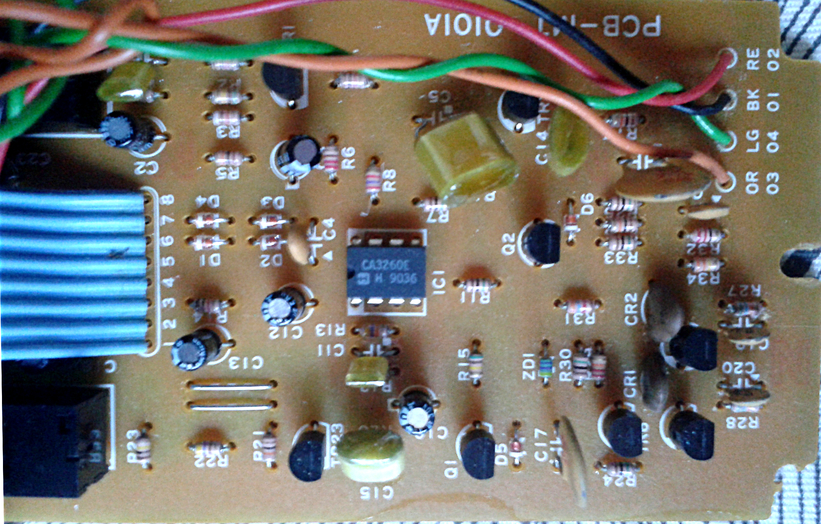
There’s some visual magic going on with the traces. Normally i would dismiss traces like this with a snarky “meh” comment, but not this time. Maybe it’s just how all the components are distributed nice and even all across the board, instead of super-engineering the left upper corner  and leave everything else blank. The schematic is up at ToneHome, and it shows how the EQ is made. Pretty cool to see something of a standard three band EQ drawn like that. Base topology is a buffer -> clipping amp -> three band EQ -> EQ recovery amp and an output buffer. Quite standard, but still something we won’t run into everyday.

MT10-guts2

It’s the opamp that makes this a MOSFET desing. Harris CA3260 to be exact. This obsolete amplifier may be the biggest reason why this design doesn’t have reissues and the number of available clones is low too. This, at least in part, would also explain the prices these currently sell for.

How does it sound?
The sound is definitely one of the factors affecting the prices. From slight, cool boosting overdrive to harsh and cold metallic distortion. Way more versatile than the first modern box i would compare this to – the ZVex Distortron. Overall tone also reminds me of a Marshall MOSFET 100 Lead head’s distortion channel. There’s this MOS signature sound going on that some people just love. It does have a face and sound of its own. Which is only a very good thing. I don’t think we really need that many more TS sounding boxes in the world. Besides. This simply rocks.

Yamaha MBD-20M Multiband Distortion

Yamaha-MBD20MII

What is it?
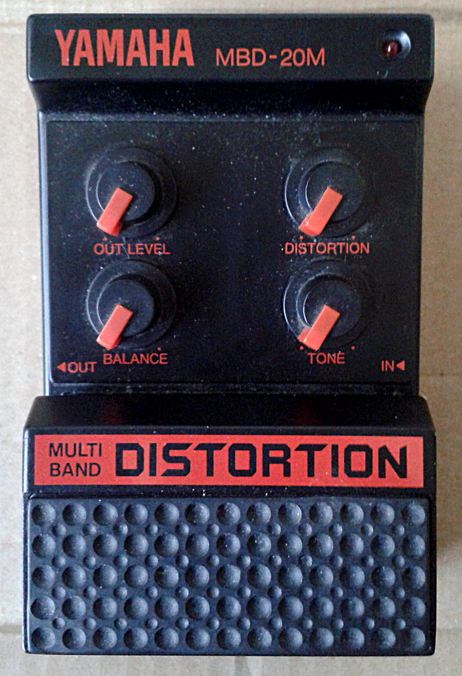
Yamaha MBD-20M Multiband Distortion. Made in japan around mid 80’s.

Got this unit from a guitar guru J. Lindén some months ago. He was selling the unit for a very decent price and i almost did let it go. We were at some gig back then and he said to me that “you’re stupid if you don’t take it”. So i did. Reason i wasn’t too interested on the unit at first was the non-uniform size of the pedal. I do dig those Yamaha 10MII-series pedals quite a lot, but this one has a lot wider footprint than the other pedals in the series. But am i glad i got it? Yes.

Yamaha-MBD20MII-guts1

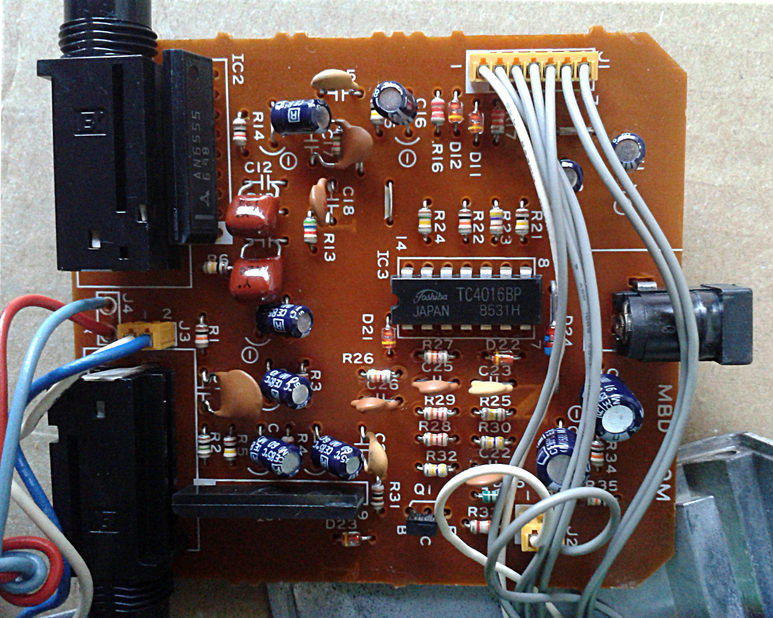
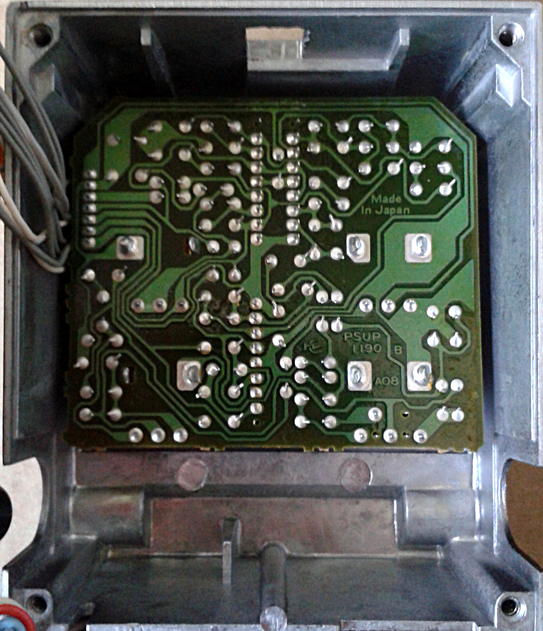
As most of the 80’s japanese pedals, there is nothing negative i can say about the design or the board. As usual with the Yamaha pedals, the quality of soldering and box design is very nice to say at least. I couldn’t find a schematic for the circuit, but There is some information about the box on Effectsfreak.com. Apparently, the design has two separate distortions on board. One distorting the lower frequencies and the other for highs. There are two Panasonic AN6555 low noise dual op-amps to give out the gain.

Yamaha-MBD20MII-guts2

The circuit is spread on two separate boards. One for main switching and the other for the controls and a bit more.. The controls are your average distortion box controls, “Out Level”, “Distortion” and “Tone”. With addition of “Balance” which mixes the low and high distortion bands together. There are obious reasons for why the world needs a distortion with blended bands. First of all the low and high frequecies clip differently. So pushing all of the audible 20Hz – 20KHz frequencies through the harmonic clipping diodes witll result in some parts of the range clipping better the others. This is highly affected by the types of diodes used.

Yamaha-MBD20MII-guts3

Even thought the idea of multiband clipping/distortion isn’t offering a huge wow factor, it is still quite ingenious. And of all the pedals i’ve dealt with – this is rather unique method of controlling how the distortion affects the guitar’s signal. Should it be unique? I think not. It is a very good idea and it probably should be used more on the boutique world.

How does it sound?
At first the feeling on the sound is quite baffling. Only thing i count as a plus is the definition and clarity. But more i play with the box the more it gives out. Level, Dist and Tone controls are your standard bread, offering nothing too interesting. Just sufficient output level and and good range on the Tone. The distortion control goes from high gain distortion to higher gain distortion and i wouldn’t call the minimum setting an overdrive anytime soon.

Then we come to the Balance control. From muddy low band distortion to clear, open wide band distortion to cutting high mids/high distortion. Versatility is enough for many purposes from sort of emulating JCM800 driven over limits for rhythm parts and the screeching high gain lead sounds that are able to cut temepered glass.

It does sound good.

Danelectro DJ-2 T-Bone Distortion

DJ2-TBone

What is it?
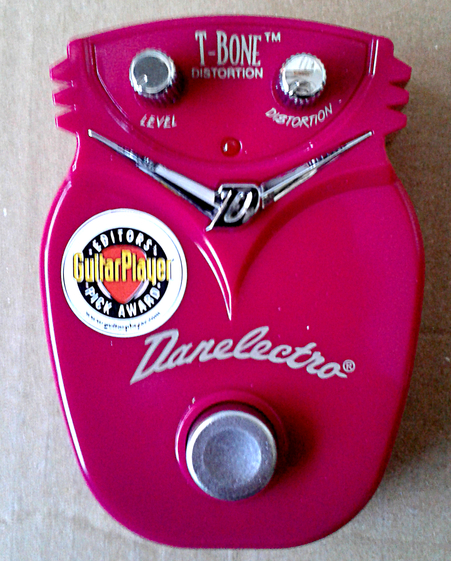
Danelectro DJ-2 T-Bone Distortion from Dano mini series in tiny plastic enclosure. Made in china around 2007 (dating based on a guess).

As i got accustomed to praising the mini series boxes, i thought it was a nice deal to take this home from local music shop as a new unit. Price was pretty much the same as the shop had paid for the unit when they bought it in – a.k.a. cheap. I couldn’t find a schematic for the circuit, so one of my thoughts was to rip it immediately open and see if it was just a simple Dist+/250 adaptation with standard Dano electronic switching. Taking the bottom plate off showed me the in/out board. Minis can be split into two categories when it comes to build quality. First is neat and well soldered. This category usually applies to the units with through-hole components (not always). And the second. The ones that were build on the first day of work after drinking for two weeks on chinese new year. This unit. Sinks definitely to the latter category.

DJ2-TBone-guts1

But i continued with the same profound enthusiasm that i usually have for the unexplored units. Taking the in/out board out made me want to put the little bastard back together as fast as possible. So there’s a 14 pin SOP quad opamp on two-sided, horribly made board that mixes SMD and through-hole components together. At this point i just reassembled the thing. I simply don’t want to know more about it.

DJ2-TBone-guts2

So. For those who have been following my puny blog, even though i may have sounded like it in the past – not all mini series effects are worth the trouble, money or anything else. This unit proves the point. It is probably the suckiest unit in the whole series. The sound and feel of DJ-1 Pastrami mini overdrive did let me have faith on this one too. Faith misplaced so far that a shovel won’t be enough to unground it.

How does it sound?
Like an unwanted, disfigured son of MXR Distortion III and Morley Just Distortion. Yes. Both of the mentioned are really bad sounding designs, so you can only imagine what this sounds like. Bad mid-honk, broken sounding clippers and thin overall feel. As a positive side, the  output level is sufficient for a distortion unit. But no. I have nothing good to say about this. Nor will i even think about tracing and fixing the design flaws on this one. Reason – it will most likely not be worth it. Anyone with an internet connection should be able to find hundreds of schematics that can be tweaked to perfection. At the moment, this doesn’t even wake up the explorer and tweaker in me.

So i put the plastic bag back on and stuff the thing back inside the cardboard box. Let’s see if it sounds better after getting ten or more years of cupboard treatment. I’m certain that the treatment has worked on many designs before. So there is a tiny, remote chance that it could work here too.

Ibanez MS10 Metal Charger

MS10

What is it?
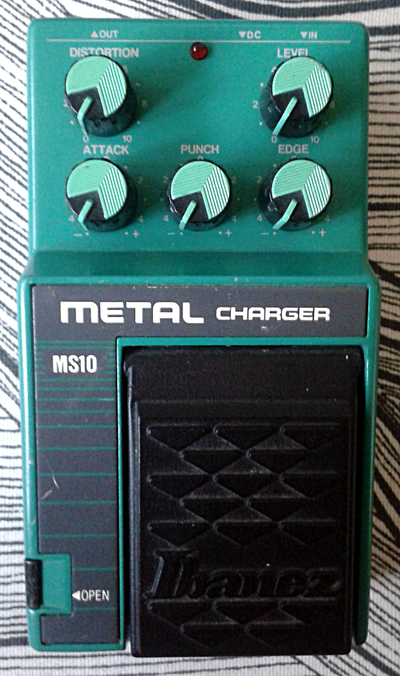
Ibanez MS10 Metal Charger from Power series. Made in japan between 1986-89.

Apparently, these units were a big seller. Which is once again something that i find intriguing. How does a very average distortion design with obvious fault in it become a big seller? I really do not know the answer to that question. Do you?

The fault i’m talking about is the low output level, which doesn’t rise above unity even with both, Level and Gain controls maxed. Gladly, this fault can be addressed with relative ease, as i’ve done with my unit. I do feel quite sad about that, as most people tend to think this is a collectible unit and so it’s ok to keep asking near astronomical prices for very common Power series box – with a built-in fault. No question about it. If i come across another unit in decent condition, and more importantly, for a reasonable price, i’ll grab it.

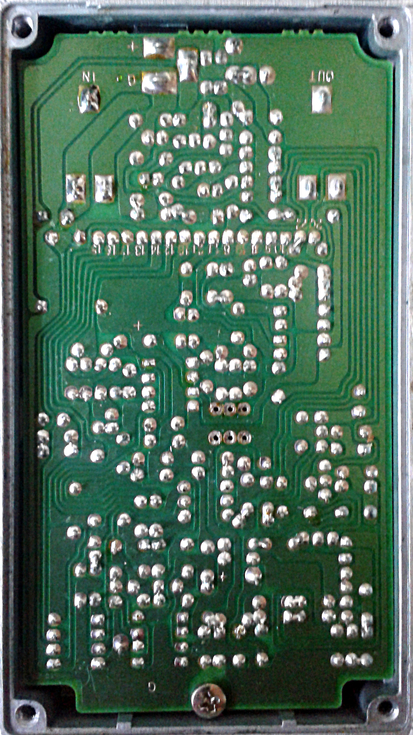
MS10-guts

One of the dullest board designs in the series. The circuit design is quite complex with couple of separate clipping stages. As you can see from the photo above, i’ve removed one of the hard clipping stages to get the overall level up. Also swapping/upping one of the caps from the tone section is a thing i recommend. That way you can get more bass in addition to standard Ibanez mid-hump.

For some reason i’m missing the component side photo of this unit. I wouldn’t be bothered. The SML from Master series uses the same board.

How does it sound?
To me. Not much like anything. The more bass and omitted one clipping section do make it a lot better, but still it is nothing more than mild distortion driver. With the mods the overall tone is a lot more overdrivish than anything that i’d associate with a “metal” distortion. Stock unit works the best with a high gainer tube head – when pushed into the drive channel. Modded one works well as a standalone overdrive too. Not the worst distortion pedal there is, but definitely not among the best either.

Despite everything. I’d recommend the mods.

Danelectro LM-1 Black Paisley Liquid Metal

LM1-BlackPaisley

What is it?
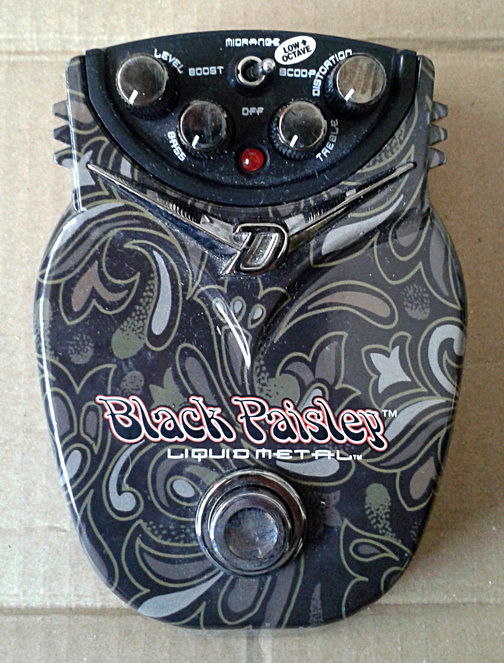
Danelectro LM-1 Black Paisley Liquid Metal distortion with optional down octave. Made in china around early to mid 00s.

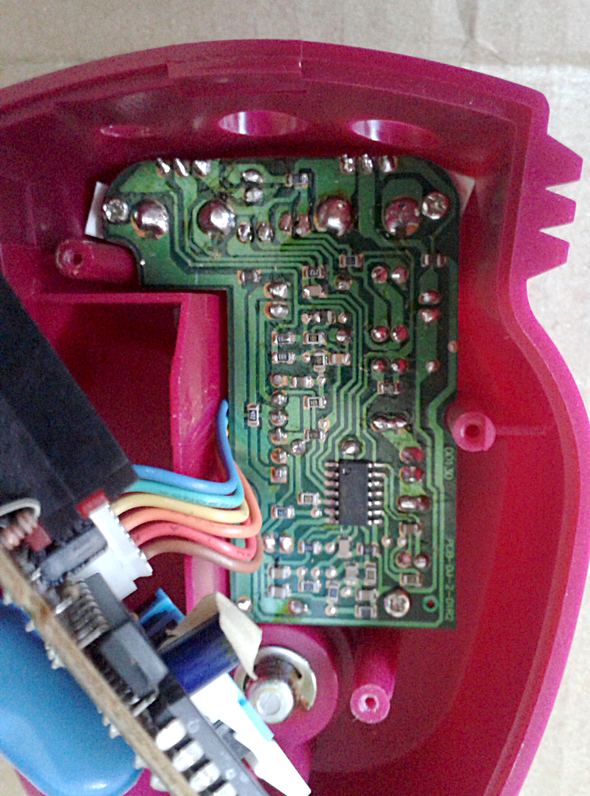
Danelectro is a fun and sometimes quite surprising brand that truly appeals to me. For some reason i’m sort of an sucker for those floral patterns, so the graphics on the pedal have their own piece. of attraction as well. Where some of the Danelectro units are meh, kinda ok or well designed (or sometimes just redesigned), there are some that really blow my mind. This unit is one of those. In addition to very successful graphic design, just take a look of the photo below. Check the placement of the SMD resistors and caps. symmetry is astounding. No schematic around. I think that this is not a prime suspect for tracing due to heavy component count and pretty complex overall design. After all, it is a super high gain distortion with good EQ controls and an added flip-flop based down octave.

LM1-BlackPaisley-guts

All the controls deliver what they promise. To begin with, there’s your volume pot, in addition to distortion and two band EQ with separate controls for bass and treble. Next, there’s the mids control on a switch that goes from flat mids to scooped to boosted. Lastly there’s a down octave slide switch between the jacks. All the controls work well and offer quite a large palette of tweakability.

How does it sound?

The sound has its own character when it comes to distortion. Down octave feels quite wild, even though this doesn’t get even close to overwhelming DOD Buzzbox kind of wild. The personality in the sound reminds me easily of many classic metal distortions, like Boss HM-2 and MT-2. Boosted mids on this one are probably a game saver for many HM-2 fans. Output level is sufficient and the EQ plus the mids switch offer a lot of versatility for overall tone. Very versatile and still it manages to have a personality. Very recommended Danelectro unit, and not just for down octave enthusiasts.

Ibanez PL5 Power Lead

PL5

What is it?
Ibanez PL5 Powerlead from Soundtank series in a plastic enclosure. Made in taiwan around 1993.

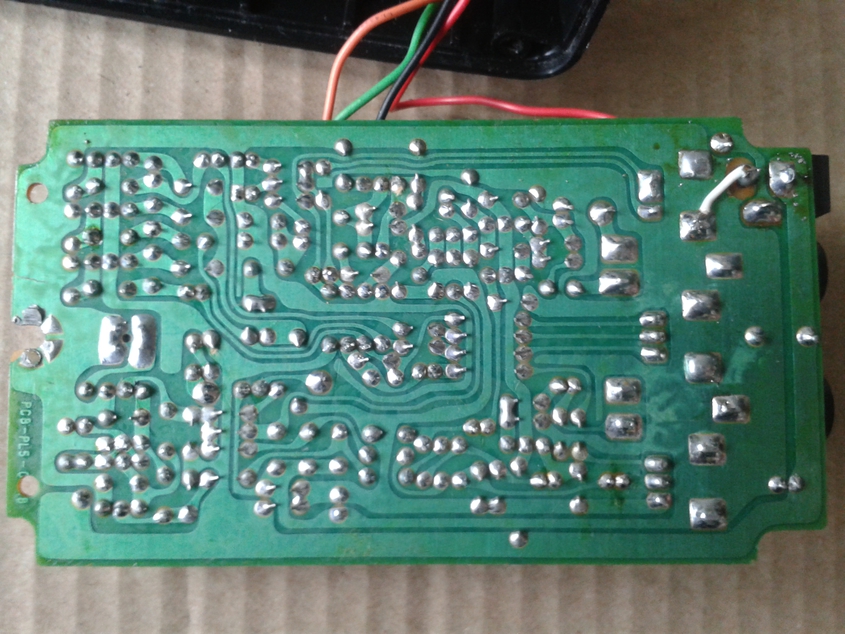
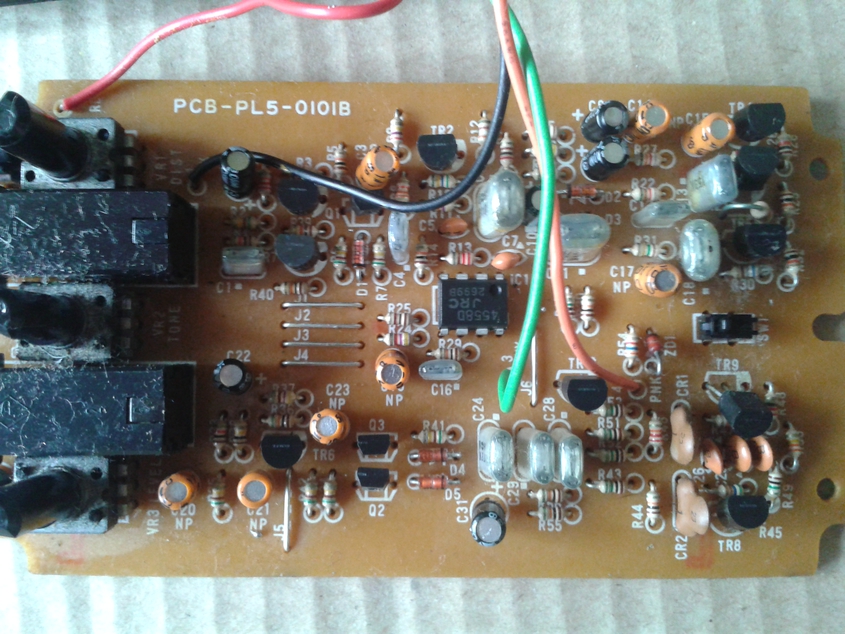
I also have another one of these, build around 1996, in mint condition and in its original cardboard box. The whole series doesn’t disappoint much in terms of dirtbox quality. Most of them sound just right, but there are couple exceptions. This being one of them. Apparently the Powerlead was the second most sold design of all Soundtanks – only falling behind TS5 sales. Amounts originally sold make this very common design, so anyone should be able to score one for cheap. Is it worth it? I can’t be certain about that. But it is definitely not the worst dirt box in the series. Schematic is available online.

PL5-guts2

Looking at the schematic, there’s your standard Ibanez buffering and electronic switching, which passes the signal to single transistor gain stage. After this, the main gain stage is basically a YAR with it’s hard clipping diodes and couple of the component values reworked. The tone control after the YAR is not you standard passive treble cutter, but tri-gyrator to tweak the frequencies that get passed forward. Lastly there is quite standard volume control that mixes the signal passage between Vref voltage (virtual ground) and the output buffering.

PL5-guts1

It is equipped with JRC4558D, and there are some things that can improve the performance. Swapping couple of components is on my to-do list and i’m committed to mod this particular unit once i get to it. Tweaking the first, discrete gain stage to push the main gain stage more is where i’ll begin. Then swapping the 220R resistor for 22K to bring out more gain of the main stage. The two paths to ground from non-inverting input should be tweaked too. Lastly the clipper diodes could be swapped for LEDs or even two pairs to push it slightly further. It may need some other swaps too, but we’ll see about those once i open it up on my bench again.

How does it sound?
Not great. At first the tone control feels to be working wrong. It basically adds low frequencies when turned clockwise. Overall tone is big and distorted, but still it doesn’t thrill me. Name says it all. It offers powerful lead tone that’s not completely unlike the classic hair metal guitar solos of the early nineties. Not great, but not too bad either. Definitely next from worst of the original six pack, right after Modern Fusion.

Ibanez SML Super Metal

SML

What is it?
Ibanez SML Super Metal from Master Series. Made in japan mid 80’s.

I wasn’t planning to go after the Master series due to the rocket prices. Of course i have been interested in these too, but the status and rarity ridden cost of collecting these made the series not too pleasing. For that same reason i won’t be collecting any of the older Ibanezes with the same enthusiasm as the later ones. To pay over 200 euros for used and beaten unit just doesn’t suit me. Of course i’ll keep my eye out for any of the pre-7 series Ibanez pedal that surfaces. But. If the price and condition are right, i might go for it.

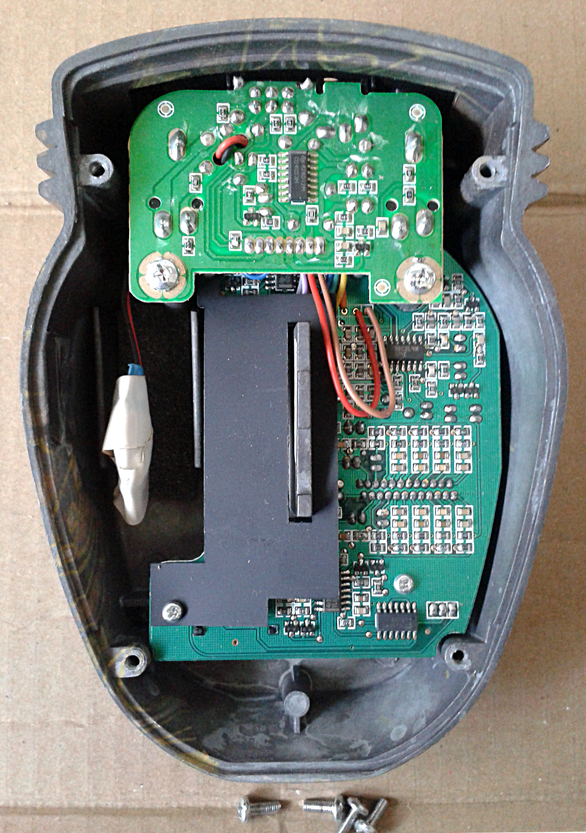
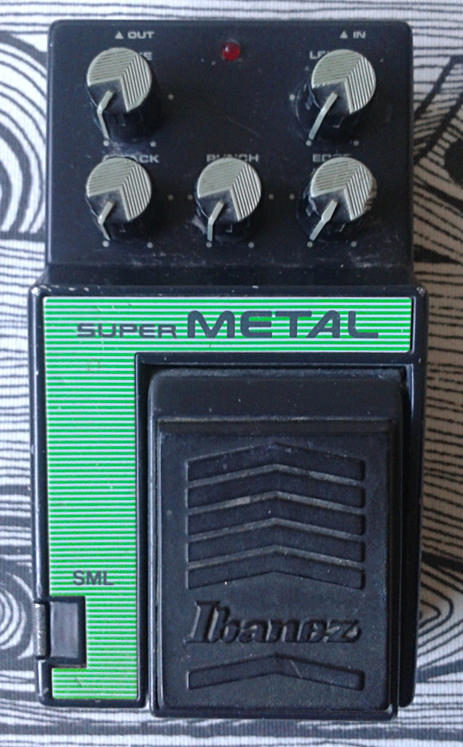
This unit came to me in a deal with pink DE7 and the total price was good, so i really had no choice. The unit was basically broken with burnt and removed polarity protection diode, out and DC jacks were disconnected and solder joints broken. And the level pot had some dead areas on the sweep. The outside condition is good as the image shows. Just couple of paint chips and mild worn. The jacks were easy to reattach by just reflowing the solder. Cleaning the level pot didn’t help enough, but i thought i’d leave it as it is and not start to hunt down a new pot.

SML-guts1

Standard and neat looking board. basically the biggest differences between the L and 10 series are the pots. in fact, this design is believed to be exactly the same circuit as older SM9 Super Metal. Lots of gain stages and clippers. And lots of control over the characteristics. Level shouldn’t need much explaining (other than it needs to be maxed to get even near to unity levels), Drive and Attack control the amount and character of the distortion. Punch and Edge take care of the EQ. These controls are very usable and have a drastic effect on the sound.

SML-guts2

The unit is sharing the board with later SM10 Metal Charger, which makes the two identical. Even though the unity level problem is apparent on all three designs (SM9, SML and MS10), the popularity can be explained without an issue.

Update! I recently got another one of these. At fist glance, both seemed and sounded quite identical. Until i noticed the silk screened labels on top of the boxes. The unit pictured above has a lot higher serial number (about 10x higher) and the labels are grey. On the other unit, the labels are printed in green and the label sticker has clearly different tint of neon green on it. All this suggests that there are at least two separate production runs of SML in existence.

How does it sound?
This being the reason for the popularity. The sound. In vast ocean of distortion pedals, this unit still has some personality and edge that most other simply don’t have. I’m liking the sound even though it has a serious flaw with the output level. And it’s a good thing i got this. I modded my SM10 for more level and i was left with mixed feelings. It is definitely more usable with mods (as this would be too), but there’s still something in the original sound that i want to keep. This probably ain’t the best metal distortion there is, but it’s very good either way.

Ibanez BN5 Black Noise

BN5

What is it?
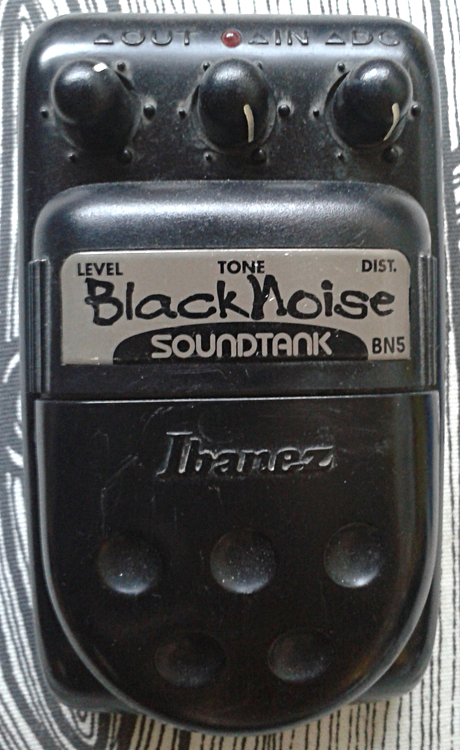
Ibanez BN5 Black Noise distortion from later Soundtank series in plastic enclosure. Made in taiwan in mid to late 90’s

The marketing section of Ibanez pedals made this out to be a “industrial” distortion. It’s how the marketing can turn a design to something that it is not – and then people will hate and slander the design for years to come because the marketed sound doesn’t have too much to do with the reality. I could sink this one deep into that category. In the day, the name and marketing suggested that the unit is “Lethal, rough-edged industrial distortion at its most extreme-the sound of a small amp overdriven way past the limits. Our heaviest, most intense, and just plain loudest distortion pedal.” it does sound like marketing jargon that promises to deliver, now doesn’t it? Does the reality support that description? Don’t get me wrong. It has some of that AC15 driven over the limits feel to it. So it’s not all wrong, but still.

I’ve ran into similar issues with other pedals too. The marketing has us believing one thing that the unit does not offer. That can lead to severe disappointments and hurt the brand as much as the individual design in eyes of the users.

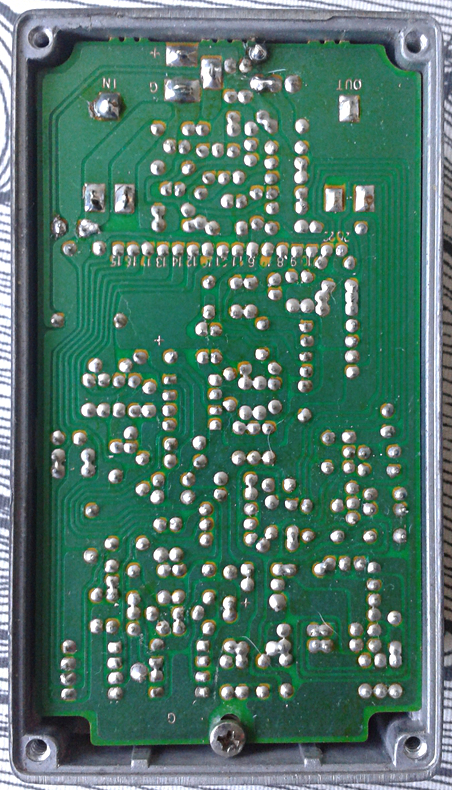
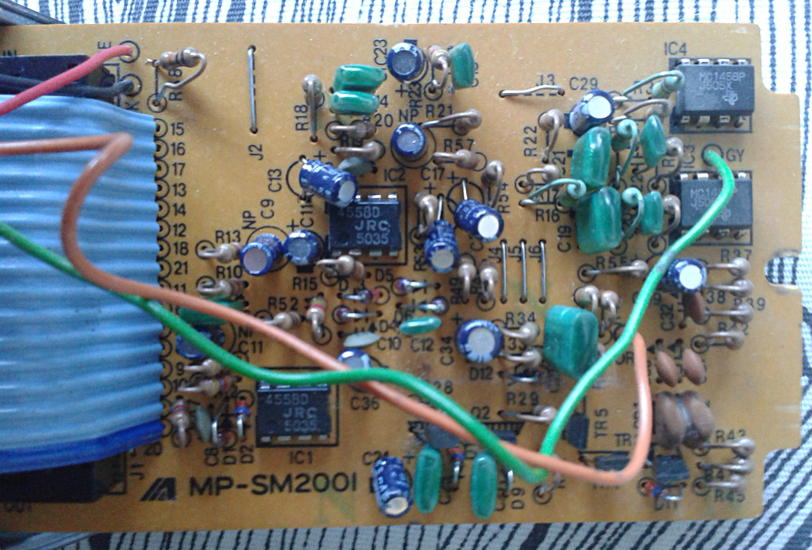
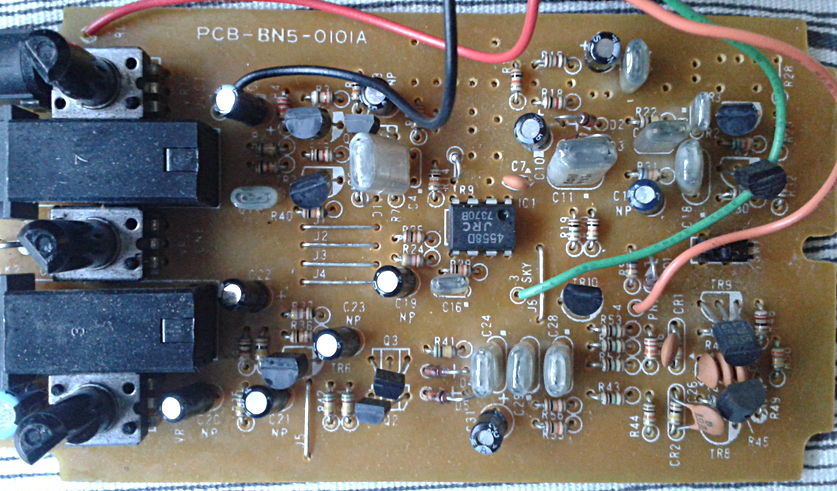
BN5-guts

Let’s leave the marketing section behind and focus on the pedal itself. The silk screened label clearly has BN5 on it. Lots of unused holes? And doesn’t the layout look familiar? How about we take a look at the schematic (from Dirk’s archives). Next, take a second to compare it with the SP5 schematic. Topology is the same. The board layout is the same, minus the silk screen labelling. I guess i need to check other pedals from this series to see which ones have the same board layout.

Deep inside this is just another Rat/TS adaptation with standard distortion box analogy. Buffer -> main gain stage -> hard clipping -> tone control and static gyrator filters -> output level control -> output buffer. Souped with electronic switching and bypass. There are at least four similar designs in the series, all with slightly different frequency responses that result in different overall feel.

How does it sound?
High gainer that’s not bad at all. Feeling slightly harsher and louder than Slam Punk, but basically hailing from the same neighbourhood. My first impression isn’t placing this to industrial music genre, but to the same lot with TM5, CM5, PL5 and SP5. All are very nice sounding distortion pedals with slight or slightly bigger differences. All of them do sound good. As the Soundtank distortions come, this is one of the really good ones.

« Older posts Newer posts »

© 2025 killall -9 humans

Theme by Anders NorenUp ↑