Category: Ibanez (Page 4 of 6)

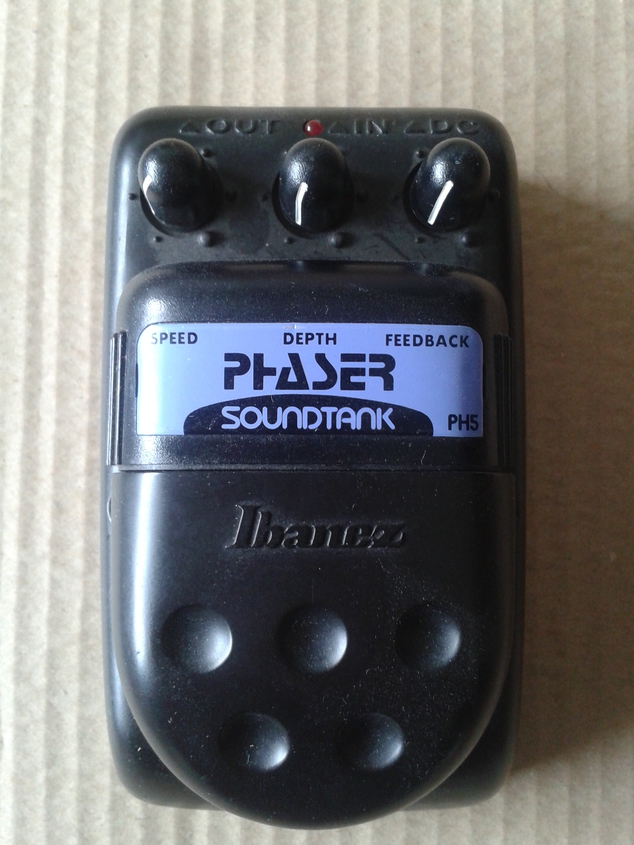
Ibanez PH5 Phaser

PH5

What is it?
Ibanez PH5 Phaser from the Soundtank series. Made in taiwan around 1996.

I’ll admit it. I love phasers. Don’t use them much (or at all) on my standard pedal board, but i always have a couple of differently voiced ones with me when i’m in studio. Some phasers are bad, while some can really improve your tone. This one sinks easily into the latter category. Opening this puppy up shows oldschool acidy corners on the traces, which always make me feel warm and fuzzy.
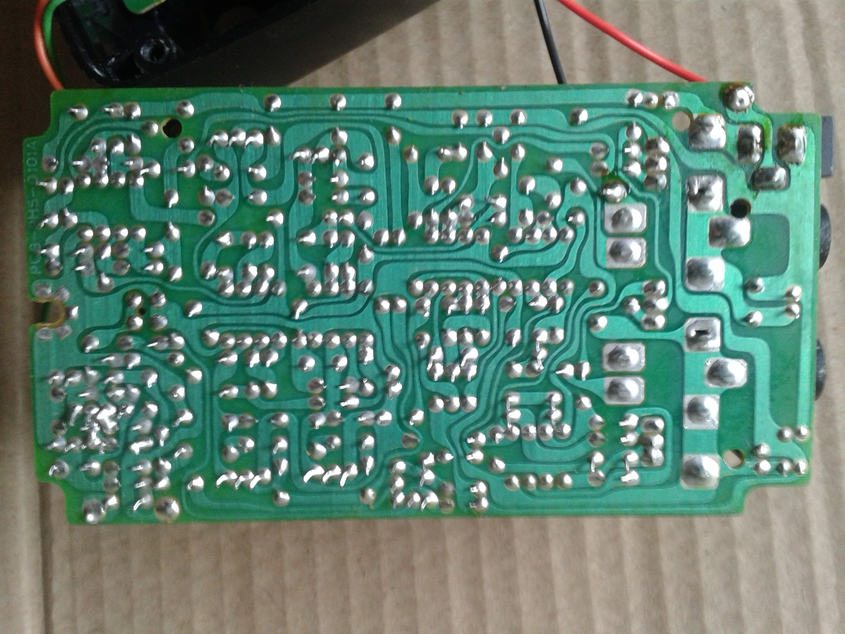
PH5-guts2

As i couldn’t find a reasonable schematic floating around, i’m going to assume couple of things by just looking at the component side of the board. To me this looks like a four stage design with JRC1458s acting as LFOs and single TL022 taking care of the mixing. Some folks on forums were talking about this being quite close to the PT9, which may very well be true. If you get a chance to read the schematic for this, the phasing JFET biasing should not be overlooked. Forum folks say that it’s unconventional.
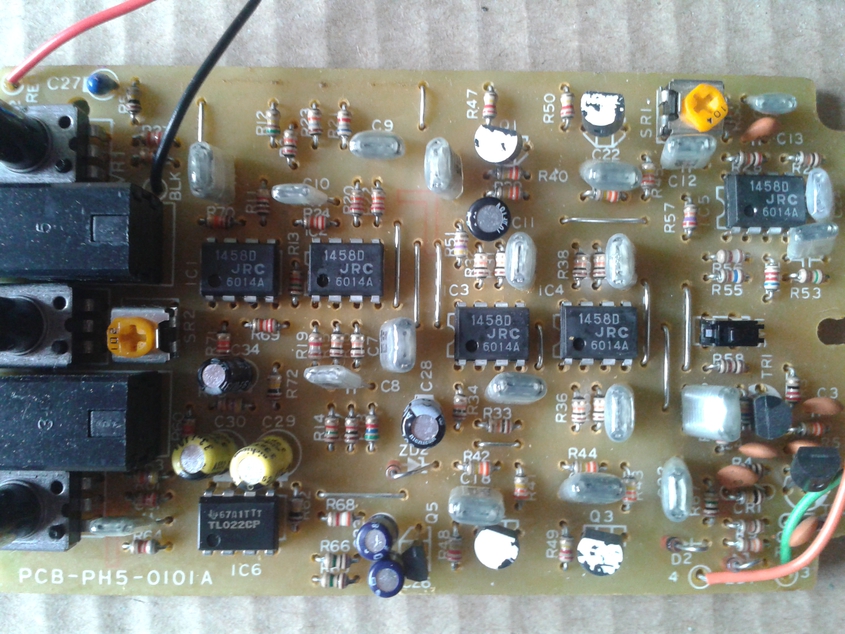
PH5-guts1

With just three controls, this is quite versatile phaser. Speed and Depth act as they should and the Feedback control can take this thing in to space. Bad swithing, as is natural for the series, but simply swapping it makes this run happily again. I do have couple of other phasers in my collection, but it seems that i take this one with me a lot.

How does it sound?
Soft and powerful. From slow and mild to fast, vibe-like and swirly wild. Despite the near-standard Phase90-style circuitry, this is versatile phaser that sounds quite natural. Biasing sounds on point and accurate as there are no “broken” parts on the phasing sweep. Really nice sounding design which makes this one of the best sounding phaser tools i know.
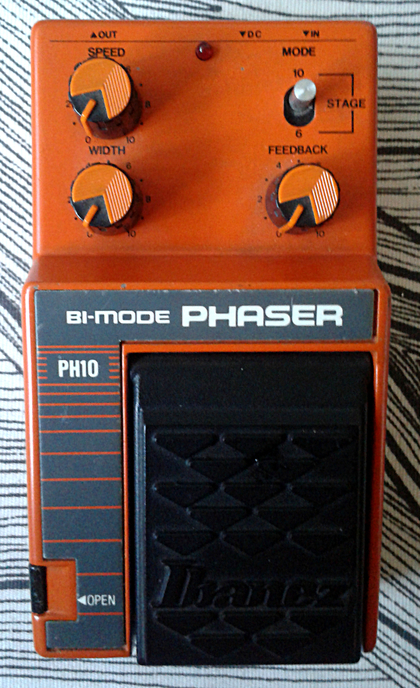
Ibanez PH10 Bi-Mode Phaser

PH10

What is it?
Ibanez PH10 Bi-Mode Phaser from Power series, made in japan between 1986-89.

One of the nicest phasers. The Bi-Mode here means that the phasing stages are switchable between six and ten stages. Which is not a bad idea to throw in to a huge bowl of phasers. Got this unit for a reasonable price from J. Linden of Linden guitars. As i tried it out, i felt like the six stage mode was losing the phase from most of the sweep. That could only mean one thing. The unit had went misbiased over time. I’ve seen this happen with new units too, so it’s not that uncommon. Biasing the JFETs with the trimmer is a bit of pain on this one, but i think i nailed in the first 5 minutes or so. So all i needed to get this unit running properly was a screwdriver and a hint of patience.

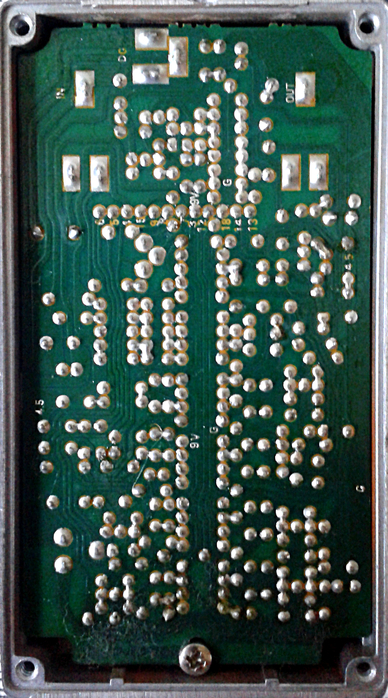
PH10-guts1

As most of you may already know, i’m a sucker for symmetry on the board layouts. The idea of placing all six ICs in a single row is a heart warming visual candy.

As for the design.. As the photo below shows, there are six JFETs responsible for the phasing. So how does it become 10-stage phaser just by a flick of the switch? The design sort of re-uses the first four stages in the 10-stage mode. Quite an elegant solution. You should be able to find the factory schematic PDF through your favourite search engine. I’m not linking it here..

PH10-guts2

The feedback control takes the signal from output filter and pushes it back to the beginning of the phasing stages through the one half of a dual opamp which is there, just to drive the feedback. This is very nice feature as well. I’ve seen this type of feedback network used a lot on different flanger designs, but not in many phasers.

So. In general this is pretty versatile and neatly designed phaser. Definitely more usable than the standard and overly cloned Phase 45, 90 or 100.

How does it sound?
Like a good phaser tool with lots of versatility on the controls. On six stage setting it is not that far away from Phase 100, but the feedback control lets you tweak this to a lot thicker and much more psychedelic swirls. Now if we take the ten stage setting, the sweeps and swirls get even more depth and psych on. The slow ambient sweeping on both, 6 and 10 stage settings are really good sounding and usable too. Once again, the feedback control takes the trophy home. Very good phaser.

Ibanez BN5 Black Noise

BN5

What is it?
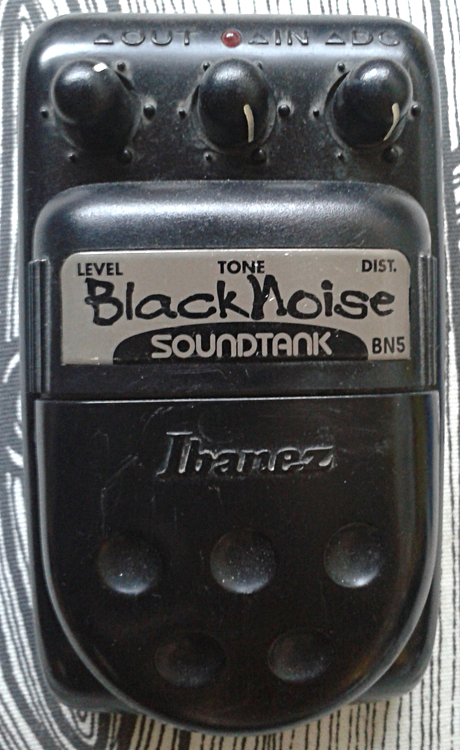
Ibanez BN5 Black Noise distortion from later Soundtank series in plastic enclosure. Made in taiwan in mid to late 90’s

The marketing section of Ibanez pedals made this out to be a “industrial” distortion. It’s how the marketing can turn a design to something that it is not – and then people will hate and slander the design for years to come because the marketed sound doesn’t have too much to do with the reality. I could sink this one deep into that category. In the day, the name and marketing suggested that the unit is “Lethal, rough-edged industrial distortion at its most extreme-the sound of a small amp overdriven way past the limits. Our heaviest, most intense, and just plain loudest distortion pedal.” it does sound like marketing jargon that promises to deliver, now doesn’t it? Does the reality support that description? Don’t get me wrong. It has some of that AC15 driven over the limits feel to it. So it’s not all wrong, but still.

I’ve ran into similar issues with other pedals too. The marketing has us believing one thing that the unit does not offer. That can lead to severe disappointments and hurt the brand as much as the individual design in eyes of the users.

BN5-guts

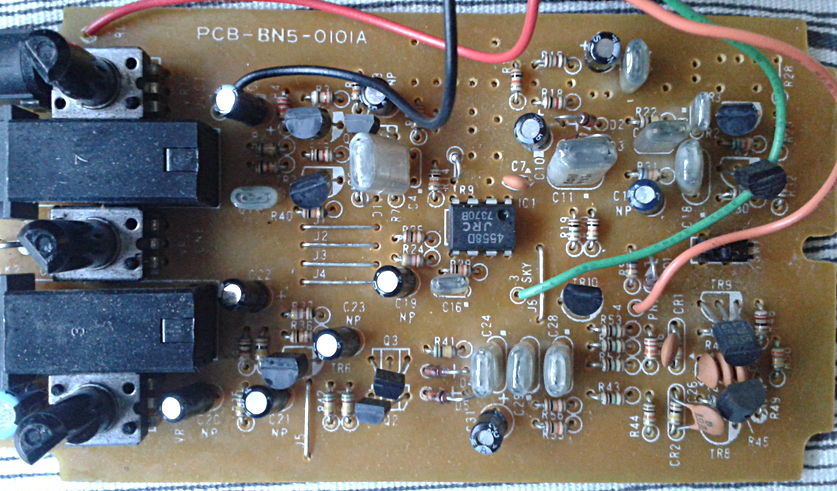
Let’s leave the marketing section behind and focus on the pedal itself. The silk screened label clearly has BN5 on it. Lots of unused holes? And doesn’t the layout look familiar? How about we take a look at the schematic (from Dirk’s archives). Next, take a second to compare it with the SP5 schematic. Topology is the same. The board layout is the same, minus the silk screen labelling. I guess i need to check other pedals from this series to see which ones have the same board layout.

Deep inside this is just another Rat/TS adaptation with standard distortion box analogy. Buffer -> main gain stage -> hard clipping -> tone control and static gyrator filters -> output level control -> output buffer. Souped with electronic switching and bypass. There are at least four similar designs in the series, all with slightly different frequency responses that result in different overall feel.

How does it sound?
High gainer that’s not bad at all. Feeling slightly harsher and louder than Slam Punk, but basically hailing from the same neighbourhood. My first impression isn’t placing this to industrial music genre, but to the same lot with TM5, CM5, PL5 and SP5. All are very nice sounding distortion pedals with slight or slightly bigger differences. All of them do sound good. As the Soundtank distortions come, this is one of the really good ones.

Ibanez SS10 Session Man

SS10

What is it?
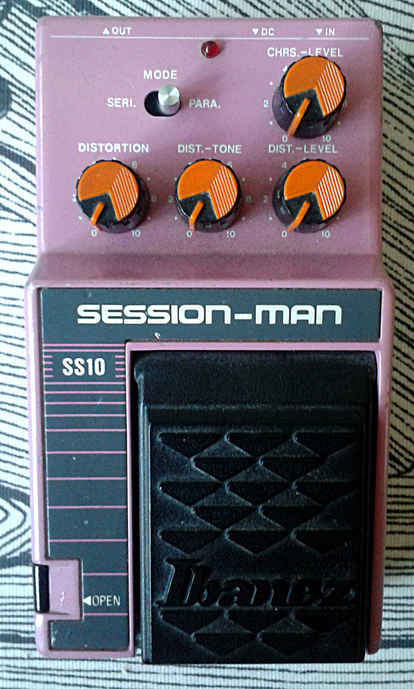
Ibanez SS10 Session-Man Distortion/Chorus from Power series. Made in japan between 1986-89.

Mid 80’s was a perfect time to try out stupid things like to combine distortion with other type of effects in small pedal enclosures. DOD did it, Boss did it and of course, Ibanez did it. The idea of mixing distortion with chorus seemed like something that i wanted to try out. The great thing with the Session Man is that there’s a switch that places the chorus in parallel or in series with the distortion to create different soundscapes. The bottom knobs control the distortion with standard parameters (level, tone, gain) and the upper knob determines the level of chorus mixed with the distortion. The chorus doesn’t have any controls, other than the mixer level. Sure, there are trimmers for those parameters inside, but it is basically fixed to one depth and one speed.

SS10-guts1

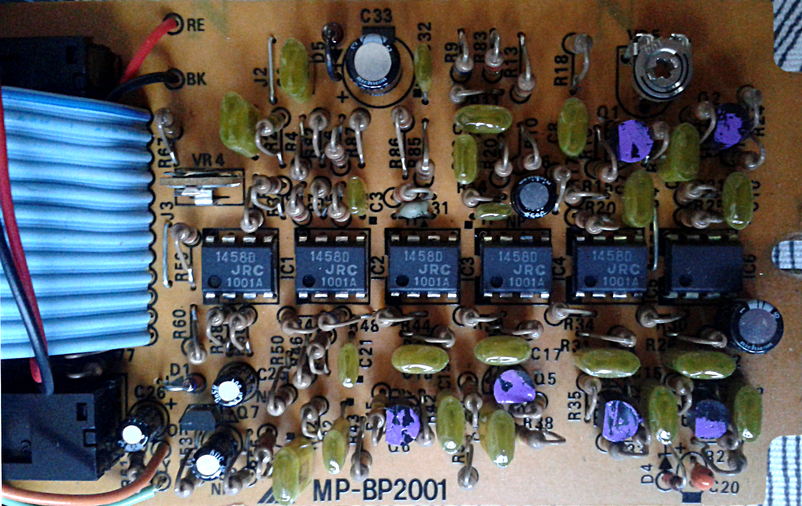
For all analog distortion and chorus delay circuitry, the board looks like it’s well used space. Turning the board around reveals crowded and crammed circuit with a lot of components. The yellow trimmers are for tweaking the chorus. I couldn’t find a schematic to see everything there’s going on.

SS10-guts2

From these crappy photos and being inside my unit, i can tell that there’s a BBD pair handling the choruses timed delay, one opamp acting as LFO ans SIP opamp driving the distortion. The SIP may be a good choice, since  there’s a lot of stuff going on on the board.

These seem to be somewhat collectible units. As a niche novelty items, i think the value is correct. But as a usable, unique sounding guitar effects? Not so sure.

How does it sound?
First of all, the distortion isn’t too bad. Quite open and dynamic, without the flattening compression that most distortions offer. Now, when we engage the chorus in parallel, i’m like “why?” The chorus is so mild that it hardly does anything, even when maxed. Anything good that is. The chorus is a lot more overwhelming in series mode, but still. Why? The parallel setting is a thing of its own, but if i wanted to chain a chorus and a distortion after each other in a studio environment, my choice would not be SS10. For a live setup maybe. But even then i’d rather use a utility box to engage both with a single stomp.

These combination pedals are nice curiosities. As these come, the SS10 isn’t the worst of them by far. It could even serve a purpose on some situation.

Ibanez AW5 Autowah

AW5

What is it?
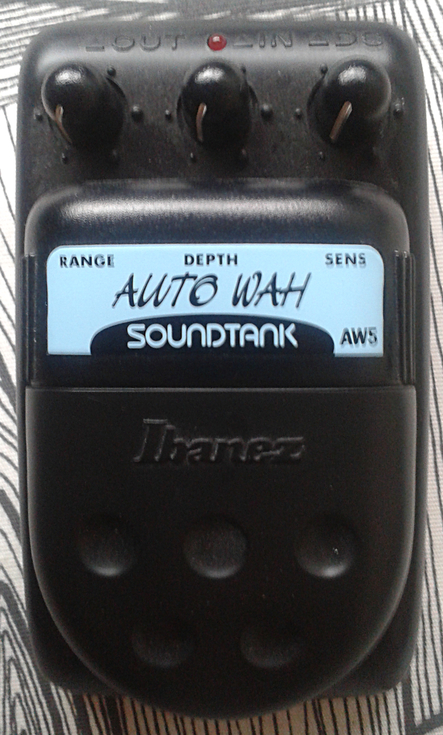
Ibanez AW5 Autowah in plastic enclosure from later soundtank series. Made in taiwan around late 80’s.

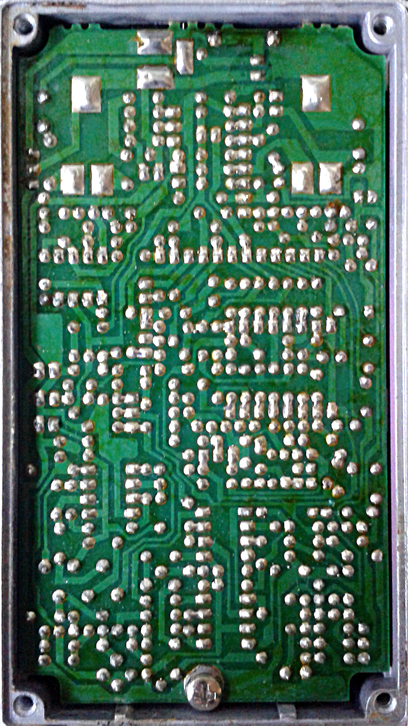
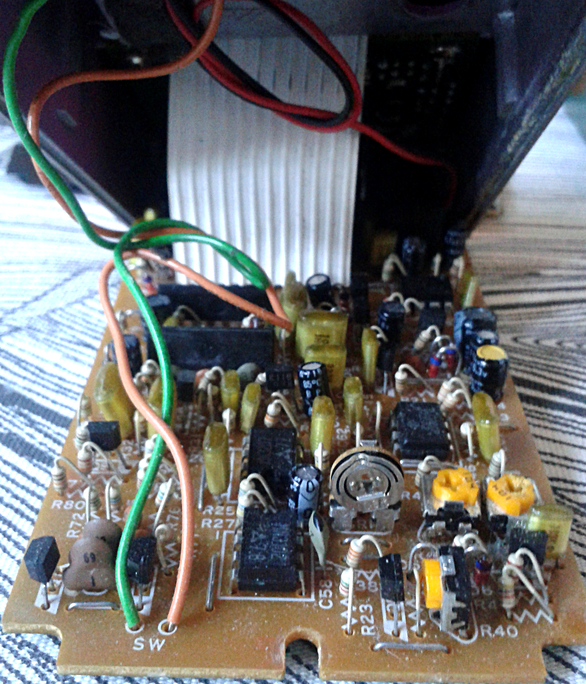
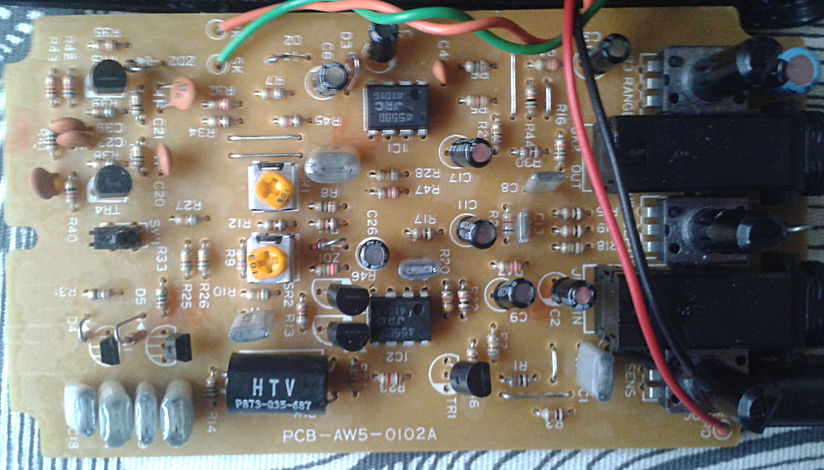
This model has couple things that are unique. First of all, it is the only Soundtank with analog opto-isolator on board. The box and the component layout itself is quite neat. It’s pretty well made and placing high on build quality in the series.There is a schematic up at Dirk’s page.

AW5-guts1

The schematic shows the basic signal path to be a buffer splitting the signal to bypass, modulation filter and the trigger part. The trigger part is close to something we’ve seen as a trigger in many other designs, like couple of EHX autowahs. It Includes half of an dual opamp and two diodes rectifying the triggered signal to two transistors which in part control the vactrol (or opto-isolator). The filter part is not too far off from WH10 and others. Then there is, of course, a output buffer and all the standard Ibanez electronic JFET switching components. All in all. Elegant design.

By the basic design, this should be very nice autowah. But is it?

How does it sound?
Sad. For obvious reasons one could have AF9 or AFL in mind once seeing this unit. It does not sound anything like the early 80s Ibanez perfection from 9- or Master series. It gets the job done, but overall it is sounding like a hollow, cheap thing. I may not be the greatest expert on autowahs, but i apparently have quite a few effect boxes from that genre. This one? Definitely not one of the greatest. Actually. One of the worst. You’re after a usable autowah in low price range? You should be looking at Dano French Fries instead. This one is much more of an nice novelty effect or a collector’s item than usable effect pedal.

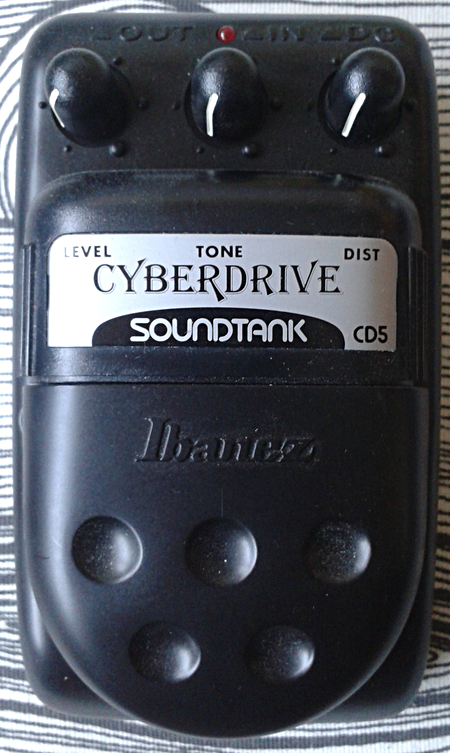
Ibanez CD5 Cyberdrive

CD5

What is it?
Ibanez CD5 Cyberdrive, fixed wah distortion from later Soundtank series. Made in taiwan late 90’s.

Ok. I’ve said this before. There’s one sub-genre of distortions that just isn’t for me. This being the fixed wah distortion. And here’s the Ibanez’ take on one with modern, dull traces and nothing earth shattering. Well. Not completely like that. There are couple of interesting things in there. That won’t mean that the unit is anything more than piece of unusable junk, but those couple of pointers are good to know before throwing your 15 year old birthday gift away. You won’t be in for a bucketful of cash, but just don’t throw it away yet.

Funny how this and my Dano Grilled Cheese are the two units in perfect condition. Both are quite old units, but it seems like neither of them has seen any real use since they were bought from music stores years ago.

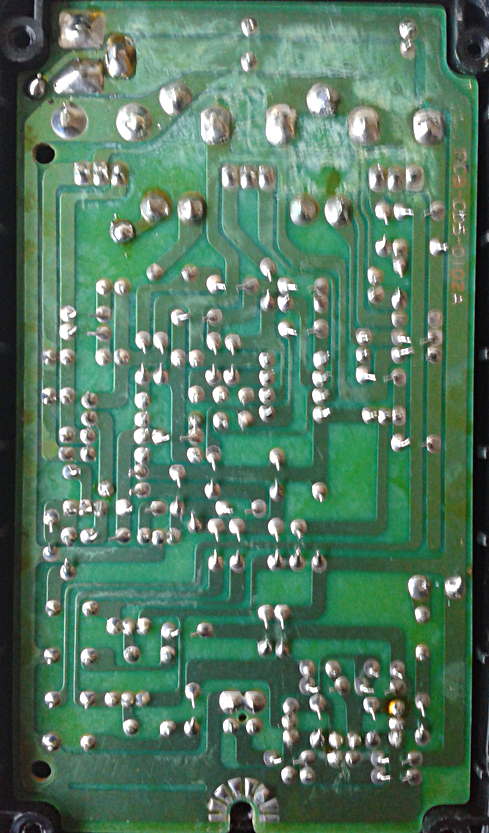
CD5-guts1

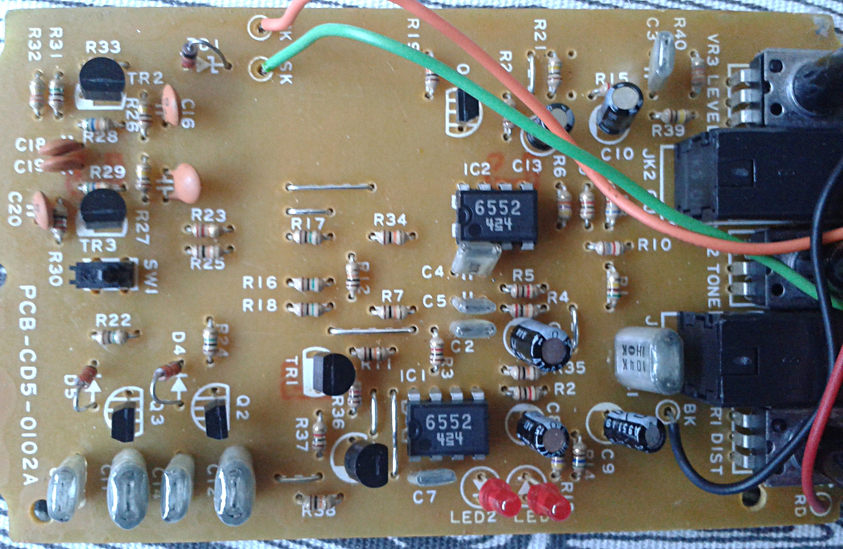
Once i opened the bottom plate, the feeling of “meh” was overwhelming. To my eyes, this is the ugliest board in the whole series. But now that we got most of the trash talking out of the way, we can dig in and see what we’ll find. Dirk Hendrik has drawn a schematic, so take a look at it next. Now. You can see the red LEDs for clippers and that the main gain stage is sort of like a Rat/TS hybrid. Those LEDs are in feedback loop of an non-inverting amplifier and the gain setting components at the inverting input are creating two frequency/gain networks alá Rat. The distortion side is quite simple but still appealing, even there’s nothing special about that.

CD5-guts2

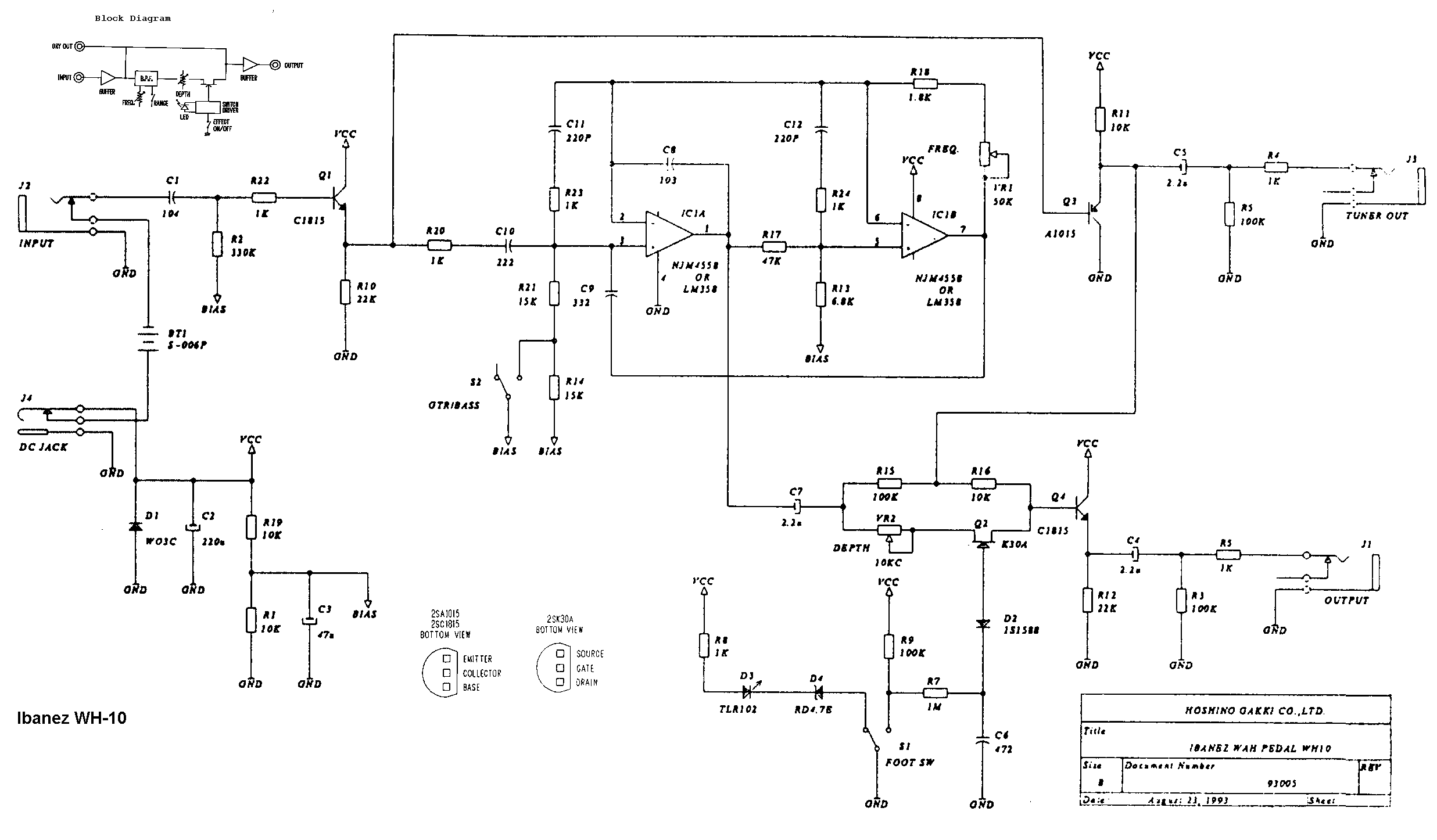
Some of you may have noticed that the input buffer splits the signal and passes it to tone “tone” control driven by another dual opamp. That topology reminds me of something. Now where have i seen that before.. Here. So you have a decent distortion and a tone control that is in fact 1:1 with Ibanez WH10 (and WH10v2) Wah pedal.

Now you know what it’s made of. It is a curiosity. Quite unusable one, but still a curiosity. One could take a wah enclosure and mount the board inside and probably even make it switchable with standalone WH10 circuit. Would make pretty cool high gain distortion wah.

How does it sound?
Engineers have been after something new and this is the result. It sounds like a high gain distortion and a inductorless wah in fixed position. That’s what it is and that’s what it sound like. Sad that we can’t separate the two. The distortion by itself wouldn’t be bad and the wah by itself isn’t bad – we know this from playing around with the reissued WH10v2. But these two combined.. No. I could see myself using this pedal in a studio, if i was to record some thrash- or mathmetal solos. But there’s not much chance of that happening, so the unit will probably stay in the cabinet with all my other Soundtanks.

Suitable for hair metal of the late 80’s and early 90’s. For anything else? There are other pedals.

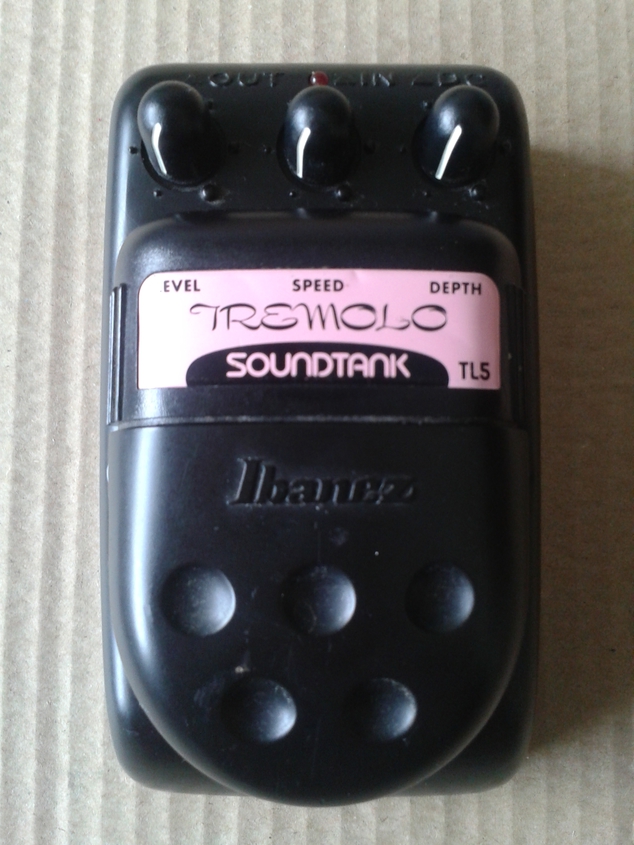
Ibanez TL5 Tremolo

TL5

What is it?
Ibanez TL5  Tremolo from soundtank series in plastic enclosure. Made in taiwan around 1995.

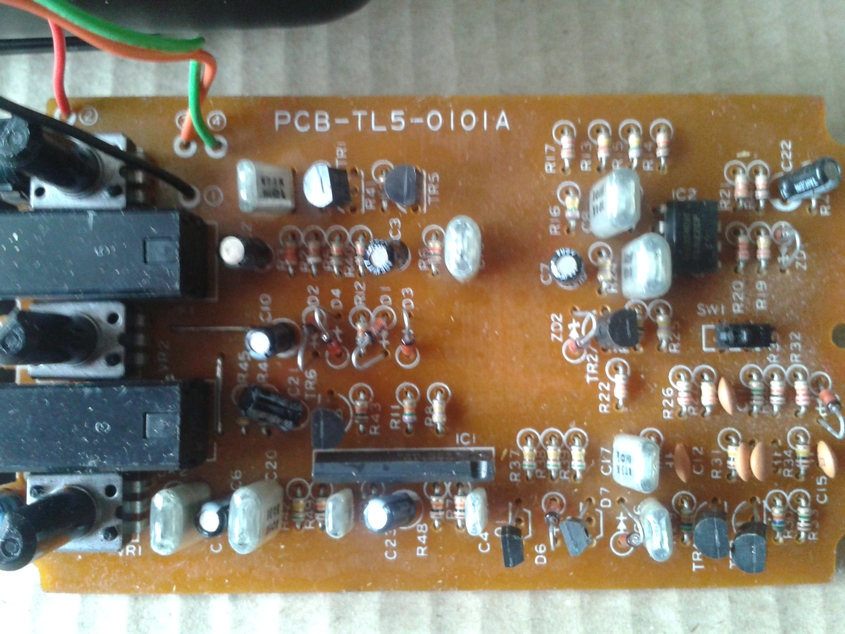
There are just a few highly peculiar effects in whole Ibanez catalog fom the seventies to today. This is one of them. Only tremolo Ibanez ever produced. And to be honest, the design isn’t bad at all. In all the simplicity, there’s TL022 opamp that acts as a LFO – which then controls the amplitude of BA6110 SIP voltage controlled amplifier. Dirk has drawn a beautiful schematic and posted it on his site.

TL5-guts1

The idea of using a VCA for amplitube modulation isn’t as popular method as i thought. The optical Vactrol and FET methods are present in more common designs. So this isn’t only special for Ibanez, but for the whole subgenre of tremolos. I’ve seen a few designs even utilizing a OTA for a tremolo effect, but for me, this was the first design with a VCA. Also the one transistor that’s controlled by LFO and pulsing the status LED is very nicely designed.

Traces look sort of like modern japanese drawing of a tree and the solder joints are neat. Components are also placed in very neatly. It’s getting harder to find anything really wrong with this unit.

TL5-guts2

Component side is one of the roomier ones in whole soundtank series. The way all the 1/8W resistors are laid in straight sets is also very eye pleasing. The biggest culprit once again is the switch. Replacing it isn’t that big of a task and is recommended as most of the original switches in this series will die eventually. All in all, this one is a must have. Ibanez (or basically Maxon) design that is at the same time quite original and versatile.

Springs up a question. Why Ibanez didn’t ever made another tremolo for any other series? In my opinion this doesn’t matter as now we have here a piece of Ibanez effect pedal history that will be a highly valued collectors item for its sound and design. Some people might argue that the value has already climbed to where it should be. I’d have to agree on that. If you are lucky, you can still find one for cheap.

How does it sound?
Like a world class tremolo. Soft with reasonably wide range of speeds and depths. The level control lets you boost the signal slightly to avoid all psychoaural volume drop issues. Really nice tremolo. One of the great beasts in a plastic box. Highly recommended pedal.

Ibanez OT10 Octave

OT10

What is it?
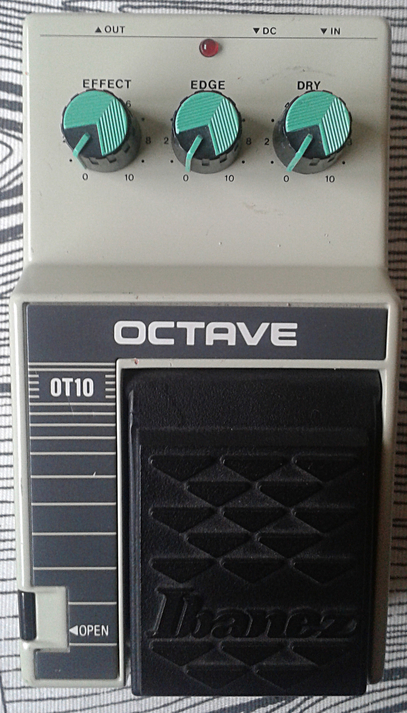
Ibanez OT10 Octave from Power series. Made in taiwan around late 80’s.

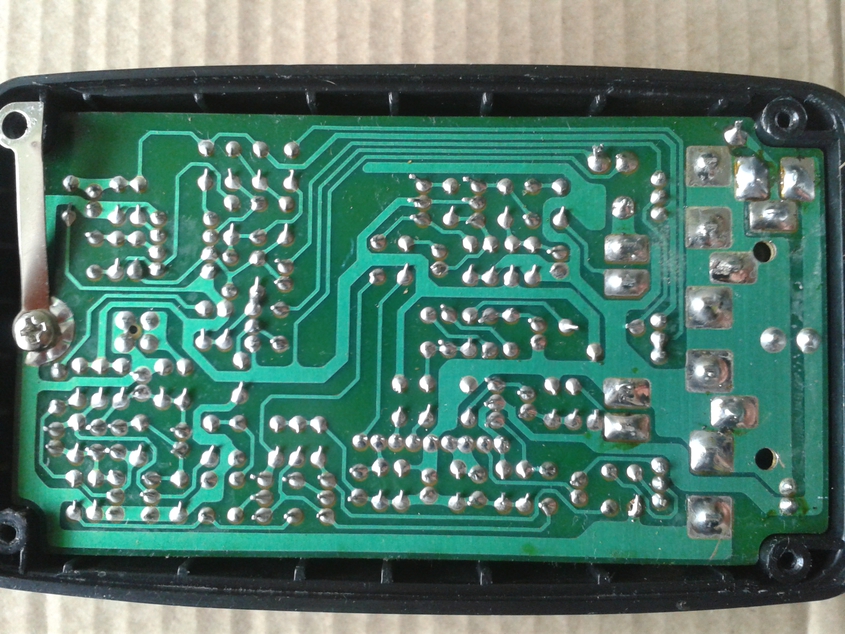
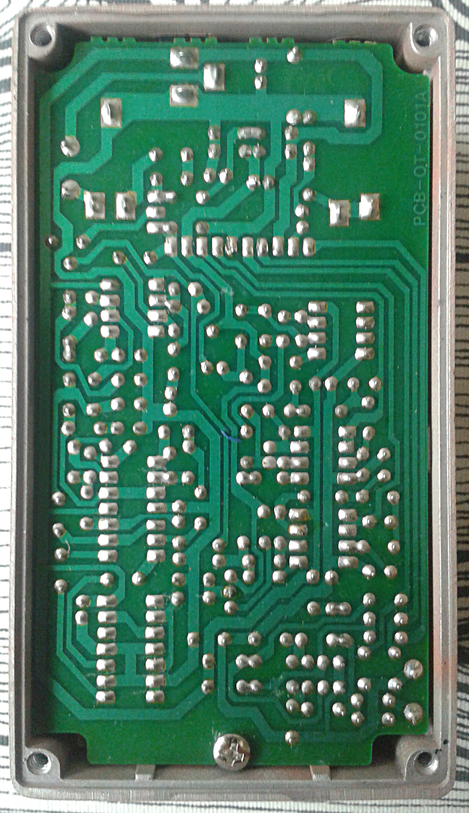
The most interesting Ibanez boxes are the couple of designs that only occur once. There are more examples where the designs have lived on in different series with slightly different names or very slight differences. For example, all the different Tube Screamers and metal distortions. Where as TL5 Tremolo from the Sounstank series is the only tremolo effect Ibanez ever produced, the OT10 Octave is the only octave effect offered by Ibanez. These are bound to gather some noticeable collectors value. Box offers up and down octaves that can be mixed with the clean signal. The clean is the same as bypassed signal. Trace design isn’t looking too beautiful, but there’s nothing wrong with it. Just your standard modern style traces.

OT10-guts1

Like all 10-series boxes, there are two circuit boards. One with the controls and one as the main board. Boards are connected with 10 stranded ribbon cable. All three pots are 100K Ohm linear taper PCB mounted carbon ptos. The ouput buffering  and part of the electronic switching network is also placed on the control board. The schematic is up online. Once again, it’s Dirk’s beautiful trace, which is simply amazing work.

OT10-guts2

The buffering aside, the signal is splitted into three and fed to down octave divider, up octave circuit and a clean channel. Down octave is created by standard method of driving the s*it out of 4013 CMOS chip by one quad opamp. Upper octave is done by two diodes and wonderful looking inverting/non-inverting amplifier pile. Clean comes through with single unity amplifier.

OT10-guts3

All this is is mixed with three pots and passed on to last filtering buffering stage. I think the design is quite elegant and still far off from the circuits considered standard, like Boss OC-2. The design clearly has potential, so it makes me wonder why Ibanez (or Maxon) didn’t pursuit the idea further..

How does it sound?
This might be the main contributing factor why OT10 remains the only octave effect in Maxon/Ibanez back catalog. Up and Down octaves are both relatively clean, with the low one being just as unstable in frequency tracking as it usually is with octave dividing designs. The box does get way better if driven by some angry fuzz or distortion. While both octaves have their own personalities and the box sounds generally good, i see why this wasn’t as big of a hit OC-2 for example. Good thing is that those who have the box usually know why they have it – it has more than just collectors value. It’s quite usable. It has more going for it than just plain two different octaves. Character. Wouldn’t use this on my board as everyday octave box, but it’ll be with me in the studio. Every time.

Ibanez SP5 Slam Punk

SP5

What is it?
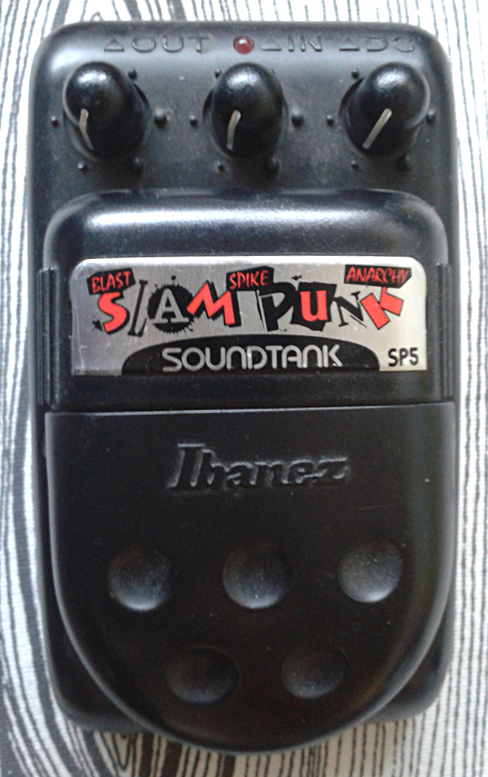
Ibanez SP5 Slam Punk distortion from later Soundtank series. Made in taiwan, mid to late 90’s.

One of the soundtanks that i had a pleasure of being in contact with before acquiring one. I did a rehousing job with true bypass for a friend and played with the circuit before letting it go. I knew then already that i may need to clone this circuit for myself, and maybe mod it slightly to lose some of the low cut that the original pedal had. Not much, but still the original had slightly clinical bottom end. After building couple of clones, to no surprise, i found another healthy original for reasonable price. This puppy is that one and i’m not letting it go.

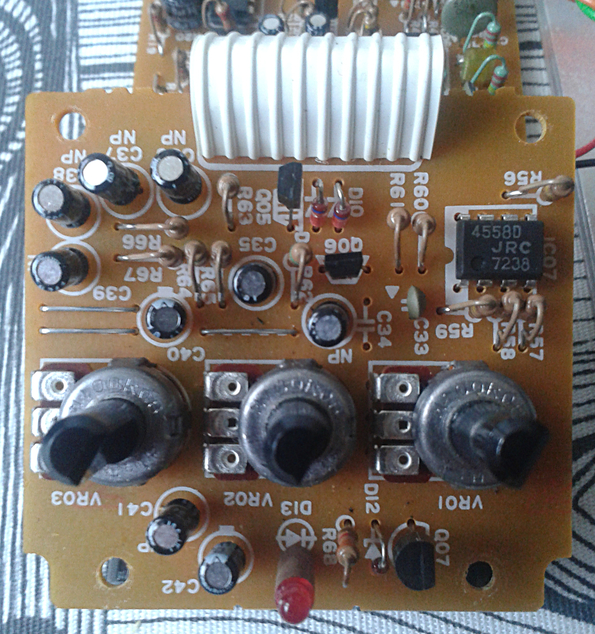
SP5-guts1

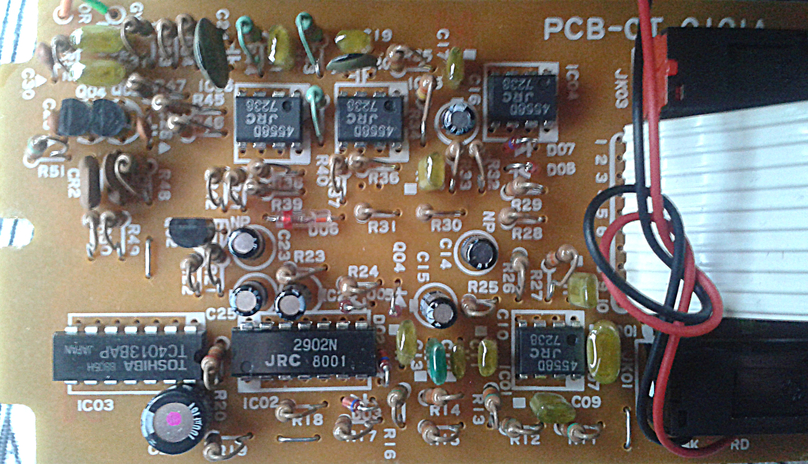
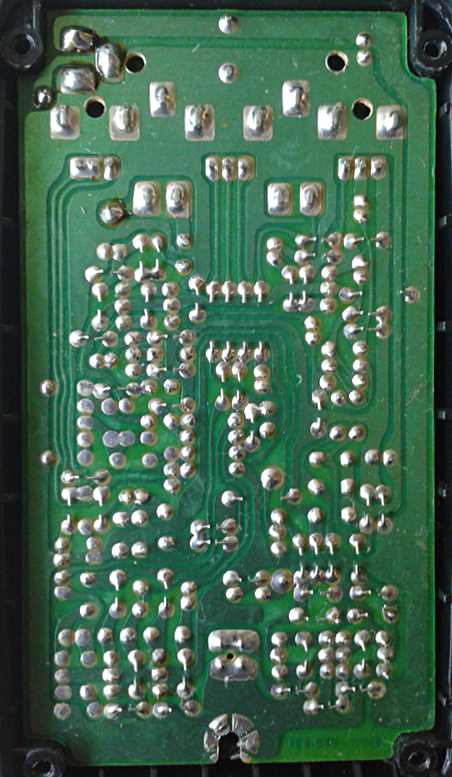
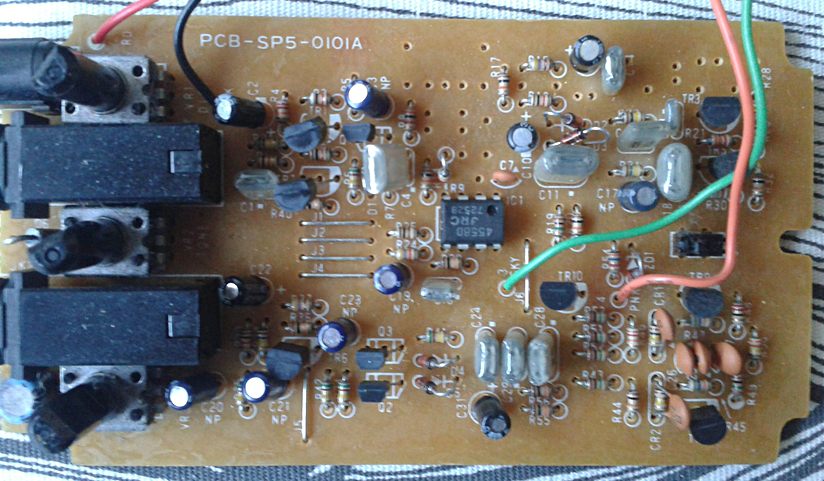
The board has standard taiwan modern traces. Take a note of the empty, unmarked holes. The board has SP5 printed on it, so the exactly same board hasn’t been used for another desing in this series. But i do believe the layout without the silk screening has been.

However. The schematic is up at 8bitsindgenug. It shows some similarities to ProCo Rat and other Ibanez designs based on it. The board has a lot of room on it.

SP5-guts2

Even though the Soundtanks aren’t getting the appreciation they should in general, this one is one of the most underrated pedals in the series with Black Noise and a few others. Nevermind the plastic housing. The sound is there, regardless of the box.

How does it sound?
High gain accuracy and definition, but still usable as a very nice overdrive. Think of Social Distortion’s “When the angels sing”. This pedal pretty much nails that overdriven/distorted base sound. No doubt this pedal wasn’t used on the recording, but the sound is close. Anyone mocking this one as a plastic cheap crap should play with one and say that again.

Ibanez TS10 Tube Screamer Classic

Ah. Back to the old tricks with yet another Tube Screamer.

TS10

What is it?
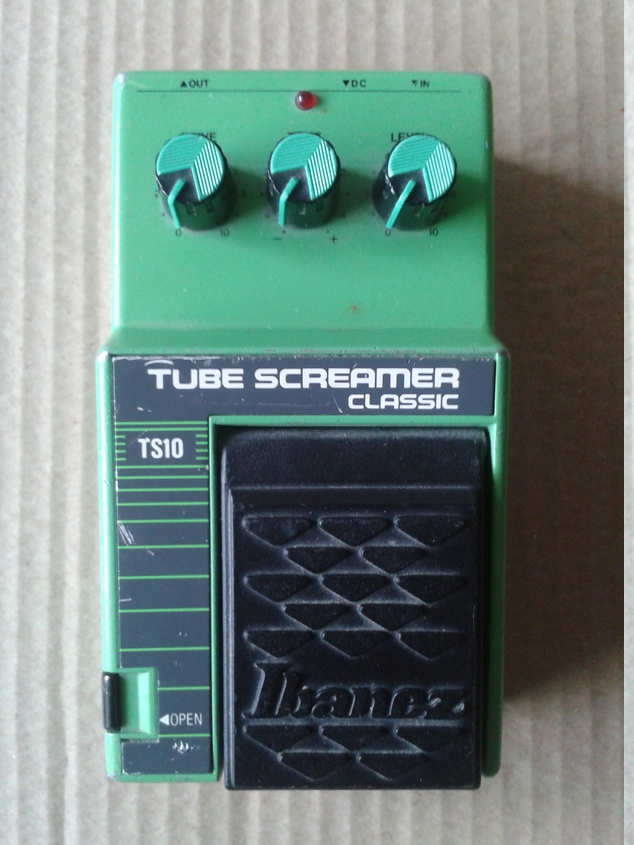
Ibanez TS10 Tube Screamer Classic. Later version, made in Taiwan late 80s or early 90s.

So it is TS9 with one resistor added before the inverting input of the opamp. These taiwanese units tend to sell for less than current TS9 reissues, so modding one might not be such a bad idea. Personally i’m happy that this post leaves me only with TS7 to cover from the standard tubescreamers – as it gets quite boring to try to find something to write about a box that one has written about twice already. TS7 has something more to offer than just one added 220R resistor.

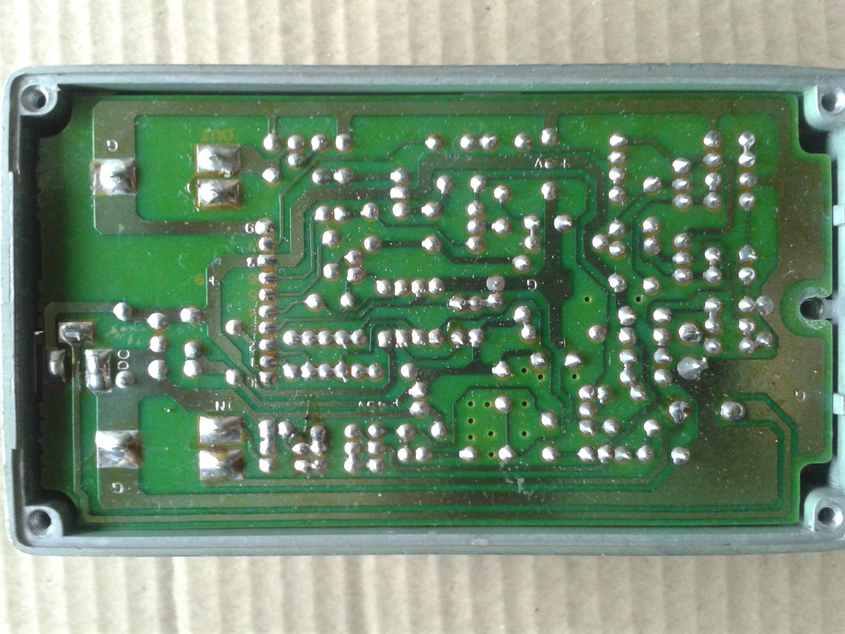
TS10-guts1

Dull as expected. In more ways than one. The enclosure may not be as sturdy as 9-series boxes, but for some reason i find this type of box soothing. Featurewise, placing of the jacks is the biggest difference between this and the nine series TS.

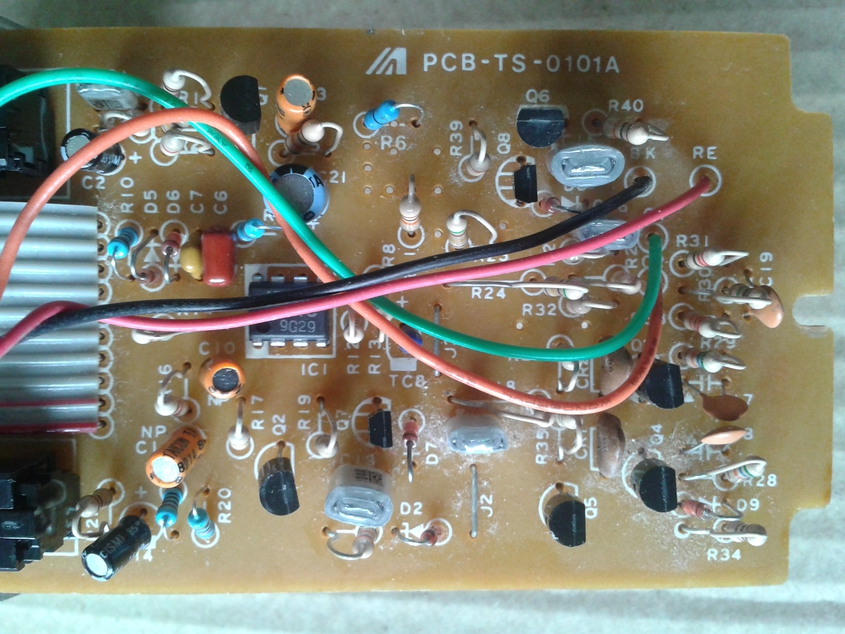
TS10-guts2mods

The photo above is taken after i modded other one of my taiwanese units. One with a keen eye should be able to catch all the components that have been swapped. Hint: original unit has 5% carbon film resistors and transparent mylar caps. Okay. I’ll let you know everything there is to know. The one resistor in the middle of the board is swapped from 220R to 0R. The inverting input components have been replaced – minimum drive setting up, more bass and more overall gain. Also the 51p ceramic cap is swapped for multilayer type. The two resistors on the bottom left are the two resistors that make this a TS9. Swapping all the mentioned values will result the circuit being transformed from TS10 to TS808 on steroids.

How does it sound?
As all the rest of the Tubescreamers. Without the mods it sounds pretty much 1:1 with TS9 and TS5. It can (and probably should) be modded into something that simply sounds way better. But still. In its heart it will always be just a tubescreamer. The sound i personally won’t ever be using for anything.

« Older posts Newer posts »

© 2025 killall -9 humans

Theme by Anders NorenUp ↑